Seasonal Timeline
In South Central states, adults and nymphs peak March through June, not in the fall or winter as some cold-season tick species do. In the Southeast, this tick is active most of the year in the mild climate, with the heaviest activity in spring and summer.
In South Central states, adults and nymphs peak March through June, not in the fall or winter as some cold-season tick species do. In the…
The South Central adult season runs opposite to what some cold-climate tick species show. Lone star ticks are a spring-and-summer problem, tapering off by winter, not a fall-through-winter risk.
Where They're Found
Wooded areas with dense underbrush, and areas along creeks and rivers where animals rest. This species tolerates drier conditions than some other ticks, which helps explain its wide range across South Central and Southeast states. It is the dominant human-biting tick across much of the South, accounting for over 90 percent of reported tick bites in parts of the region. That does not mean it is the only tick present. The American dog tick is also common in these same states and carries its own separate disease risk.
Life Cycle
Egg to the death of a reproducing adult spans roughly one to three years depending on how quickly the tick finds a host at each stage. All three mobile stages, larva, nymph, and adult, will readily bite humans, which is unusual among U.S. tick species and part of why bite counts run so high in this tick's range.

Egg
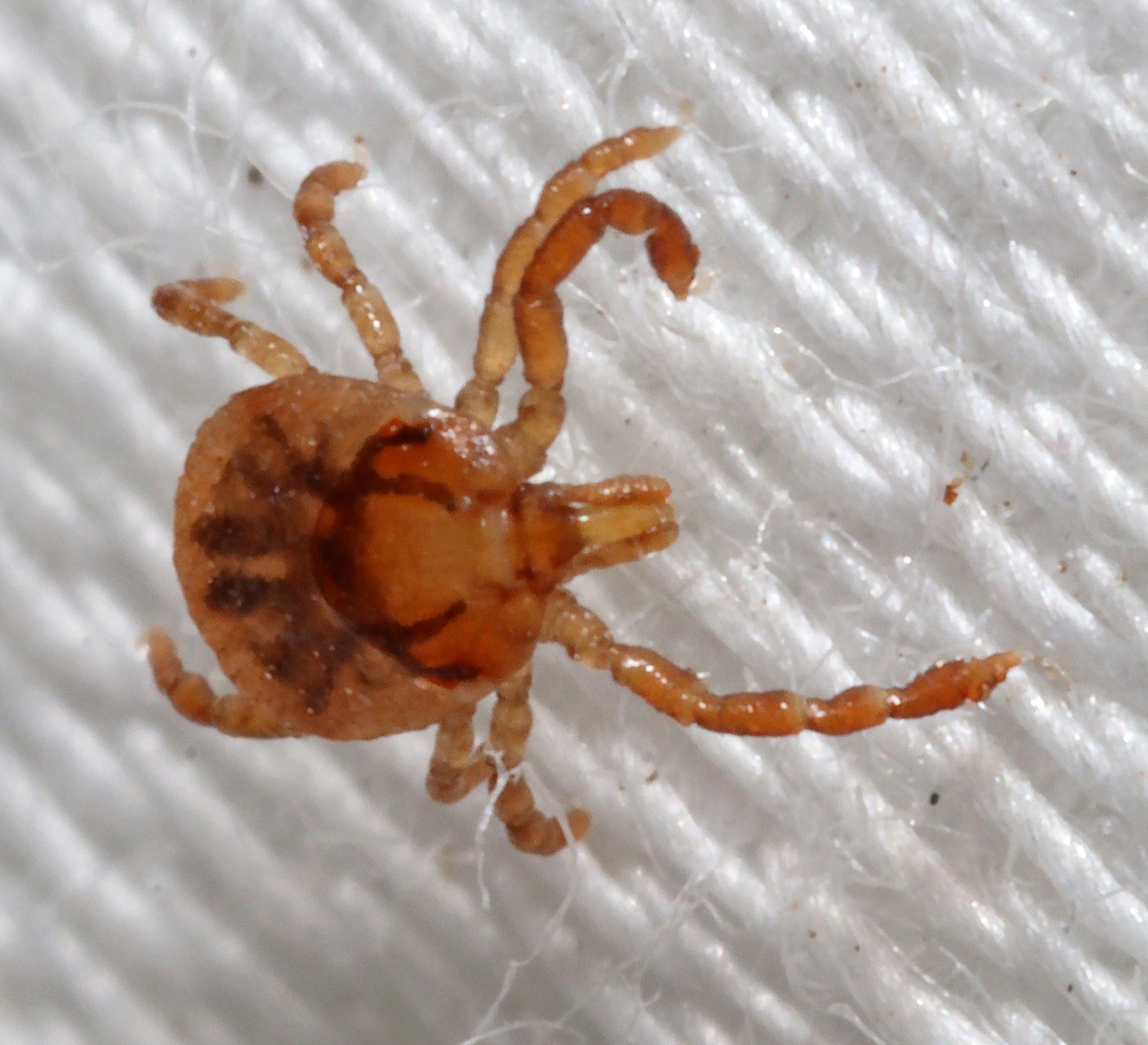
Larva2
Nymph
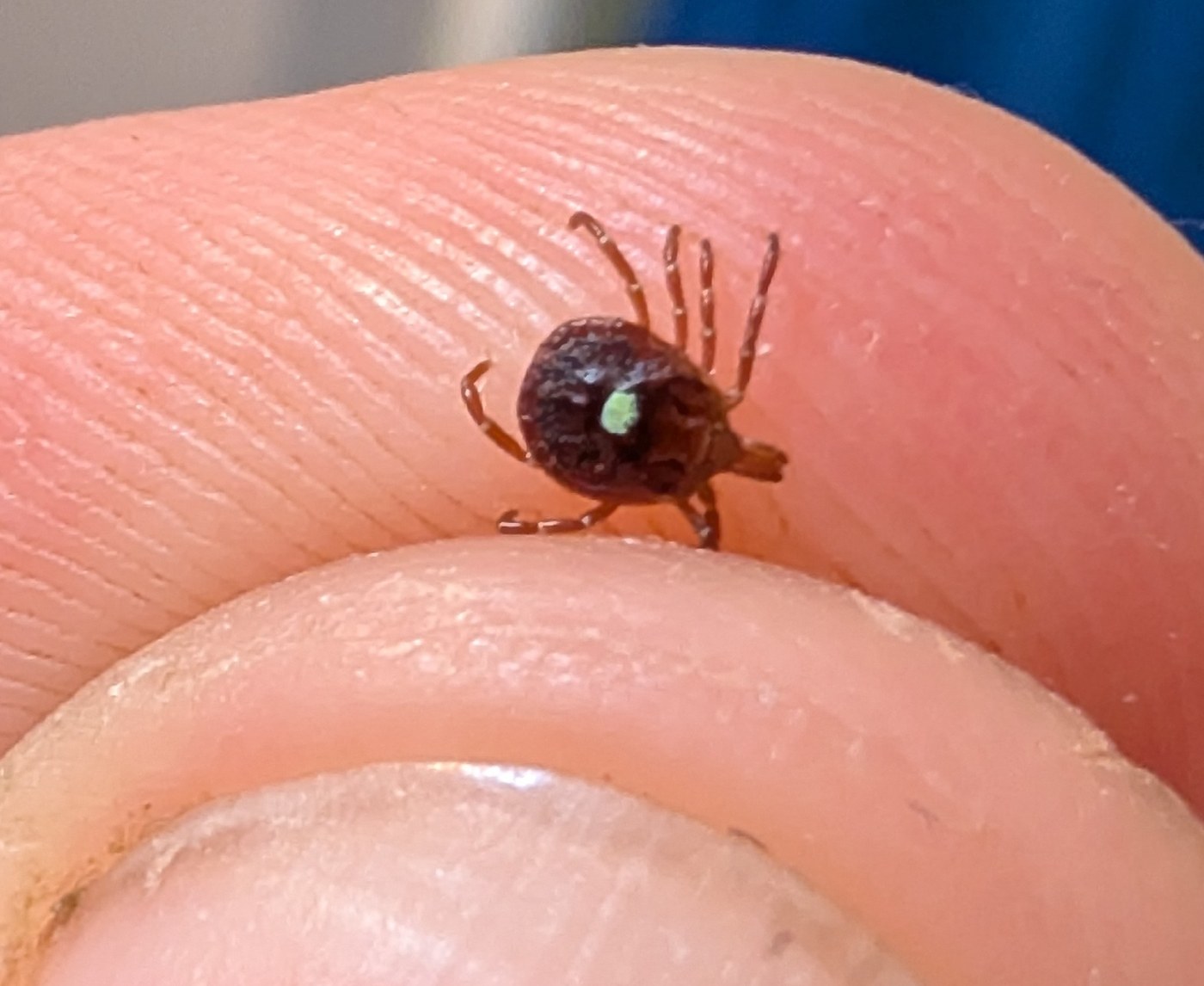
Adult1
Identification
A reddish-brown body
Reddish-brown body, with mouthparts noticeably longer than other common U.S. ticks.
One white dot on the female
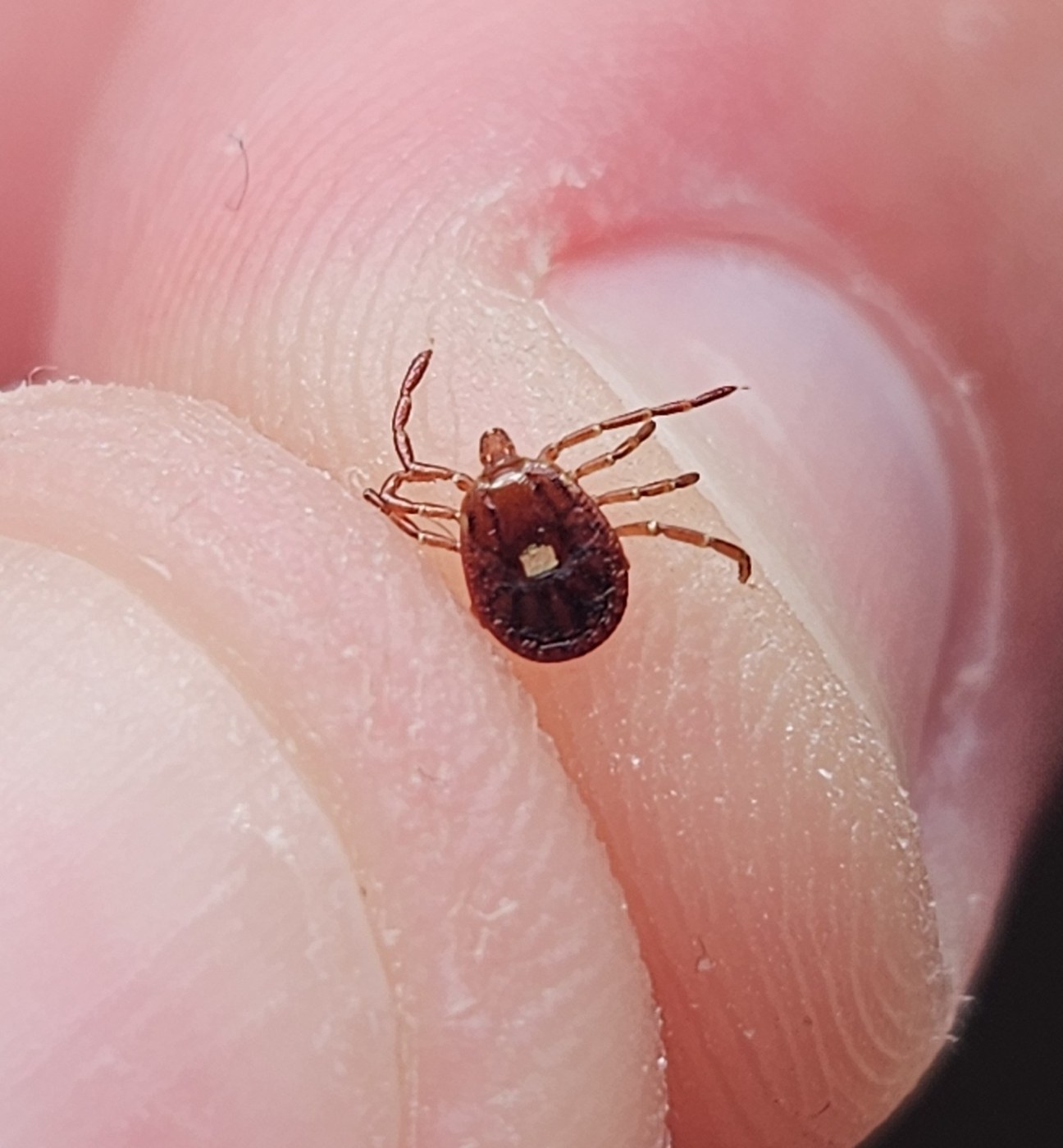
The adult female carries a single, solitary white or silvery dot in the center of her back, the field mark the species is named for. This dot appears on females only.
Adult males have no central dot
Instead they show faint cream or whitish streaking and spots scattered around the outer edge of the body. A tick with a central dot is female. A tick with only marginal streaking and no dot is male.
It does not just wait, it comes looking
Most ticks quest passively from the tip of a grass blade. The lone star tick still quests, but is also documented moving actively toward a host it detects by carbon dioxide and vibration. This is the behavior homeowners actually notice, and it is a large part of why this species accounts for such a high share of tick bites in the South.
Appearance is a reliable split here
This species does not closely resemble the blacklegged tick's plain dark shield or the American dog tick's mottled shield, so appearance is not the hard part here. The harder question is disease attribution: if you were bitten in South Central or Southeast territory and later developed a reaction to red meat, this is very likely the tick responsible, even if you never saw or identified it.
Signs of Infestation
Finding it attached
The sign is the tick itself, found attached after time outdoors in wooded or brushy habitat. This is not a structural infestation pest, it is an outdoor, human and pet-biting species.
Redness from the saliva alone
Redness and mild discomfort at the bite site are common from the saliva alone and do not by themselves mean an infection has started.
Classic tickborne symptoms
They show up within days to weeks. See a doctor about any new symptoms in the weeks after a bite.
Alpha-gal looks nothing like it
Alpha-gal syndrome looks completely different. Instead of a symptom near the bite, it is a delayed allergic reaction that shows up two to six hours after eating red meat, dairy, or other mammal-derived products, and the first reaction can occur weeks or even months after the bite that caused it. Symptoms include hives or itchy rash, nausea or vomiting, stomach pain, difficulty breathing, swelling of the lips or throat, dizziness, or in severe cases anaphylaxis.
A larval hatching site, and a tick bomb
A person or pet that walks through an active larval hatching site can pick up dozens to hundreds of larvae at once, sometimes called a tick bomb. This mass-attachment pattern sets this species apart from other common ticks.
Prevention and When to Call a Pro
The basics, from CDC guidance
Tick removal, repellent choice, clothing treatment, and yard management follow the same CDC-based guidance that applies to ticks generally. Remove an attached tick promptly with fine-tipped tweezers, use an EPA-registered repellent, treat clothing with permethrin, and check thoroughly after every outing.
Why further bites matter here
One addition specific to this species. Because new tick bites can reactivate an existing alpha-gal allergic reaction, avoiding further bites is not just about preventing a first diagnosis, it is an ongoing requirement for anyone already diagnosed with alpha-gal syndrome.
Leaf litter matters more here
Removing leaf litter from yard areas people and pets actually use reduces overwinter survival for this species more than for some other ticks, since it depends heavily on humid leaf-litter conditions.
If red meat starts reacting
If you develop a delayed reaction to red meat or other mammal products, especially hours after eating and especially if you live in or have visited South Central or Southeast tick territory, that is worth discussing with a doctor as possible alpha-gal syndrome.
What a pro visit can do
A pest control service cannot treat a tick bite. What it can do is reduce tick habitat and pressure around a property, clearing brush and leaf litter at the woodline where these ticks wait and actively seek hosts. Given how aggressively this species pursues people and pets compared to other ticks, that yard-level reduction is a genuinely useful service here.
Frequently Asked Questions
What is alpha-gal syndrome?
It is a serious, potentially life-threatening allergy to a sugar molecule called alpha-gal that can develop after a tick bite. A tick can transfer alpha-gal into the bloodstream, and the immune system can then react to red meat and other mammal-derived products, sometimes starting weeks or months after the bite.
How do I know if I found a lone star tick?
Look for the single white or silvery dot in the center of the adult female's back, the mark the species is named for. Males have only faint white streaking around the body's edge and no central dot. The body is reddish-brown with noticeably longer mouthparts than other common U.S. ticks.
Is this really the tick that causes a meat allergy?
Yes. In the United States, the lone star tick is the species most often associated with alpha-gal syndrome. A few cases have followed bites from blacklegged and western blacklegged ticks, but the lone star tick is the primary one.
What other diseases does the lone star tick carry?
It is the main U.S. vector for ehrlichiosis and is specifically linked to STARI, southern tick-associated rash illness, which produces a rash similar to Lyme disease but is a separate condition, since lone star ticks have not been shown to transmit the bacterium that causes Lyme disease.
Is the lone star tick more aggressive than other ticks?
Yes, in a specific and documented way. Most ticks wait passively for a host to brush past. The lone star tick still does that, but is also known to move actively toward a host it detects by carbon dioxide and vibration, which helps explain why it accounts for such a large share of tick bites across its range.
Sources
- About Alpha-gal Syndrome Centers for Disease Control and Prevention
- Symptoms of Alpha-gal Syndrome Centers for Disease Control and Prevention
- Managing Alpha-gal Syndrome Centers for Disease Control and Prevention
- About Ehrlichiosis Centers for Disease Control and Prevention
- About Southern Tick-Associated Rash Illness (STARI) Centers for Disease Control and Prevention
- Lone Star Tick Surveillance Centers for Disease Control and Prevention
- Field Guide to Common Texas Insects: Lone Star Tick Texas A&M AgriLife Extension Service
- The Tick App: Lone Star Tick Texas A&M AgriLife
- Lone Star Tick University of Rhode Island, TickEncounter Resource Center
- Common Ticks of Oklahoma and Tick-Borne Diseases Oklahoma State University Extension
- Lone Star Ticks (Amblyomma americanum): An Emerging Threat in Delaware Delaware Journal of Public Health