Seasonal Timeline
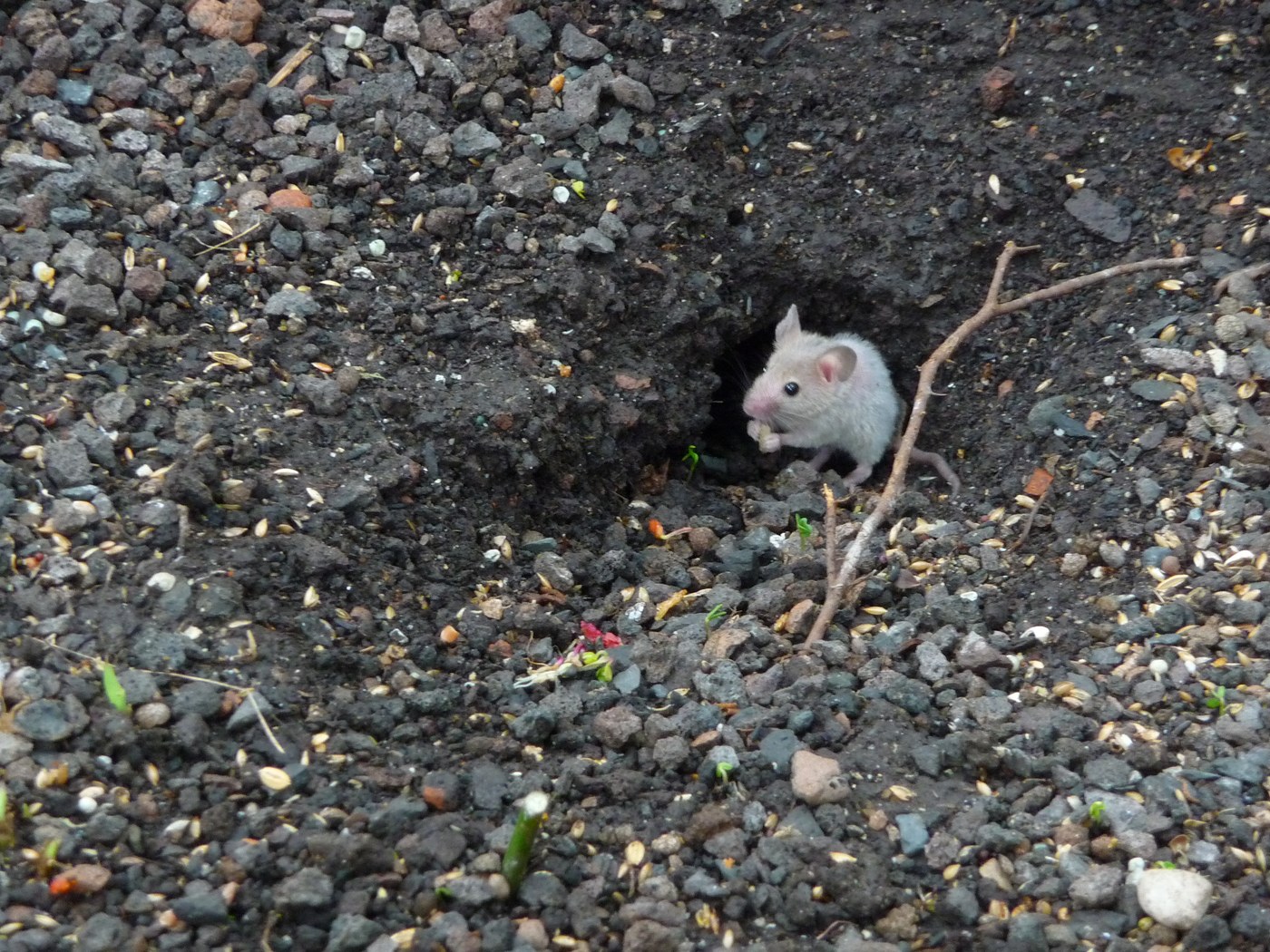
Autumn through late winter. House mice run the opposite calendar to most household pests. They peak when it turns cold, because that is when outdoor populations move indoors.
Autumn through late winter. House mice run the opposite calendar to most household pests. They peak when it turns cold, because that is…
The Mountain West starts earliest, in September, because cold nights arrive sooner at altitude. Southern California runs close to year-round pressure. Alaska's cold-weather pattern is the most extreme version of the same story: house mice there depend on heated structures and port facilities to survive winter at all. Hawaii has no winter to drive a seasonal shift, so pressure stays year round.
Where They're Found
Every region covered here, including Alaska and Hawaii. The house mouse, Mus musculus, is the one that actually lives inside buildings year round, and it is everywhere. It is a different animal from the deer mouse, which carries a more serious disease and does not live in every region the same way.
In Alaska, house mice depend on heated structures, port facilities, and shipping traffic to survive winter, and island populations are targeted by wildlife eradication programs specifically to protect native seabirds. In Hawaii, house mice breed year round outdoors across all major islands, in residential, commercial, and agricultural land alike.
Life Cycle
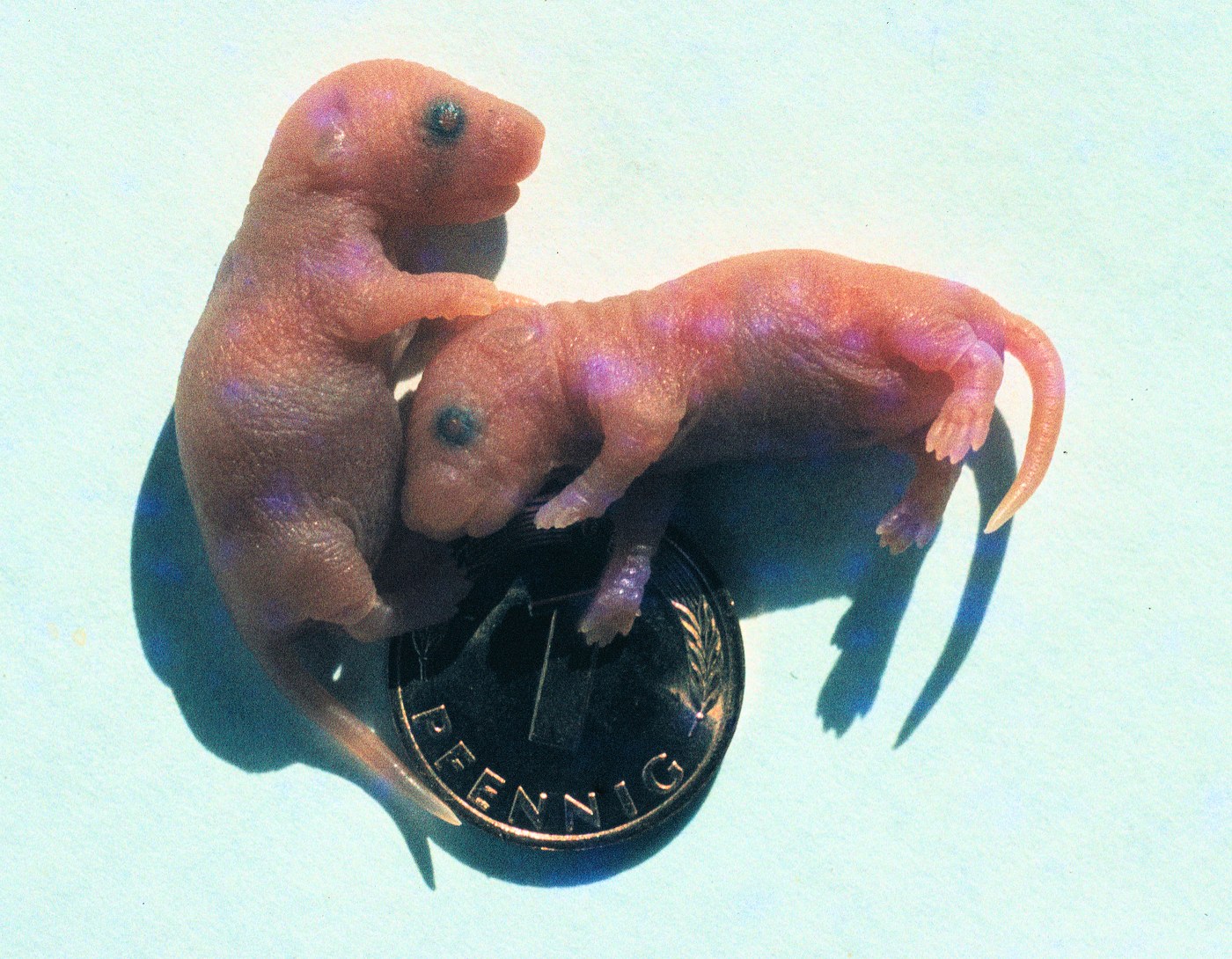
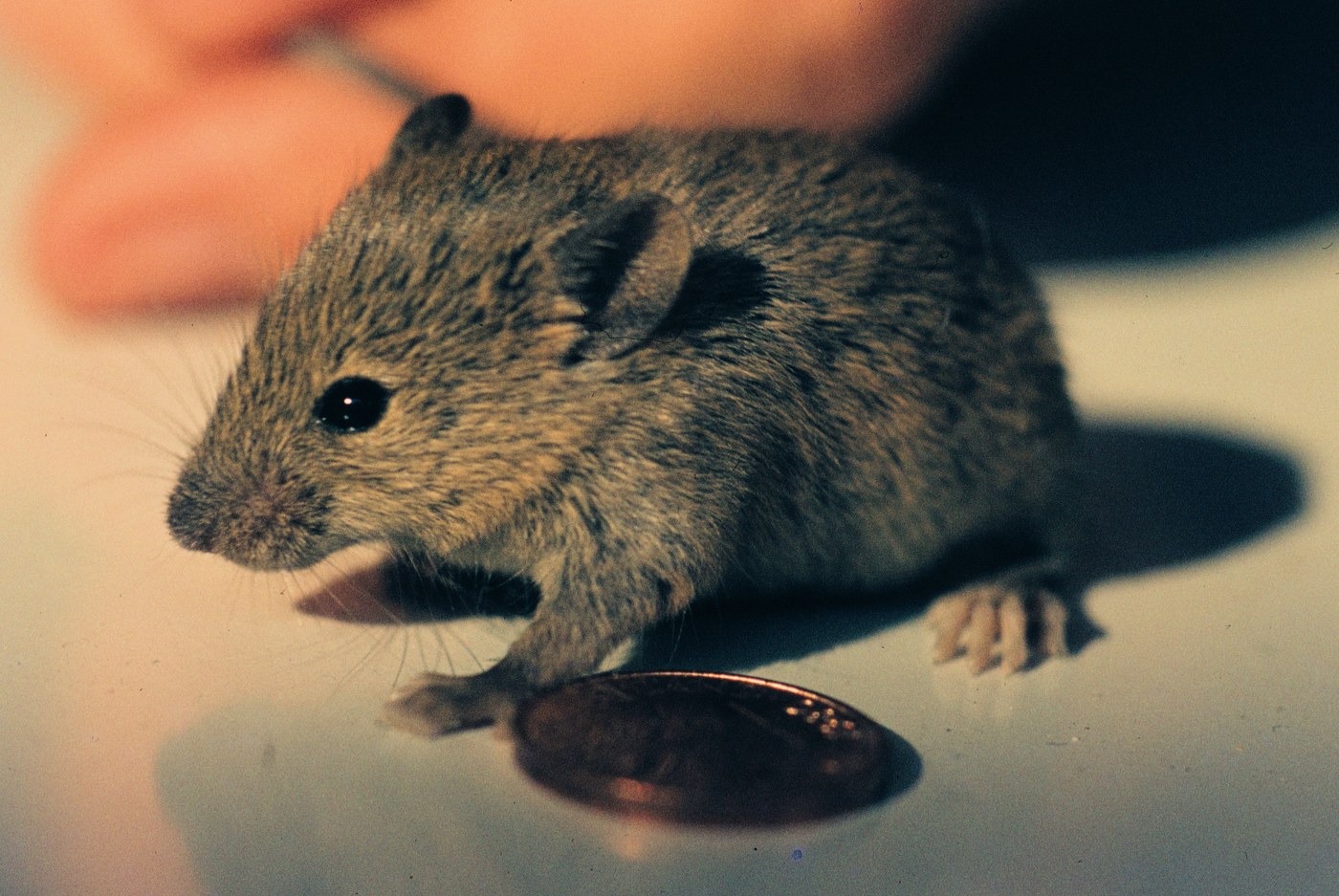
The arithmetic is the argument. Gestation runs 18 to 21 days. Young are breeding at five to six weeks. One female produces five to ten litters a year, of about five or six each, and litters get larger as she ages. Where food and shelter hold steady, house mice breed year round. This is why a single sighting is not a single mouse.
Pup2
Juvenile2
Adult3
Identification
Size, weight, and coat
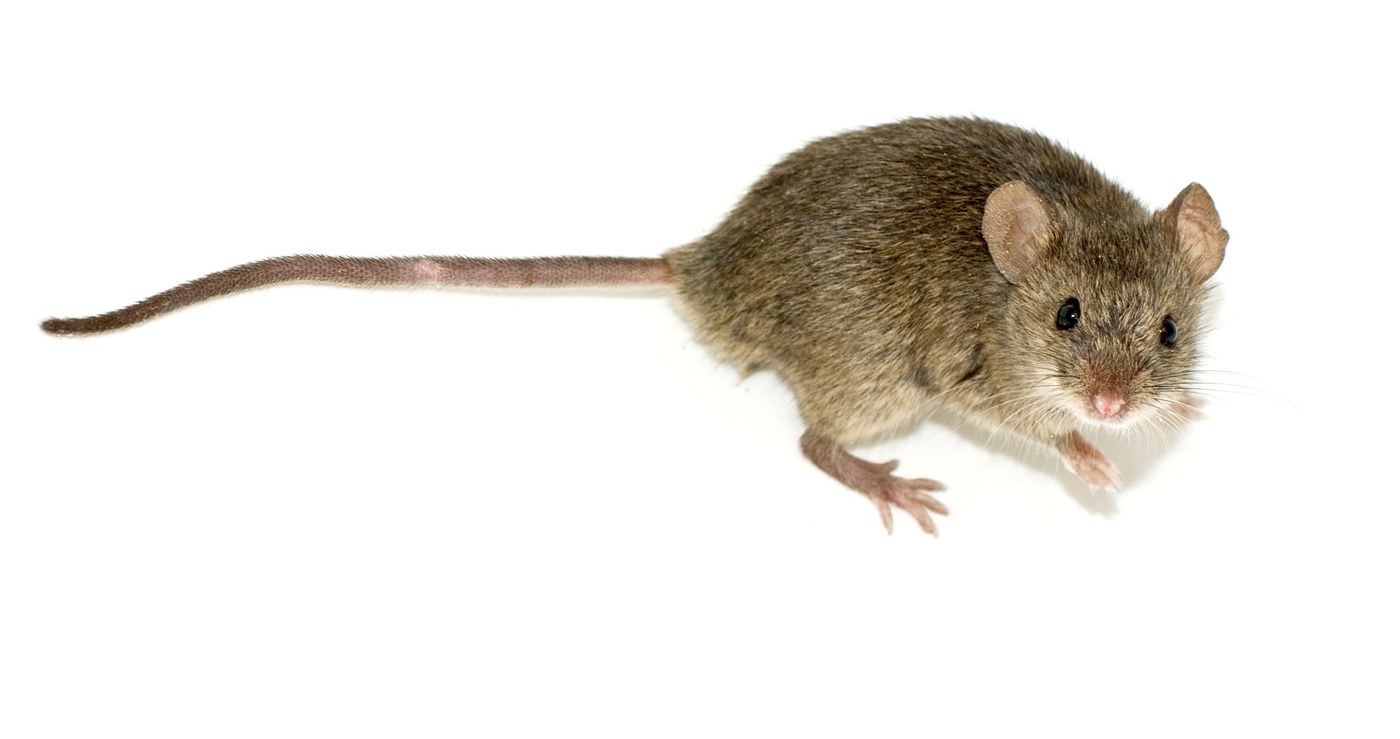
An adult house mouse runs 5 to 7 inches from nose to tail tip, with 3 to 4 inches of that being tail, and weighs about half an ounce. Light brown to gray, with the same shade carrying onto the belly. Large ears, small black eyes, pointed nose.
The comparison that changes the risk
The one comparison that changes the health risk is the deer mouse, a different species covered on its own page. A house mouse is gray all over. A deer mouse has a white underside with a sharp line where the dark back stops, noticeably larger eyes, and a tail that is furred and two-toned rather than nearly bare. Any one of the three is enough to settle it, and the tail is easiest to read on a trapped animal.
Voles and shrews get blamed too
Voles get mistaken for mice too, but have short tails. Shrews have pointed snouts and tiny eyes.
Signs of Infestation
Droppings, gnaw marks, tracks
Droppings, gnaw marks and tracks mark the active areas. Fresh gnaw marks matter more than old ones, since they tell you the problem is current.
Nests of shredded paper
Nests of finely shredded paper or similar fibrous material, tucked behind boxes, inside drawers, in garages, or around woodpiles.
A musky odor
It is characteristic, and it goes with large or long-running infestations rather than a single animal.
Gnawed wiring
Mice chew appliance cords, wires in walls, and gas lines. UC IPM puts it carefully: many fires of unknown origin are believed to be caused by rodents gnawing wires.
Where to look, and it is close
Where to look, and why it is closer than you think. House mice seldom go more than about 30 feet from their nest and food. Droppings in a corner mean the nest is in that room or the next one, not across the house.
Prevention and When to Call a Pro
Exclusion is the only permanent fix
Exclusion is the only permanent answer. UC IPM calls it the most successful and permanent form of house mouse control, and the specification is simple to state and hard to execute: seal every gap larger than a quarter of an inch.
Most materials do not work
Most of the materials people reach for do not work. Plastic screening, rubber, vinyl, expanding foam and wood are all gnawable and all fail. Use metal or concrete. Steel wool pads work as a temporary plug but rust over time. Seal foundation cracks and the openings around pipes, vents and utility cables, and make doors, windows and screens fit tightly, adding metal edging where gnawing is a problem.
Cut the ladder and the door
Cut the ladder as well as the door. Mice climb any rough vertical surface, run along wire and rope, and jump 12 inches onto a flat surface. Thin or remove plants growing against or up the building.
Take away the reasons to stay
Feed pets only what they finish in one sitting, seal food and garbage containers, and reduce clutter. Good housekeeping alone will rarely clear an infestation, but poor housekeeping lets one grow far larger. Note that mice do not need to drink water to survive, so a dry pantry is not the deterrent people assume.
Two things that do not work
Both get sold hard. Ultrasonic and electronic repellers: UC IPM found little evidence that sound, magnetic or vibrational devices drive mice out or keep them away, since the sound is directional, will not reach behind objects, and mice quickly get used to repeated noise. And cats and dogs: some will catch mice, but they rarely control a population, and their presence can push rodents into hiding and make the problem look solved when it is not.
When to Call a Pest Control Professional
Any daytime sighting, a musky odor, or droppings in more than one room. The reason is the arithmetic above, not urgency for its own sake. Cleanup is its own hazard as well, since the exposure route for disease is fresh urine, droppings, saliva and nesting material, which is exactly what gets disturbed during a cleanup. Worth saying plainly: for a genuinely small problem, trapping is effective and is UC IPM's own recommended first step.
Frequently Asked Questions
How small a gap can a mouse get through?
A quarter of an inch. House mice squeeze under gaps 1/4 inch tall and through openings 3/8 inch wide, and they will climb a rough wall to reach one.
Do house mice carry hantavirus?
No. House mice are not the hantavirus carrier. In the United States that disease is spread mainly by the deer mouse, a different species covered on its own page here, which you can tell apart by its white belly with a sharp dividing line, larger eyes, and a furred two-tone tail. House mice carry a different virus, LCM, along with leptospirosis and salmonella. The CDC reports that around 5 percent of house mice in the U.S. carry LCM, and that it is genuinely dangerous during pregnancy and for people with weakened immune systems.
I have only seen one mouse. How many are there?
More than one, and the number compounds quickly. Gestation is 18 to 21 days, young are breeding at five to six weeks, and one female can produce five to ten litters a year of about five or six each.
Do ultrasonic repellers work?
No. UC IPM found little evidence that sound, magnetic or vibrational devices drive mice from a building or prevent them entering. The sound is directional, it does not travel behind objects, it fades fast with distance, and mice get used to repeated noise.
Why am I seeing mice during the day?
House mice are mainly nocturnal but they are active whenever food is available. Daytime sightings usually mean the population has grown enough to push activity into daylight hours.
Sources
- Pest Notes: House Mouse UC Statewide IPM Program, UC ANR Publication 7483
- About Lymphocytic Choriomeningitis Centers for Disease Control and Prevention
- Hantavirus and Disease Prevention University of Arizona Cooperative Extension, Publication AZ2158
- About Hantavirus Centers for Disease Control and Prevention
Image Credits
- Image: 3268zauber, via Wikimedia Commons. Licensed CC BY-SA 3.0; this resized copy is offered under the same license.
License. - Image: Gerbil, via Wikimedia Commons. Licensed CC BY-SA 4.0; this resized copy is offered under the same license.
License. - Image: George Shuklin, via Wikimedia Commons. Licensed CC BY-SA 1.0; this resized copy is offered under the same license.
License.