Seasonal Timeline
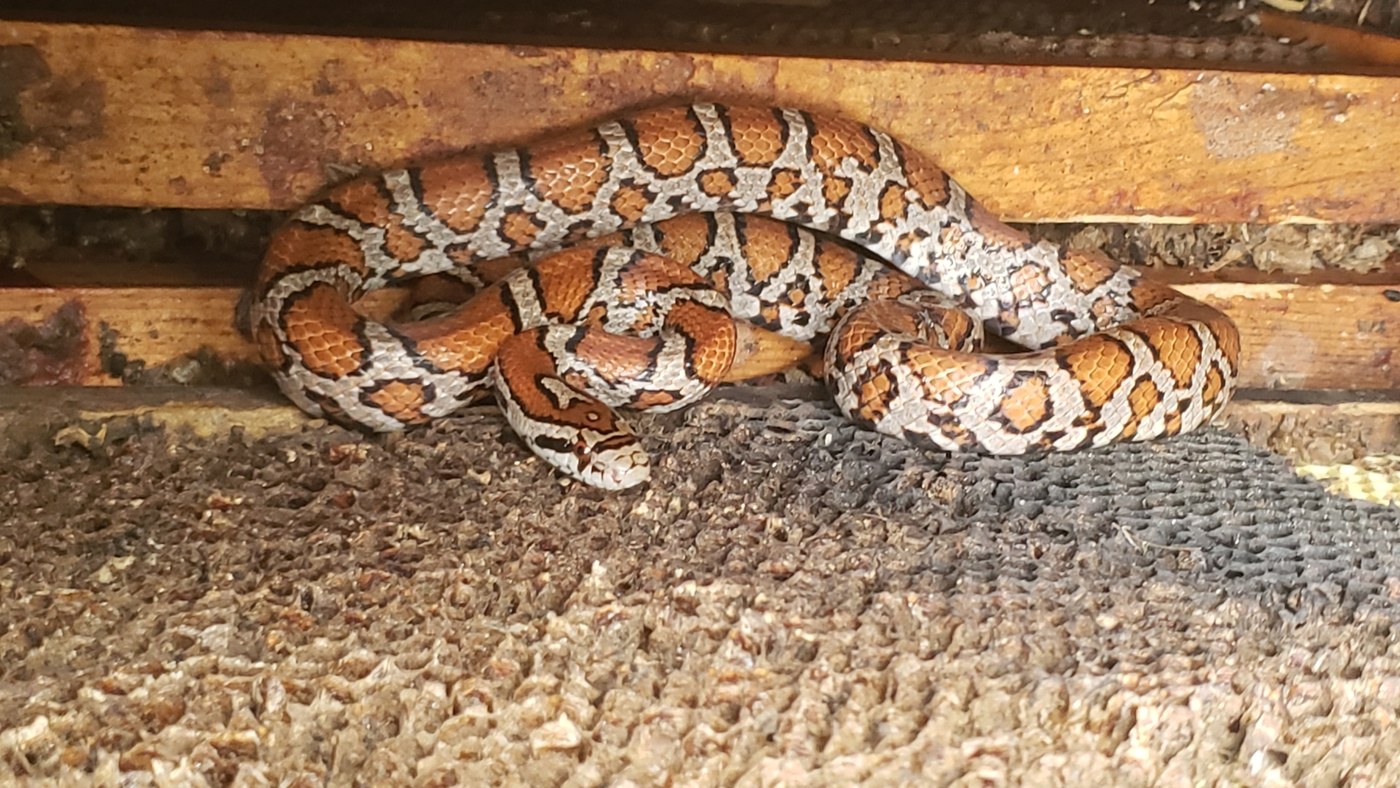
Eastern milksnake is active from April through October across both regions, spending the colder months underground. It is secretive and seldom seen in the open even where locally common, so most sightings happen when a cover object like a board, sheet of metal, or rock pile gets moved.
Eastern milksnake is active from April through October across both regions, spending the colder months underground. It is secretive and…
Mating happens in spring, April to May, with a possible second mating window in autumn documented in some sources. Eggs are laid in early summer and hatch mid-August to early September, which puts newly hatched, brightly colored young in leaf litter and under debris during the same late-summer weeks that homeowners are still working outside. That overlap, an already camouflage-pattern snake plus a small, unfamiliar hatchling coloration, is part of why late summer sees a real uptick in this species being reported as something more dangerous than it is.
Where They're Found
Eastern milksnake is an outdoor species that occasionally turns up in a barn, shed, garage, or basement while hunting rodents, but it is not a structural invader the way a rodent or insect pest is. It favors rocky, sun-facing hillsides and glades, old fields and pastures, oak savannas, and the edges of woodlots and prairies, sheltering under embedded rocks, logs, boards, sheet metal, and other surface debris rather than basking in the open. Around a property, that means woodpiles, rock piles, abandoned farm equipment, stone foundations on older barns and outbuildings, and vacant lots at the edge of town.
In the Northeast, the species occurs throughout the region except in the uppermost reaches of Vermont, New Hampshire, and Maine. In the Midwest, it is documented statewide in Missouri, Illinois, Indiana, Wisconsin, and Ohio, among other states, though it is secretive enough that it is genuinely uncommon to see one even where the population is healthy. Central and southern Illinois sit in an intergrade zone with a different, redder subspecies further south, a taxonomic detail rather than a reason to expect a different snake at the property line.
No source found placing eastern milksnake, or any milksnake taxon, in Alaska or Hawaii. Both are confirmed absent for this species.
Life Cycle
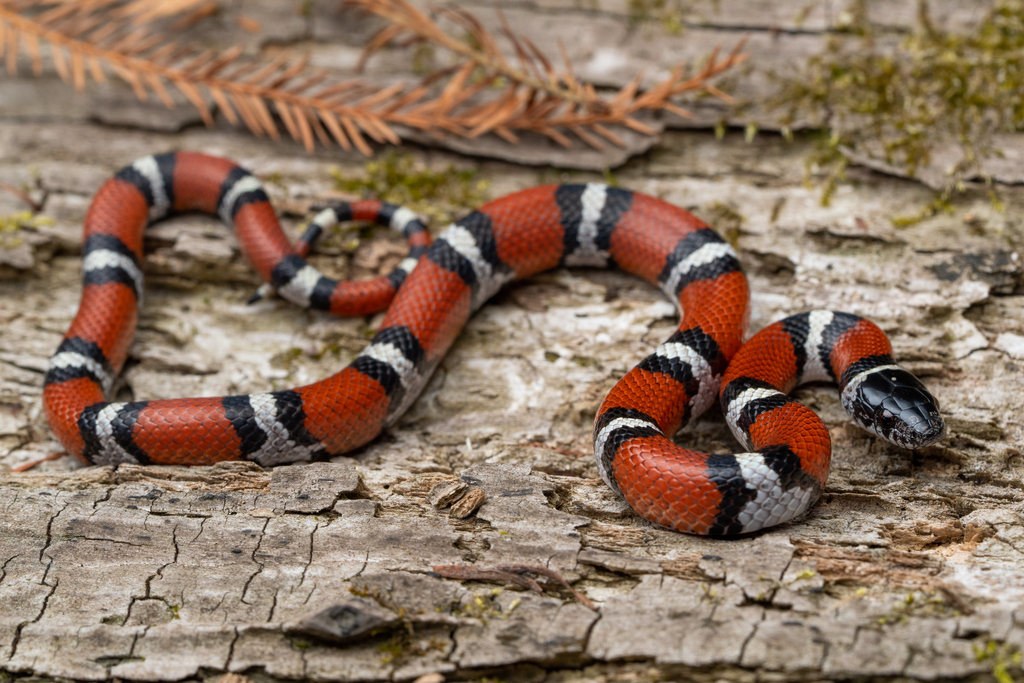
The reproductive calendar explains the late-summer sighting bump. Eggs hatch mid-August to early September, which puts small, brightly colored, unfamiliar-looking young snakes in leaf litter and under debris during the same weeks homeowners are still active outdoors. A hatchling's vivid red-orange coloring reads as more alarming to an untrained eye than the muted adult pattern does, even though the hatchling is exactly as harmless as the adult it will become.

Egg
Hatchling2
Juvenile
Adult
Identification
The belly and the neck marking
They are the two field marks that matter. Ground color is gray, tan, or light brown, crossed by 3 rows of reddish-brown to brown blotches outlined in black, with the back blotches larger than the side blotches. A pale Y-shaped or V-shaped marking often sits at the back of the head and neck, though it is not present on every individual. The belly is white to pale, boldly marked with black squares or rectangles in a checkerboard pattern, the single most reliable field mark for ruling out copperhead.
Scales, pupils, and build
All three separate this species from the venomous look-alikes it gets mistaken for. Dorsal scales are smooth, not keeled, the anal plate is undivided, and pupils are round rather than the vertical, elliptical pupils a pit viper carries. There is no heat-sensing pit between the eye and nostril, and no fangs, only small teeth that at most lightly scratch skin in a defensive bite.
Juveniles run brighter than adults
Hatchlings and young snakes show vivid red-orange blotches that gradually darken and mute toward the adult's gray-brown-and-black pattern with age, which means the same snake can look meaningfully different at 8 inches than it does at 3 feet.
The copperhead confusion
Commonly confused with copperhead, and this is the misidentification that matters most in this species' actual range. When an eastern milksnake's blotches run darker and more coppery-tan, it reads as copperhead to an untrained eye. The reliable distinctions are the checkerboard belly (vs. copperhead's plain or lightly mottled belly), round pupils (vs. copperhead's vertical pupils), and no heat-sensing pit (copperhead has one between the eye and nostril).
A coral snake mimic, out of range
The species is also a documented coral snake mimic at the family level, worth knowing even though it does not apply where this snake lives. The broader milksnake species complex is a genuine, well-studied case of Batesian mimicry of venomous coral snakes, distinguished from a true coral snake by red bands bordered in black rather than yellow. No coral snake species is established in the Midwest or Northeast, so this is a real biological fact about the species, not a regional identification risk in either region. The practical, region-relevant lookalike here remains copperhead.
The Mountain West one is separate
The milk snake of the Mountain West is no longer counted as the same species, and it does not look like this one. A 2014 genetic study split the old Lampropeltis triangulum into seven species. The eastern milksnake kept that name; the Colorado, Wyoming and Montana populations moved to Lampropeltis gentilis, the western milksnake, which is a fully ringed red, black and whitish snake rather than a blotched one and carries a banded or plain whitish belly instead of this species' checkerboard. The split is accepted by the current standard names list and still argued in the journals.
Defensive behavior adds confusion
Defensive behavior adds to the confusion rather than resolving it. When threatened, this species will hiss, strike, release musk, and rapidly vibrate its tail against dry leaves or debris, a sound that mimics a rattlesnake's warning buzz even though the eastern milksnake has no rattle at all. A buzzing sound in leaf litter is not proof of a dangerous snake; it is one of this species' own bluffing displays.
Signs of Infestation
No structural damage
This species leaves no structural damage, the same as any harmless constrictor. Eastern milksnake does not chew, burrow, or gnaw, and there is no droppings pattern, entry hole, or odor a homeowner can work from after the fact. The sign is the snake itself, seen or not seen, or a shed skin left behind.
Where you actually find one
Under a board, sheet of metal, rock, log, or other surface debris, rather than out in the open. Rock piles, woodpiles, abandoned farm equipment, and the stone foundations of older barns and outbuildings are the most common spots. Shed skins may turn up in the same debris piles or rodent-active areas.
The audible sign is a bluff, not a threat
A rapid tail-vibration against dry leaves or debris is this species' own defensive display, mimicking a rattlesnake's buzz. Eastern milksnake has no rattle, so a buzzing sound in the leaves is evidence of a startled milksnake, not a rattlesnake or any other genuinely dangerous species.
It usually means rodents
A milksnake around a structure usually means rodents are already there. Because rodents are this species' primary prey, its presence near a barn, shed, or foundation is frequently a byproduct of an existing mouse or vole population rather than an unrelated nuisance. If milksnakes keep turning up, it is worth checking what they are hunting.
Prevention and When to Call a Pro
Identification is the real step
Correct identification is the actual prevention step here, not exclusion. Because this species causes no structural damage and carries no venom, the goal is preventing an unnecessary kill, not preventing an infestation. Check any dark-blotched snake against the checkerboard belly pattern and round pupils described above before assuming copperhead.
Address the rodents
Address the rodent population and the snake's reason for being there goes with it. Eastern milksnakes are drawn to a property specifically by rodent prey, so reducing harborage and food sources for mice and voles is the long-term way to see fewer snakes around a barn, shed, or foundation.
Remove ground-level cover
Do it if fewer sightings around a structure is the goal. Boards, sheet metal, rock piles, and log piles left on the ground are exactly the microhabitat this species prefers. Clearing them from immediately around a foundation reduces shelter without needing to trap or relocate the snake.
Do not trap, move or kill it
Do not trap, relocate, or kill the snake. No state-specific legal restriction is recorded for this species, but the guidance stands on its own merits regardless: eastern milksnake is a genuinely beneficial predator of rodents and of the young of venomous species, it is not dangerous, and unnecessary killing by frightened homeowners is itself documented as a real threat to the species, alongside habitat loss and road mortality.
When to Call a Pest Control Professional
The threshold here is identification confidence, not danger. If you cannot confidently rule out copperhead using the belly-pattern, pupil, and heat-pit distinctions above, that uncertainty, not a real emergency, is the reason to call a licensed pest control or wildlife control professional to identify the snake rather than attempting to handle or kill it yourself. A confirmed identification protects you if the snake turns out to be venomous, and protects the snake if it is, as is statistically likely, a harmless milksnake.
Frequently Asked Questions
Do milk snakes really drink milk from cows?
No. The name comes from a myth: early settlers who found these snakes in and around barns and milk sheds assumed they were stealing milk from cows, but the snakes were actually hunting the mice and rats that the stored milk and grain attracted. They were never after the milk itself.
How do I tell a milk snake from a copperhead?
Check the belly and the pupils. Milk snakes have a black-and-white checkerboard belly and round pupils. Copperheads have a plain or lightly mottled belly and vertical, elliptical pupils, plus a heat-sensing pit between the eye and nostril that milk snakes lack entirely.
Is a milk snake dangerous to my kids or pets?
No. It is entirely non-venomous, has no fangs, and even a defensive bite typically does no more than lightly scratch skin. Its most alarming behaviors, hissing and rapid tail-buzzing against leaf litter, are bluffing displays meant to look like a rattlesnake, not a real threat.
Why does this harmless snake vibrate its tail like a rattlesnake?
It is a defensive mimicry behavior. Vibrating the tail against dry leaves or debris produces a buzzing sound that can fool a predator, or a startled person, into thinking a genuinely dangerous snake is nearby, even though the milk snake has no rattle and no venom.
Should I kill a milk snake I find near my barn or house?
No. It is a documented, beneficial predator of the mice and rats that are the actual reason it showed up, and unnecessary killing by frightened homeowners is itself named as a real conservation threat to this species, alongside habitat loss and road mortality.
Sources
- Eastern Milk Snake species profile U.S. Fish & Wildlife Service
- Eastern Milksnake field guide entry (size, habitat, diet, reproduction, defensive behavior, the milk-drinking myth) Missouri Department of Conservation
- Eastern Milksnake species page (physical ID, habitat, diet, Wisconsin range) Wisconsin Department of Natural Resources
- Eastern Milksnake species account (size, ID, diet, reproduction, Illinois range and subspecies intergrade zone) Illinois Natural History Survey Herpetology Collection
- Assessment and Status Report on the Eastern Milksnake (lifespan, reproductive vulnerability, threats from habitat loss, road mortality and persecution) Committee on the Status of Endangered Wildlife in Canada (COSEWIC), Government of Canada
- Eastern Milksnake range note for Vermont and the Northeast Vermont Reptile and Amphibian Atlas
- Eastern Milksnake species page (Indiana range and habitat) Indiana Herp Atlas
- Lampropeltis triangulum taxon page quoting the SSAR Standard English Names 9th Edition commentary: the 2014 Ruane et al. split of the milksnake into seven species, and the continuing dispute over whether Lampropeltis gentilis is distinct from Lampropeltis triangulum Center for North American Herpetology
- Lampropeltis gentilis (TSN 1082855): valid species status for the western milksnake, and the synonymy folding the gentilis, multistriata, taylori, celaenops and amaura subspecies names into it Integrated Taxonomic Information System, U.S. Geological Survey
Image Credits
- Image: Christina Moresi via iNaturalist. CC BY 4.0.
License. - Image: evangrimes via iNaturalist. CC BY 4.0.