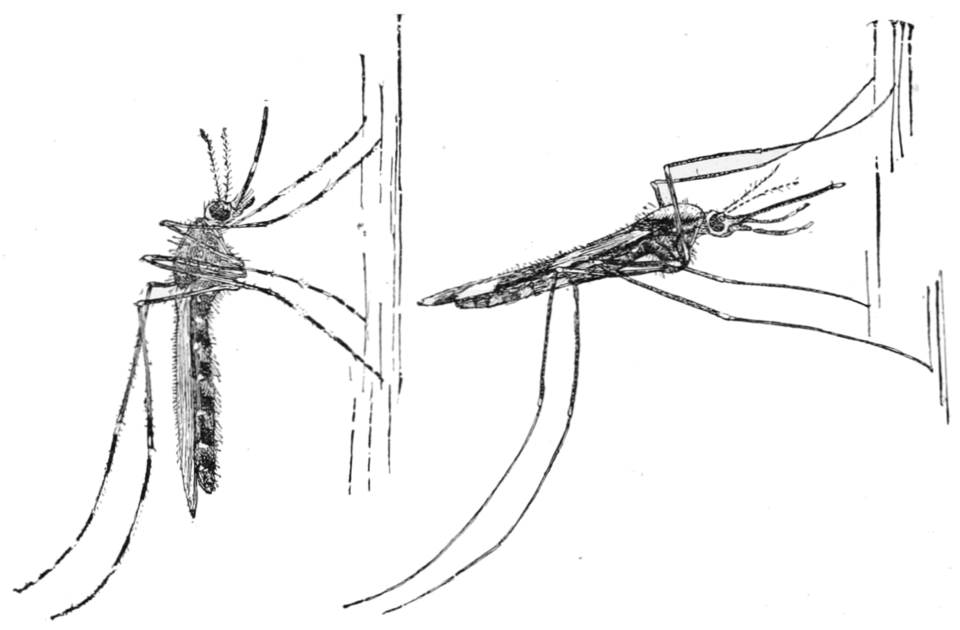
Seasonal Timeline
Dusk-through-night biters, most active in the evening, the opposite pattern from day-biting Aedes. Activity builds as temperatures warm through spring, peaks in mid to late summer, and tapers off with the first hard cold.
Dusk-through-night biters, most active in the evening, the opposite pattern from day-biting Aedes. Activity builds as temperatures warm…
West Nile virus risk peaks a bit later than mosquito activity itself, typically late August into early September, per the CDC's own surveillance data.
Where They're Found
West Nile virus has been reported in every state in the contiguous US, and Culex mosquitoes are present nationwide, including Alaska and Hawaii, though which named species is doing the biting, and what public health impact it has, changes by region. Culex pipiens, the Northern house mosquito, dominates the northern states. Culex quinquefasciatus, the Southern house mosquito, dominates the South and was introduced to Hawaii, where it is now the principal vector of avian malaria threatening native forest birds. Culex tarsalis is the western species, most important in irrigated agricultural areas, and it overlaps with the other two where their ranges meet. In Alaska, the genus is represented mainly by Culex territans, which feeds on amphibians rather than humans and carries minimal arboviral risk due to the cold climate. This is a presence question everywhere, but a which-species question by region.
Life Cycle
The life cycle mechanics follow standard mosquito development, moving from egg to flying adult in approximately 7 to 10 days during warm summer conditions, per CDC surveillance benchmarks. What is genus-specific is the water: Culex eggs and larvae tolerate, and often prefer, stagnant water that is murky or organically enriched, not the clean containers Aedes favors.
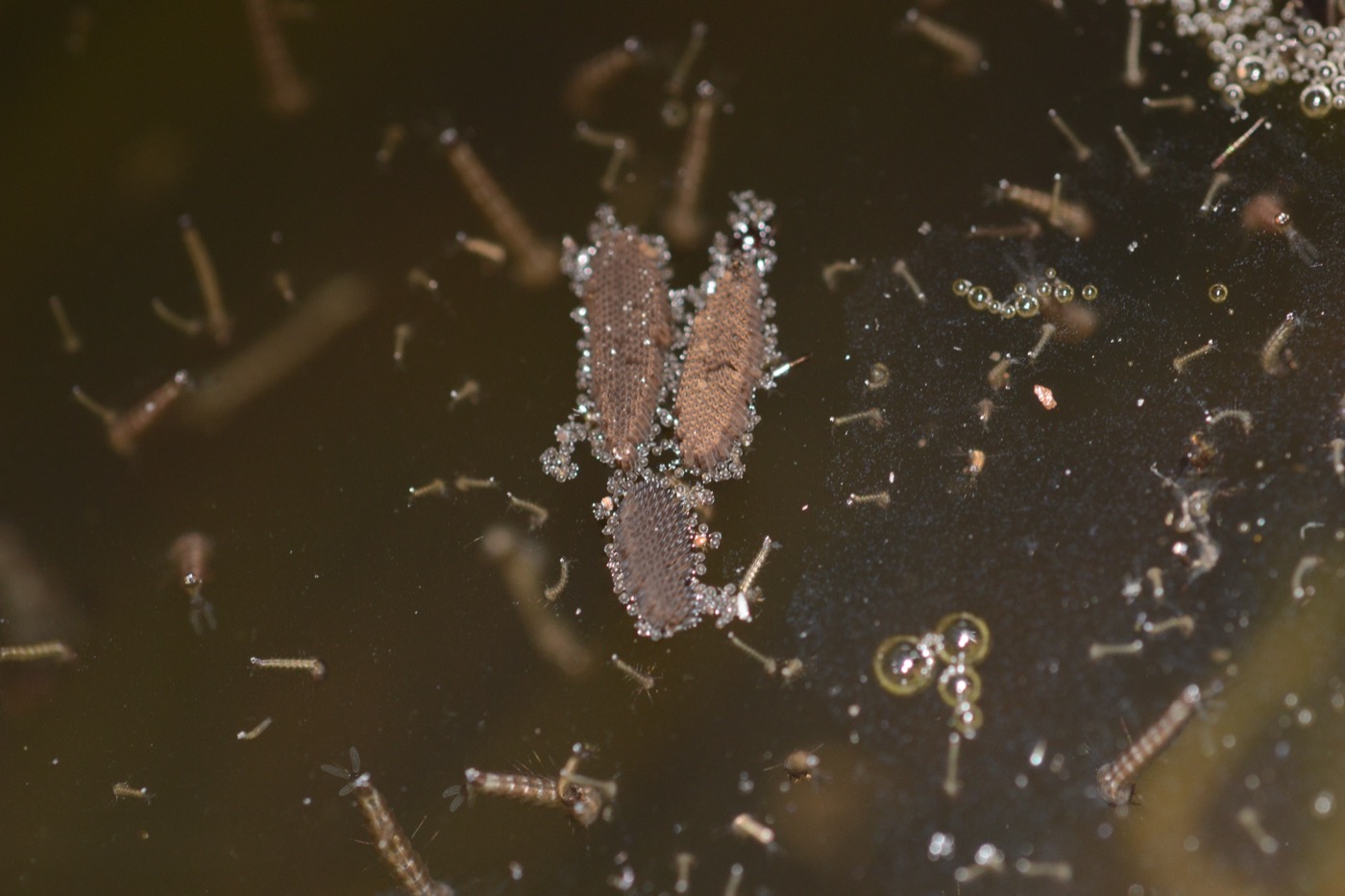
Egg2
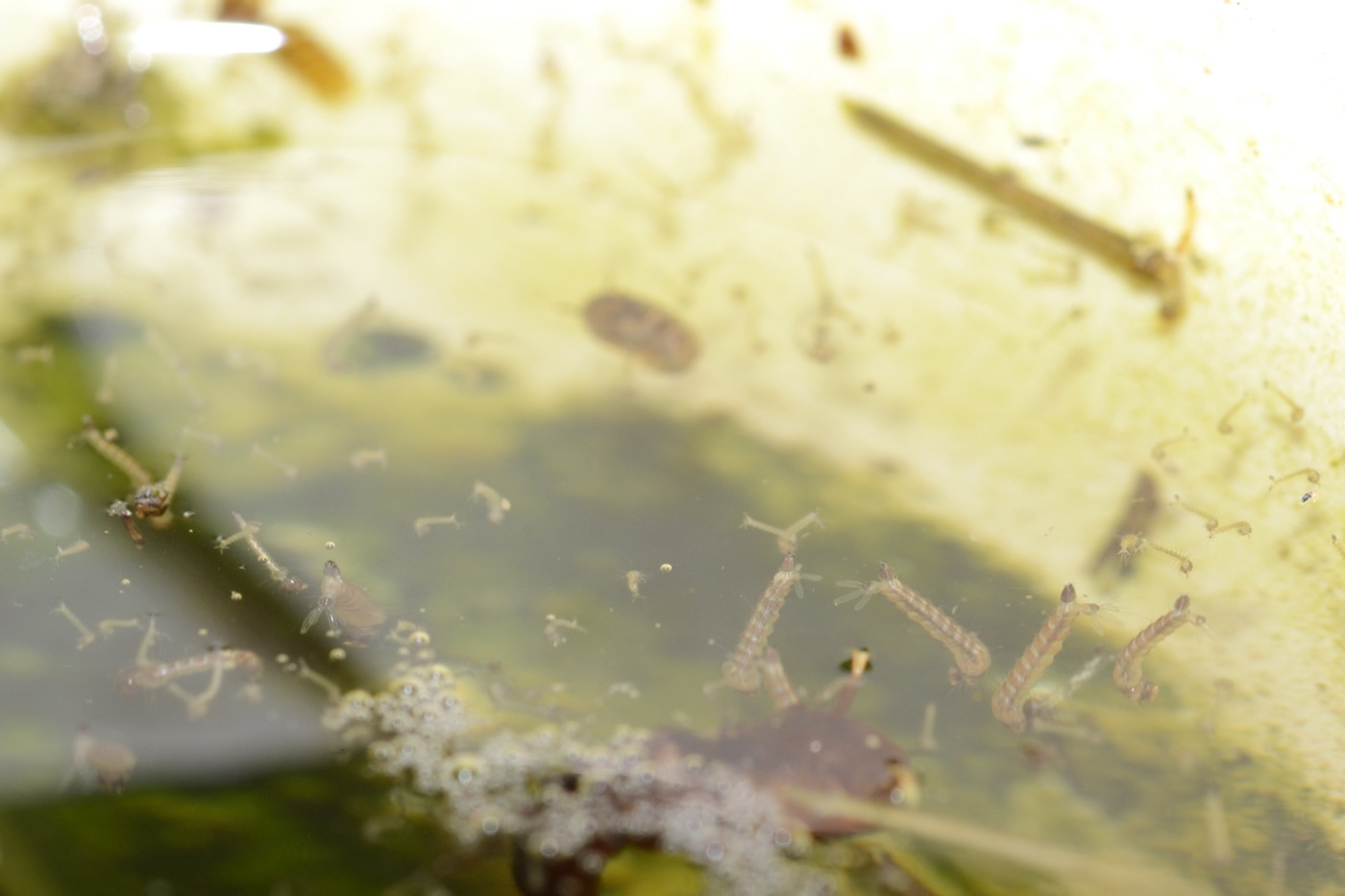
Larva2

Pupa
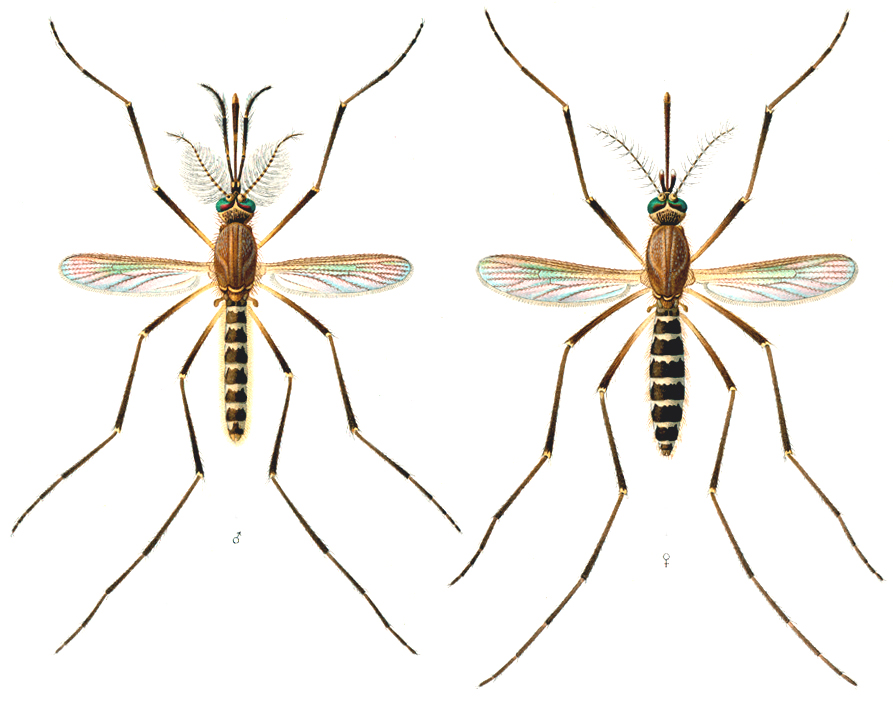
Adult3
Identification
Three named species matter
All three are in the US. The first two are so visually similar to each other that telling them apart reliably comes down to where and when you found one, not what it looks like.
No reliable adult field mark
There is no reliable adult field mark that separates Culex from Aedes across the board. The folk rule that plain brown means Culex and bold black-and-white banding means Aedes breaks down with Culex tarsalis, which carries its own white leg banding. Treat that rule as unverified rather than repeating it as fact.
The larvae do not split it either
In the water, Culex and Aedes larvae share the same rear breathing tube, or siphon, so the larval stage does not separate the two genera either. What does separate them is the water they are found in: murky, stagnant, organically enriched water points toward Culex, while a clean container points toward Aedes.
They do rule out Anopheles
Culex larvae do rule out Anopheles, which has no siphon at all and lies flat under the surface film instead of hanging from a tube.
Signs of Infestation
Murkier water than you would expect
Look at murkier, dirtier water than you would for a container-breeding species. Catch basins, storm drains, clogged gutters, ditches, and neglected pools with visible organic buildup are the sources this genus actually favors, not clean rainwater in a bottle cap.
When they bite
Bites happen at dusk and into the night, the opposite pattern from day-biting Aedes. If you are getting bitten after dark, this genus is the more likely culprit.
Catch basins and storm drains
They are a real, major source. That is worth knowing before assuming a backyard-only inspection will solve a Culex problem.
In irrigated western farmland
In irrigated agricultural areas of the West, Culex tarsalis breeds in a genuinely different picture again: irrigation ditches, tailwater, and poorly drained pasture water rather than anything near a house.
Prevention and When to Call a Pro
Target the murky water
The clean containers are not the whole job. Weekly draining of bird baths and pet dishes still matters, but this genus's real breeding pressure comes from stagnant, nutrient-rich sources: clogged gutters, ditches, neglected pools with algae or debris, and catch basins.
Storm drains are public property
Catch basins and storm drains are public infrastructure, and that is the honest limit of what a homeowner can do alone. Many mosquito control districts routinely treat these as a matter of course, because a private property owner has no legal access to fix the water sitting in a roadside drain all summer.
In irrigated western regions
Source reduction looks different again: managing irrigation runoff and avoiding poorly drained pasture water matters more than a backyard container audit.
The rest is on the overview page
Bti, repellents, screens and what does not work are covered on the Mosquitoes overview page and apply here without change. The one added wrinkle: because a meaningful share of this genus's breeding water is not on your property at all, calling your county mosquito and vector control district is close to unavoidable for a Culex problem, more than merely recommended.
Frequently Asked Questions
What is the difference between the different types of Culex mosquitoes?
In the US, three species matter: Culex pipiens (Northern house mosquito, dominant in the North), Culex quinquefasciatus (Southern house mosquito, dominant in the South), and Culex tarsalis (dominant in the West, especially irrigated agricultural areas). They look nearly identical and are told apart mainly by where and when you find them.
Why do Culex mosquitoes carry West Nile virus if they mostly bite birds?
West Nile virus is maintained in a cycle between birds and Culex mosquitoes. People get infected only when an infected Culex mosquito shifts from biting a bird to biting a person, which is exactly the host-switching behavior documented in these species.
Will emptying my bird bath get rid of Culex mosquitoes?
It helps, but Culex breeds heavily in murkier, nutrient-rich water: catch basins, storm drains, clogged gutters, neglected pools. A birdbath-only routine misses the bigger sources, and some of those, like storm drains, are not even on your property.
Can I tell a Culex mosquito from an Aedes mosquito just by looking at it?
Not reliably. No solid source confirms a universal adult field mark, and Culex tarsalis actually has white leg banding similar to the pattern people are told means Aedes.
Are Culex mosquitoes active during the day?
No, they are dusk-through-night biters, most active in the evening, the opposite pattern from day-biting Aedes mosquitoes.
Photo Gallery
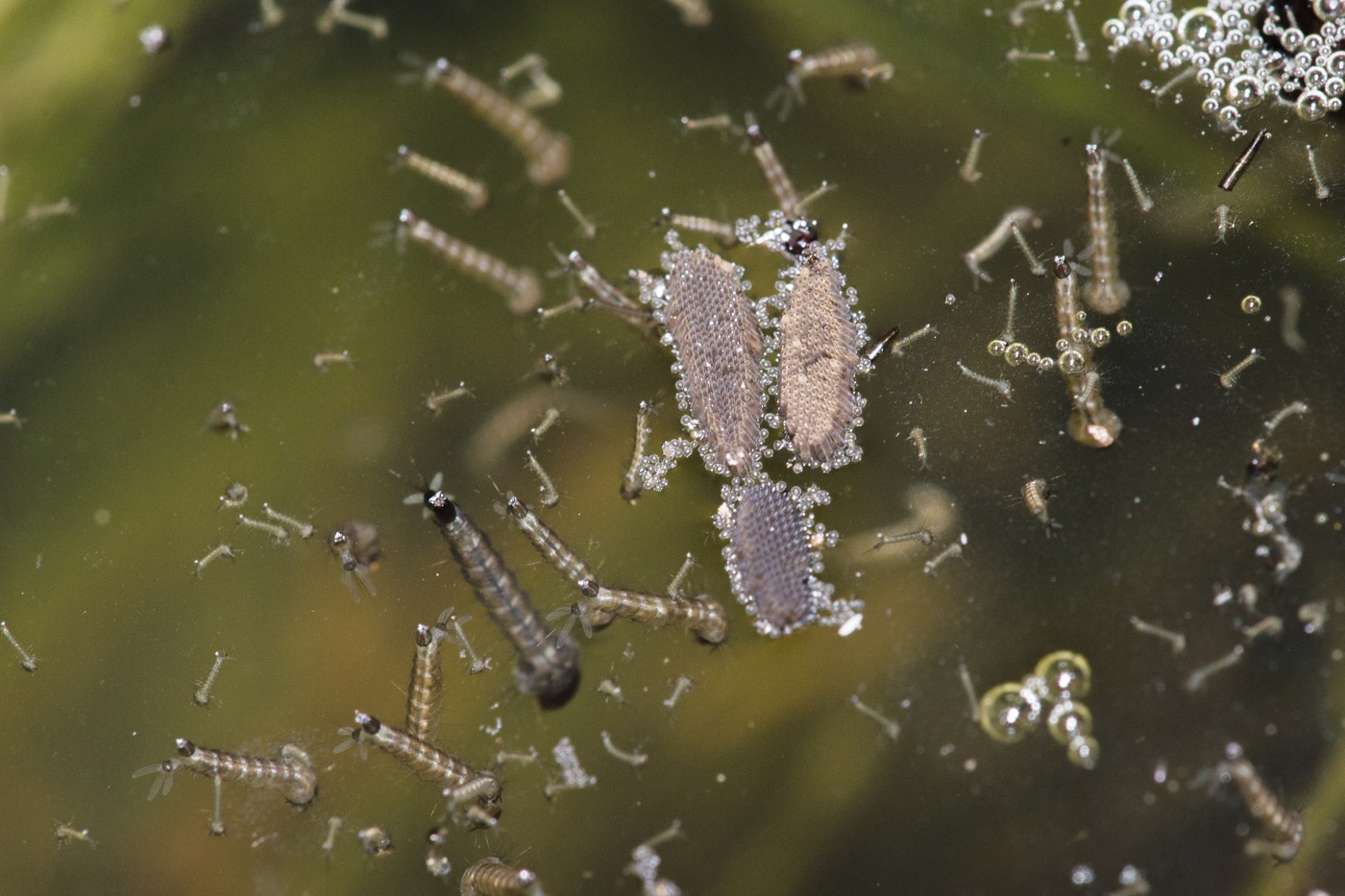
Several Culex egg rafts afloat in stagnant water, already surrounded by newly hatched larvae.
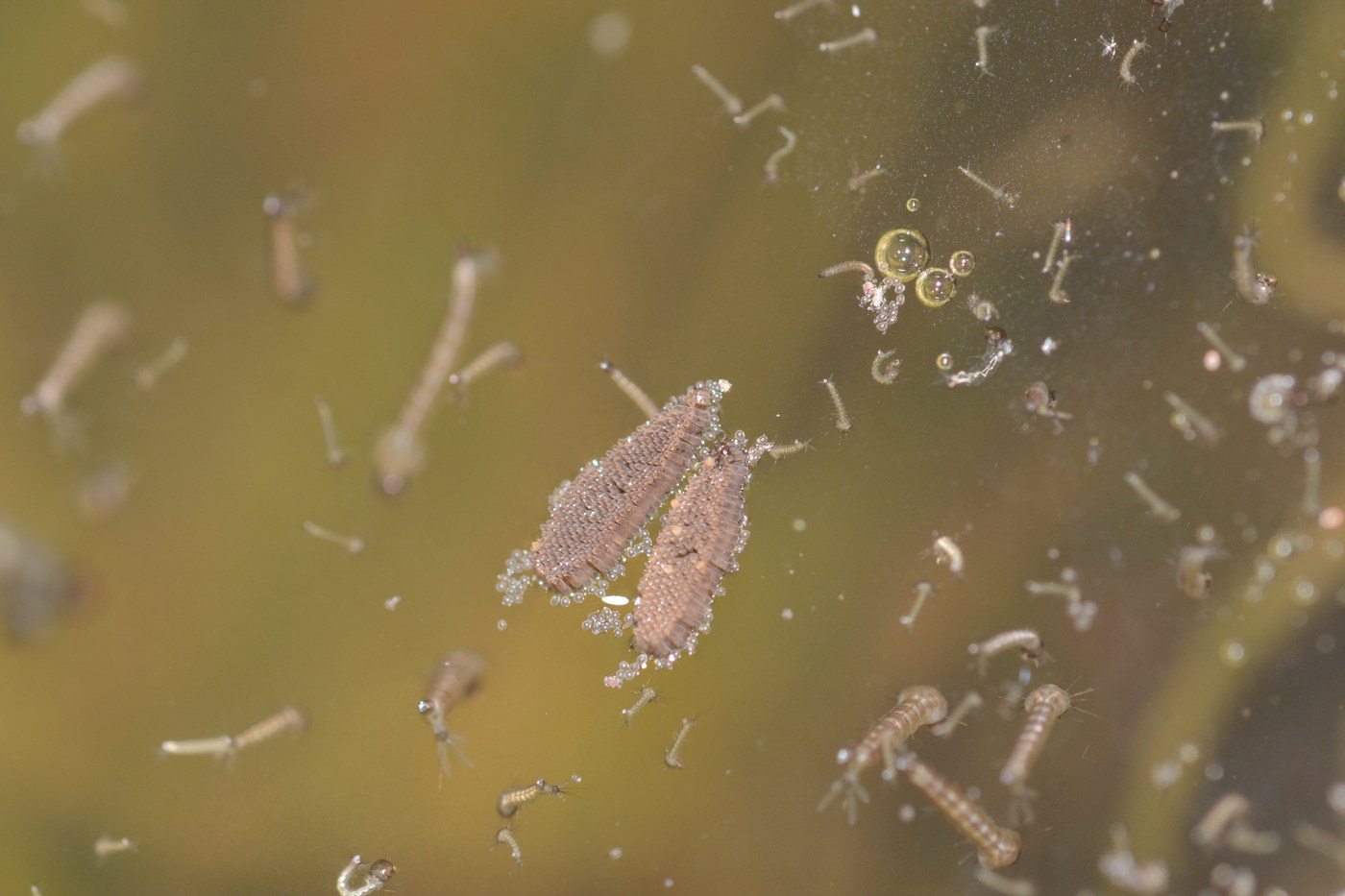
A tighter view of the same egg rafts, showing the hundreds of individual eggs packed edge to edge.
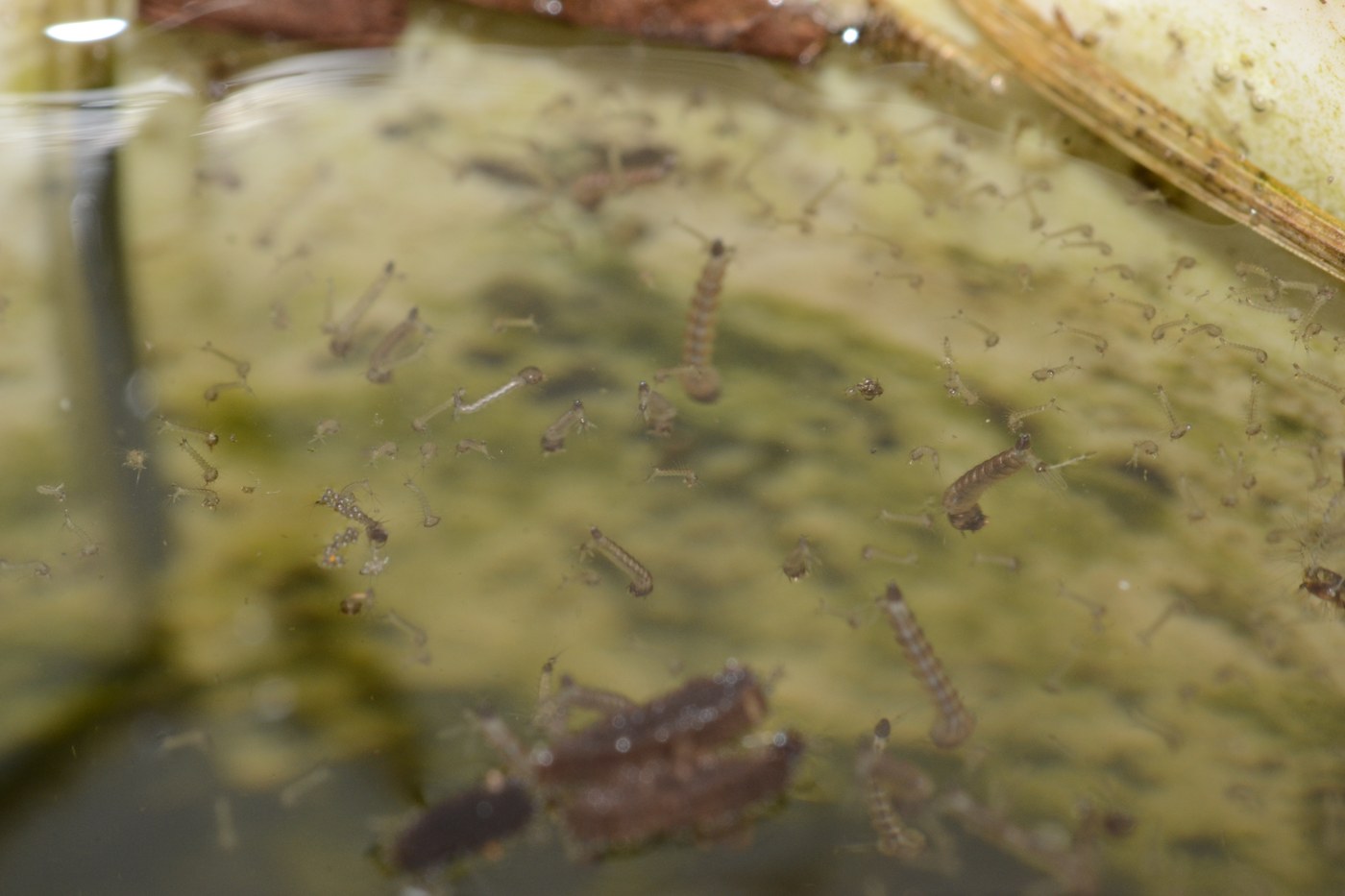
Culex larvae hanging at the surface of stagnant water, siphons visible as they breathe air from above.
Sources
- Northern House Mosquito The Ohio State University, Ohioline Extension, Fact Sheet ENT-89
- Southern House Mosquito, Culex quinquefasciatus Say University of Florida IFAS/EDIS, EENY457/IN837
- Culex tarsalis Coquillett Rutgers University Center for Vector Biology
- Culex pipiens Linnaeus Rutgers University Center for Vector Biology
- Guidelines for West Nile Virus Surveillance and Control Centers for Disease Control and Prevention
- About West Nile Centers for Disease Control and Prevention
Image Credits
- Image: after Howard, USDA, Popular Science Monthly volume 76 (1910), via Wikimedia Commons. Public domain.
- Image: NPMA. Used under NPMA member image license.
- Image: Emil August Goeldi (1905), via Wikimedia Commons. Public domain.