Seasonal Timeline
Bites primarily during the day, most active in the early morning and late afternoon, unlike the dusk-and-night pattern of other mosquitoes. In warm subtropical and tropical zones, both species breed continuously all year. In temperate northern regions, shortened autumn day length triggers egg diapause, which keeps active adult flight to roughly May through October.
Bites primarily during the day, most active in the early morning and late afternoon, unlike the dusk-and-night pattern of other mosquitoes.…
Egg diapause kicks in once autumn day length drops below about 13.5 hours of light, which is what sets the May-to-October window in the temperate regions above. Where winters never bring that kind of photoperiod drop, such as South Florida, the Gulf Coast and Southern California, both species keep breeding straight through winter.
Where They're Found
Aedes albopictus, the Asian tiger mosquito, is the one most homeowners will actually meet: it is established broadly across more than a thousand US counties, reaching through the Southeast, South Central, Midwest, Northeast and California, with isolated introductions near tire recycling facilities in the Mountain West and Pacific Northwest. Aedes aegypti, the yellow fever mosquito, is concentrated across the southern tier, with persistent populations in Florida, the Gulf Coast, Texas, urban Arizona, New Mexico, Nevada and Southern California, and it is the more efficient disease vector of the two because it prefers biting people over other animals.
Hawaii and Alaska sit outside the mainland regions shown on the map below, so they are called out here instead. Both species are established in Hawaii: Aedes albopictus is present across all the major islands, and Aedes aegypti persists in warm, dry leeward pockets of the Island of Hawaii. Neither species is established in Alaska. Subarctic winters prevent both from overwintering there, so the state carries no local risk of Aedes-driven disease transmission.
Life Cycle
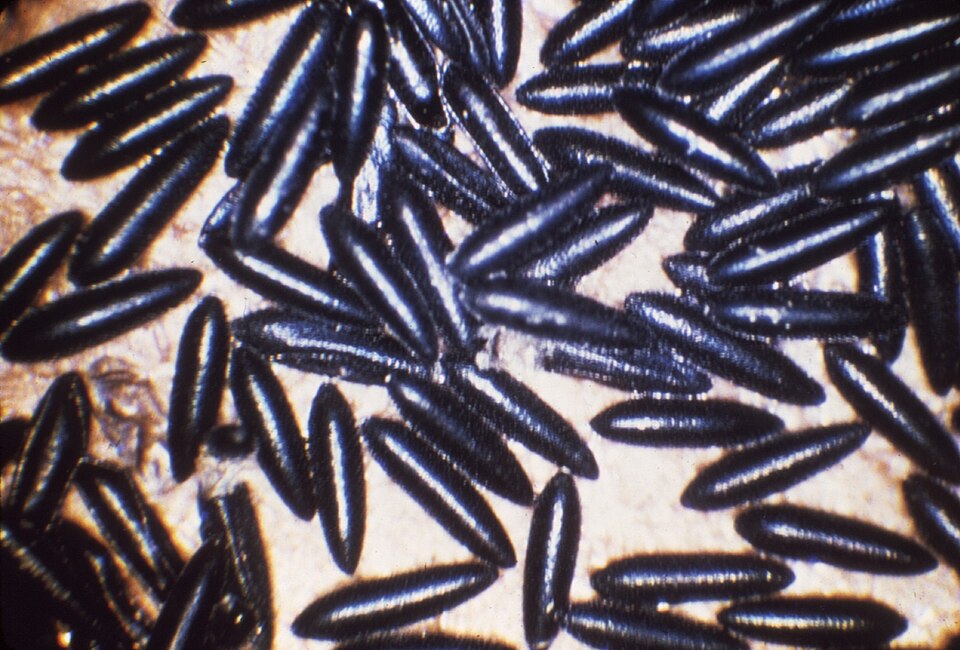
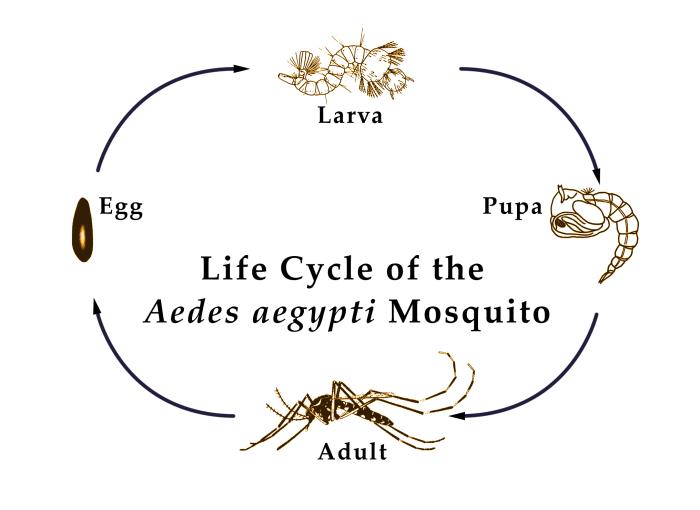
The whole cycle can finish in about a week in summer heat, same as every mosquito. What is different here is the egg. Because it survives drying and hatches in batches as it gets wet again and again, one container can keep producing for months after you think you cleared it.
Egg2
Larva1
Pupa3
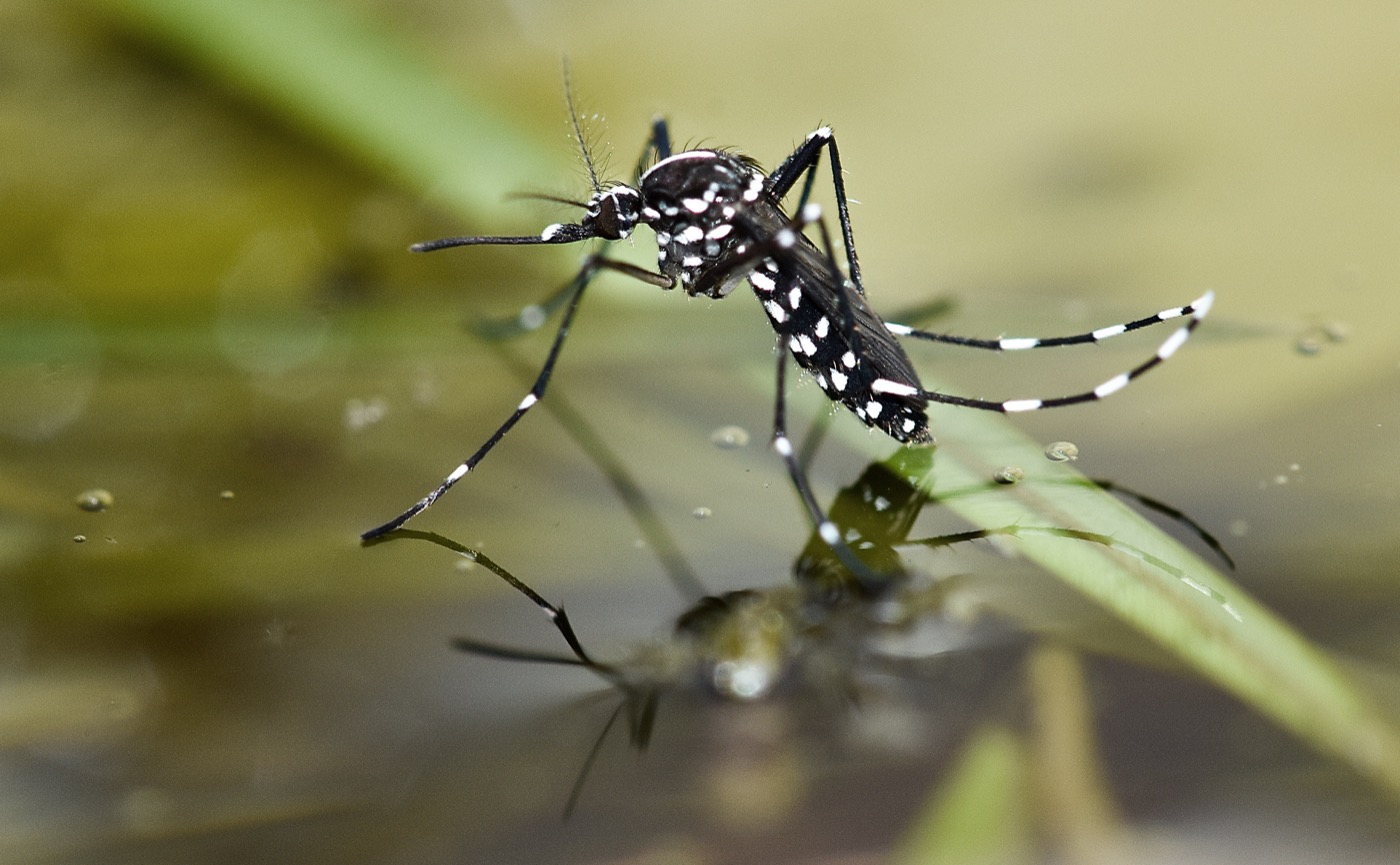
Adult1
Identification
Two species, told apart at the thorax
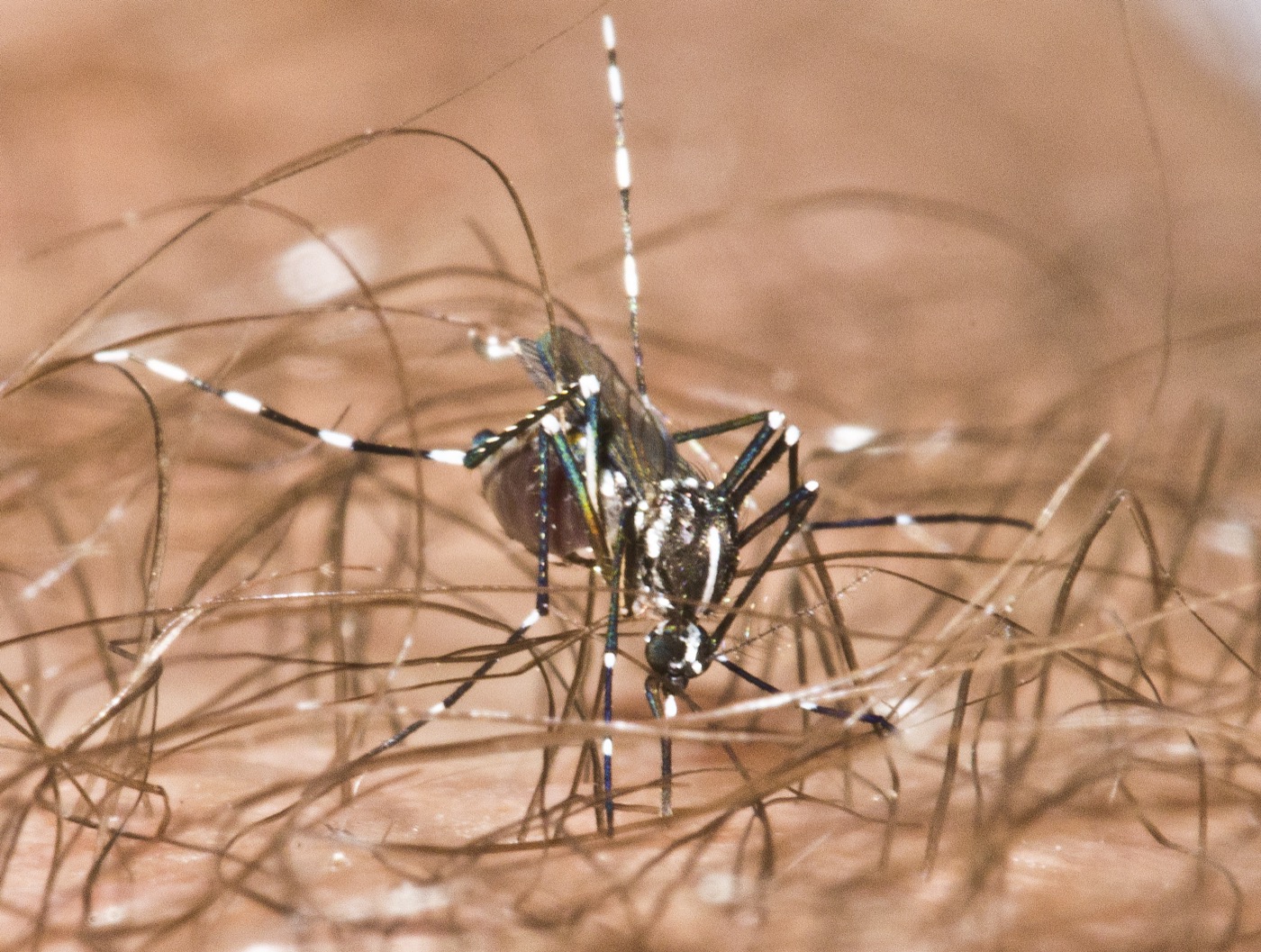
Two species matter in the US and they are told apart at the thorax. Aedes aegypti carries a pale, lyre- or violin-shaped pattern, two curved white lines meeting in a narrow waist. Aedes albopictus, the Asian tiger mosquito, carries one straight white stripe down the center instead, which is the simpler, bolder mark that earned it the name.
Banded hind legs on both
Both species also carry prominent black-and-white banded tarsal segments on the hind legs, and this one does hold up as a field mark, not just folk wisdom. Major urban Culex mosquitoes have plain, unbanded, brownish legs, so tarsal banding combined with the thorax pattern is a reliable way to separate a domestic Aedes from a common urban Culex.
Which one you will actually see
Aedes albopictus is the one most homeowners will actually see. It is established far more widely than Ae. aegypti, which is more concentrated in the South and Southwest. Ae. aegypti is still the more important species for disease risk where it persists, because it prefers biting people specifically, while Ae. albopictus feeds more opportunistically on whatever host is nearby.
The larvae in the water
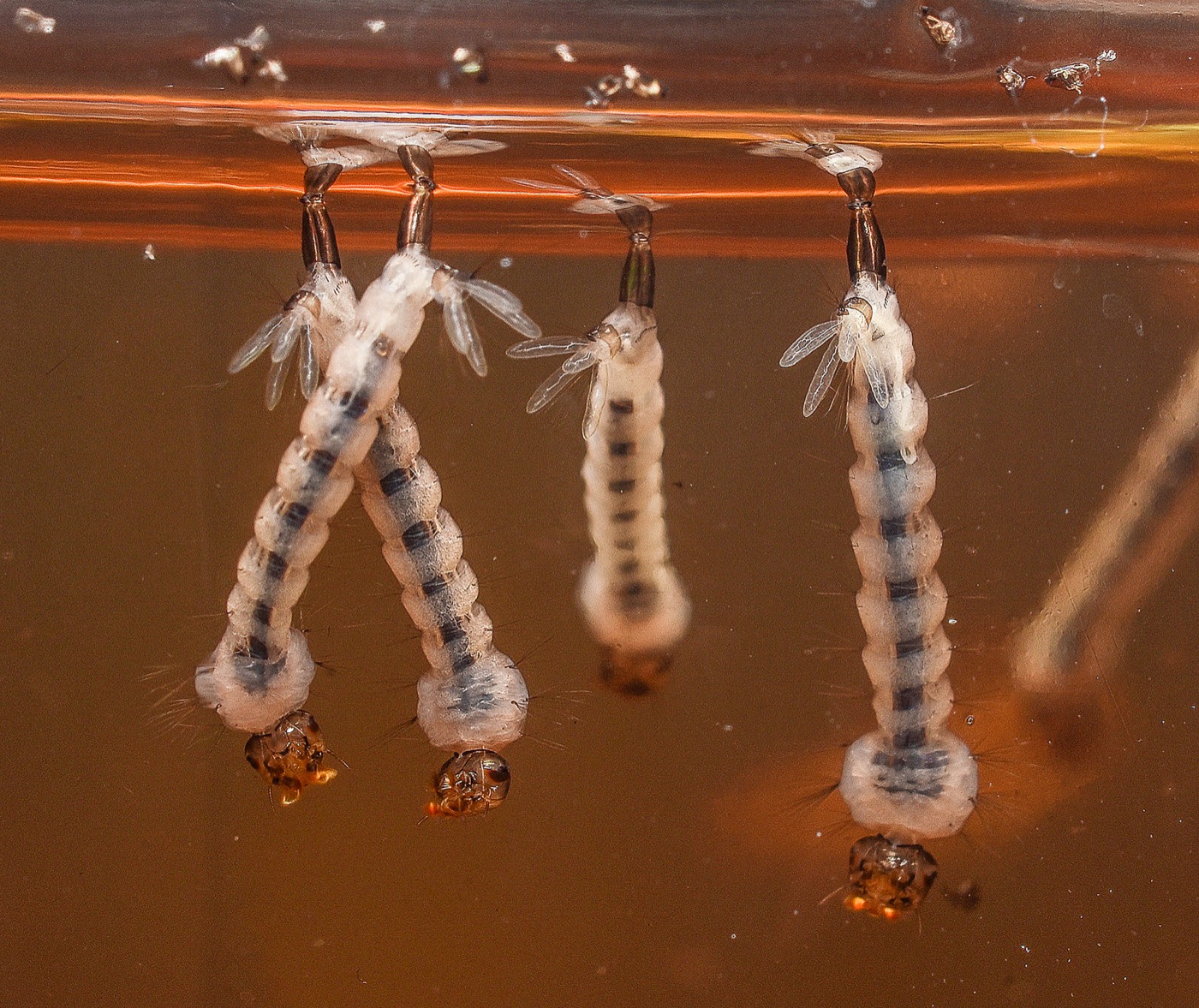
In the water, the larvae carry a rear breathing tube, or siphon, that is also diagnostic. Aedes larvae have a short, stout siphon with a single pair of hair tufts, while Culex larvae carry a noticeably longer, slender siphon with multiple hair tufts. Both rule out Anopheles, which has no siphon at all and rests flat against the water surface instead of hanging at an angle.
Signs of Infestation
Check the dry rim, not just the water
Check the dry rim of containers, not just the water. Aedes eggs are laid singly on the inside wall just above the waterline, not floating in a raft. An inspector who only looks at the water surface misses them.
Daytime bites, especially around the ankles
Vector control districts call these species "ankle biters" for exactly this reason, and they will follow a person indoors to keep feeding rather than staying outside.
Any small container counts
Buckets, saucers under pots, discarded tires, bird baths, clogged gutters, tree holes, even a bottle cap. If it can hold a tablespoon of water for a few days, it can raise a brood.
One clean-out is not the end of it
Eggs stuck to a dry container rim survive for months, sometimes close to a year, and hatch in batches as the container refills. Every rain can start another round.
Prevention and When to Call a Pro
Scrub the container, do not just drain
Because these eggs sit on the dry rim of a container rather than floating in the water, draining the water is not enough by itself. Scrub or wipe the inside walls too, or the eggs stuck there will simply wait for the next rain.
Weekly beats occasional
Same rule as every mosquito. Change water in pet dishes, bird baths and saucers every week. Empty and turn over anything that is not in use. Fill tree holes with sand or mortar. Screen or seal rain barrel access points.
Good news for this genus
The good news is genuinely good news for this genus specifically. Aedes mosquitoes are weak fliers, generally staying within about a quarter mile of where they hatched. Unlike mosquitoes that range for miles, an Aedes problem is almost always coming from a container on your own property or your immediate neighbor's, which makes a focused inspection a lot more likely to actually solve it.
How Bti works, and its limit
Bti (Bacillus thuringiensis israelensis) works the same way it does for every mosquito: it is a stomach poison that only kills larvae that eat it, and it has no effect on pupae, which do not feed at all. Repellents, screens and what does not work (zappers, wristbands, ultrasonic devices) are covered on the Mosquitoes overview page and apply here unchanged.
Call your vector control district
Call your county mosquito and vector control district first if you are dealing with a mosquito problem beyond your own yard. For this genus specifically, the short flight range means a private inspection that finds the actual container source has a real shot at solving the problem outright, not just knocking numbers down temporarily.
Frequently Asked Questions
What is the difference between Aedes aegypti and Aedes albopictus?
Look at the thorax. Aedes aegypti has a pale, lyre-shaped marking; Aedes albopictus has a single straight white stripe. Albopictus is far more widespread in the US, while aegypti is more concentrated in the South and Southwest and is the more efficient disease vector because it prefers biting people specifically.
Do Aedes mosquitoes really bite during the day?
Yes, and this is one of the few mosquito genera where that claim actually holds up. They are most active in the early morning and late afternoon, though night biting is not ruled out entirely.
How far can these mosquitoes fly from where they hatched?
Not far. They are weak fliers, generally staying within about a quarter mile of the breeding site, which is much shorter than some other mosquitoes. That means the source of an Aedes problem is almost always close by.
I dumped the water and the larvae came back. Why?
Aedes eggs are laid one at a time on the dry inner wall of a container, just above the waterline, not floating in the water. Dumping the water alone leaves those eggs stuck to the rim, ready to hatch the next time it rains or the container refills. They can survive dry for months.
Can Zika really spread person to person, not just by mosquito bite?
Yes. Zika can also be transmitted sexually, from an infected person to a partner, even without symptoms, and it can cross the placenta during pregnancy. Mosquito bites remain the main route, but it is not the only one.
Photo Gallery
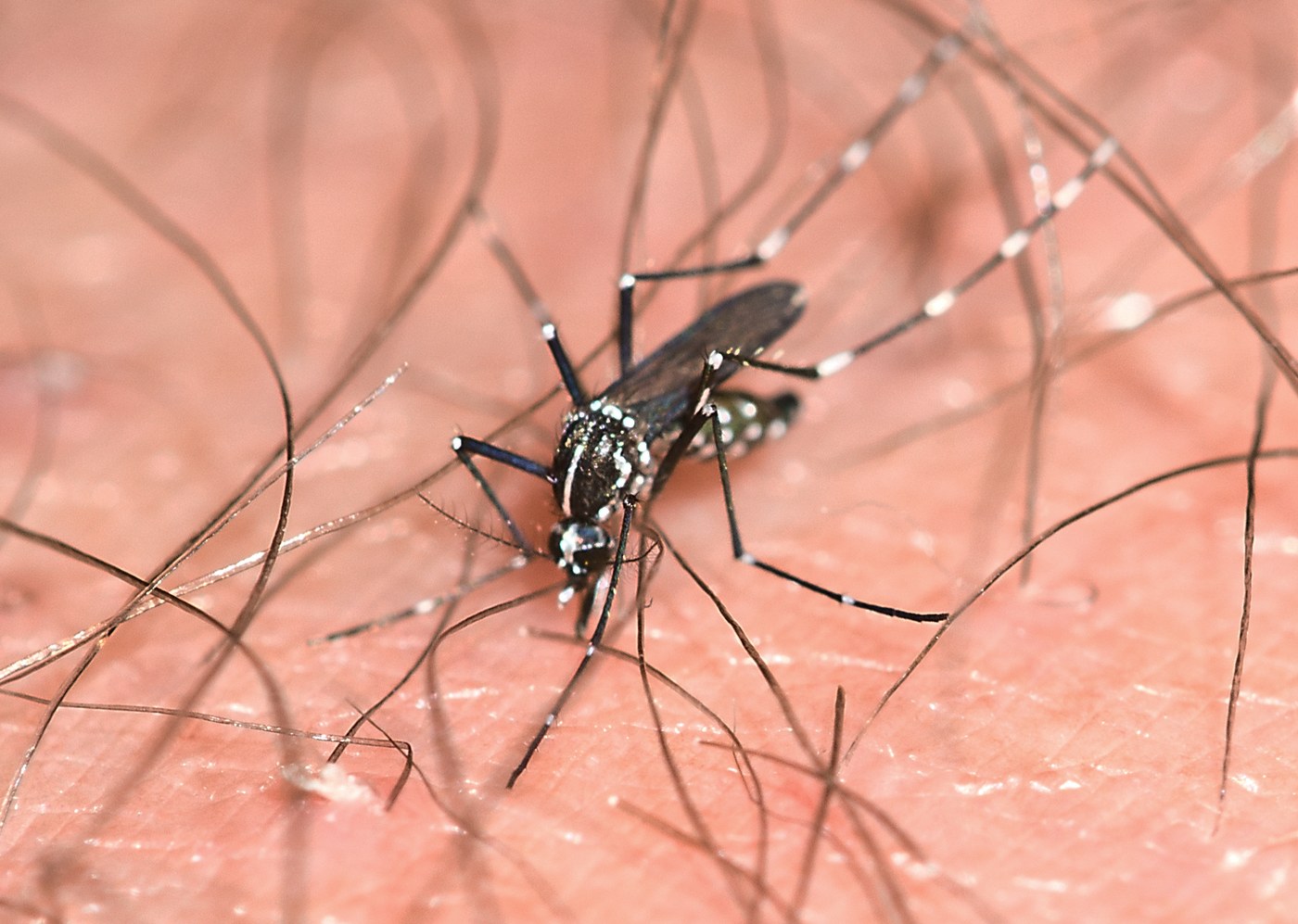
An Aedes albopictus female feeding, showing the sharply banded legs used to tell this genus apart from a plain brown Culex on sight.
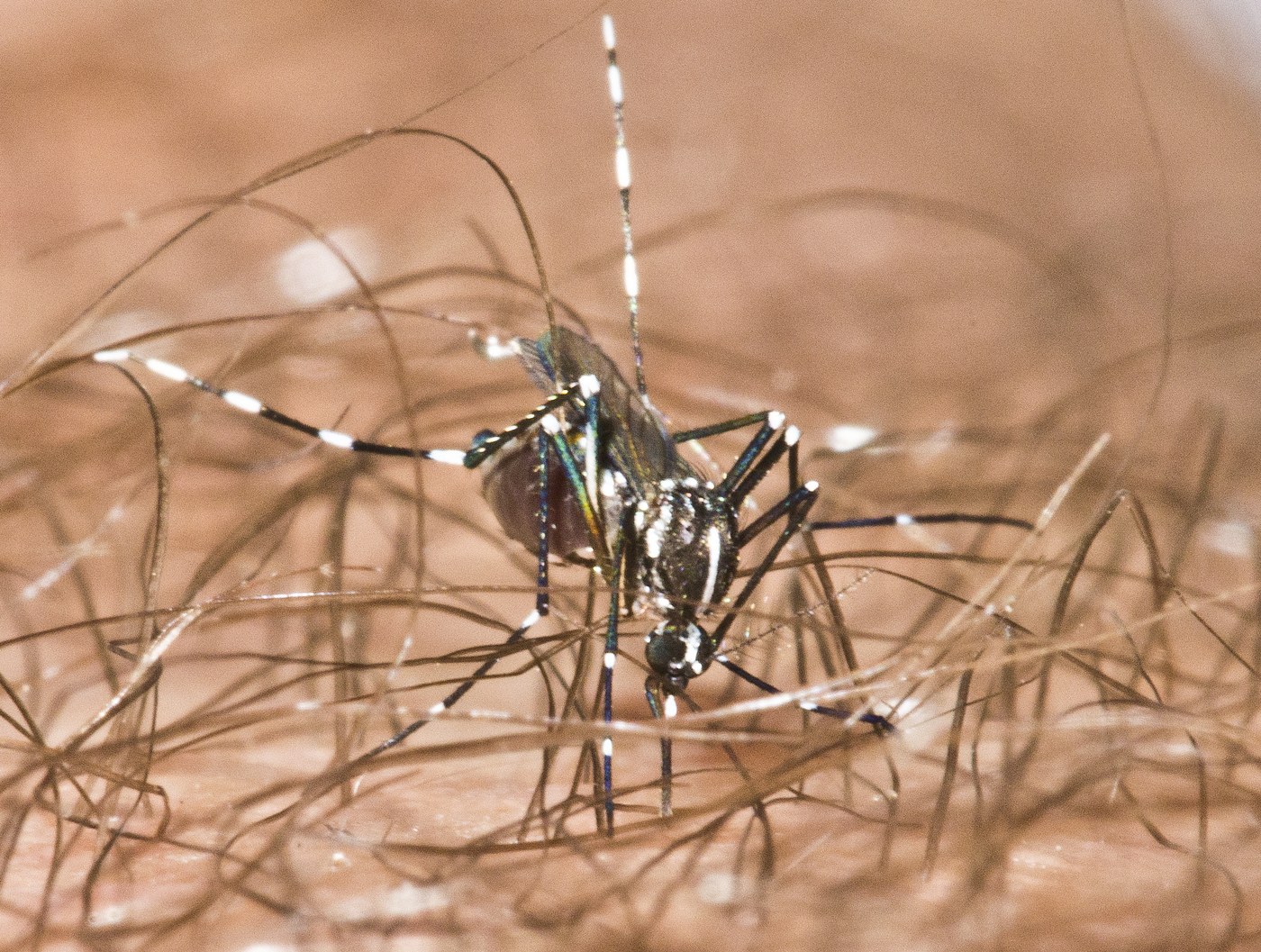
A closer angle on the same biting behavior, with the dark, high-contrast body pattern typical of Aedes albopictus.
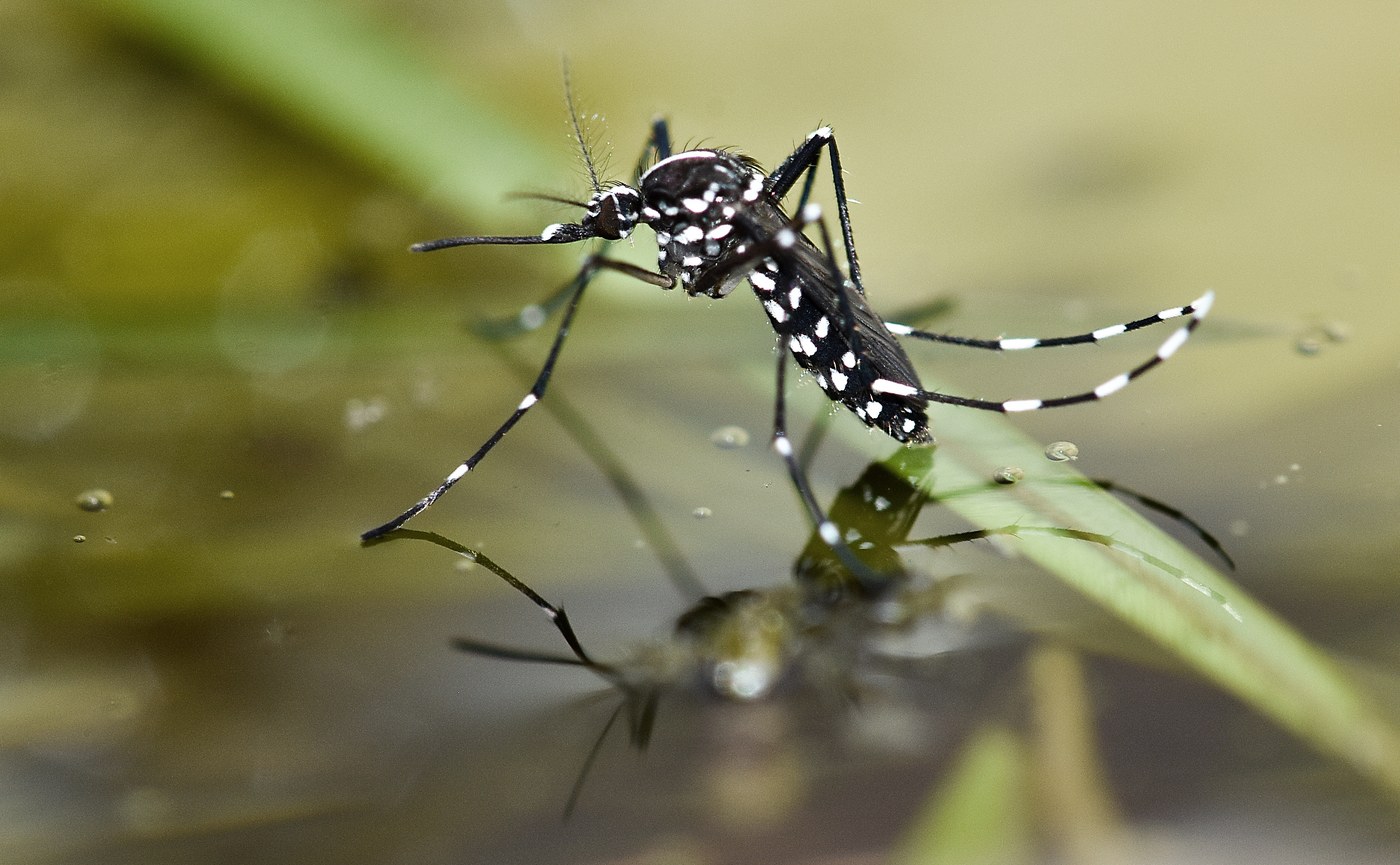
An adult Aedes albopictus resting on standing water, the kind of container or puddle surface this genus breeds in.
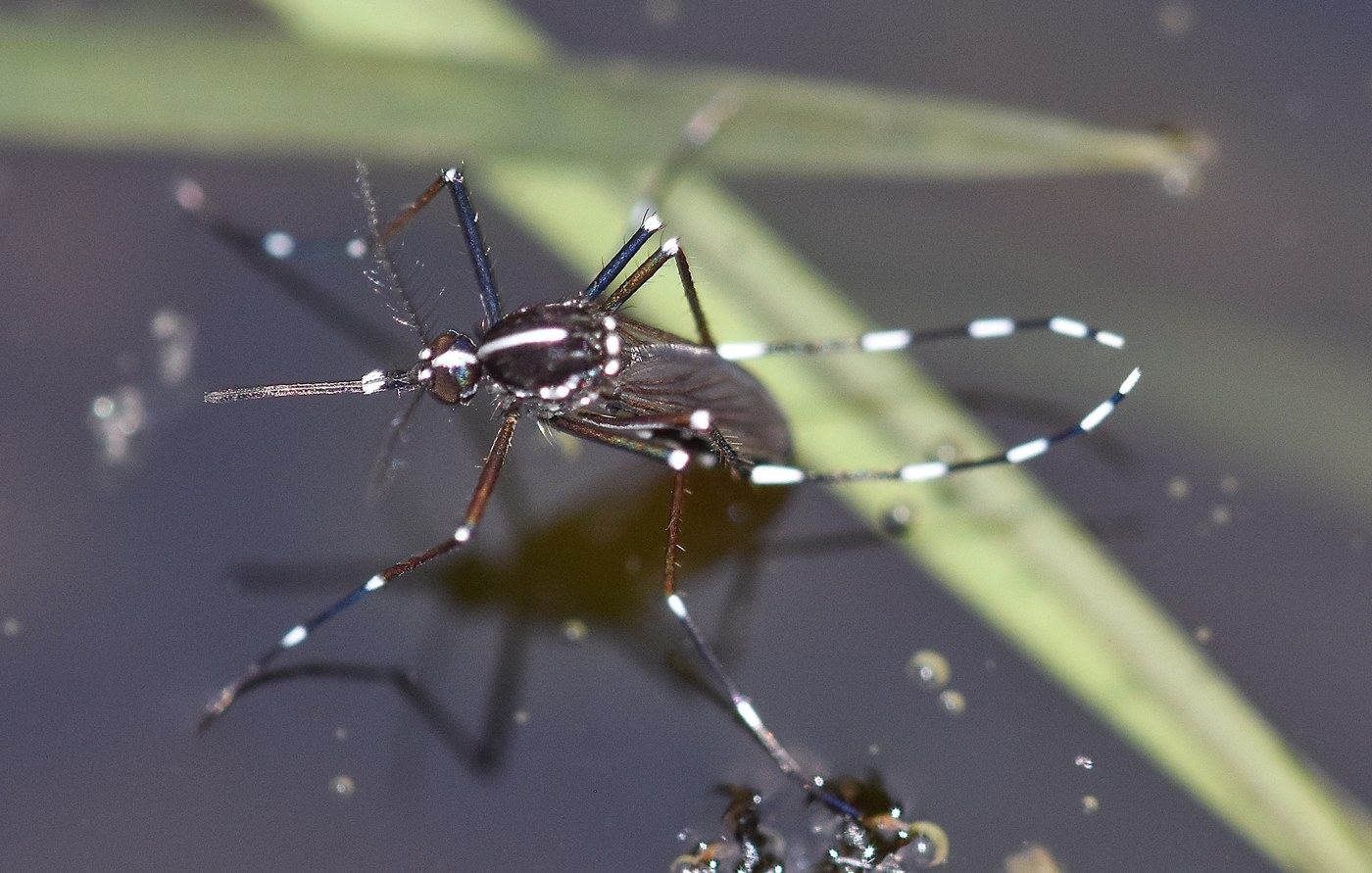
An overhead view of the same species poised over still water, legs splayed across the surface tension.
Sources
- Yellow Fever Mosquito, Aedes aegypti (Linnaeus) University of Florida IFAS Featured Creatures, EENY-434/IN792
- Asian Tiger Mosquito, Aedes albopictus (Skuse) University of Florida IFAS Featured Creatures, EENY-319/IN594
- Potential Range of Aedes Mosquitoes Centers for Disease Control and Prevention
- How Dengue Spreads Centers for Disease Control and Prevention
- Sexual Transmission of Zika Virus Centers for Disease Control and Prevention
- About Chikungunya Virus Centers for Disease Control and Prevention
- Chikungunya World Health Organization
- Zika Virus, Questions and Answers World Health Organization
Image Credits
- Image: NPMA. Used under NPMA member image license.
- Image: CDC, Public Health Image Library 5129, via Wikimedia Commons. Public domain.
- Image: CDC, Public Health Image Library 20204. Public domain.