Seasonal Timeline
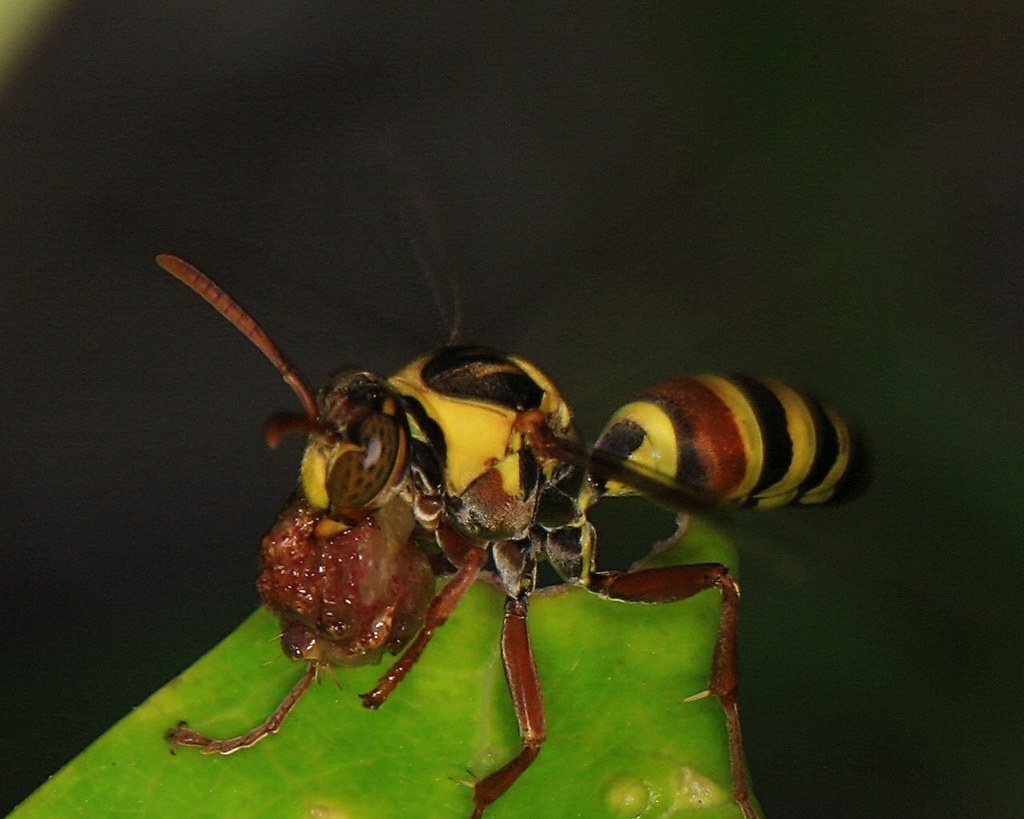
Late summer and fall, in every region. Colonies hit peak population in August and September, and at the same time the workers switch from hunting insect protein to hunting sugar. That is why the August call is a different job from the May call.
Late summer and fall, in every region. Colonies hit peak population in August and September, and at the same time the workers switch from…
Two things break the tidy version of this calendar. In coastal California south of San Francisco, and in any very mild winter, some yellowjacket colonies survive several years and get very large instead of dying at frost. And in the Deep South, nests in attics and other temperature-controlled spaces can carry the queen and workers straight through to the next year, with the German yellowjacket being the species most likely to reuse its nest. An off-season also does not mean no contact: mated queens overwinter in wall voids and under siding, and when they wake in late winter they sometimes come out into the attic or the living room instead of outside.
Where They're Found
Wasps, hornets and yellowjackets are established across the continental United States, the Mountain West included, where Colorado State and Utah State both name the western yellowjacket (Vespula pensylvanica) their state's primary stinging insect. Different species dominate different parts of the map, and that changes the advice. The western yellowjacket is the dominant pest species in California, the Southwest and the Pacific Northwest. The introduced German yellowjacket (Vespula germanica) is the urban problem across the Midwest, Northeast, California and Southeast, and it is the one most likely to nest in a house. The eastern yellowjacket (Vespula maculifrons) runs the Northeast, Southeast, Midwest and South Central. Native red paper wasps (Polistes carolina and P. rubiginosus), which almost everyone in Texas and Louisiana calls red wasps, are Southeast and South Central. The bald-faced hornet (Dolichovespula maculata) and the black and yellow mud dauber (Sceliphron caementarium) are found essentially everywhere. Two range facts matter more than the rest: the European hornet (Vespa crabro) is eastern only, so a very large hornet in Phoenix, Seattle or Sacramento is something else, and the northern giant hornet (Vespa mandarinia) was officially declared eradicated from Washington State and the entire United States by the USDA and WSDA in December 2024, after three straight years of trapping with zero confirmed sightings or nests.
Stinging insects are established in Alaska and Hawaii as well. Alaska has native ground-nesting yellowjackets (Vespula alascensis, V. vulgaris), the western yellowjacket, and the aerial-nesting bald-faced hornet widely established across southcentral and interior regions; paper wasps are limited to a few southern coastal pockets, and mud daubers and true hornets do not survive the winters there at all. Hawaii has no native social wasps, but the western yellowjacket is a serious invasive pest there, building multi-year "super-colonies" of over 100,000 workers because the islands never get a killing freeze; introduced paper wasps and the yellow-legged mud dauber (Sceliphron caementarium) are also widespread across the islands.
Life Cycle
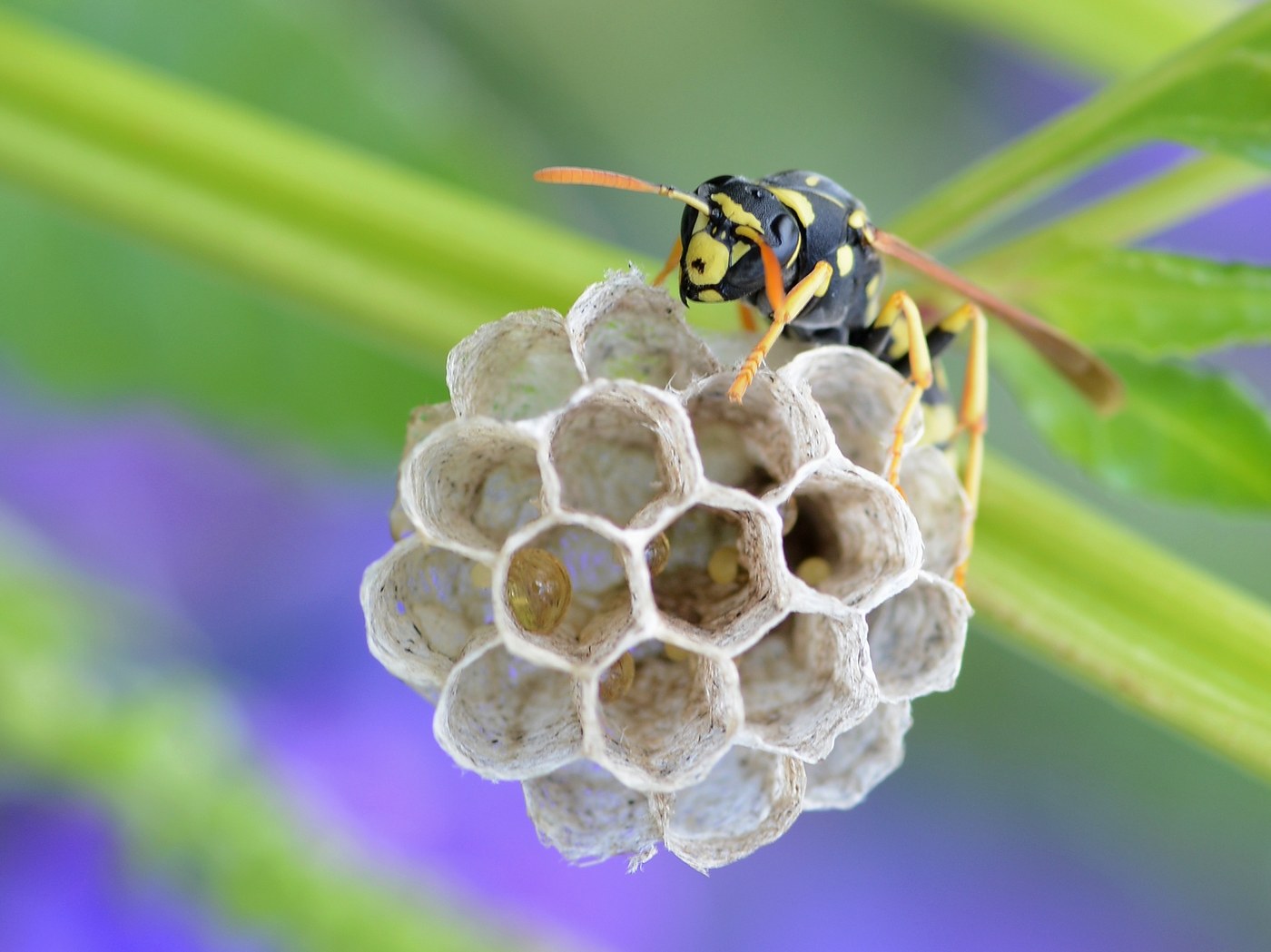
Every social wasp in this group runs one annual colony, and that cycle explains the entire season. A single mated queen wakes in late April or early May and founds a nest alone. The first workers emerge by mid-June and growth turns exponential, because the queen stops doing anything but lay eggs. By August and late September the colony is at peak: 4,000 to 5,000 workers and 10,000 to 15,000 cells in a large Vespula nest, against 15 to 200 individuals in a paper wasp nest that rarely exceeds the size of an outstretched hand. Late in the season, new queens and males are raised in special larger cells, and the workers switch from protein to sugar because insect prey has run short. That switch is the fall problem. From early October the colony is abandoned and the workers, the drones and the old queen all die, at temperatures in the mid to upper 20s Fahrenheit. Only the newly mated queens survive the winter, alone, under bark, in stumps, in leaf litter and in the wall voids and attics of buildings. Mud daubers do not follow this at all. They are solitary and multivoltine, several generations a year, and they spend the winter as a pre-pupa sealed inside the mud cell, which is why a mud nest is not empty in January.
Founding Queen2

Brood Cells3
Ground Nest4
Umbrella Nest5
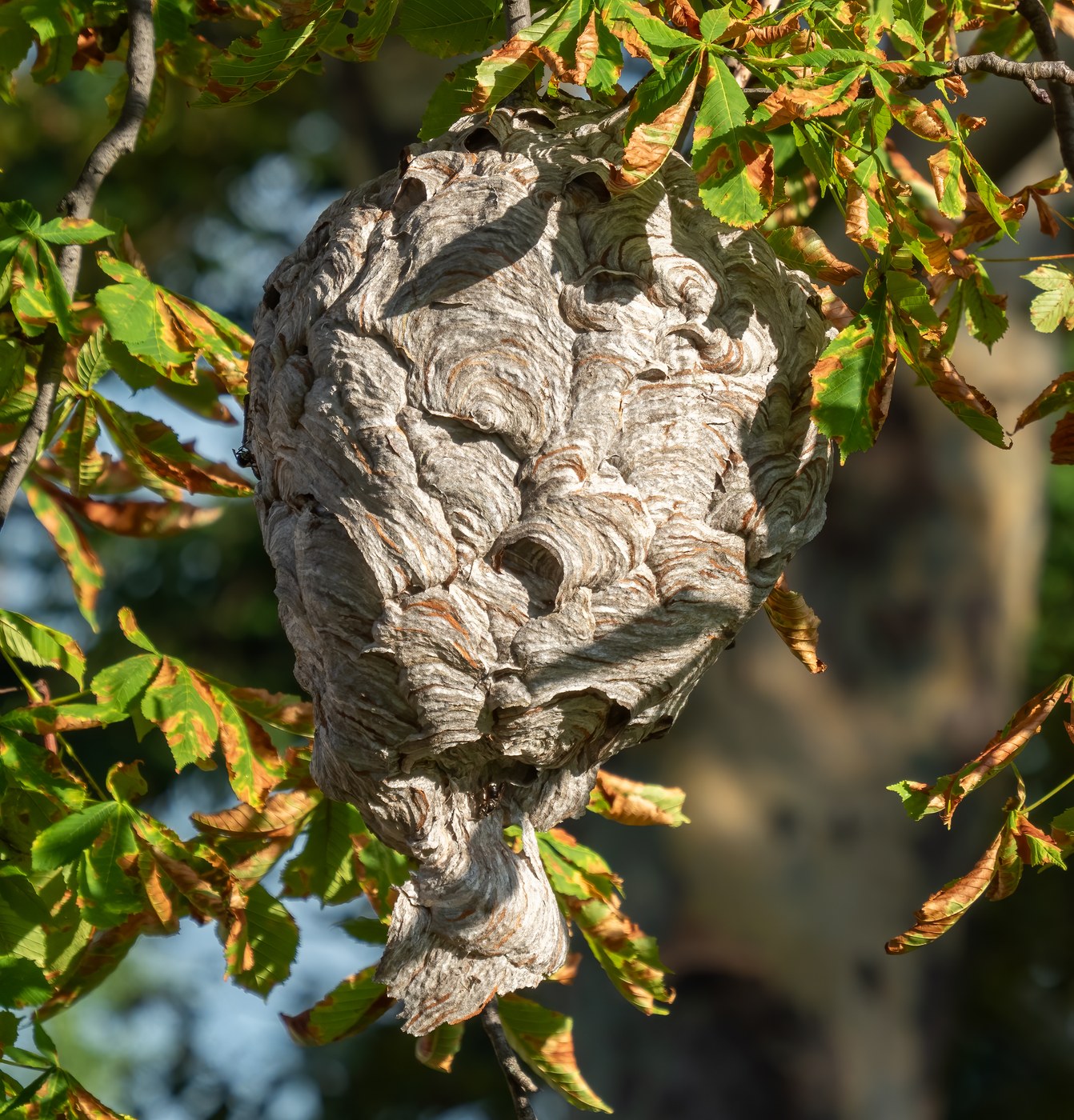
Aerial Nest6
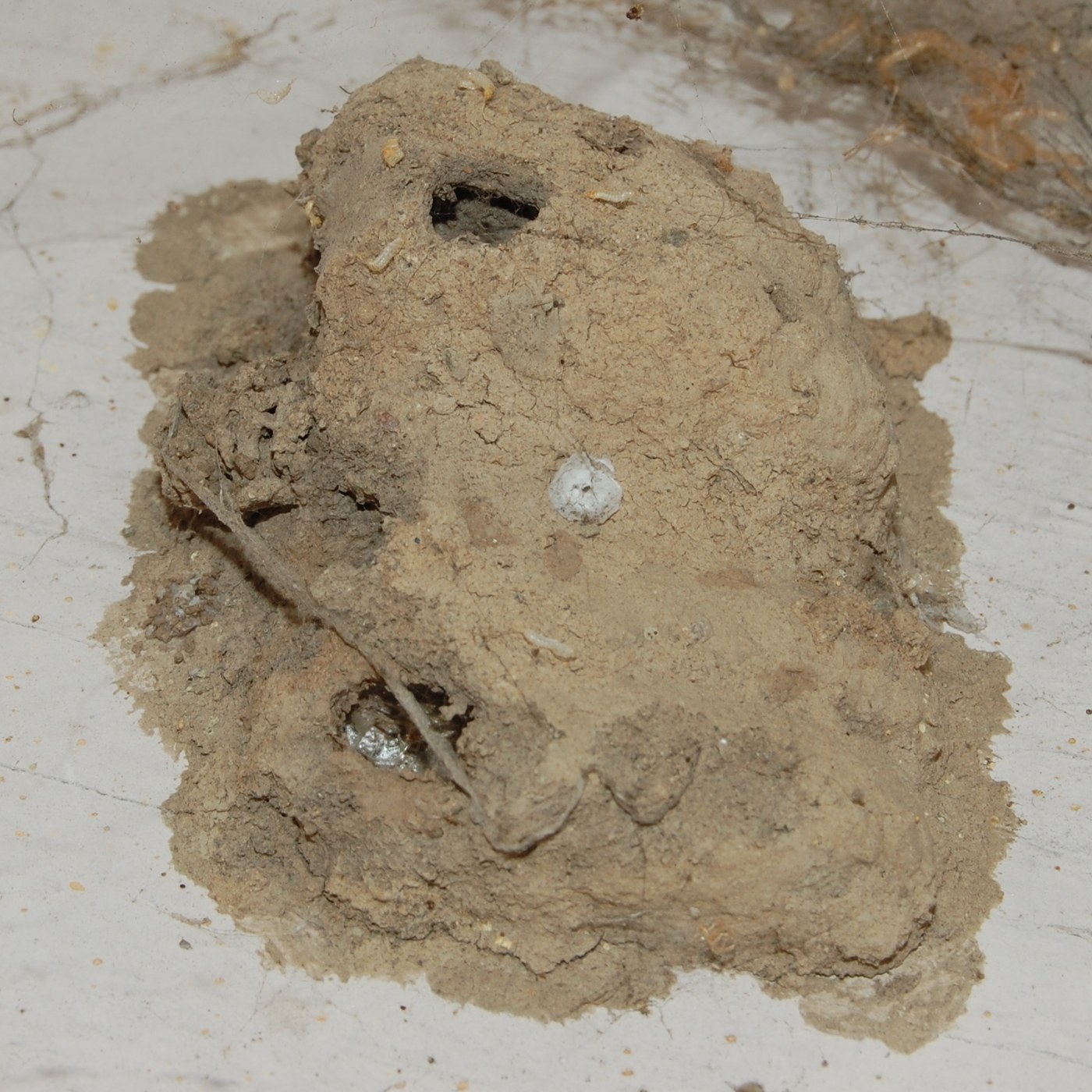
Mud Nest7
Identification
The waist tells you what you have
It takes one second. A yellowjacket has a very short, narrow waist that is barely visible, on a blunt, compact body. A paper wasp has a long, distinctly slender waist. A mud dauber has the extreme version, a long thread-like stalk between thorax and abdomen, which Texas A&M calls the single best identifying feature.
Watch the back legs in flight
A paper wasp flies with its hind legs trailing and dangling below the body. A yellowjacket flies with its legs tucked in. At rest, every wasp here folds its wings lengthwise into a narrow strip over the abdomen, and a honey bee does not.
The honey bee question, at the bin
The honey bee question resolves itself at the trash can. Honey bees are hairy, carry flattened pollen baskets on the hind legs, hold their wings flat and unfolded at rest, and are not interested in meat or garbage. If it is on the hamburger or in the bin, it is not a honey bee. This matters because a wasp's stinger is not barbed and is not left behind, so one wasp can sting you over and over, which is especially likely if it gets inside your clothing. Only the honey bee leaves its stinger in the skin.
Sizes, insect by insect
Sizes, by insect, because a single range for the group is useless. Yellowjacket workers run 3/8 to 5/8 in, with the queen around 3/4 in. Paper wasps are 1/2 to 1 in. The bald-faced hornet is roughly 3/4 to 7/8 in, with the sources disagreeing slightly. Mud daubers are 1/2 in to just over 1 in. The European hornet worker reaches 1 in and the queen 1.3 in, which is genuinely large.
Two names people get wrong
The bald-faced hornet (Dolichovespula maculata) is not a hornet. It is an aerial-nesting yellowjacket, and Virginia Tech has already renamed it the baldfaced aerial yellowjacket. The only true hornet established in North America is the European hornet (Vespa crabro), and it is eastern only. It has a red and yellow head, a red and brown thorax, and a mostly yellow abdomen with brown teardrop marks. The northern giant hornet (Vespa mandarinia), the one the news called the murder hornet, was declared eradicated from the United States by the USDA and WSDA in December 2024.
Red wasp is a real name for a real insect
Across the Southeast and South Central, the fine-backed and coarse-backed red paper wasps are the everyday red wasp. Both are rust-colored with small dark markings and LSU is honest that telling the two apart is difficult. The one that is easy to separate is the darker paper wasp with yellow on its legs.
The European paper wasp costs you
The European paper wasp is the lookalike that costs you. It is introduced, now widespread, and it is black and yellow like a yellowjacket. The long slender waist, the dangling legs and above all the open comb with no envelope give it away.
Signs of Infestation
Traffic to one fixed point
Wasps flying repeatedly to and from one fixed point. That is the primary nest indicator, and it works whether the nest is in the ground, in a wall or up in a tree. Traffic to a single spot means a nest at that spot.
A ground entrance the size of a coin
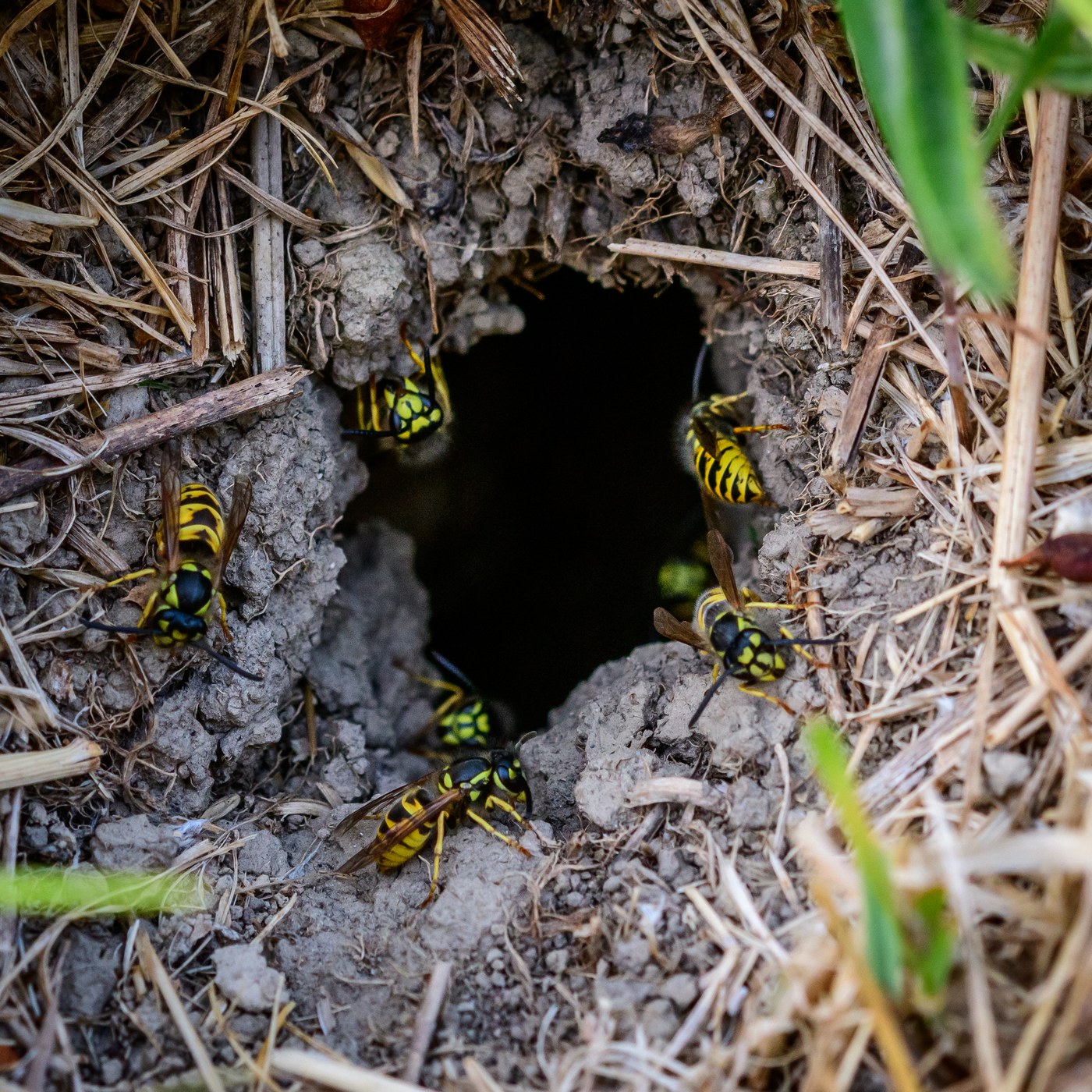
A ground entrance the size of a nickel to a quarter, in high grass, in a mulch bed, under landscape timbers or under a gutter splash block. Ground nests often have several entrance holes, which is why treating "the" hole so often fails. Late in the season the colony may pile mud pellets around the opening into a small turret.
A damp ceiling patch in August
A spreading damp patch on a ceiling in August is not always a plumbing leak. When a wall cavity is too small, yellowjackets enlarge it by moistening the material and digging it out. Inside a house that sometimes shows up as a wet patch that develops into a hole in the wall or ceiling. If there is wasp traffic on the outside wall, check the wasps before you call a plumber.
Match the nest to the insect
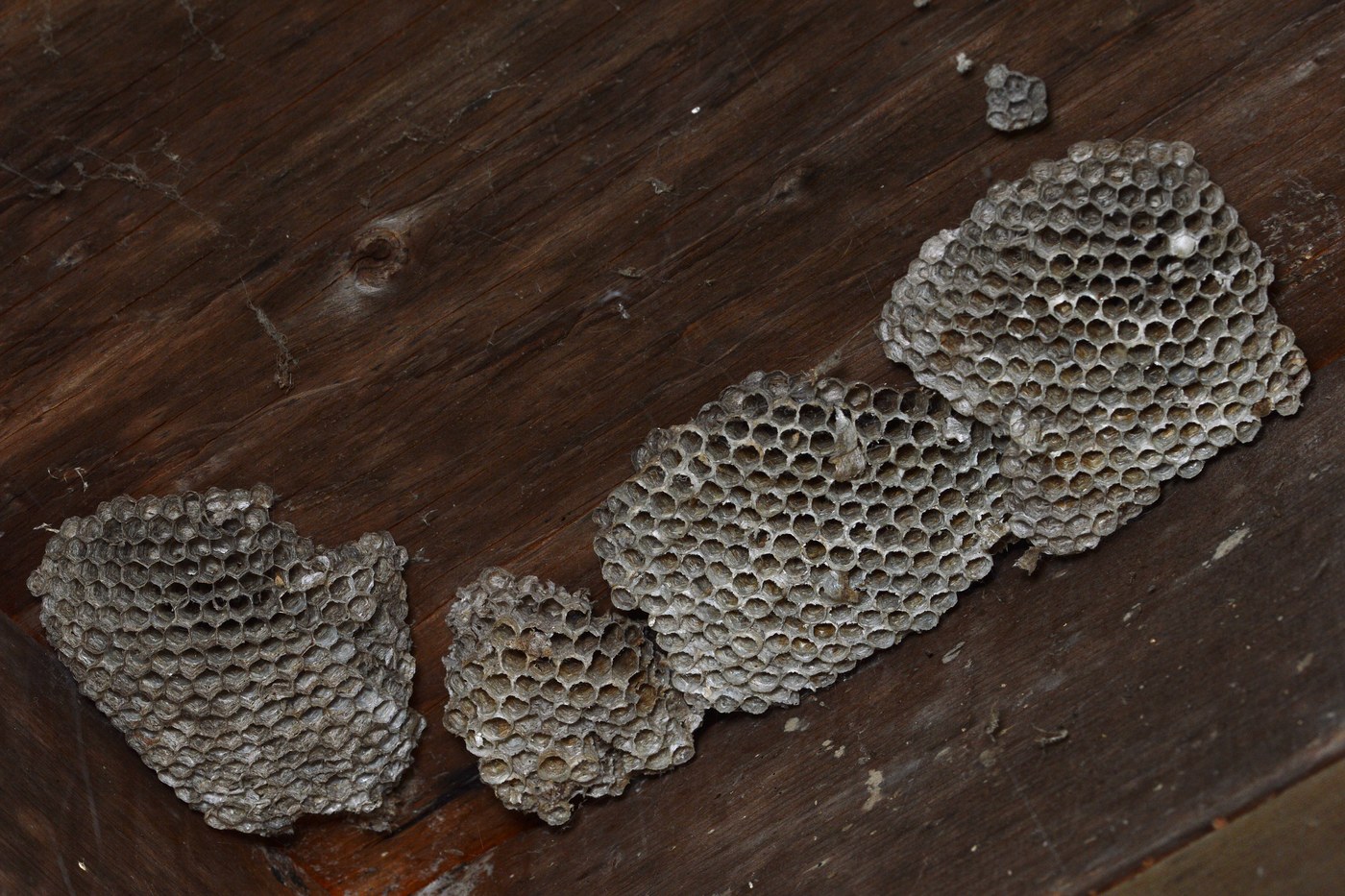
A gray football in a tree or under an eave is a bald-faced hornet. An open, stalked, umbrella-shaped comb with visible cells is a paper wasp. Hard mud tubes or clustered mud cells are a mud dauber, and round holes in them mean it is already vacant.
Bark stripped from twigs
Bark stripped from lilac and ash twigs, with the affected twigs and branches dying back, is the European hornet feeding on sap. It is the only real landscape damage any of these wasps cause. The same insect is the only nocturnal wasp in its range, so a very large wasp hitting the porch light in September is close to a positive identification on its own.
Nothing reliable to smell or hear
Nothing reliable to smell, and nothing reliable to hear. There is no characteristic odor. Applicators do locate wall-void nests by listening at the wall, sometimes with a stethoscope, but there is no described sound a homeowner should be listening for.
Prevention and When to Call a Pro
Never plug an active nest
Never seal, plug or caulk the entrance of an active nest in a wall void. This is the most important rule of the lot, and five separate university extension services state it independently. If you block the only exit, the wasps do not die in there. They chew inward through the interior wall and come out inside the house. An outdoor problem becomes an indoor one, in the room you sealed them out of.
Seal the same openings in winter
Do it in winter or early spring, once the colony is dead. That is the actual long-term fix. Caulk cracks in siding and around windows and pipes, seal holes and crevices in walls and foundations, and keep tight-fitting screens and working door sweeps, so that next spring's queens cannot get into the void in the first place. Seal in winter, never in season.
Knock new nests down in spring
Knock down new paper wasp nests in spring, while one wasp is on them. If only the founding queen is present, a broom is enough. She will move elsewhere or join a neighboring nest as a worker. Monitor the prime spots from March through May. The catch is that a new nest has almost no activity around it and is genuinely hard to spot, which is why most people find it in August at full size.
The fake nest decoys do not work
The fake paper wasp nest decoys do not work. LSU addresses the claim directly: there are no data behind it, and the paper facsimile actually supplies wasps with perfect nest-building material. Skip it.
Sanitation works if you start early
Sanitation works, but only if you start early. Keeping an area clean early in the summer is what makes it less attractive to yellowjackets later in the year. Use trash cans with tight-fitting, ideally self-closing lids, use liners, empty and clean them often, and site them away from serving tables, doors and traffic. When yellowjacket numbers are high, a lidless outdoor container may need emptying every few hours. Rake up fallen apples, peaches and other windfalls, which also cuts European hornet numbers in fall.
Cover drinks, check the can
Cover drinks and check the can before you sip. Scavenging yellowjackets crawl into open cans and sting inside the mouth or throat, and swelling there is dangerous in a way an arm sting is not.
Do not swat, skip the fragrance
Do not swat, and skip the fragrance. Most stings from foraging workers happen when the wasp is slapped or trapped against skin. If one lands on you, wait, or brush it off gently with a piece of paper. If one gets into your car, stop and open all the windows. Avoid scented soaps, shampoos, deodorants, perfume, cologne and hairspray, plus bright flowery clothing. Ohio State adds the odd one: yellowjackets are alarmed by musk-based scents, heavy body odor and bad breath, because those smell like the skunks, raccoons and bears that raid their nests.
Repellents and zappers do nothing
Repellents and bug zappers do not do anything here. Standard mosquito and tick repellent will not stop yellowjackets foraging. DEET may cut landings on bare skin, but long sleeves and pants work better. UV electrocuting devices have no value at all in reducing yellowjacket foragers.
Look before you mow
Walk the yard for nests during summer, and watch where you step in high grass and around mulched beds. Vibration from lawn equipment is a reliable way to provoke a ground colony. In fall, turn off porch lights where European hornets occur.
Traps are regional, placement matters
Traps are regional, and the placement is what people get wrong. The standard heptyl butyrate lure attracts the western yellowjacket well and does essentially nothing for the German yellowjacket, paper wasps or hornets, so a trap that clears a yard where the western yellowjacket is the pest can do nothing at all where the German yellowjacket is. Meat baits extend the catch but have to be replaced often. Set traps around the periphery, between the area you are protecting and the wild ground where the nests are, never beside the picnic table. In a yard, that means the property line, as far from the patio as you can get. Start early to catch overwintered queens, roughly June and early July. And be realistic: a late-season nest holds thousands of wasps and trapping seldom produces a noticeable decline.
Your yard may not be the source
Treating your own yard may not stop the foraging at all. Estimates of yellowjacket foraging range run from about a quarter mile, to 300 to 1,000 yards, to a full mile depending on the source. They all make the same point. The nest can be well off your property, and nothing you do in your yard will reach it.
What not to do
No gasoline, no diesel, no bleach, no garden hose, no smoking or burning them out, and do not bury an underground nest. Freeze-type aerosols do not reliably stop every wasp coming out. Aerosols sprayed into a wall void are ineffective and can push wasps into the house.
Five situations that need a pro
Call a professional, and do not attempt it yourself, in five situations. Anyone in the household is allergic to stings. The nest is in a wall void, attic, crawlspace, ceiling or behind siding, where the nest often sits well away from the entrance so nothing you spray reaches it. Reaching it needs a ladder. It is a hornet or bald-faced hornet nest, which can hold hundreds of very defensive wasps. Or it is a ground nest in a lawn, play area or walkway. Three separate universities recommend hiring a pro for nest removal, and the University of Kentucky's phrasing is worth repeating: a homeowner going after a yellowjacket nest is entering a danger zone, and there is no pest control scenario worse than a botched treatment. Wear eye protection if you are anywhere near a nest, because yellowjackets and bald-faced hornets are known to squirt venom at the eyes of an attacker, which causes intense irritation and temporary blindness.
When not to call anyone
And the times you should not call anyone. A paper wasp nest that is not near people does not need treating. A nest that is genuinely out of the way can be left, and in any region with a cold winter it dies on its own at the first hard freeze and the paper carton falls apart over the following months. Mud daubers do not need treating at all, and their nests can be scraped off in winter with no spray. Saying that costs a pest control company work, and it happens to be true.
Some of this is medical
It is not pest control. More than ten stings, or a sting in the mouth or around the eyes, means see a doctor. Any sign of a systemic reaction means the emergency room immediately, without waiting to see whether it passes. Anyone who has had a moderate to severe reaction, or has been stung many times, should be evaluated by an allergist.
Frequently Asked Questions
There is a wasp nest in my wall. Can I just seal the hole?
No, and it is the one action that reliably makes things worse. Block the entrance and the wasps chew inward through the interior wall and come out inside the house. Five separate university extension services say so independently. Seal the opening in winter or early spring, after the colony is dead, and never while it is active.
Why do yellowjackets get so aggressive in late summer?
Two things land at the same time. The colony hits peak population, four to five thousand workers in a large nest by August or September, and insect prey runs short, so the colony's demand switches from protein to sugar and thousands of foragers go out looking for it. Defensive behavior rises as the colony grows and food gets scarcer. The wasp is not in a worse mood in August. There are simply far more of them and they now want what is on your plate.
How dangerous is a wasp sting, really?
For most people it is painful and nothing more, but the tail risk is real. The CDC recorded 788 deaths from hornet, wasp and bee stings in the United States between 2011 and 2021, an average of 72 a year, ranging from 59 in 2012 to 89 in 2017, and 84 percent of those deaths were among men. On how many people are allergic: clinical consensus from the Allergy and Asthma Foundation of America (AAFA) puts systemic insect sting allergy at approximately 3 percent of the U.S. adult population. What is not in dispute is what a severe reaction looks like: hives, widespread itching, difficulty breathing or swallowing, swelling of the face, throat or mouth, dizziness, a rapid pulse and a drop in blood pressure. It can begin immediately or up to 30 minutes later, and death can follow in a matter of minutes. Do not wait to see whether it passes. Anyone known to be allergic should carry an epinephrine auto-injector, and should still go to an emergency room after using it in case symptoms return.
Can one wasp sting me more than once?
Yes. A wasp's stinger is not barbed, so it is not left behind and the wasp can sting repeatedly. That is the real difference between a wasp and a honey bee, which leaves its stinger in the skin and can only sting once. Repeat stinging is especially likely when the wasp ends up inside your clothing.
Are mud daubers dangerous?
No, and there is a biochemical reason rather than just a reassurance. Mud daubers are solitary wasps. There is no colony to defend, they do not defend the nest, and they sting only if handled roughly. Their venom evolved to paralyze spiders, not to protect a colony: it carries roughly a tenth the volume of a hornet's and it lacks the histamine, serotonin, acetylcholine and pain-producing peptides that make a yellowjacket sting hurt. Clemson rates the sting 1 on a 1 to 4 pain scale, the same as a fire ant. The nests can be scraped off in winter with no spray at all.
Do wasps come back to the same nest next year?
Almost never. The nest is used for one season and then abandoned, and the paper carton breaks down over winter. Only the newly mated queens survive, alone in sheltered spots, and they build fresh in spring. There are two exceptions worth knowing. European paper wasps sometimes reuse a nest, and the German yellowjacket occasionally does, with year-round nests being more common in the Deep South. Queens also tend to start new nests near old ones, simply because the site was a good one the first time.
Is this a murder hornet?
No. The northern giant hornet (Vespa mandarinia, formerly dubbed the "murder hornet") was officially declared eradicated from Washington State and the entire United States by the USDA and WSDA in December 2024, following three consecutive years of intensive trapping with zero confirmed sightings. What people are usually looking at is the European hornet (Vespa crabro), which is the only true hornet established in North America, is eastern only, and reaches about an inch as a worker. Its head is red and yellow, its abdomen mostly yellow with brown teardrop marks. The other common mix-up is the bald-faced hornet (Dolichovespula maculata), which is not a hornet at all but a large black and white aerial yellowjacket.
A yellowjacket got into my soda can. Is that actually worse than a normal sting?
Yes. Scavenging yellowjackets crawl into open cans, and a sting to the lips, inside the mouth or in the throat can swell enough to obstruct the airway. A sting to the mouth or neck warrants immediate medical attention. Cover drinks outdoors and look in the can before you drink.
Photo Gallery
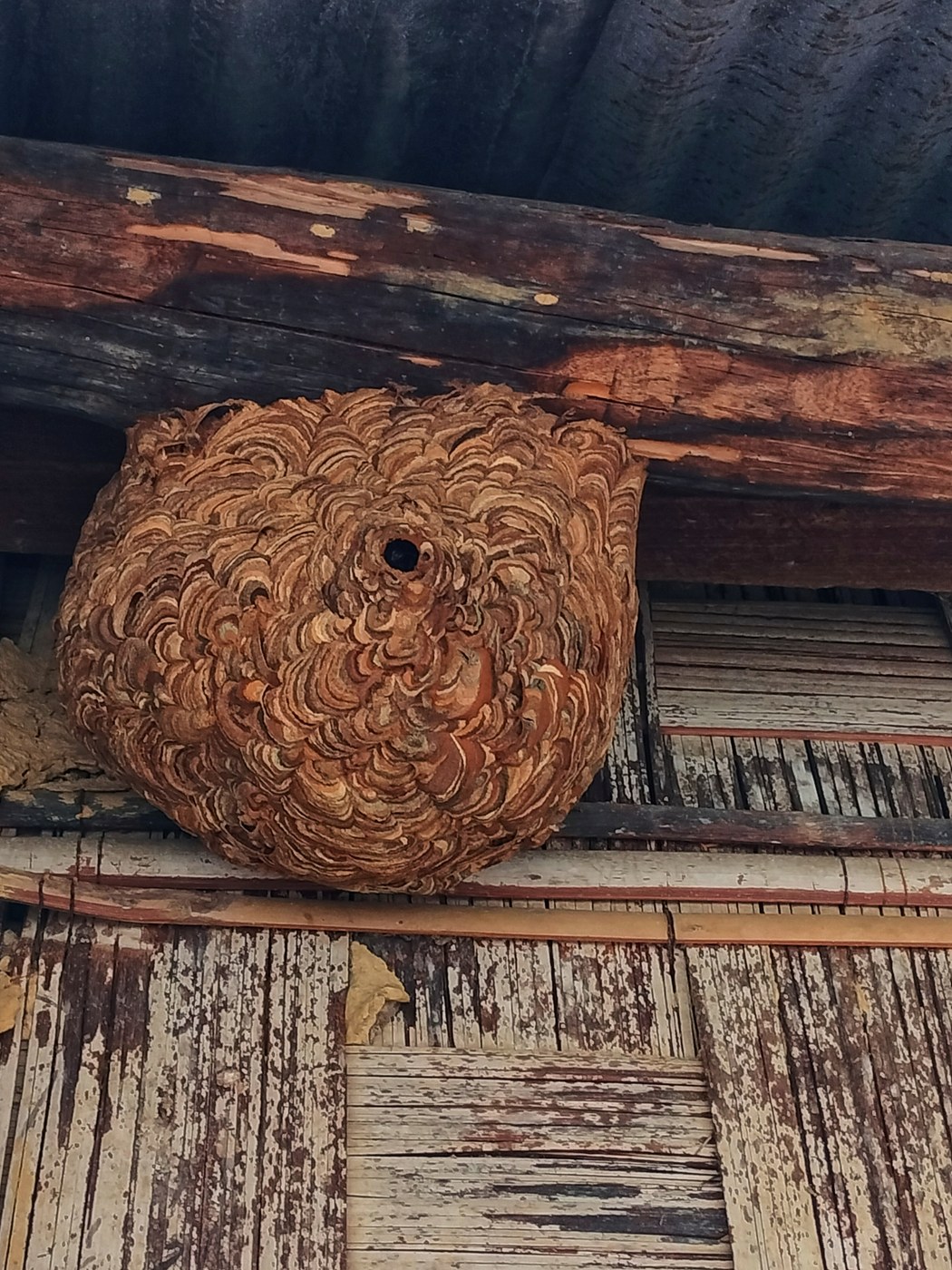
Nest under a roof eave.
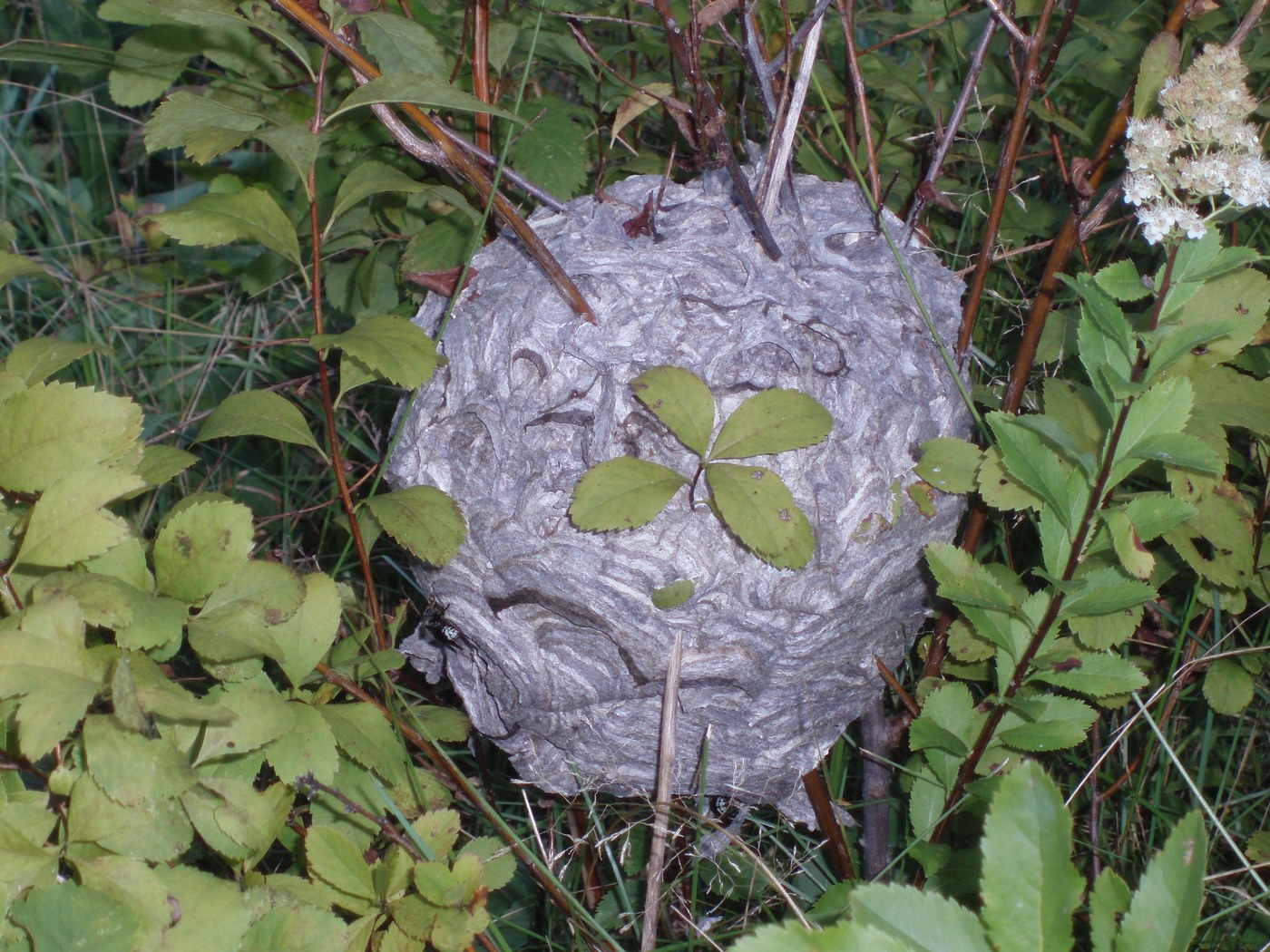
Nest built into a shrub.
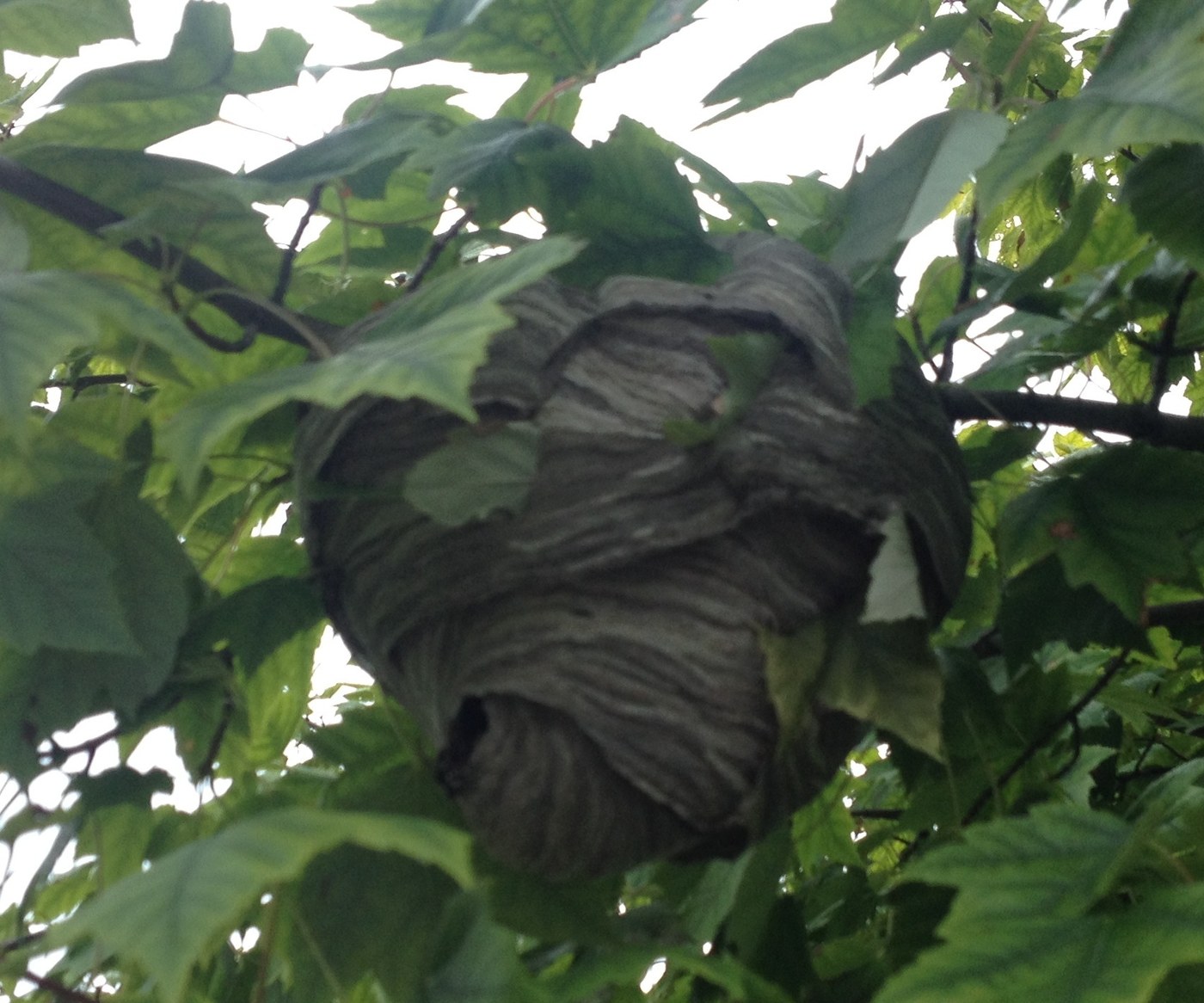
Nest suspended in tree canopy.
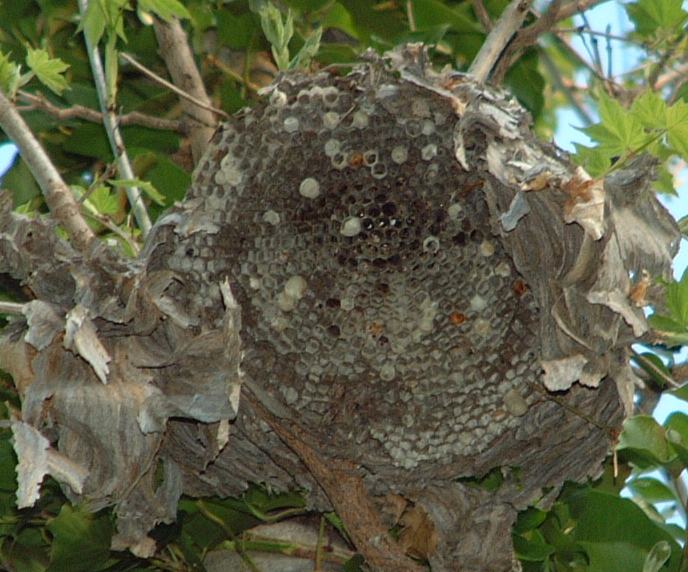
Opened nest showing brood comb.
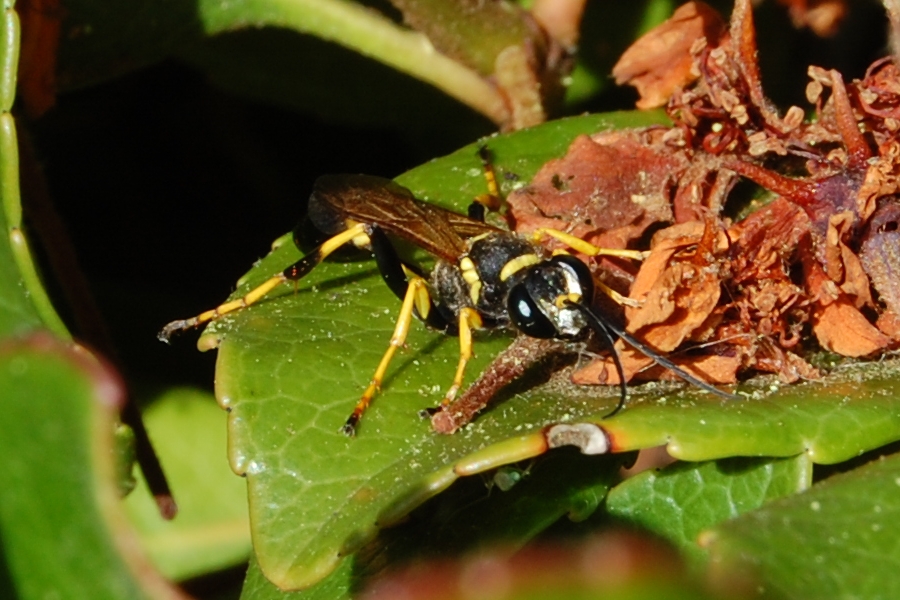
Mud dauber wasp on a leaf.
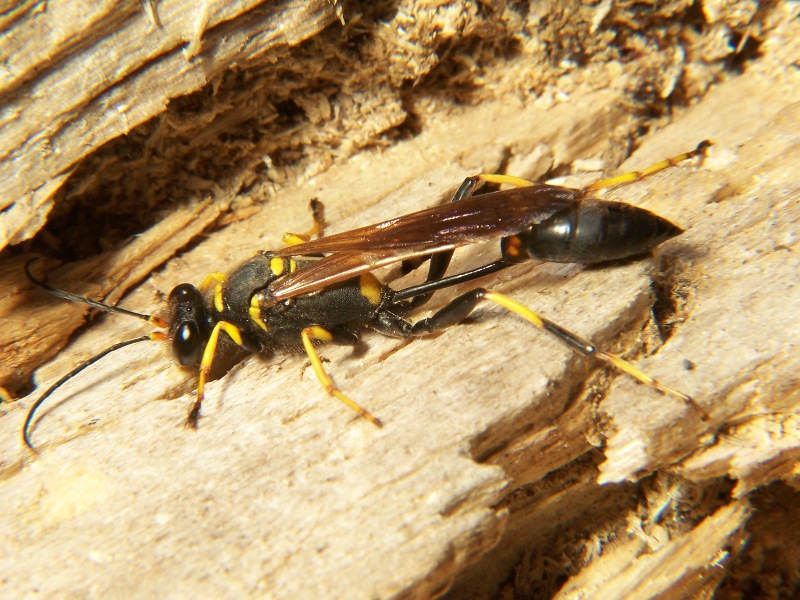
Mud dauber wasp on wood.
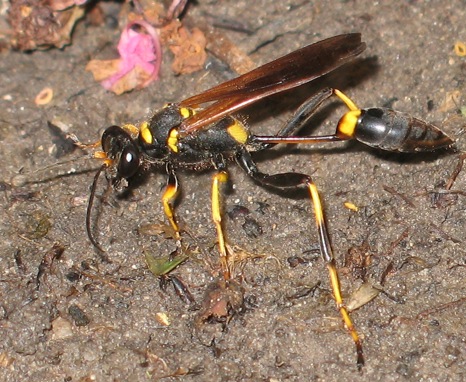
Gathering mud for a nest.
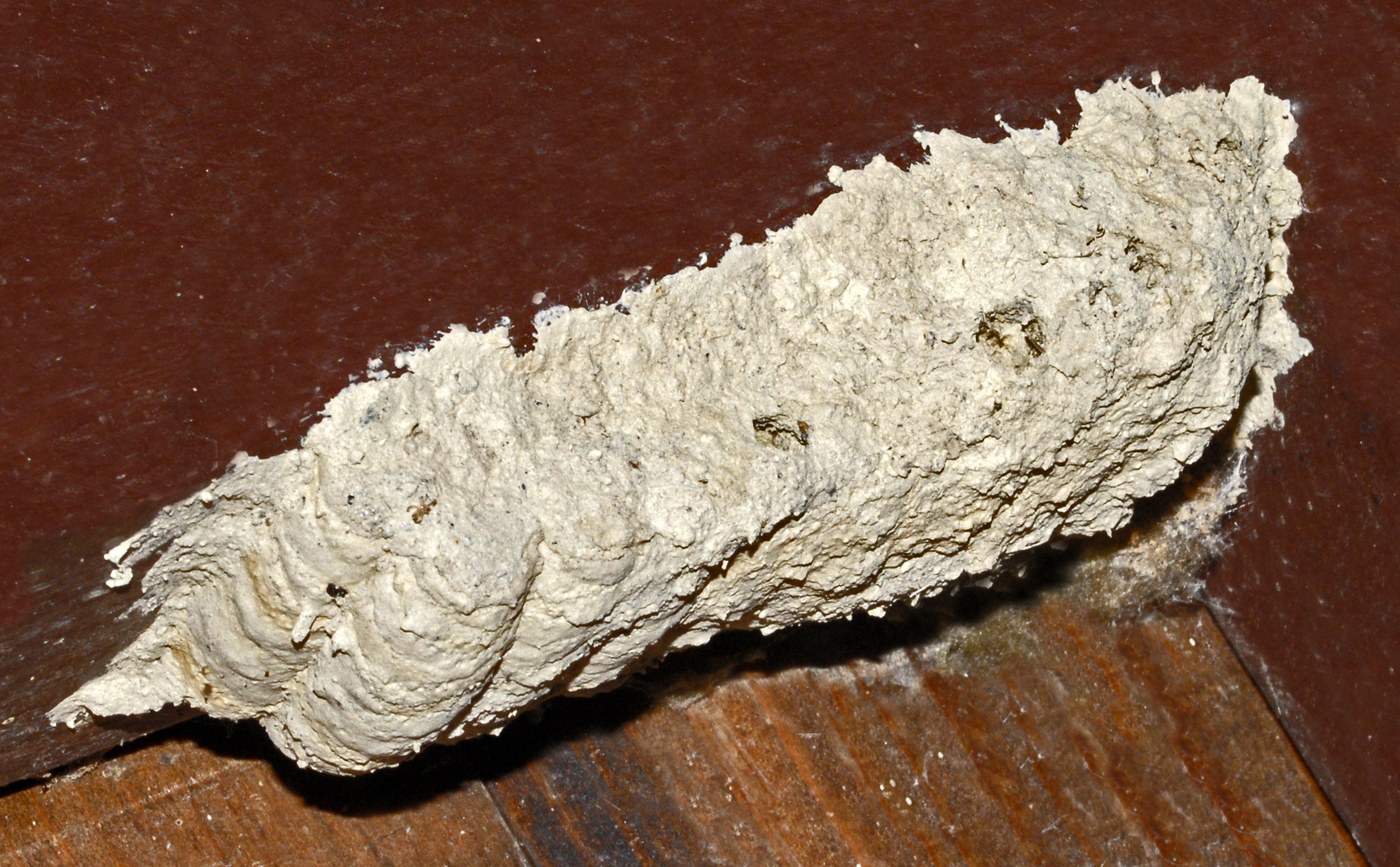
Mud dauber nest tube.
Sources
- QuickStats: Number of Deaths from Hornet, Wasp, and Bee Stings, United States, 2011-2021 Centers for Disease Control and Prevention
- ENTFACT-620: Controlling Wasps, Hornets and Yellowjackets University of Kentucky Department of Entomology
- Pest Notes: Bee and Wasp Stings, Publication 7449 University of California Statewide IPM Program
- HYG-2075: Yellowjackets Ohio State University Extension
- European Hornet Penn State Extension
- EENY-653: Black and Yellow Mud Dauber University of Florida IFAS Extension
- Allergy Facts, Figures and Stats Allergy and Asthma Foundation of America (AAFA)
- WSDA, USDA announce eradication of northern giant hornet from the United States Washington State Department of Agriculture
Image Credits
- Image: gbohne via Openverse. CC BY-SA 2.0. Resized, so this version is offered under the same license.
License. - Image: Alvesgaspar, via Wikimedia Commons. Licensed CC BY-SA 3.0; this resized copy is offered under the same license.
License. - Image: University of Minnesota Extension.
- Image: Stephan Sprinz, via Wikimedia Commons. Licensed CC BY 4.0.
License. - Image: Ryan Hodnett, via Wikimedia Commons. Licensed CC BY-SA 4.0; this resized copy is offered under the same license.
License. - Image: Rhododendrites, via Wikimedia Commons. Licensed CC BY-SA 4.0; this resized copy is offered under the same license.
License. - Image: Eugene Zelenko, via Wikimedia Commons. Licensed CC BY-SA 4.0; this resized copy is offered under the same license.
License. - Image: পাপৰি বৰা, via Wikimedia Commons. Licensed CC BY-SA 4.0; this resized copy is offered under the same license.
Source. License. - Image: Bpbmainer, via Wikimedia Commons. Licensed CC BY-SA 3.0; this resized copy is offered under the same license.
Source. License. - Image: N8ary, via Wikimedia Commons. Licensed CC BY-SA 4.0; this resized copy is offered under the same license.
Source. License. - Image: Makuabob, via Wikimedia Commons. Licensed CC BY-SA 3.0.
Source. License. - Image: Eugene Zelenko, via Wikimedia Commons. Licensed CC BY-SA 4.0.
Source. License. - Image: Bruce Marlin, via Wikimedia Commons. Licensed CC BY-SA 2.5.
Source. License. - Image: psionicman, via Wikimedia Commons. Licensed CC BY 2.0.
Source. License. - Image: Hectonichus, via Wikimedia Commons. Licensed CC BY-SA 4.0; this resized copy is offered under the same license.
Source. License.