Seasonal Timeline
Warm months, everywhere they occur. The Gulf Coast runs close to year round and Southern California is not far behind, while the Midwest and Northeast get a short June to September window.
Warm months, everywhere they occur. The Gulf Coast runs close to year round and Southern California is not far behind, while the Midwest…
The northern windows are short for a biological reason rather than a reporting one. The American cockroach is active around 70°F, prefers it above 82°F, and cannot tolerate freezing. Through a Midwest or Northeast winter it survives mainly in steam heat tunnels and large institutional buildings rather than out in the general environment, which is exactly why cold-month activity in a home is worth taking seriously.
Where They're Found
Found across the South Central states, the Southeast, California, the Midwest and the Northeast. The name changes with the region, and the names cause real confusion. In the Southeast both species get called palmetto bugs, a term that actually covers all four of the large outdoor cockroaches found there, running roughly 1 1/4 to 2 inches. In the Midwest the American cockroach is the sewer roach, which matches where basement and drain sightings concentrate. Water bug is used almost everywhere and is the least useful of the three, because in California that name usually points at the oriental cockroach instead, a different insect that stays at ground level and cannot fly.
Life Cycle
The arithmetic runs the opposite way from the German cockroach. These two are slow. Sources put development from egg to adult anywhere between six months and two years, with about 600 days the most cited single figure, and they disagree on the molt count as well: 10 to 13 in one University of Florida text, six to 14 in another, and LSU declines to give a number for the smokybrown at all. Adults then live months longer, up to a year or more for the American and somewhere between two months and about 215 days for the smokybrown depending on the source. The practical meaning is worth stating. A large cockroach you find today may have hatched more than a year ago, and a population like this does not appear out of nowhere in a season. It is a slow, structural problem, which also means a job done properly tends to stay done.
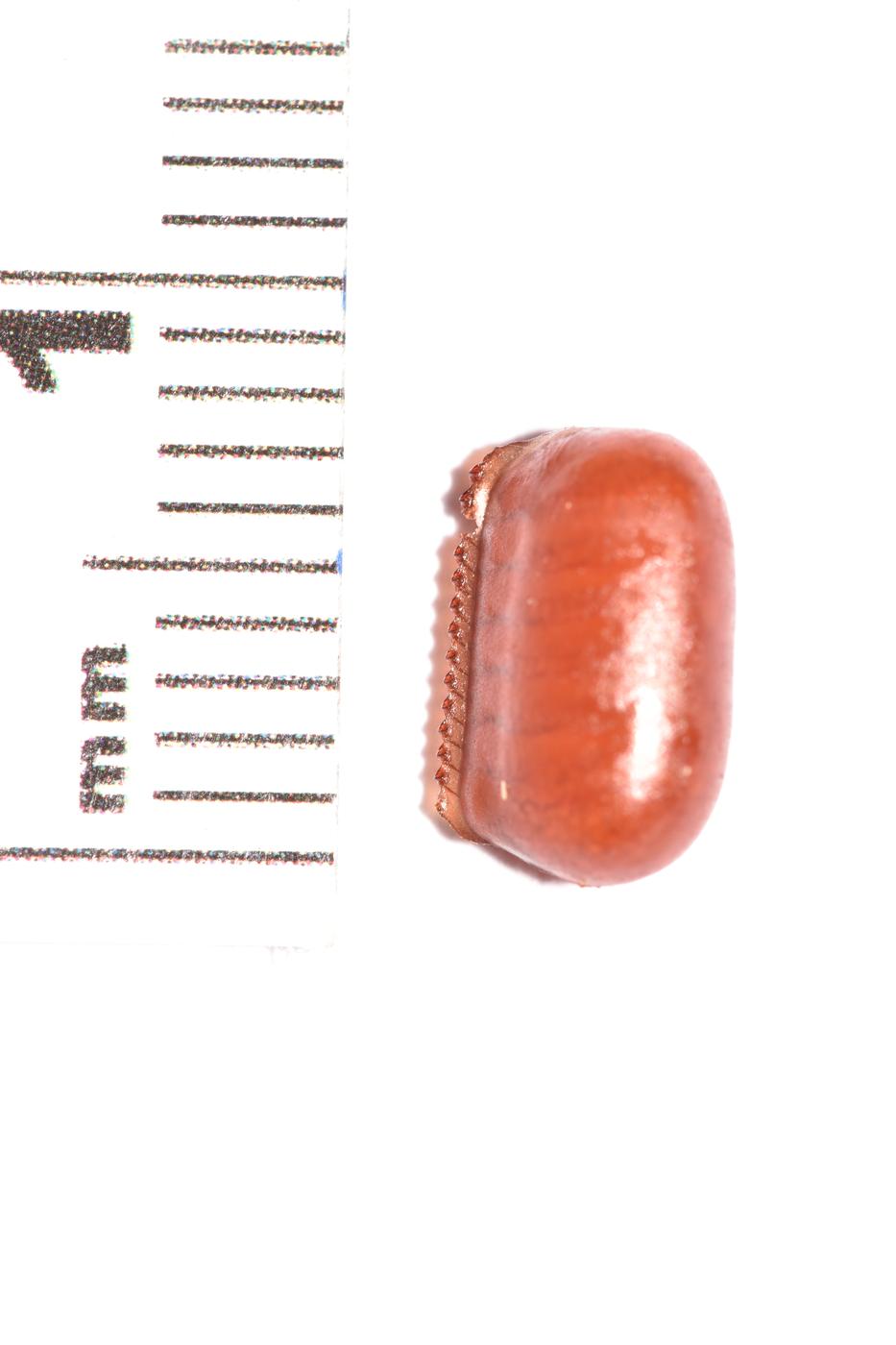
Egg case1
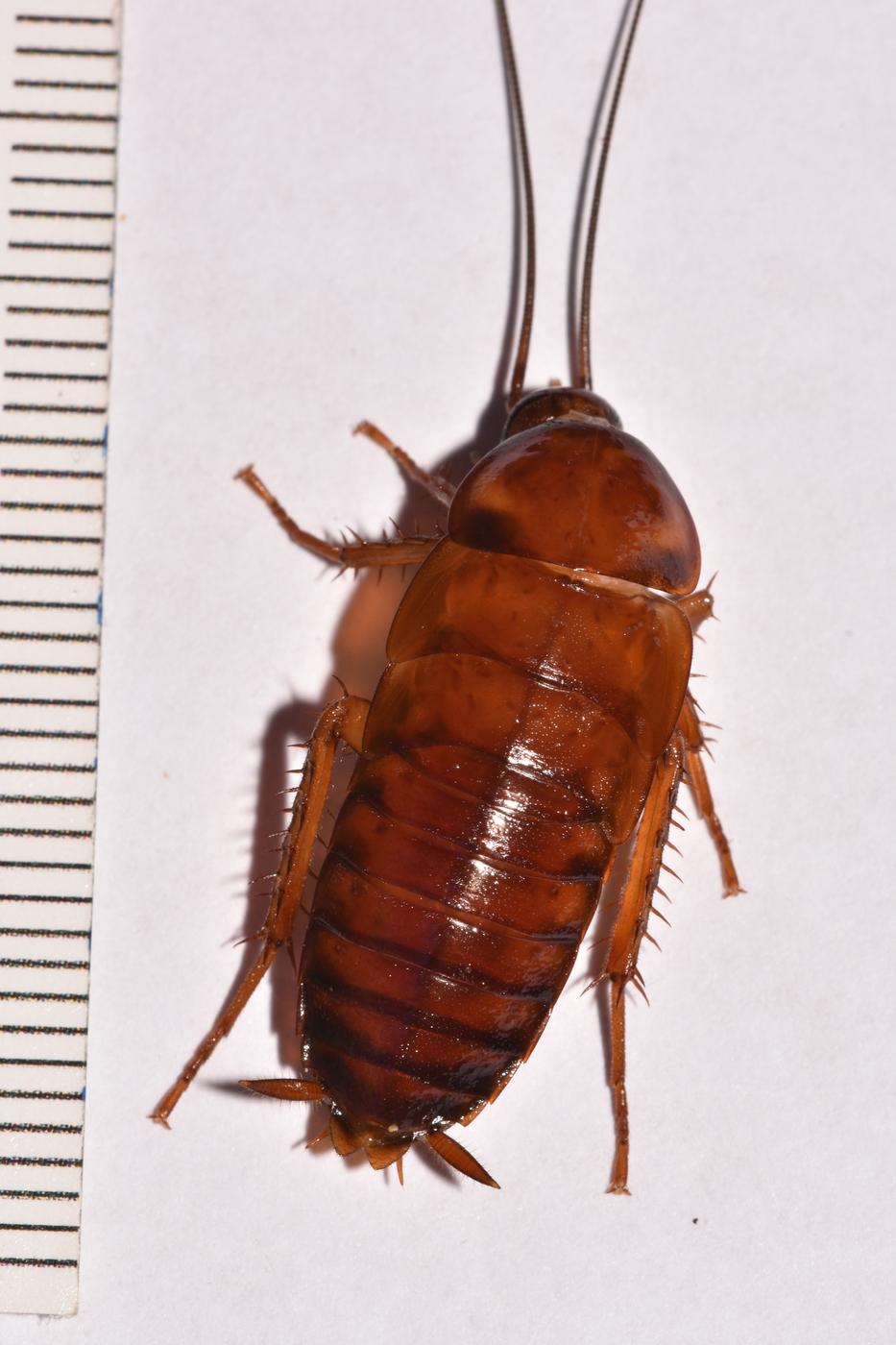
Nymph1
Adult1

Side by side
Identification
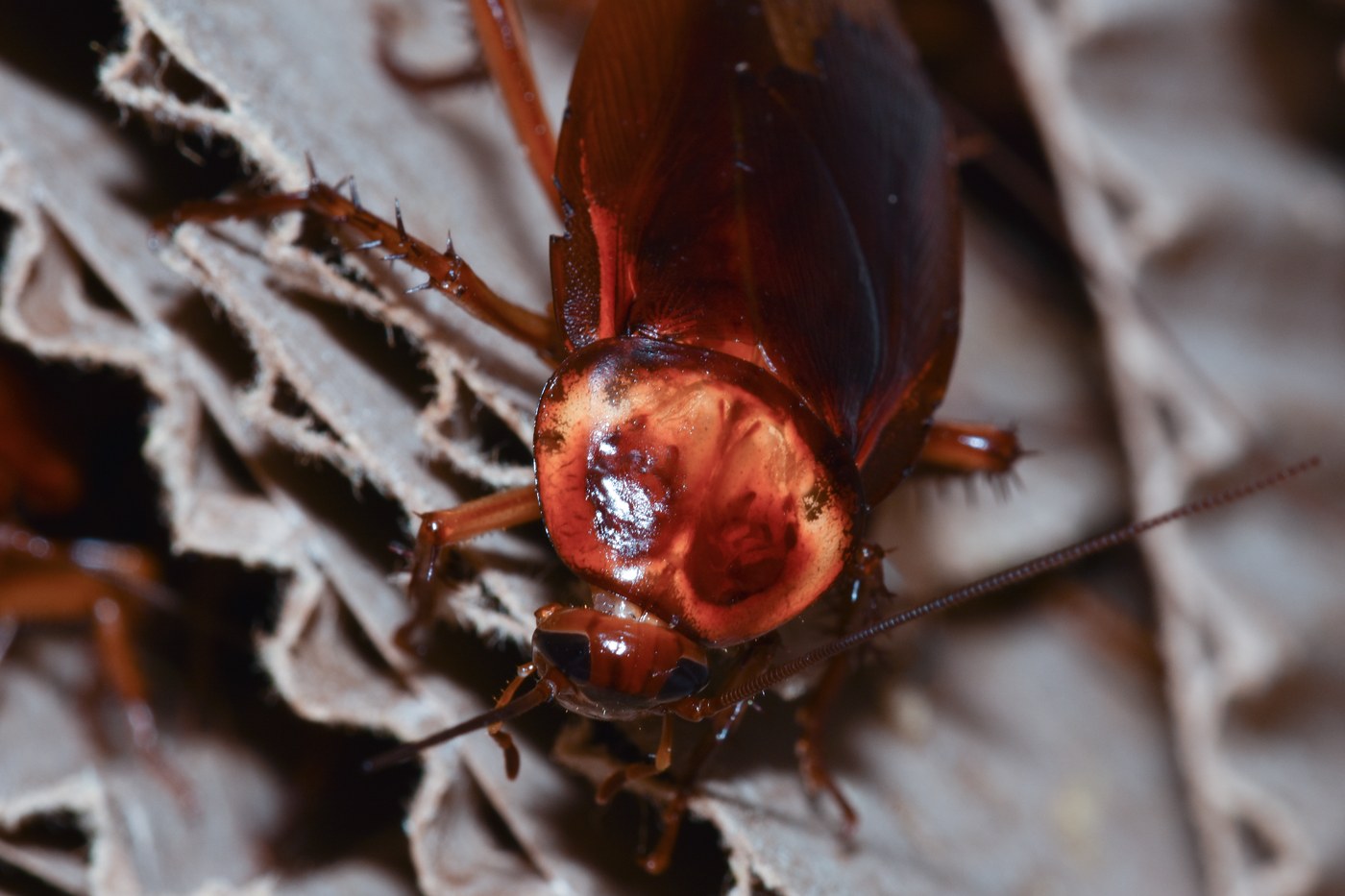
The American cockroach's pale marking
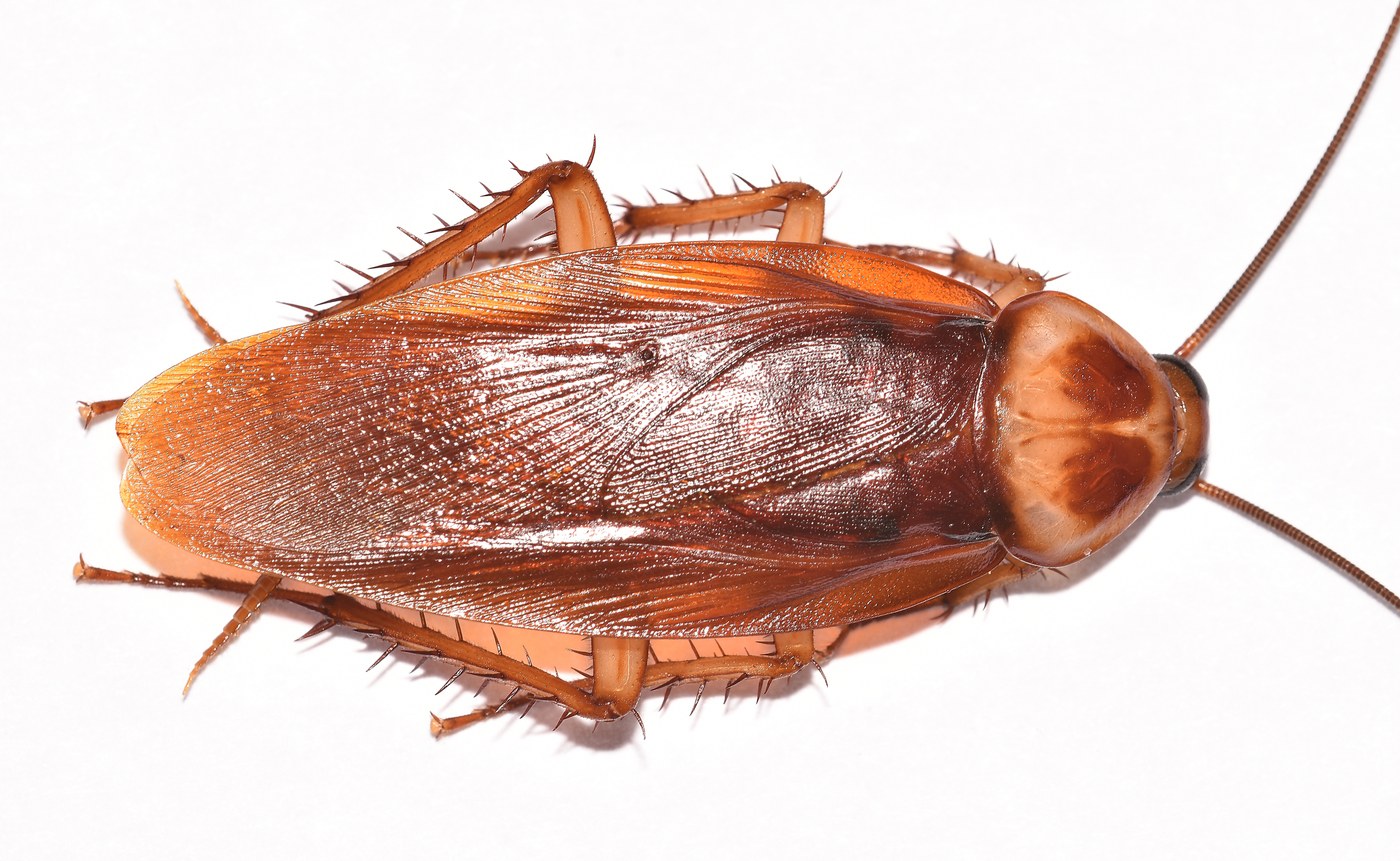
The American cockroach is reddish brown with a pale marking behind the head. Look at the pronotum, the shield covering the area behind the head. It carries a pale yellow or light brown band around its outer edge, often described as a yellowish figure-8 pattern, with a darker center. Adults run 34 to 54 mm, roughly 1 3/8 to 2 1/8 inches, which makes this the largest cockroach commonly found in homes.
The smokybrown carries no marking
The smokybrown is uniformly dark and carries no marking at all. Shiny dark brown, mahogany, sometimes close to black, with nothing on the pronotum. The absence of that pale border is the whole identification. It is smaller on average, 25 to 38 mm, roughly 1 to 1 1/2 inches, with wings extending past the abdomen in both sexes and antennae as long as the body or longer.
If you have no body, use the source
If the body is not in front of you, use where it came from. Out of a floor drain, a bathroom fixture or a basement, reddish brown, marked behind the head: American. Flew to a porch light on a warm humid evening, uniformly dark, unmarked: smokybrown. The American has well-developed wings but seldom flies, gliding down more readily than flying up. The smokybrown is a strong flier and is strongly attracted to light, which is why lighting is a control variable for it and not for the others.
Nymphs are the most useful find
Smokybrown nymphs are the most useful thing you can find. Dark brown to black, with a white band at the tip of the antennae and a white band across the back just behind the thorax. First instars are only 1/8 to 3/16 inch. They also barely move, so finding one means an egg case hatched close by rather than an insect wandering through.
The lookalikes worth knowing
The brown cockroach is the closest match to the American, and the tell is the antennae on first-instar nymphs, white at the tips on the brown cockroach and uniformly brown on the American, plus broader end segments on the cerci. The Australian cockroach is darker and smaller at 31 to 37 mm, with a yellow-bordered thorax and yellow streaks on the forewings. The oriental cockroach is shiny black, about 1 to 1 1/4 inches, sluggish, stays at ground level, does not fly and cannot climb smooth vertical surfaces. In California the Turkestan cockroach is displacing the oriental, and its males can pass for a small American cockroach until you notice the yellowish-beige wings with cream-colored stripes along the edges.
Neither one is native
There are 47 species in the genus Periplaneta and none of them originated in the United States. Periplaneta americana came from Africa, recorded here as early as 1625, and the smokybrown most likely came from Asia.
Signs of Infestation
The insect itself, usually just one
The insect itself, and usually just one of them. Large, fast, running for dark cover when a light comes on. Because both species live outdoors, a single big cockroach in the bathtub is more often a wanderer than an infestation. What turns a sighting into a problem is repetition, and where it repeats.
Droppings, and the common mistake
Droppings, and the mistake almost everyone makes. American cockroach droppings show up as pellets or smears. The pellets are about 1/4 inch long with flat, blunt ends and ridges along the sides. Mouse droppings are about the same length but taper to a point. Check the ends before you decide what you are dealing with, because it changes the entire treatment.
Fecal smears mark the harborage
Dark spots and smears show where they rest and where to concentrate. These species build no nest, but they do gather in response to an aggregation pheromone in their own droppings, so scrubbing the spotting off with hot soapy water matters as much as killing the insect. Vacuum up the droppings and shed skins with a HEPA or triple-filter vacuum, since that debris is where the allergen lives.
An oily, offensive odor
Cockroaches secrete an oily liquid with a sickening smell that transfers onto dishes, food and clothes that look perfectly clean. Their excrement, whether as pellets or as an inklike liquid, adds to it.
Egg cases, shed skins and dead cockroaches
The American cockroach's case is about 8 mm long and dark, often cemented to a surface near a food source. Check basements, laundry rooms, behind appliances and under cabinets.
Where to look, by species
Where to look depends on which species you have. For the American, look low and near water: floor drains, under sinks, crawl spaces, basements, the water heater. American cockroaches are also thigmotactic, meaning they prefer harborage that presses on them top and bottom, which is why they wedge into cardboard box flaps and the gap behind a wall-mounted fixture. For the smokybrown, look up: attics, soffits, rain gutters, tree holes, the fireplace. A bright flashlight is the tool, and sticky traps set flat against a wall near exterior doors and suspected entry points are the best way to find out which species you actually have.
Sewer or attic is a tendency
Treat the sewer and attic split as a tendency, not a rule. The University of Georgia puts the American cockroach in sewers and says it is rarely, if ever, found in attics, and puts the smokybrown in attics and says it is rarely, if ever, found in sewers. That is the cleanest version of the contrast and it is the one to work from. But four other university sources place smokybrowns in or near sewers and drainage systems, so a smokybrown coming out of a drain is unusual rather than impossible.
Prevention and When to Call a Pro
The usual advice inverts here
The advice inverts for these two, and that is the most important thing to know about them. German cockroaches live indoors and nowhere else, so cleaning and baiting the kitchen genuinely works on them. These two live outdoors and come in. The reservoir is the sewer, the mulch bed, the tree hole and the gutter, not the crumbs under your stove. More than 5,000 American cockroaches have been counted in a single sewer manhole. You cannot sanitize that away, and it is not on your property. For this pair the work is exclusion and moisture.
Seal the gaps, and know their size
Seal the gaps, and know how small they are. An adult American cockroach fits through a 3 mm gap, the height of two pennies stacked. Caulk them. Fit door sweeps and weather stripping on every exterior door, keep window and soffit screens in repair, screen or seal attic vents, outside drainage lines and sewer vents, and seal around plumbing and electrical penetrations. Tightly packed steel wool works as a temporary filler. Indoors, the gaps people miss are missing escutcheon plates, unsealed edges around sinks and cabinets, and the unsealed edges of wall-mounted electrical panels, mirrors, light fixtures and fire alarms. For scale on the rest of it, adults can squeeze into cracks of about 1/16 inch and actively prefer spaces around 3/8 inch.
Drains are the front door
Drains and traps are the American cockroach's front door. They forage up out of sewers into the ground floor of a building, especially where pipes are damaged, screens are missing, or the water traps in drains are dry or faulty. Keep drain traps full or capped. Clean drains with an enzyme or bioremediation cleaner to strip out the organic film they feed on. A broken or uncapped drain or sewage pipe inside a wall or under a floor is a genuine and hard-to-find source.
Dry the perimeter out
A smokybrown cannot hold on in a dry perimeter. Smokybrowns lose water through the body wall faster than other cockroaches, so they need high humidity and still air, protected from the drying effect of wind. That single physiological fact predicts every place they live: the tree hole, the mulch bed, the closed-up attic. So keep mulch under 2 inches deep, in a thin layer extending about 1 foot out from the foundation so it can dry. The large outdoor cockroaches breed prolifically in pine straw and poorly in gravel or bare soil, which is why a 6 to 12 inch band of gravel around the building is worth considering. Keep groundcovers at least 1.5 feet off the foundation walls and get rid of ivy, a favorite breeding site. Trim shrubs and any branch overhanging the roof, which is a named route into a structure. Fill tree holes. Ventilate crawl spaces, check the vapor barrier, and make sure rainwater and A/C condensate drain away from the foundation.
Fix the roof and gutters
Fix the roof and the gutters. Smokybrowns feed on bird droppings and plant material in rain gutters, which makes the gutter the food and the harborage at the same time, and a leaky roof will draw them in. Clean organic material out of gutters and drains, clear window wells holding water, rotting leaves or damp wood, and stack firewood off the ground and well away from the house.
Move the porch light
Smokybrowns are strong fliers, strongly attracted to light, and they come in through lit openings at night. Position exterior lighting so it does not draw insects to doorways. This step does nothing at all for a German cockroach and a great deal for this one.
Why bug bombs fail here
Bug bombs are still the wrong answer, for a more basic reason than usual. With a German cockroach the case against foggers is that they cannot reach into the cracks where the insects live. Here it is simpler than that. The population is in a sewer or a mulch bed outside your walls, so no indoor treatment reaches it at all. Foggers also disperse cockroaches into surrounding rooms and buildings without killing them.
Boric acid, indoors only
Boric acid picks up a new limit: indoors only. It behaves the same way it does on a German cockroach and the same application rule applies, but it is toxic to plants and is not recommended for outdoor use, and it discolors some fabrics. Since the harborage for these species is the planter and the mulch bed, the indoor dust that works so well on German cockroaches mostly does not transfer to the place that matters.
Bait stations are often too small
Standard bait stations are often too small for these cockroaches. The openings in most stations will admit small nymphs, but adults and large nymphs of these species may not fit through them. Get stations rated for the larger outdoor cockroaches, or use gel bait and granular bait instead. Then bait the reservoir rather than the kitchen: water meter boxes, drains, under concrete slabs, around the building perimeter, in wood piles and around planters, with granular bait broadcast into mulched areas and applied within about 3 feet of the house, in pine straw, fallen leaves, ivy, garden borders and around large rocks and railroad ties. UF/IFAS puts that outdoor approach at an 80% or better reduction in cockroach numbers. Never spray a liquid insecticide where bait has been applied, because it drives them off the bait.
When not to call
This comes first, because it is the honest answer. UF/IFAS states plainly that outdoor cockroaches do not survive well indoors, that people often overreact to finding one, and that removing the cockroach you found is often all the control that is needed. One large roach in the bathtub is usually a wanderer rather than an infestation.
When to Call a Pest Control Professional
Repeat sightings coming out of a drain, floor drain or bathroom fixture, which point at the sewer reservoir or a failed trap that you cannot inspect. Smokybrown first instars indoors, the 1/8 inch nymphs with white antennal tips, because they barely move and so hatched inside your envelope. Sightings in an attic or near a fireplace in the South, which usually have a roof or moisture defect behind them. And any American cockroach activity in the Midwest or Northeast during the cold months, which means an indoor or sub-structural reservoir rather than seasonal wandering. The framing that makes the decision easy: outside a genuinely warm, humid environment, a cockroach indoors is evidence of an entryway. The roach is the symptom. The gap is the problem.
Frequently Asked Questions
Why do cockroaches come inside after it rains?
Because they were never really inside to begin with. UF/IFAS records that the American cockroach is rarely found in houses, but that infestations can occur after heavy rain. The reservoir they arrive from is the sewer and drainage system, and they come up from it through the plumbing and through drain water traps that are dry or faulty. LSU generalizes the trigger further: older homes with outdated or degraded seals are the ones hit hardest after extreme weather, whether that is rain, cold or heat. The mirror image is also true. During drought they come indoors looking for moisture, and when it turns cold they come in looking for warmth. Water, not food, is the thing they are chasing.
What is a palmetto bug, and how do I tell an American cockroach from a smokybrown?
"Palmetto bug" is not one species. In the South it is used for any of the four large outdoor cockroaches found there, the American, smokybrown, Australian and brown, which all run roughly 1 1/4 to 2 inches long. To separate the American from the smokybrown, look behind the head. The American cockroach is reddish brown with a pale yellow band around the edge of the shield behind its head, and runs 34 to 54 mm. The smokybrown is uniformly dark mahogany to near black with no marking at all, and is smaller at 25 to 38 mm. If it flew to your porch light, it is far more likely the smokybrown. If it came up out of a drain, it is far more likely the American.
Does one big cockroach mean I have an infestation?
Usually not, and it is worth saying so. These are outdoor species that do not survive well indoors, and UF/IFAS says that removing the one you found is often all the control needed. Two things change that answer. Repeat sightings out of a drain, which point at a reservoir you cannot reach. And tiny nymphs about 1/8 inch long with white antennal tips, which are barely mobile and therefore mean an egg case hatched nearby.
Are those droppings from a mouse or a roach?
Check the ends. American cockroach droppings are pellets about 1/4 inch long with flat, blunt ends and ridges along the sides. Mouse droppings are a similar length but taper to a point at each end. It is one of the most common misidentifications in a home inspection and it sends the whole treatment in the wrong direction.
Can these cockroaches make you sick?
The allergen risk is the settled one. Five university sources independently document that cockroach allergens, carried in the droppings, shed skins and body parts, cause reactions up to and including severe asthma, and UC IPM identifies indoor cockroach infestations as a risk factor for the development of asthma in children, with allergen levels tracking cockroach density. Pathogen transfer is a separate question and the evidence is species-specific. Because American cockroaches contact human waste in sewers, they are capable of transmitting bacteria that cause food poisoning, including Salmonella and Shigella, and at least 22 species of pathogenic bacteria, viruses, fungi and protozoans plus five species of parasitic worms have been isolated from field-collected American cockroaches. No source publishes a pathogen claim specific to the smokybrown, beyond a general statement that outdoor cockroaches can deposit microbes when they enter a home. Note the wording throughout: capable of transmitting, not known to transmit.
Photo Gallery
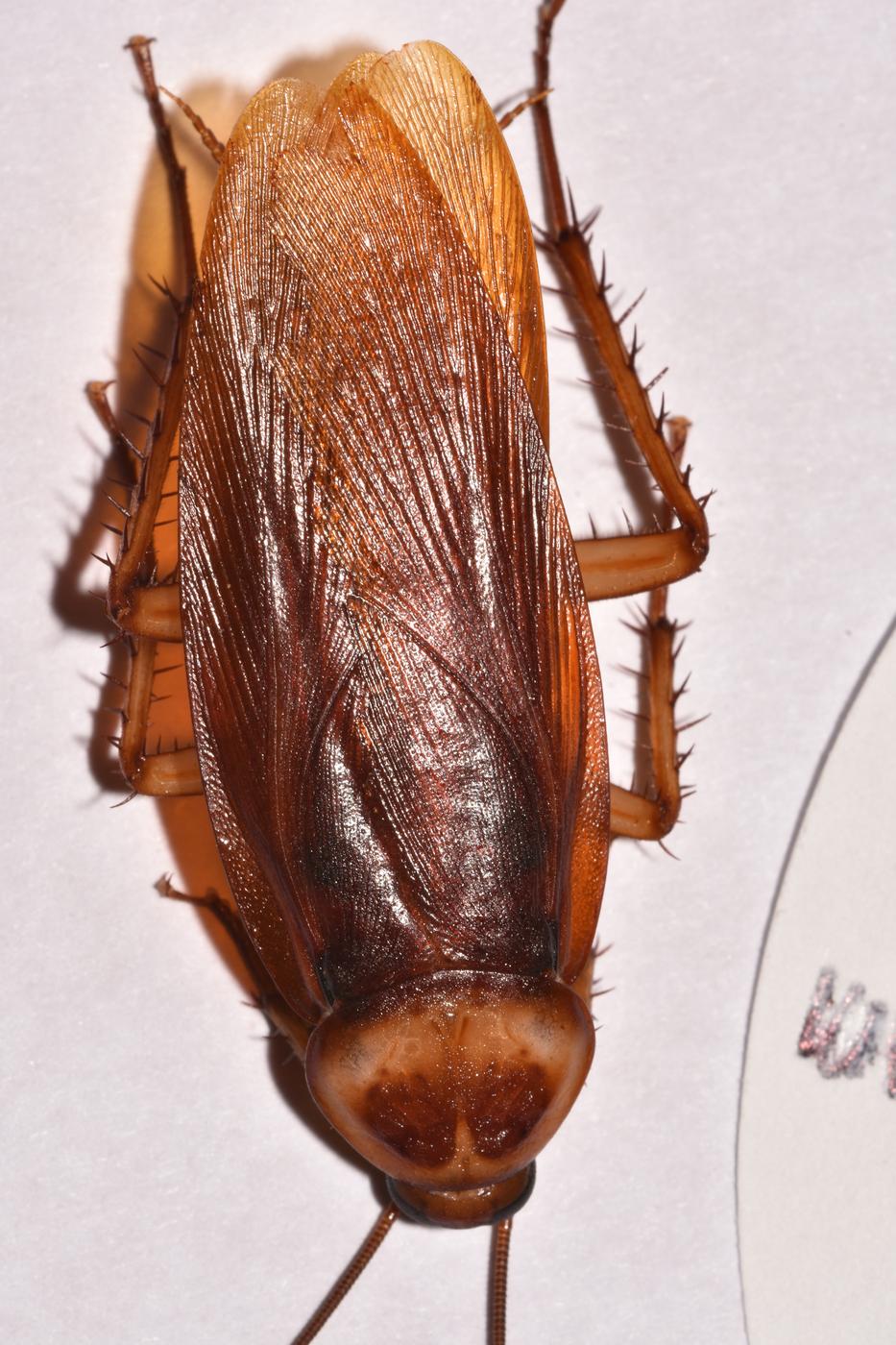
Adult, dorsal, with scale.
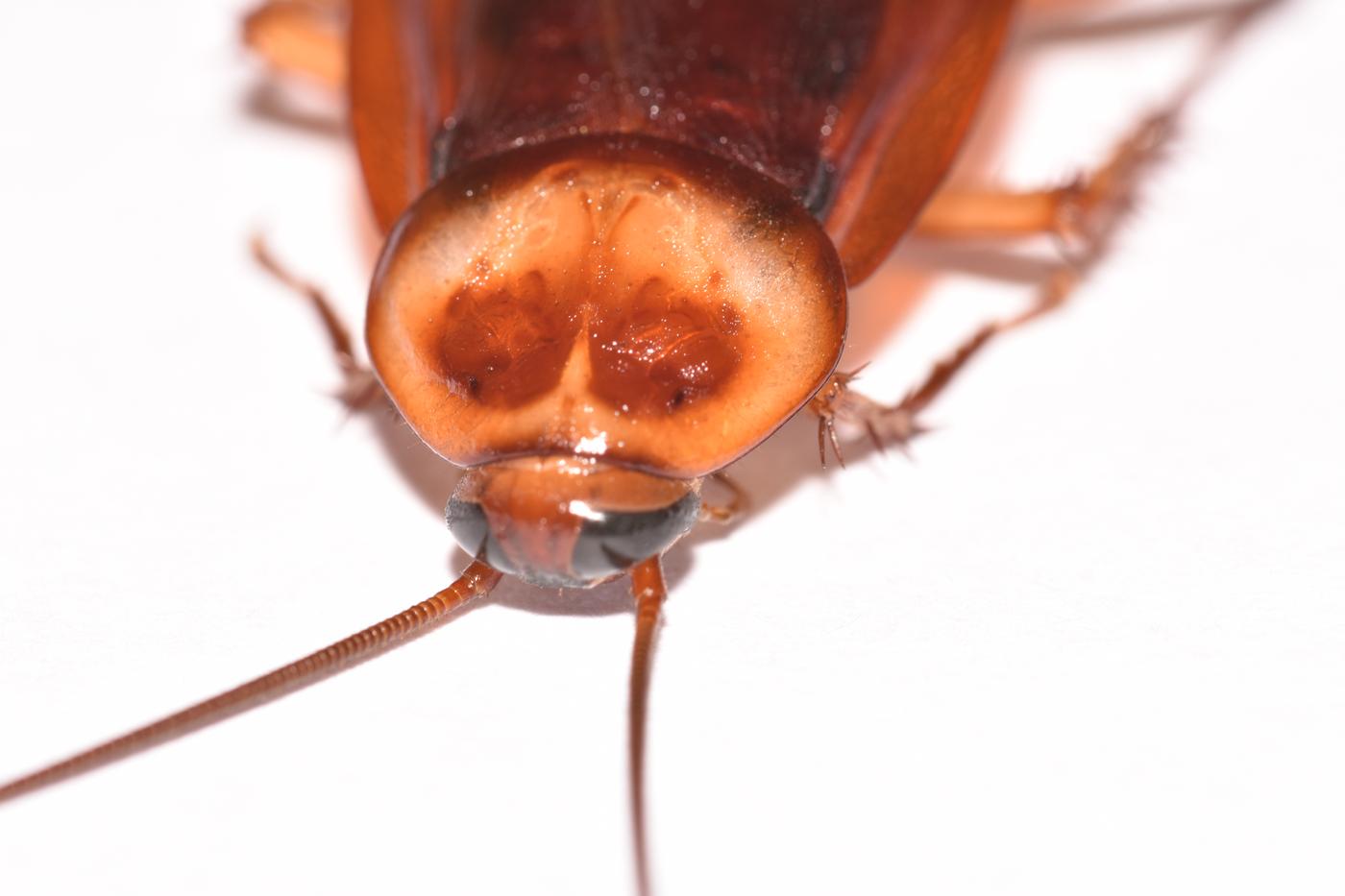
Pronotum marking close-up.
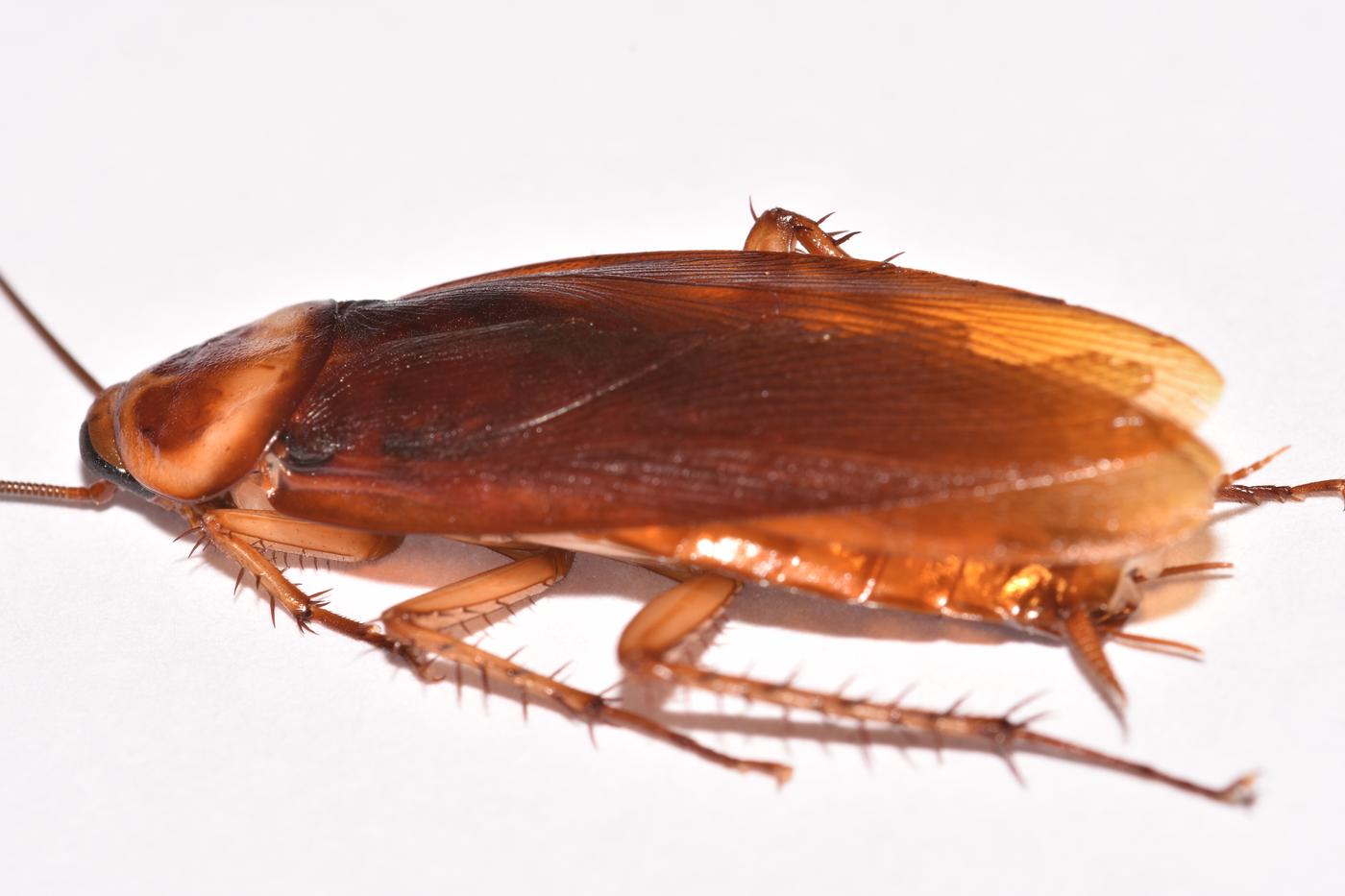
Adult, lateral profile.
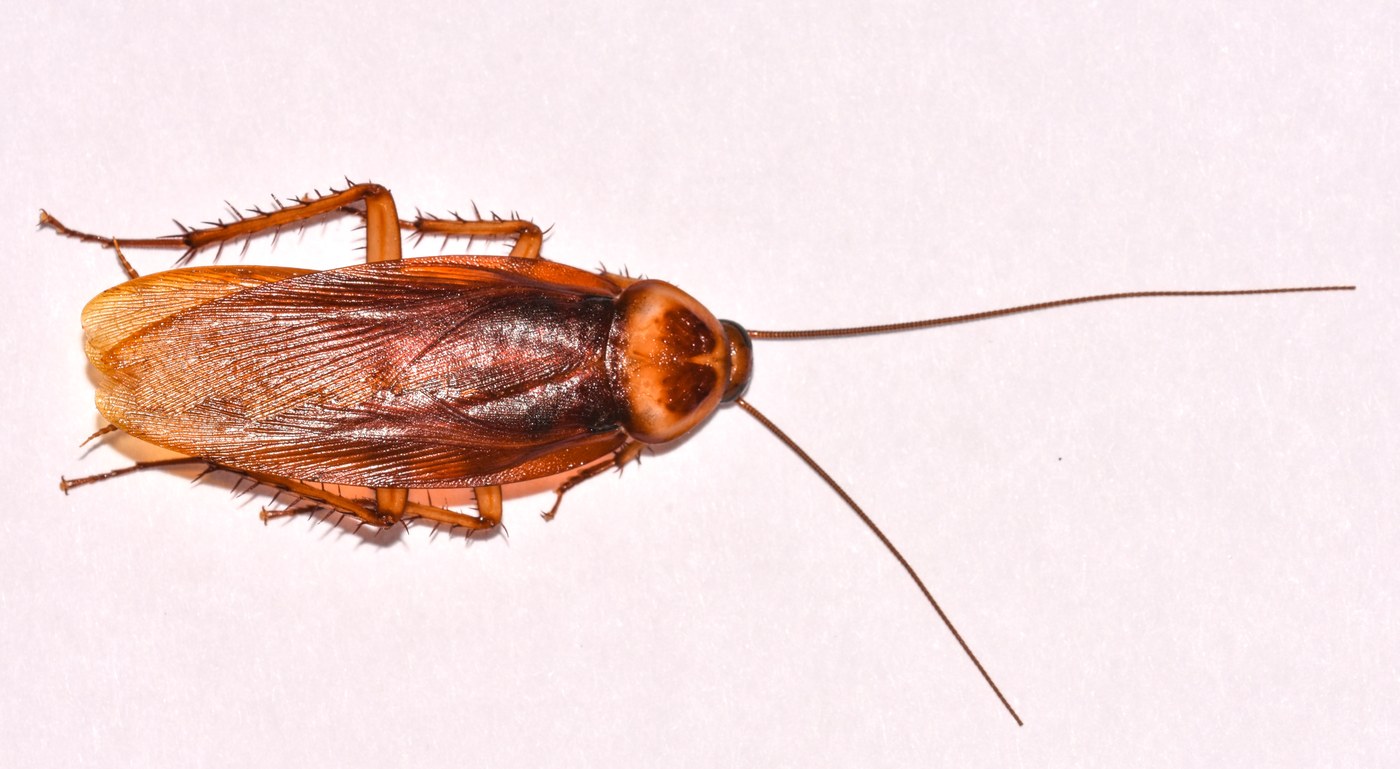
Adult with antennae extended.
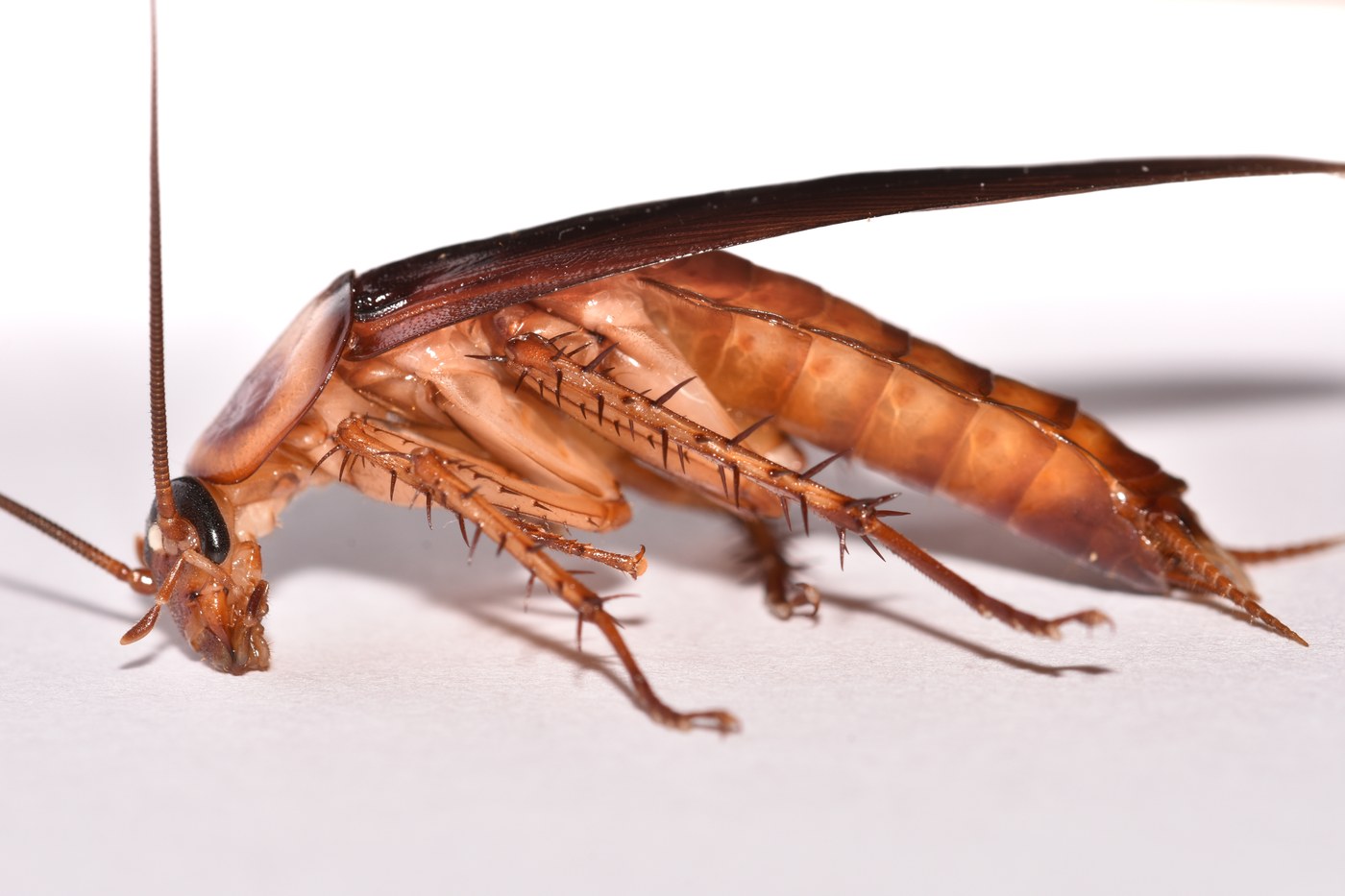
Adult, wings raised.
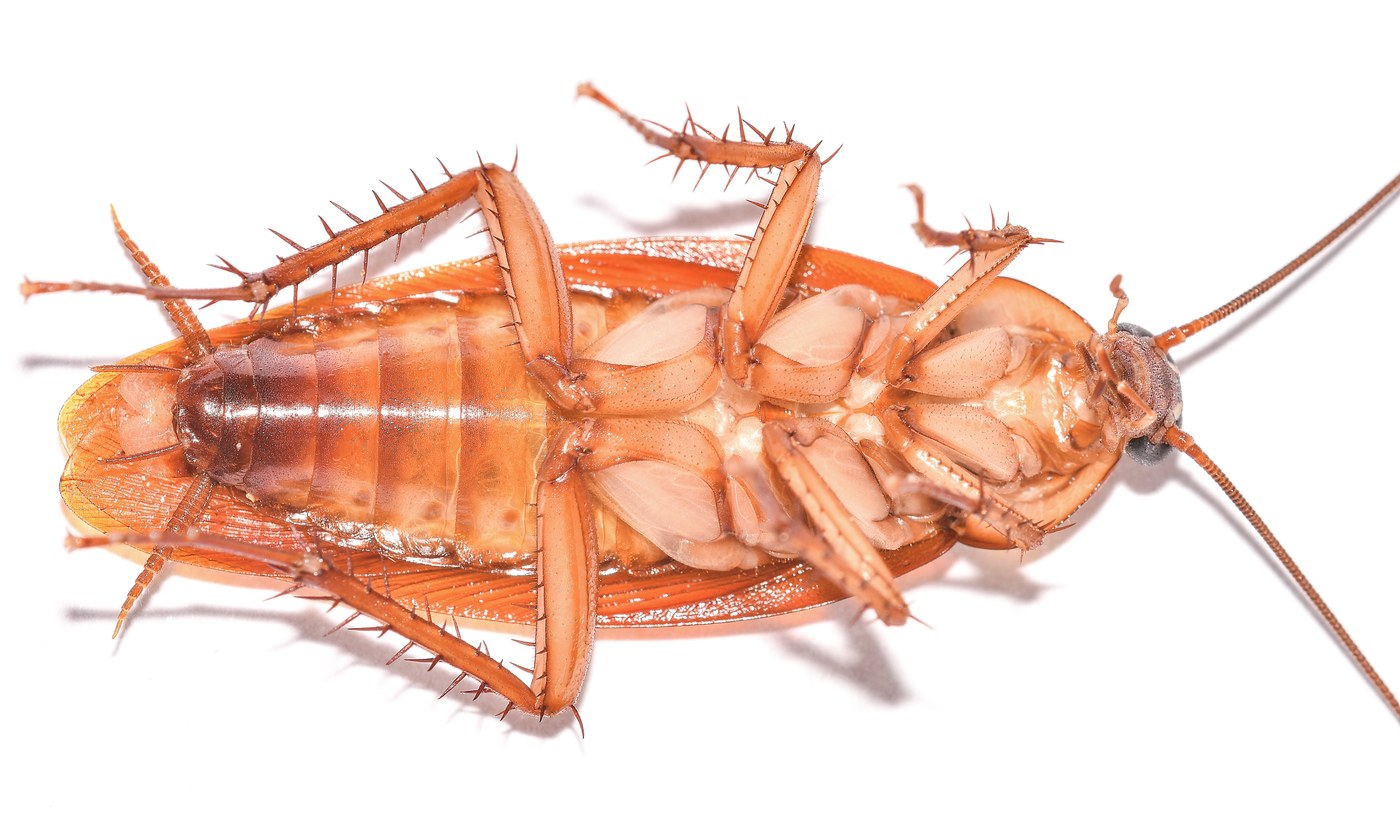
Adult, ventral view.
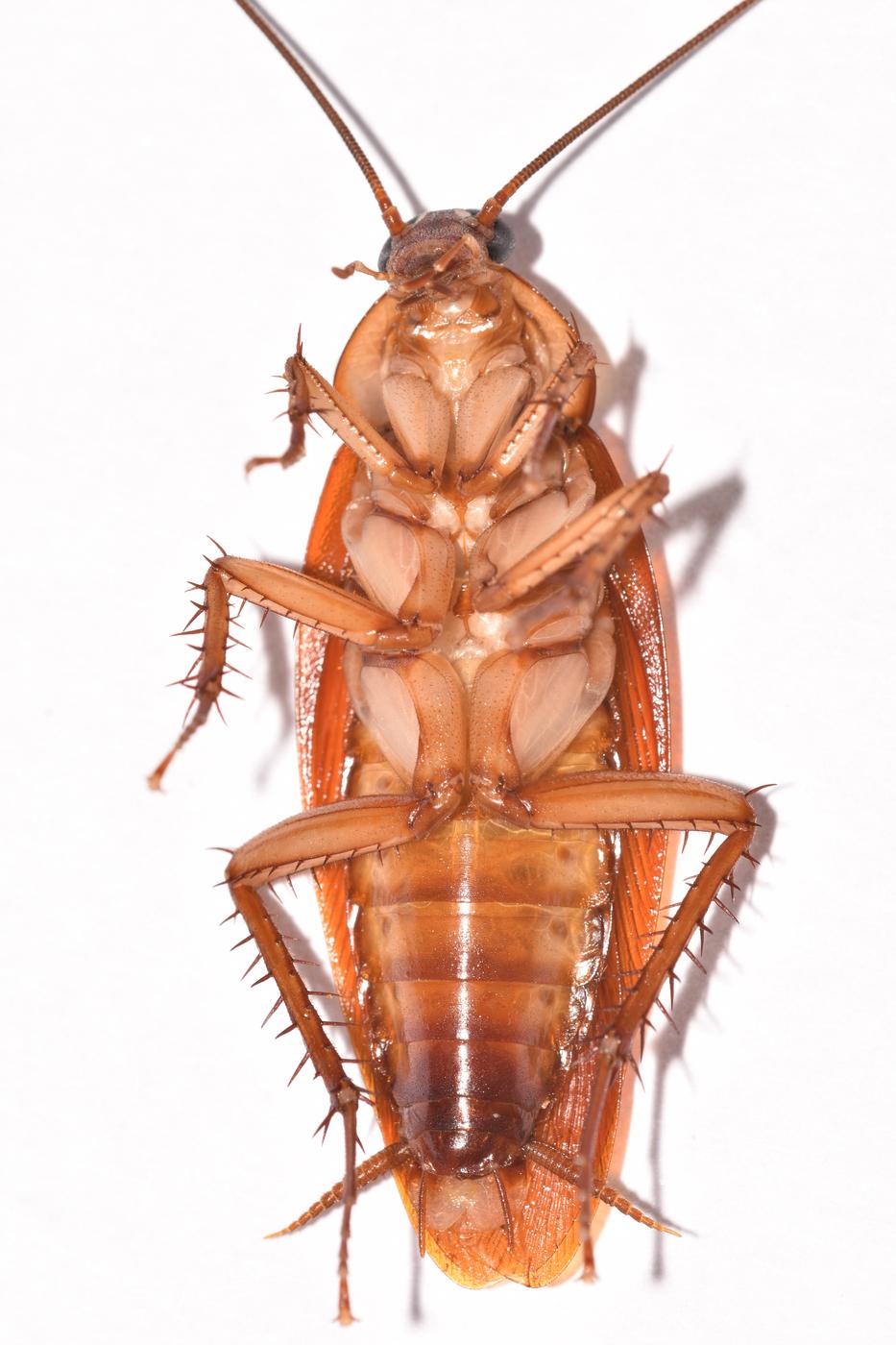
Adult, ventral, legs splayed.
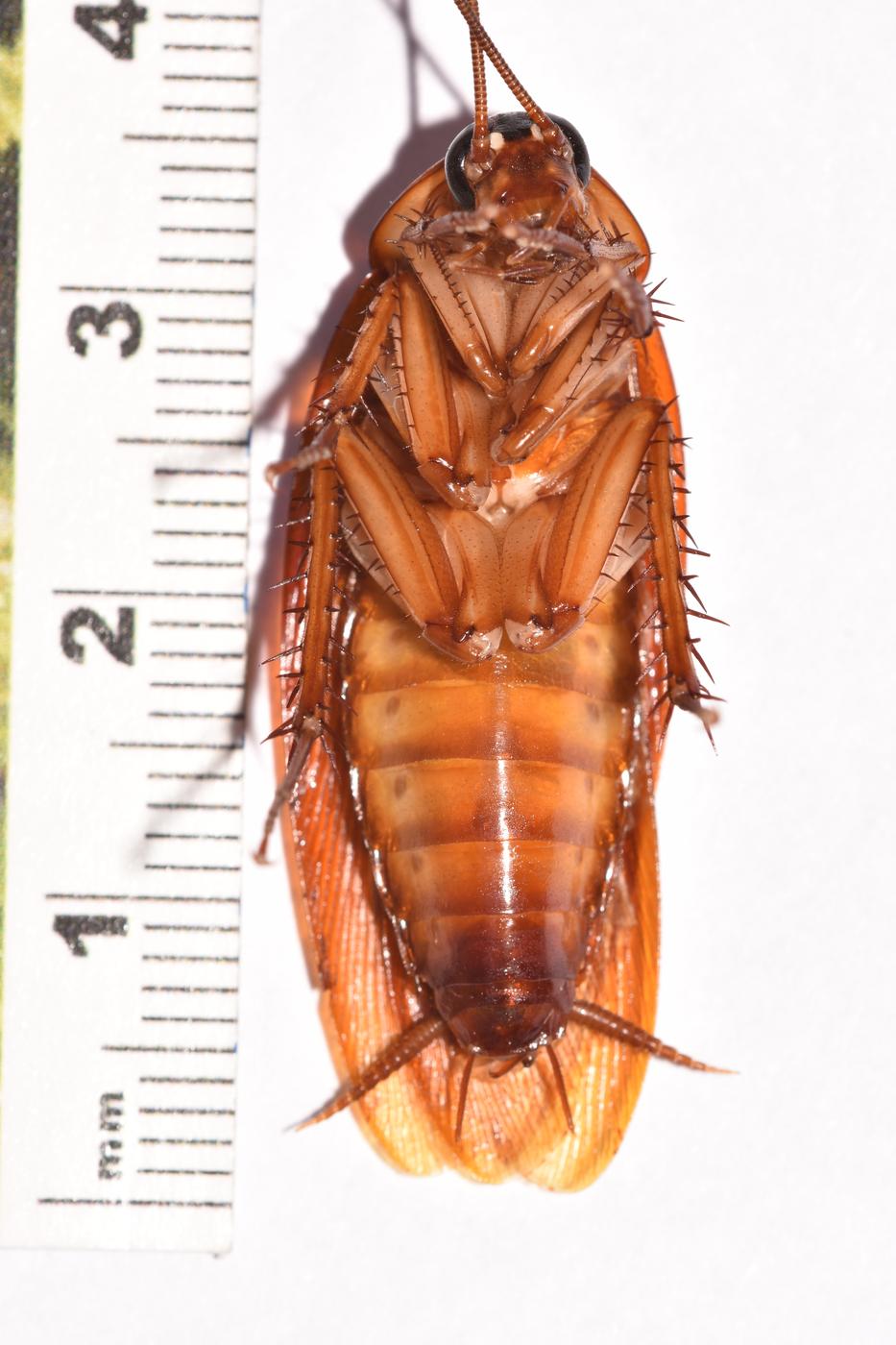
Adult, ventral, with ruler.
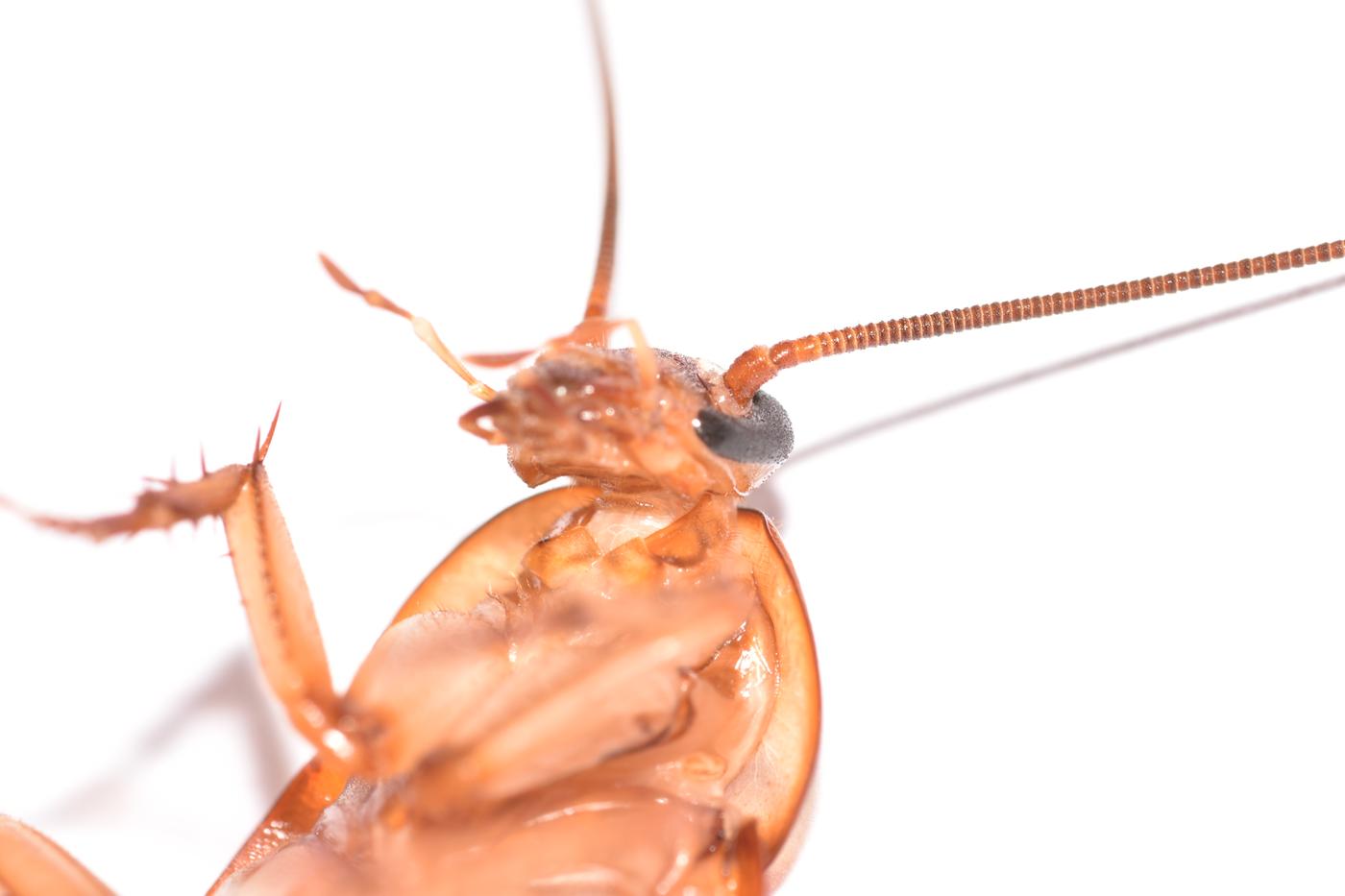
Ventral head close-up.
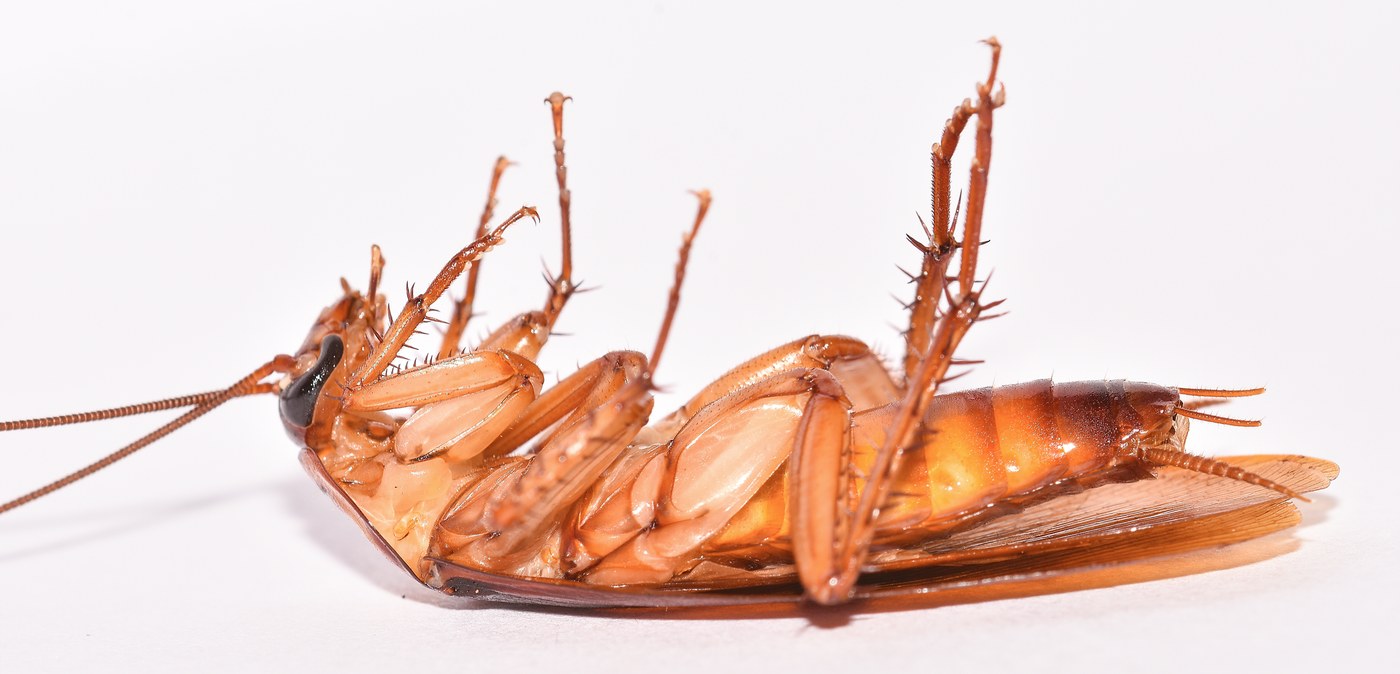
Adult on its back, side view.
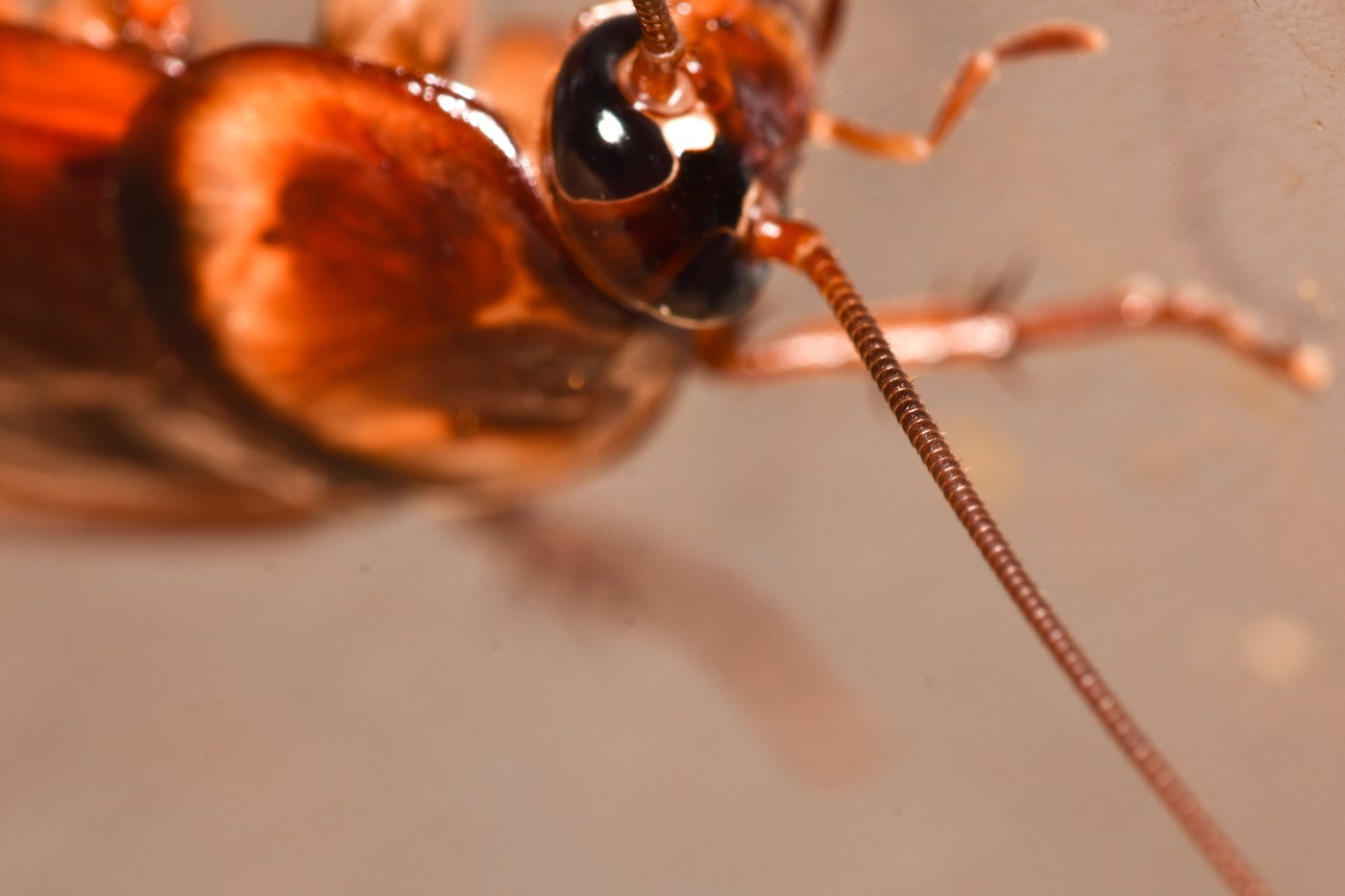
Eye and antenna macro.
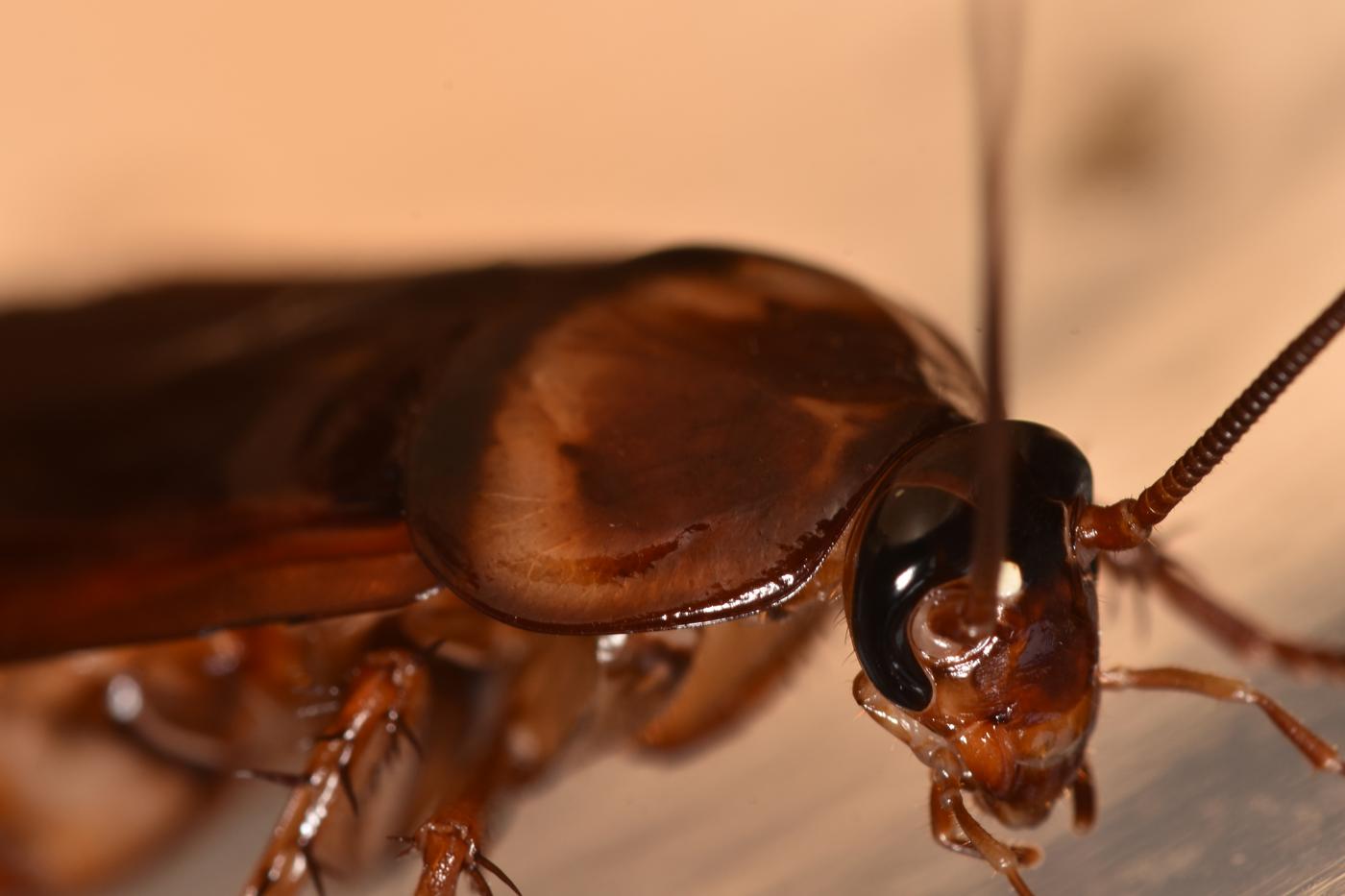
Head and pronotum profile.
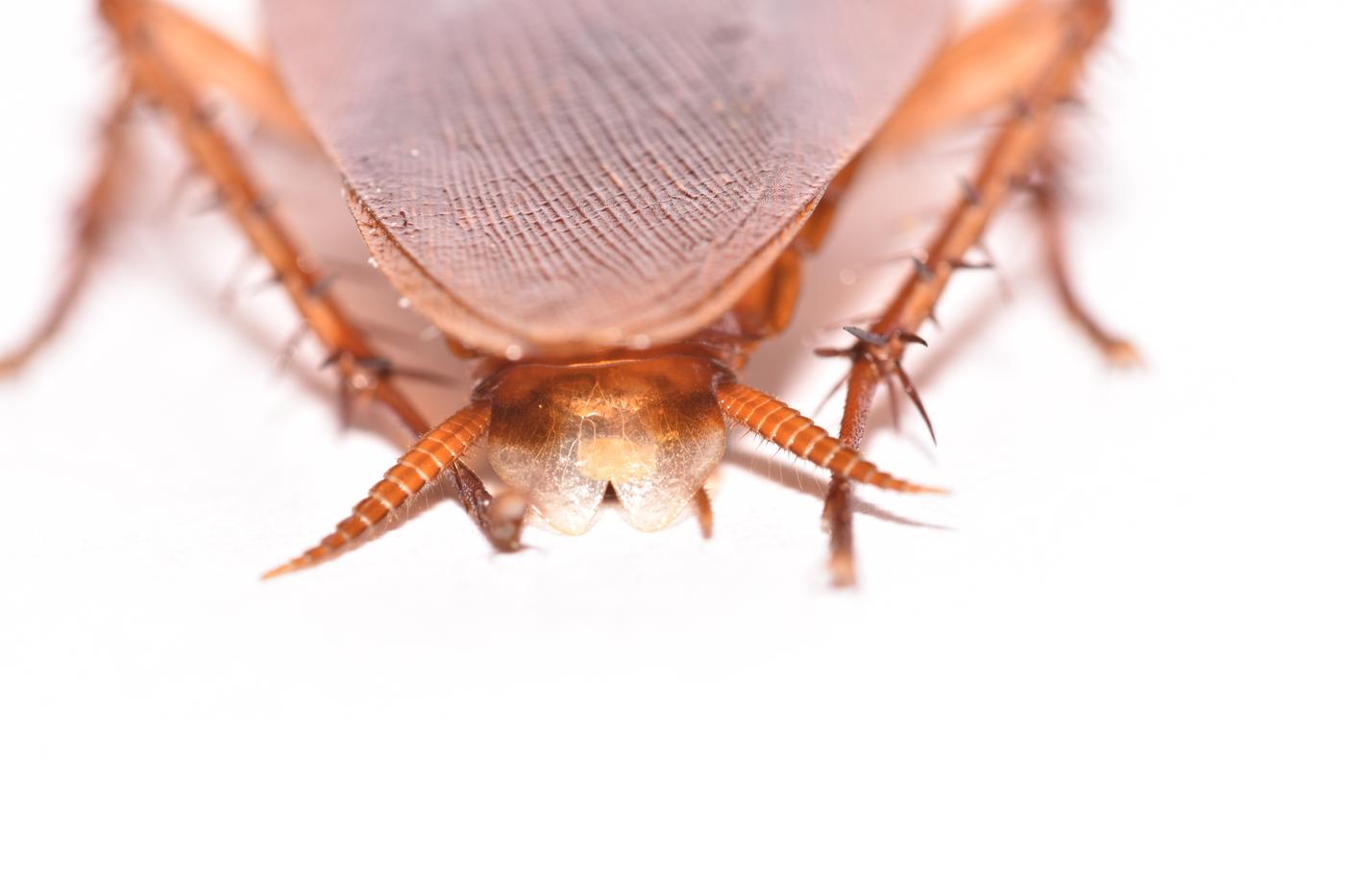
Rear cerci close-up.
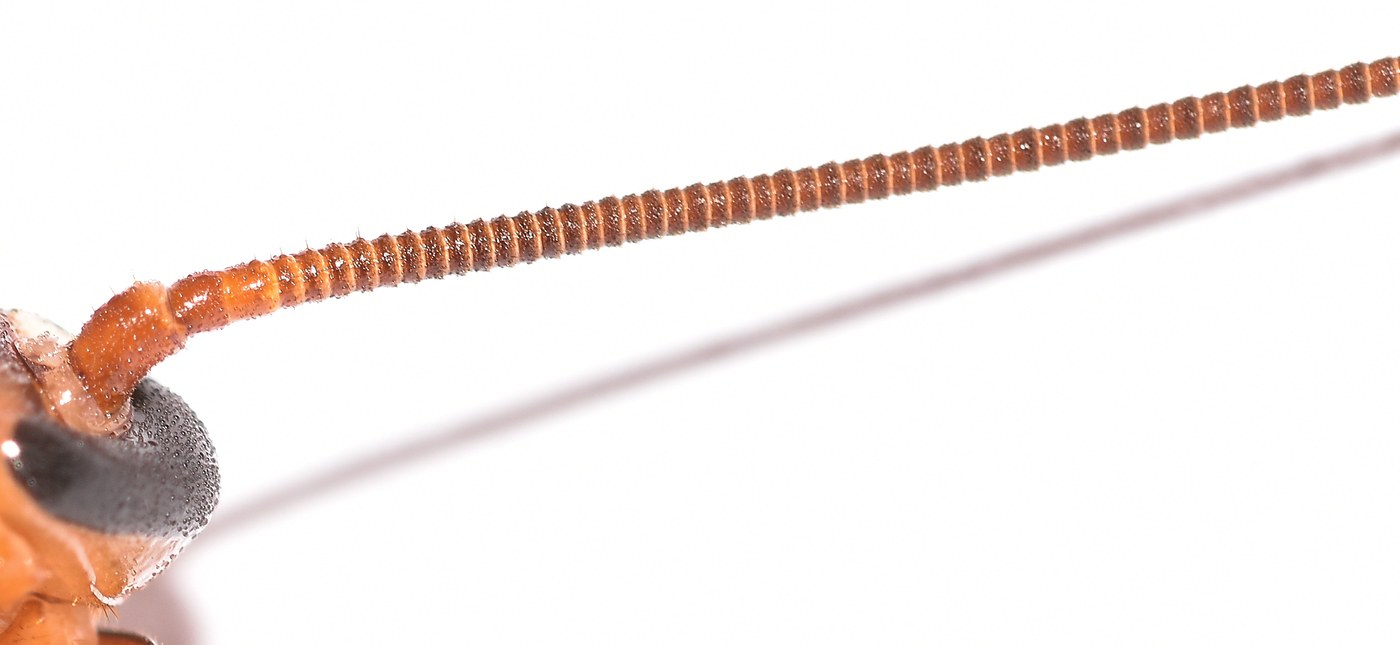
Antenna segment macro.
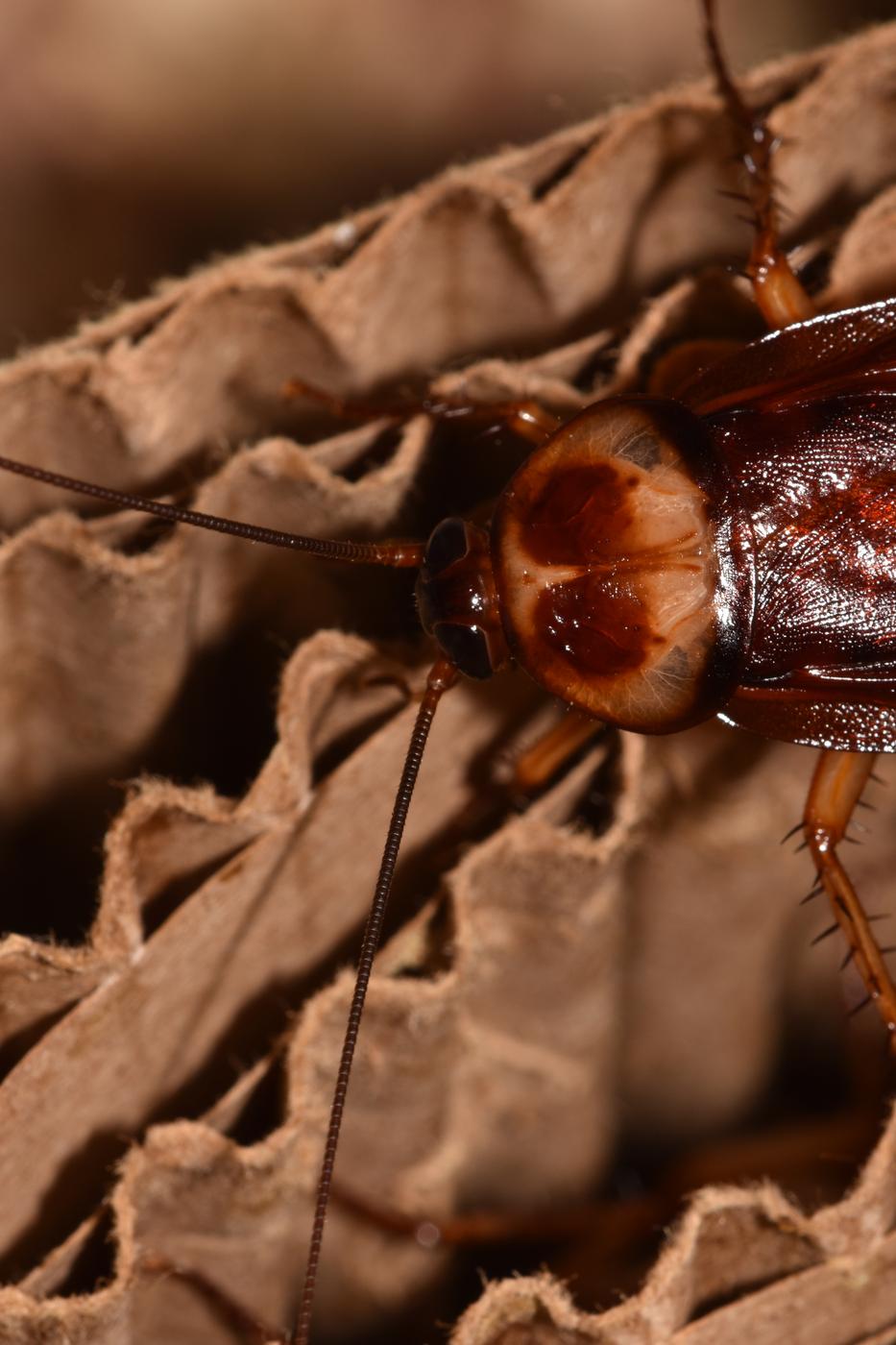
Head close-up in cardboard.
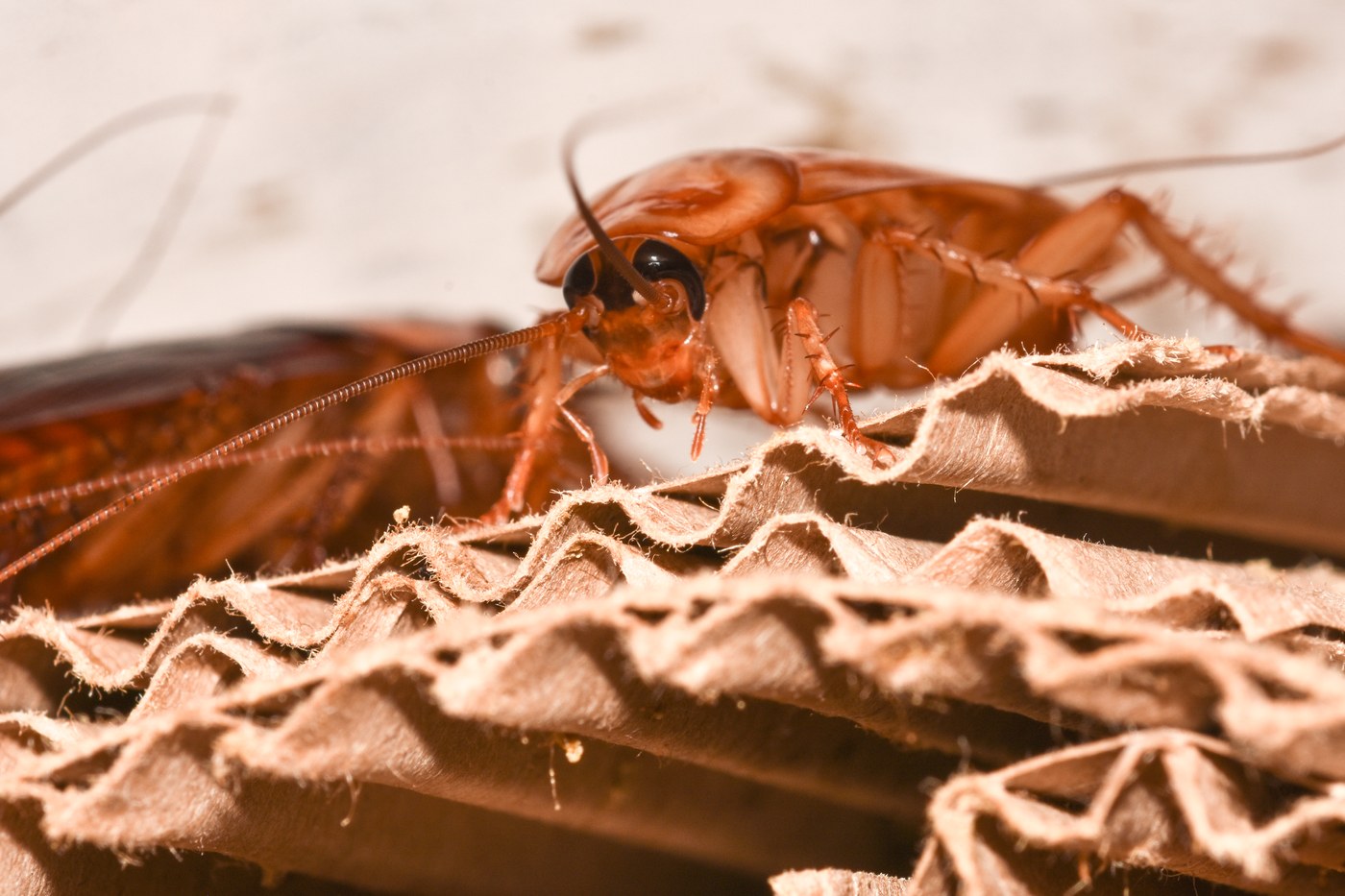
Adult on cardboard edge.
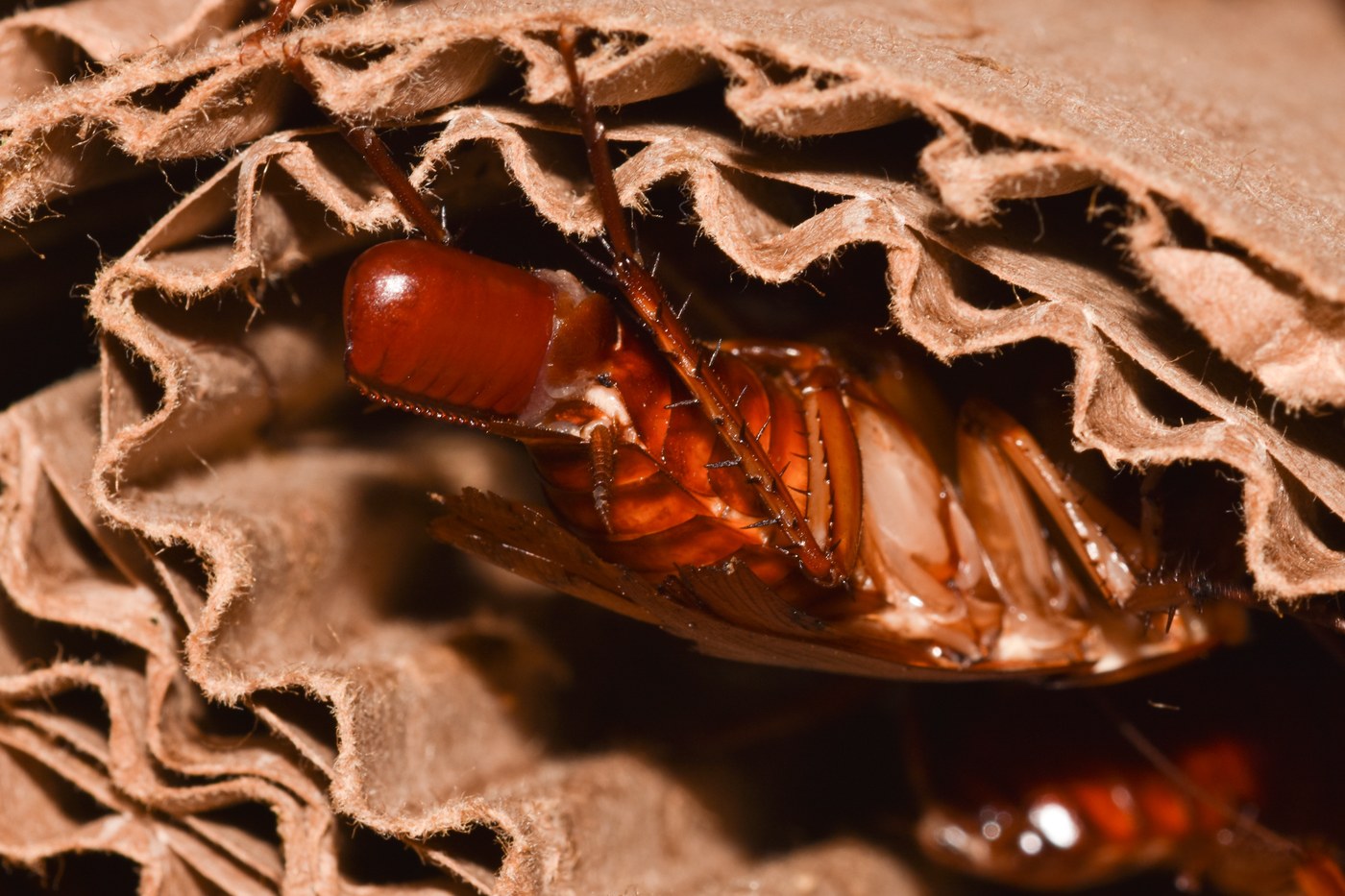
Adult sheltering in cardboard.
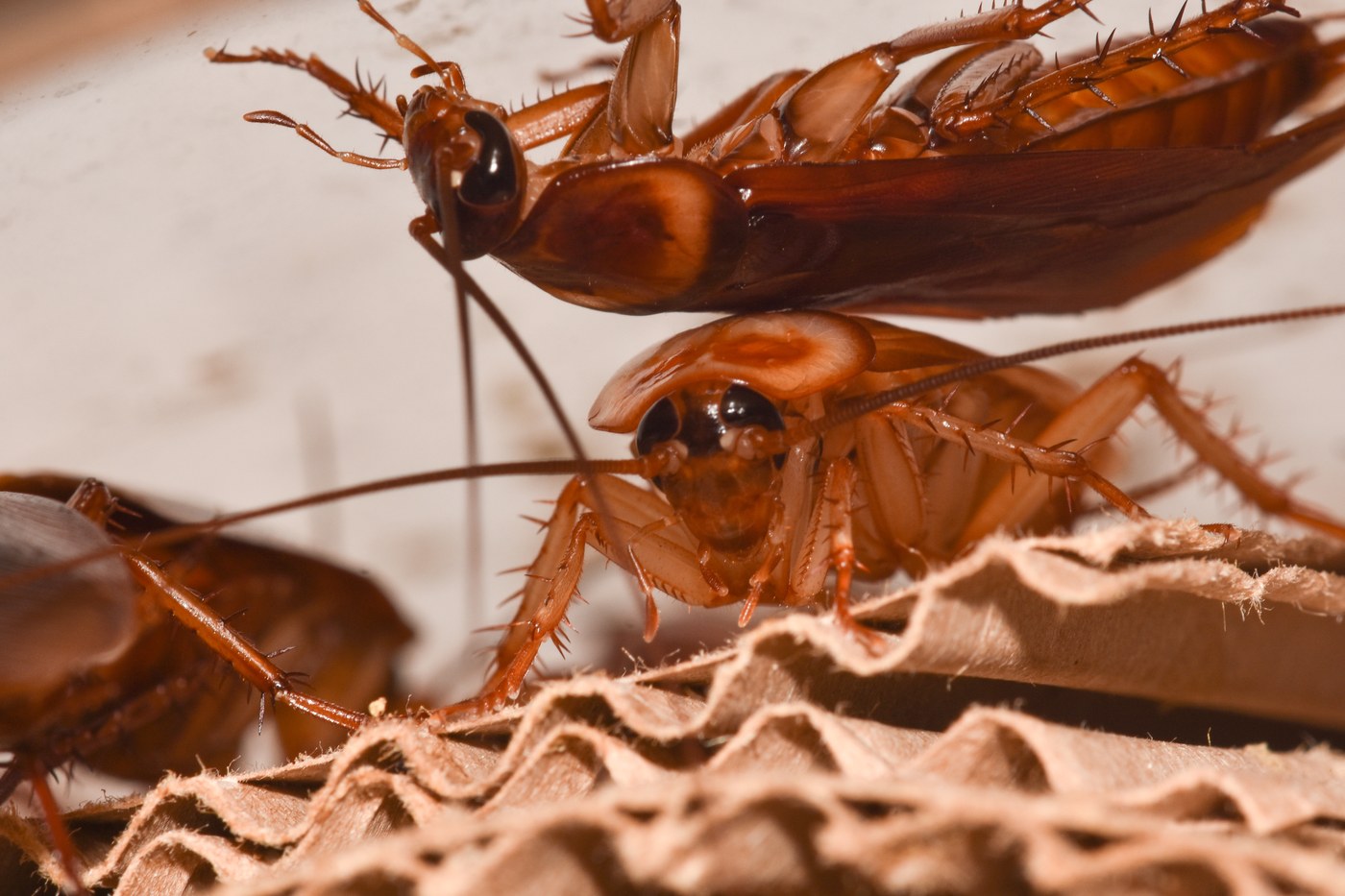
Two adults sheltering together.
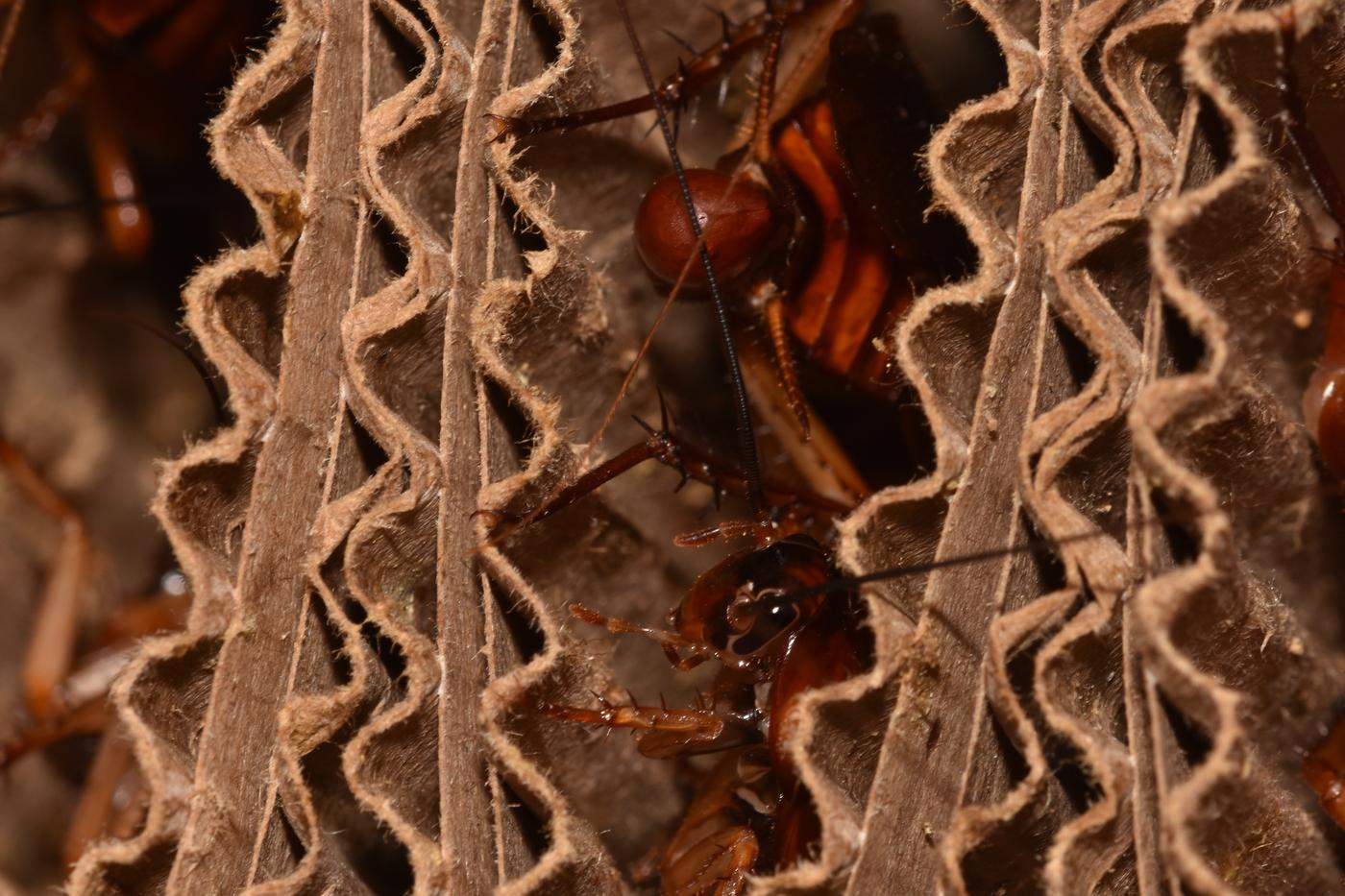
Aggregation in cardboard folds.
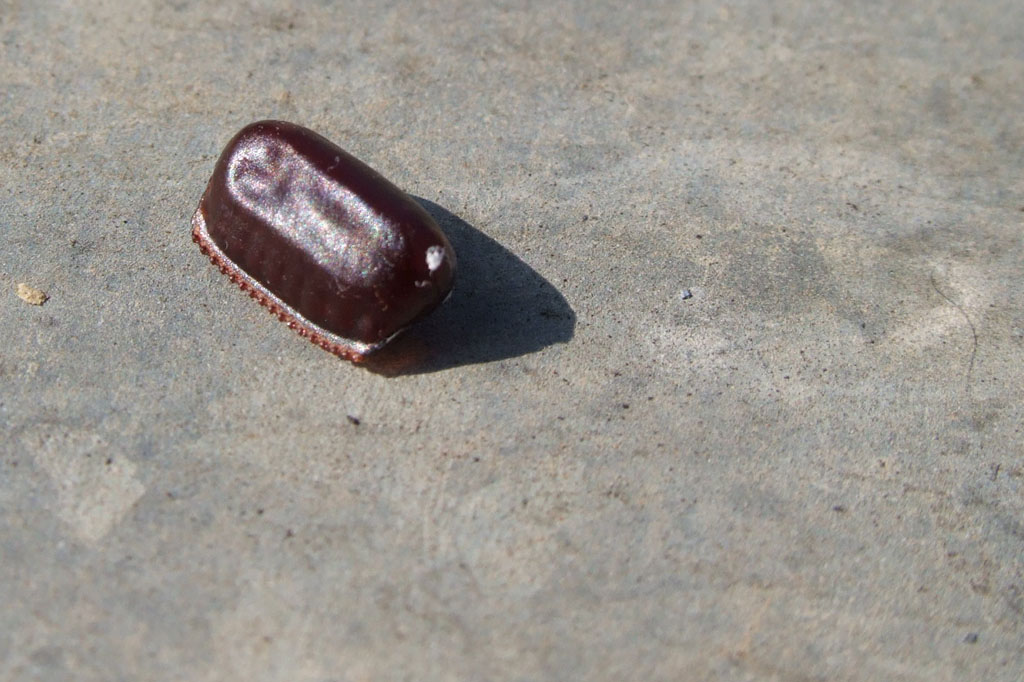
Egg case found outdoors.
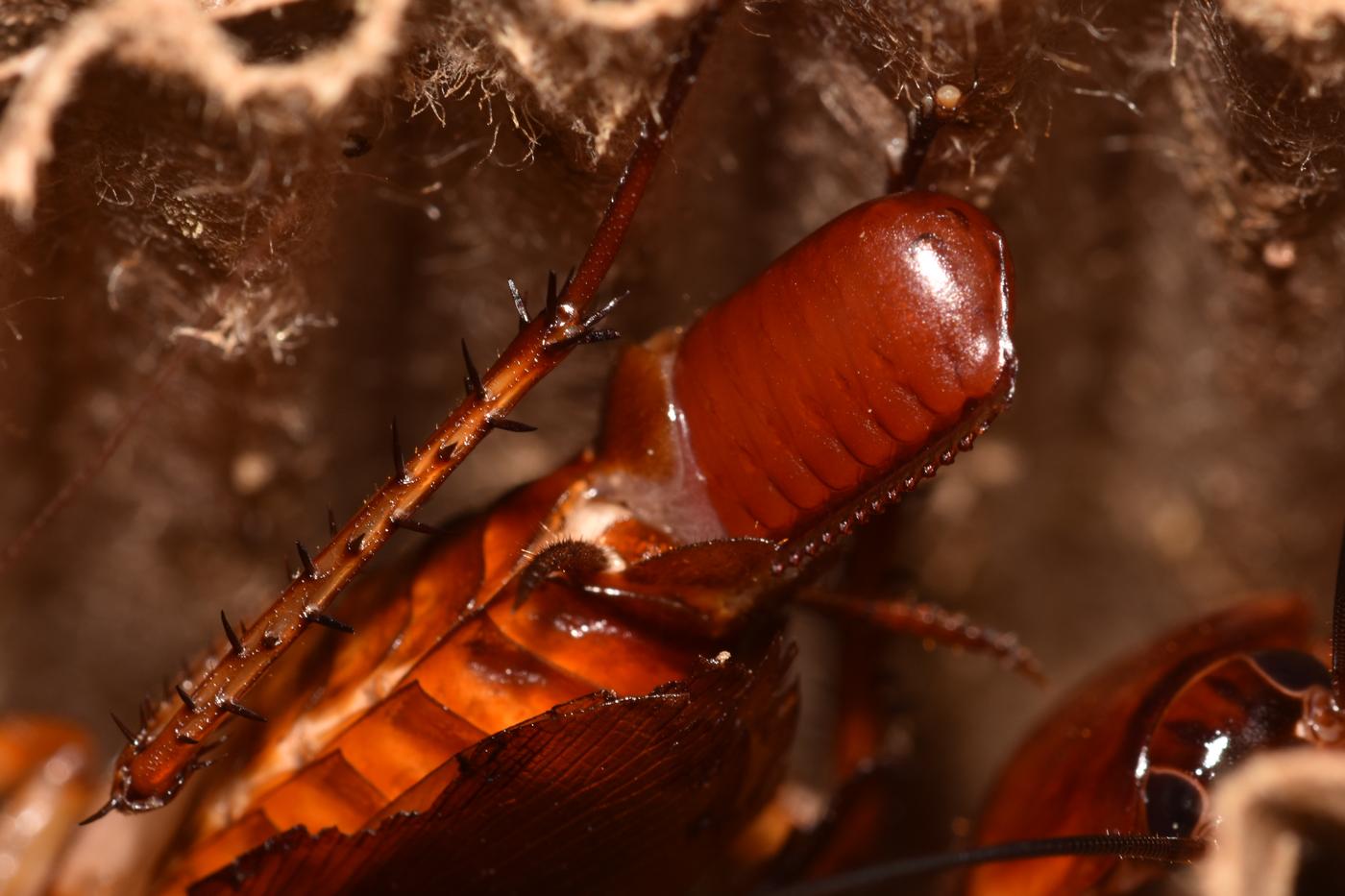
Egg case still attached.
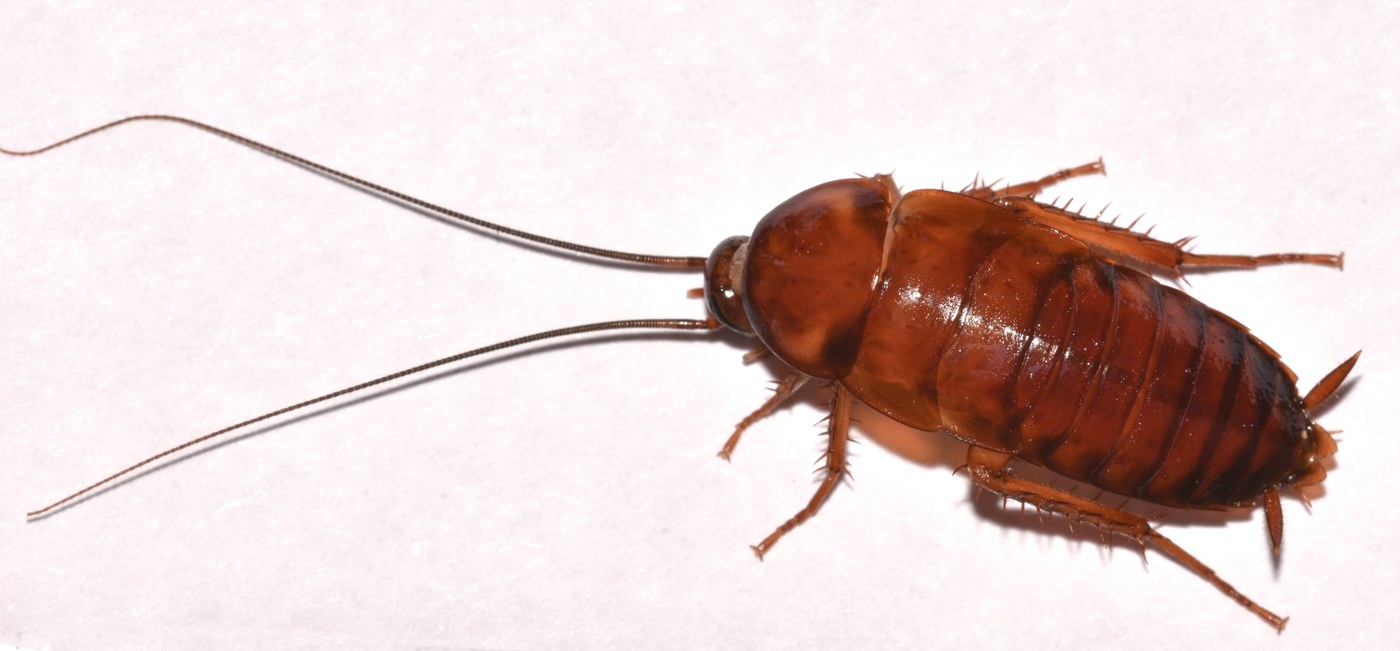
Nymph, dorsal view.
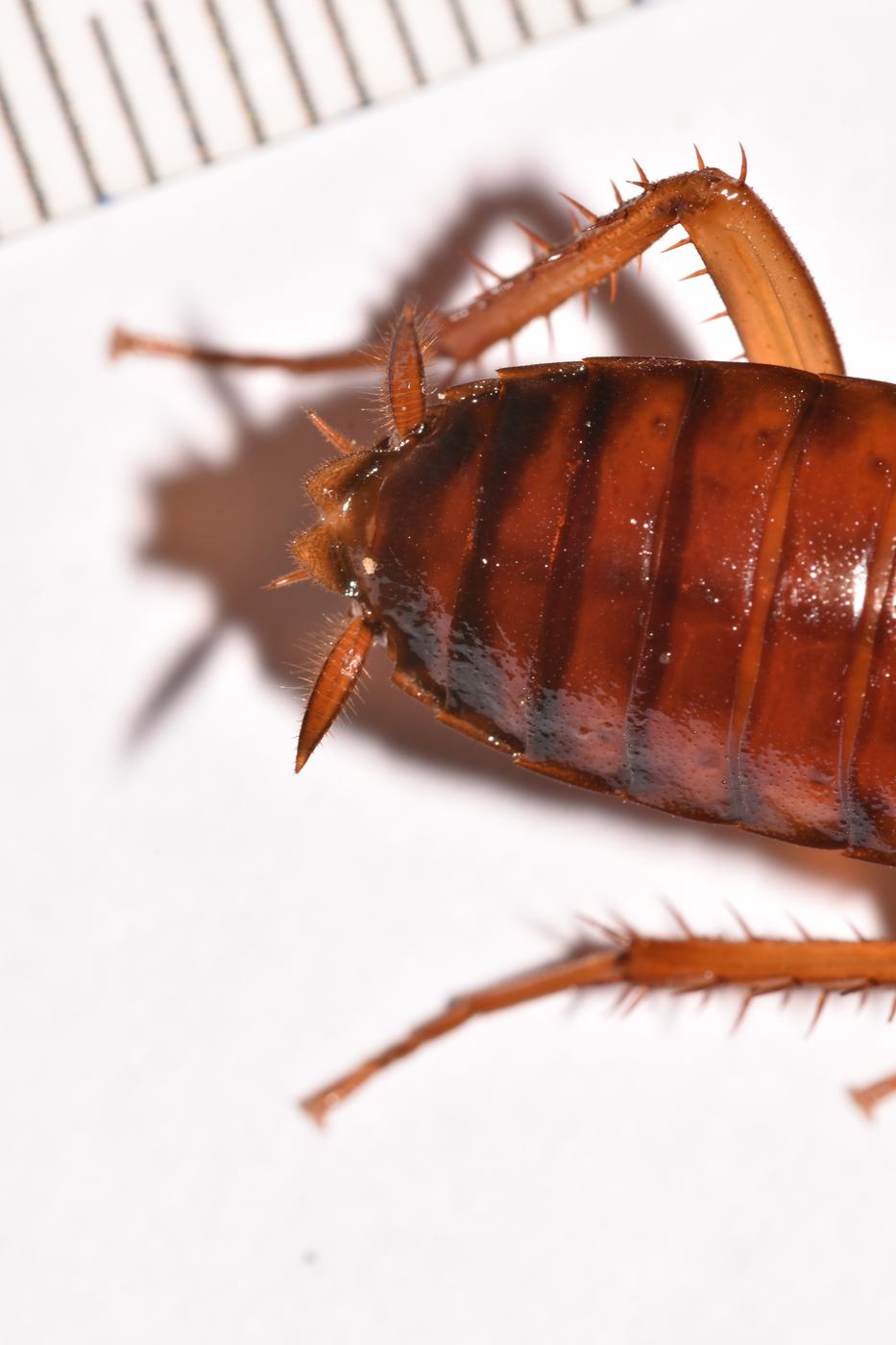
Nymph, rear dorsal, with ruler.
Sources
- American Cockroach, Periplaneta americana (Linnaeus), EENY-141 UF/IFAS Extension, Entomology and Nematology Department
- Cockroaches and Their Management, ENY-214 UF/IFAS Extension
- Pest Notes: Cockroaches, Publication 7467 UC Statewide Integrated Pest Management Program
- Peridomestic Cockroaches Part 1 (Blattodea), Bug Biz P3877-A LSU AgCenter
- Cockroaches (Blattodea) University of Georgia Integrated Pest Management
- The American Cockroach, Periplaneta americana University of Arizona Department of Entomology