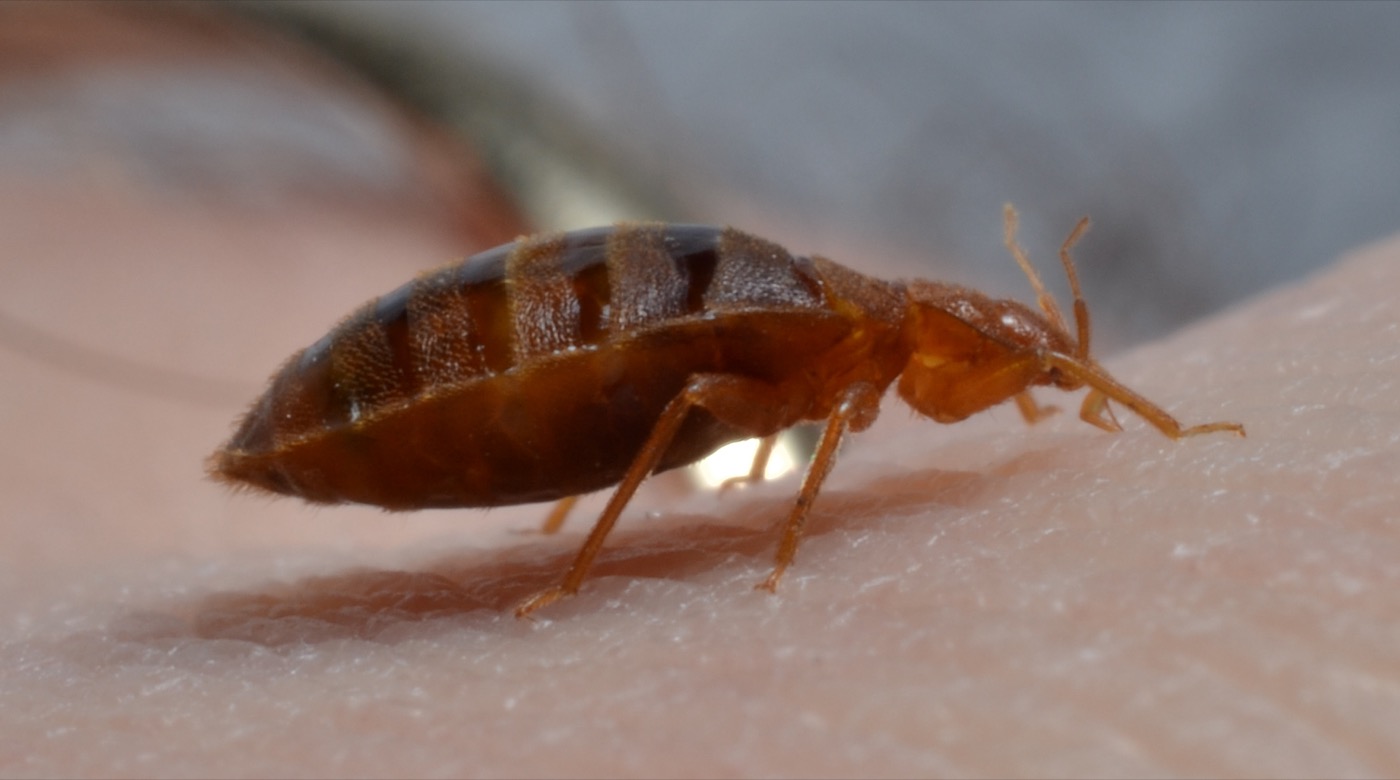
Where They're Found
All eight U.S. regions, with no meaningful regional variation. The common bed bug, Cimex lectularius, is the species behind essentially every U.S. household case. A second species, the tropical bed bug Cimex hemipterus, dominates in tropical regions and turns up in limited U.S. locations.
Seasonal Timeline
Year round. Bed bugs live indoors at controlled temperature, so there is no dormant season. What changes through the year is how often they get carried in, and that follows travel.
Year round. Bed bugs live indoors at controlled temperature, so there is no dormant season. What changes through the year is how often they…
Those windows describe when infestations get introduced and reported, not when the insect is active. A bed bug in a heated bedroom in February is as active as one in July.
One limit, stated rather than hidden. No month window is documented for Alaska and Hawaii, so they are not on the bar.
Life Cycle
The number that explains why one treatment is rarely enough: there are exactly five nymphal stages, and every one of the five molts requires its own blood meal. A female lays 200 to 500 eggs across her life, two to five a day. Egg to adult takes five weeks to four months, fastest between 70 and 82 degrees, and a home can carry up to four generations a year. Interrupting the blood supply does not touch the eggs at all.
Egg1
Egg. About the size of a dust speck, glued in place. Hatches in one to two weeks at room temperature.
1st nymph2
Five nymphal stages, shown here against a millimeter rule. Each one needs its own blood meal before it can molt.

5th nymph
Fifth and final nymphal stage, up to about 1/5 inch.
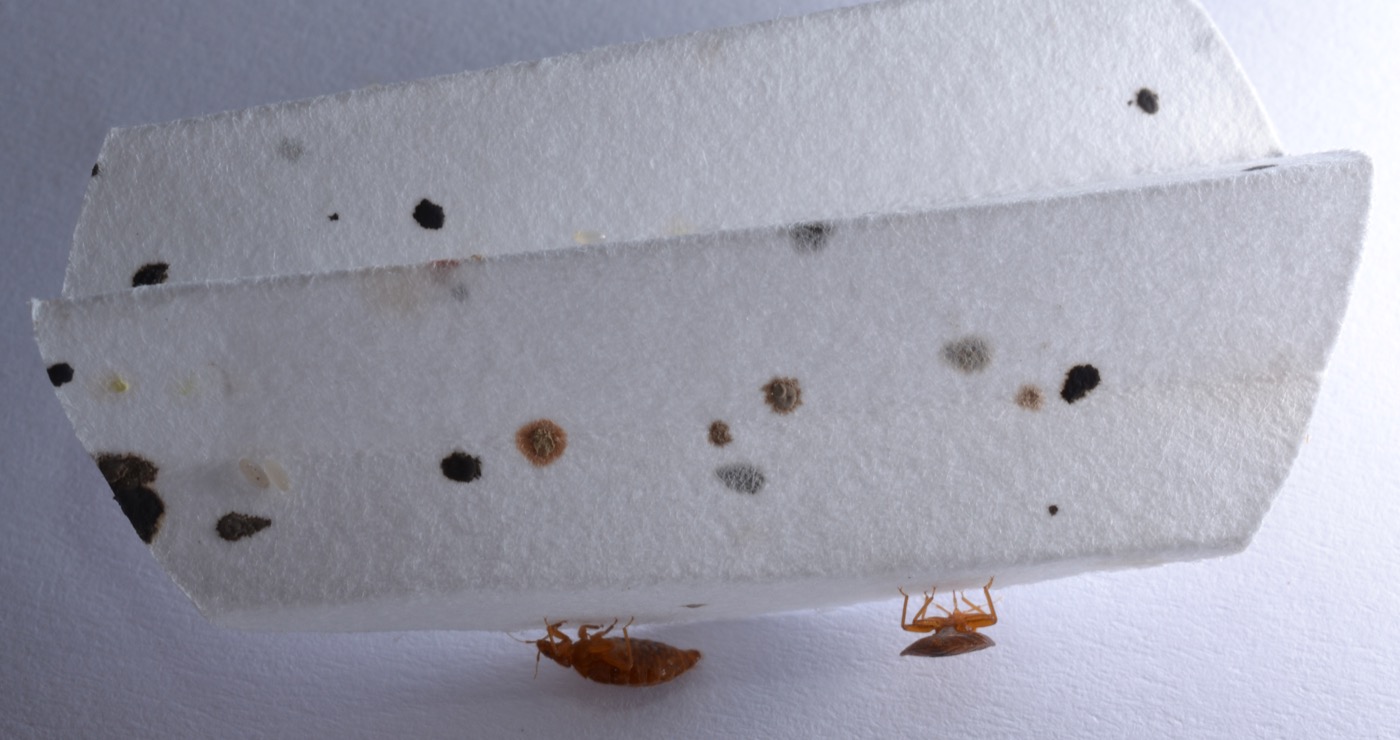
Signs1
What all of it looks like together: adults, nymphs, eggs, shed skins and fecal spots on a mattress.
<p><strong>The number that explains why one treatment is rarely enough:</strong> there are exactly five nymphal stages, and every one of the five molts requires its own blood meal. A female lays 200 to 500 eggs across her life, two to five a day. Egg to adult takes five weeks to four months, fastest between 70 and 82 degrees, and a home can carry up to four generations a year. Interrupting the blood supply does not touch the eggs at all.</p>
Identification
Adults are oval, flattened, wingless, and reddish-brown, roughly 3/16 to 1/5 inch long. Close to an apple seed in color, closer to a lentil in size. Nymphs look like small pale versions of the adult, translucent enough to disappear against light bedding. They do not fly and do not jump. They crawl, fast, across floors, walls, and ceilings.
The confusion that changes the treatment is bat bugs and swallow bugs. They look almost identical, and the tell needs a hand lens: compare the length of the hairs on the plate behind the head to the diameter of the eye. On a bed bug those hairs are shorter than the eye. On a bat bug or swallow bug they are longer. It matters because bat bugs and swallow bugs are solved by excluding the bats or swallows nesting on the building, not by treating the bedroom.
Kissing bugs get mistaken for them too, but reach 3/4 inch and have wings. Ticks, cockroach nymphs, and carpet beetles round out the list of things people bring in for identification.
Signs of Infestation
Start with the bed, because that is where 85 percent of them are. Current research puts the great majority in or immediately around the bed: mattress seams and tufts, the wood joints of the box spring, cracks in the bed frame, and behind the headboard. In hotels, behind a wall-mounted headboard is often where they establish first. The other 15 percent turn up in sofas and recliners, nightstands, along carpet edges, behind pictures and switch plates, under loose wallpaper, along book bindings, and inside clocks and smoke detectors.
What to look for: dark spotting and staining along seams, which is dried excrement. Tan shed skins, one per molt, five per insect. Rusty smears on sheets from bugs crushed after feeding. Eggs, though those need magnification. And the insects themselves, which are visible to the naked eye.
Bites are not a diagnosis, and this is the part most pages get wrong. Reactions vary enormously. Studies in infested apartments suggest around 30 percent of people never react at all, even when bitten repeatedly, and non-reaction is more common among older adults. Marks can take up to 14 days to appear. Bed bug welts cannot be reliably told apart from mosquito or flea bites. Confirmation means finding the insects, the skins, or the spotting.
Smell is a late sign, not a first one. A sweet musty odor is real, but it usually only becomes apparent in heavy infestations, and it should not be used for detection.
Prevention and When to Call a Pro
Sealing cracks is the wrong advice for this pest. Bed bugs arrive in a suitcase, not through a gap in the siding, so prevention is a travel and secondhand-furniture habit.
In a hotel room: check behind the headboard, pull back the sheets, and look along mattress seams and tufts. If you find signs, change rooms or hotels. Inspect your luggage before you leave.
When you get home: wash and dry everything at the hottest setting the fabric will take. University of Kentucky puts a clothes dryer on medium to high at 10 to 20 minutes, and items that go in already dry reach a lethal temperature sooner. Give it the full 20 if you are not sure. If you travel often, store the suitcase in the garage or a hall closet rather than the bedroom.
Secondhand furniture is the other main route in. Inspect any used bed, mattress, or upholstered piece before it comes through the door. If you are getting rid of an infested item, do not leave it at the curb. Take it to the dump, or mark it clearly so nobody else carries it home.
What does not work: tick and mosquito repellent at bedtime. Sleeping with the lights on, since they adjust to your sleep schedule. And leaving the house empty to starve them out, because they survive 20 to 400 days without feeding depending on temperature, with one to four months typical in a heated home.
Call a pro on any confirmed find. There is no infestation small enough to be a DIY project, and three specific reasons say so. Over-the-counter total-release foggers have been shown ineffective against bed bugs and potentially harmful to the people in the room. The products that actually work are restricted to commercial applicators, and insecticide resistance in bed bug populations keeps growing. And heat, which does work, has a real spec: at least 140 degrees for two hours, or 130 for three, against a minimum lethal temperature of 113. That is not something a space heater achieves. If you rent, tell your landlord or property owner, and know that tenants have rights here.
Frequently Asked Questions
Do bed bugs spread disease?
No. The CDC states bed bugs are not known to spread diseases to people, and UC IPM says they have never been shown to transmit human disease. The real harm is itching, lost sleep, anxiety, and secondary skin infection from scratching.
How long can bed bugs live without feeding?
Between 20 and 400 days, depending on temperature and humidity, and adults have passed 400 days in a laboratory at low temperatures. In a normal heated home, one to four months is more typical. Leaving a house or apartment empty will not starve them out. They often just move to the neighboring unit.
Can bed bugs be in a clean home?
Yes. They feed only on blood, so cleanliness is irrelevant to them, and the CDC notes they are found in five-star hotels and resorts. Clutter matters, but only because it gives them more places to hide and makes inspection harder.
How do I know the bites are bed bugs?
From the bites alone, you do not. Around 30 percent of people show no reaction at all, marks can take two weeks to appear, and the welts look like mosquito or flea bites. You confirm bed bugs by finding the insects, their shed skins, or the dark fecal spotting.
What temperature kills bed bugs?
113 degrees is the minimum lethal temperature, but professional heat treatment targets at least 140 degrees for two hours, or 130 for three, so the heat actually penetrates every hiding place. For clothing and bedding, a dryer on its hottest setting for 10 to 15 minutes is enough.
Photo Gallery
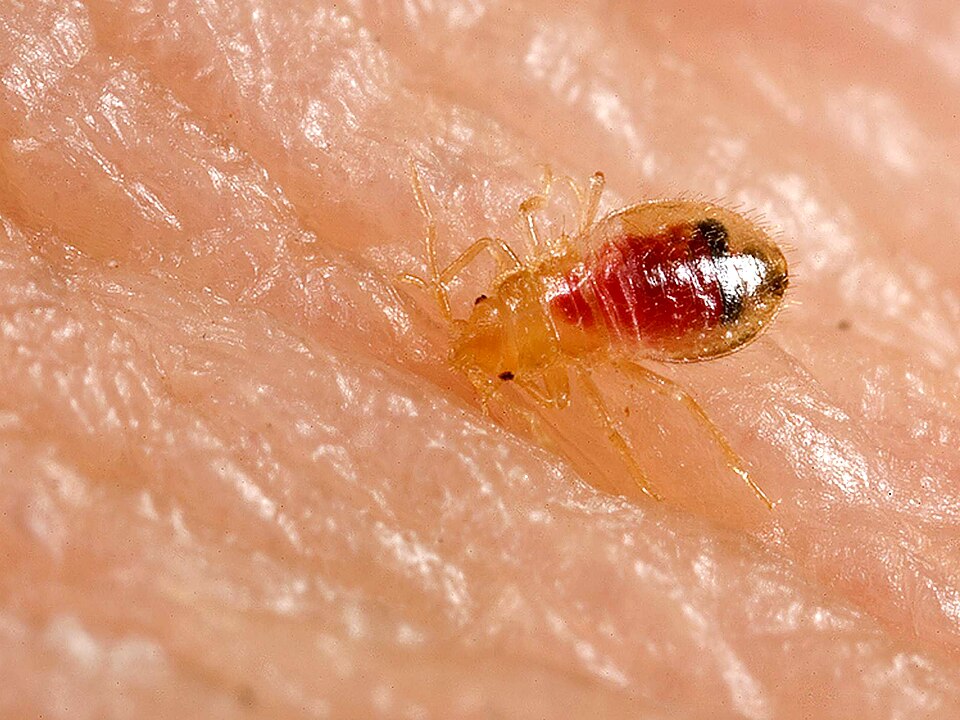
Nymph mid-feed on skin.
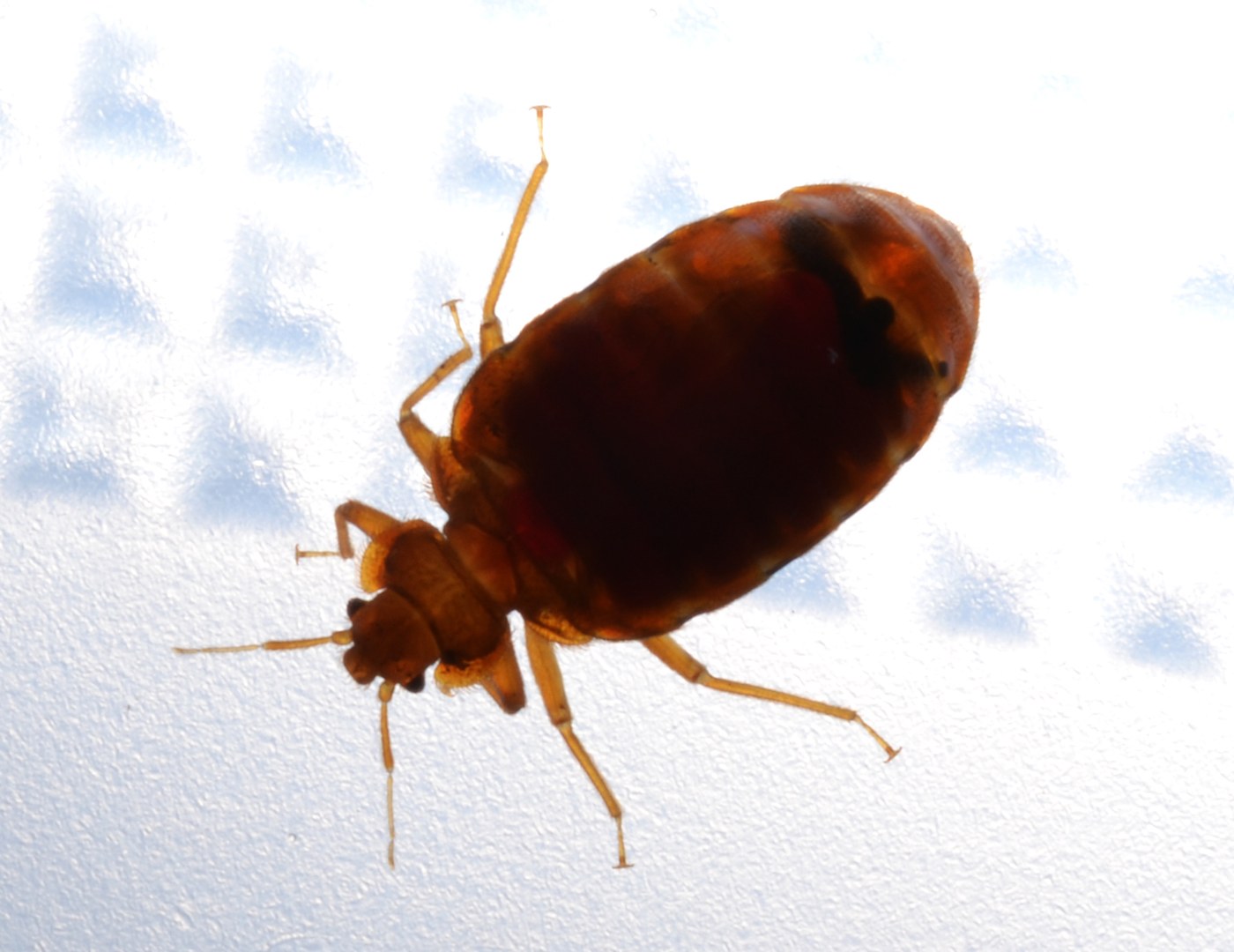
Fed adult, top-down view.
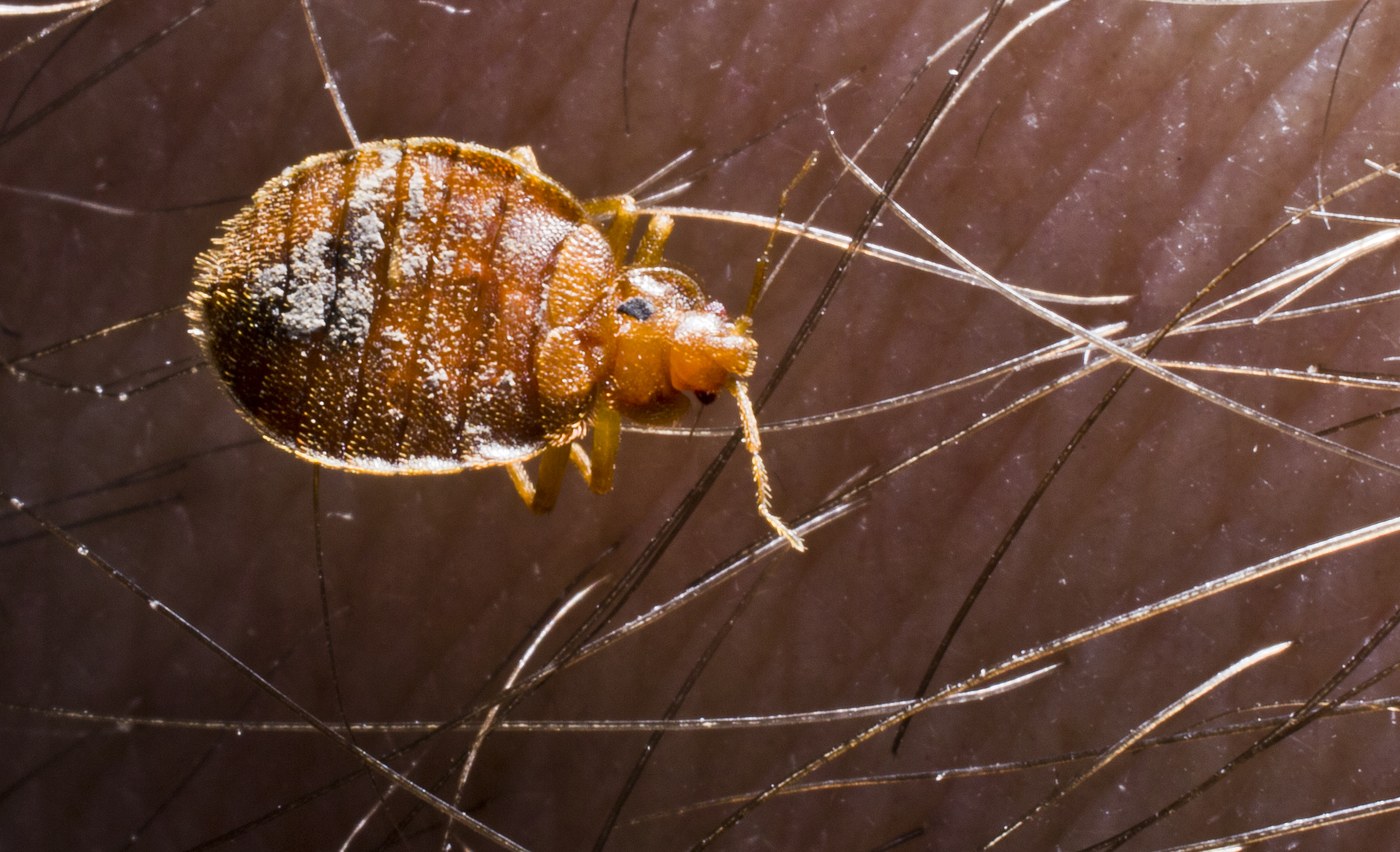
Unfed adult on skin.
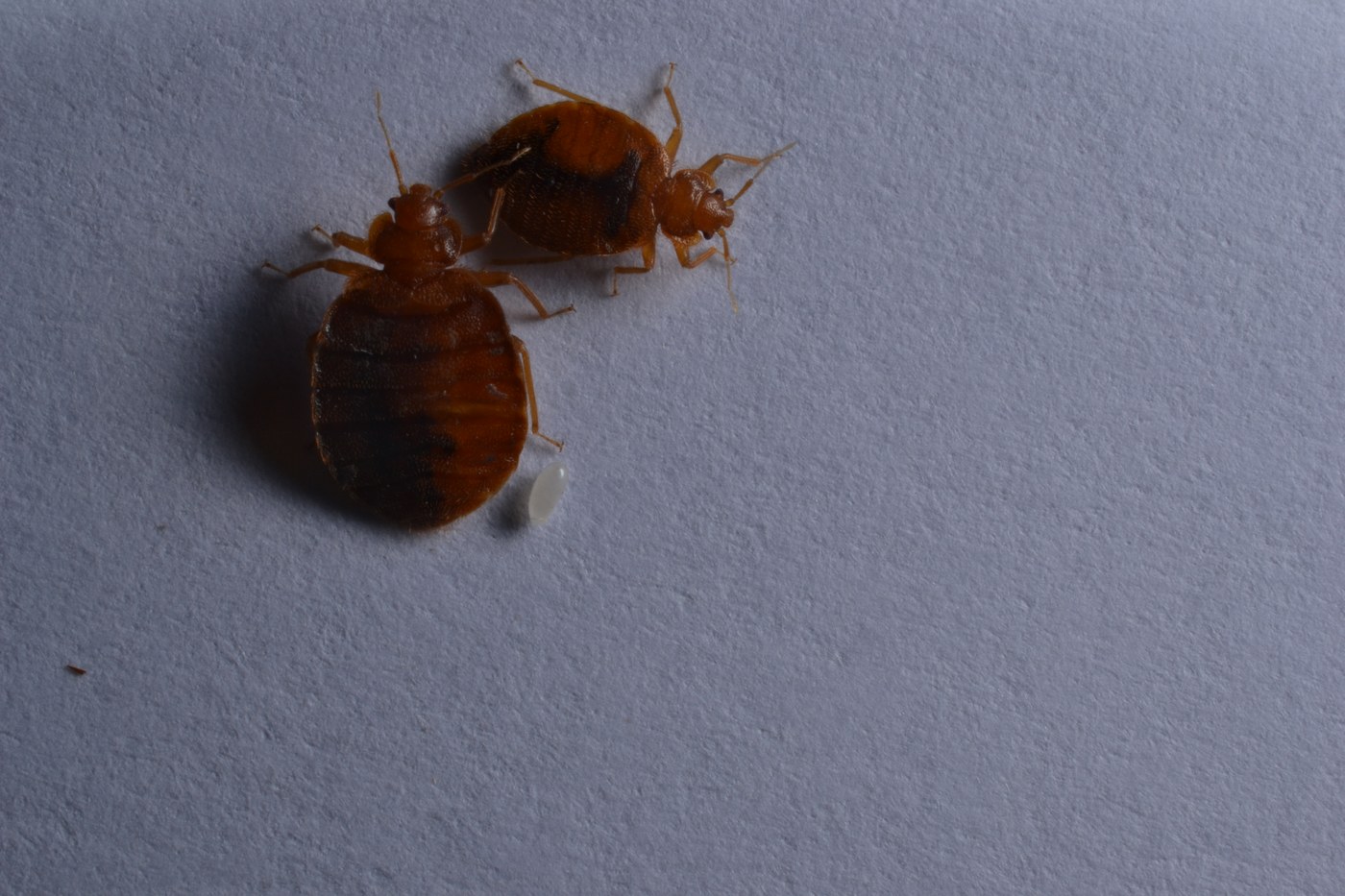
Adults next to a single egg.
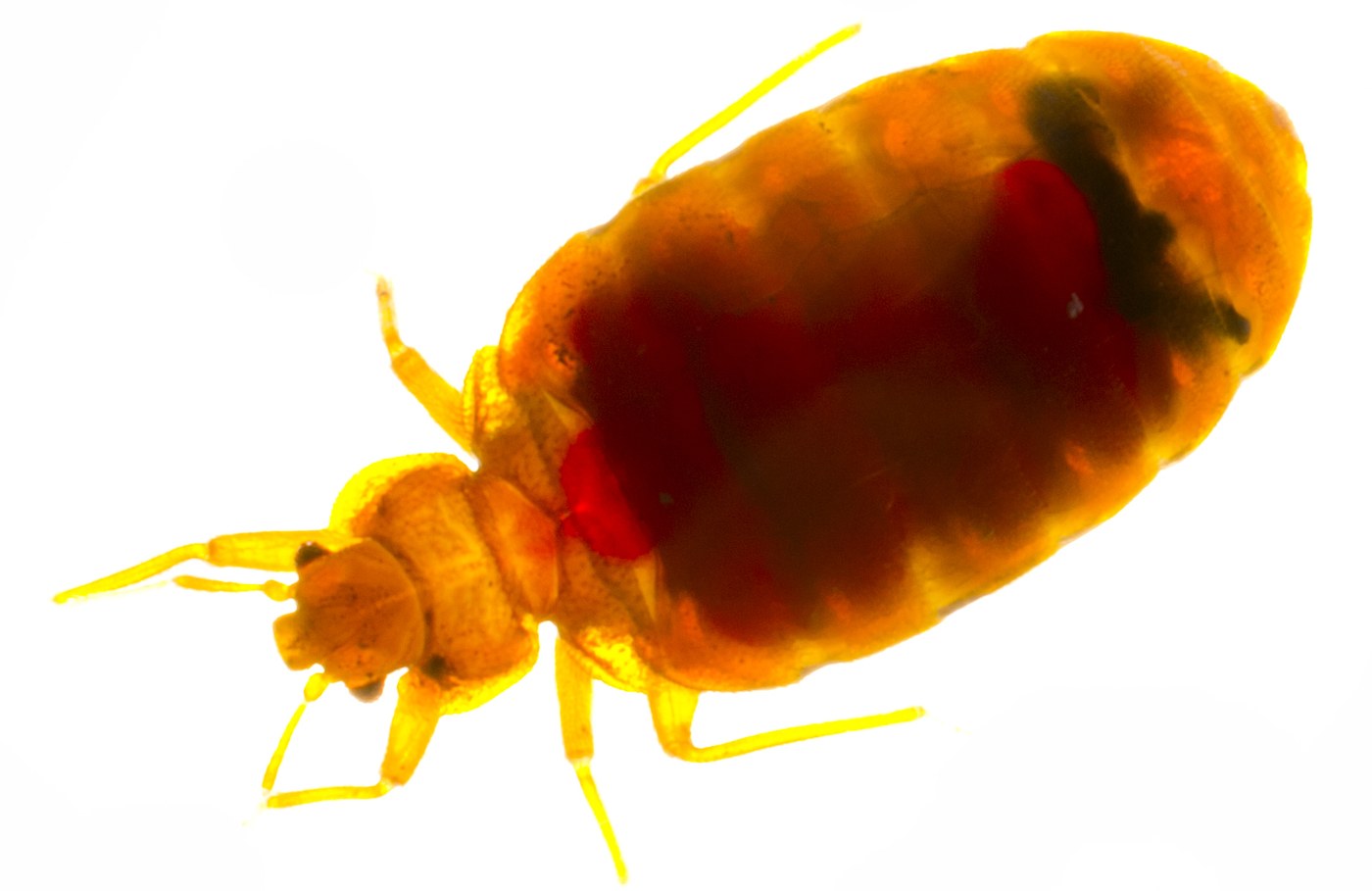
Blood meal visible through the body.
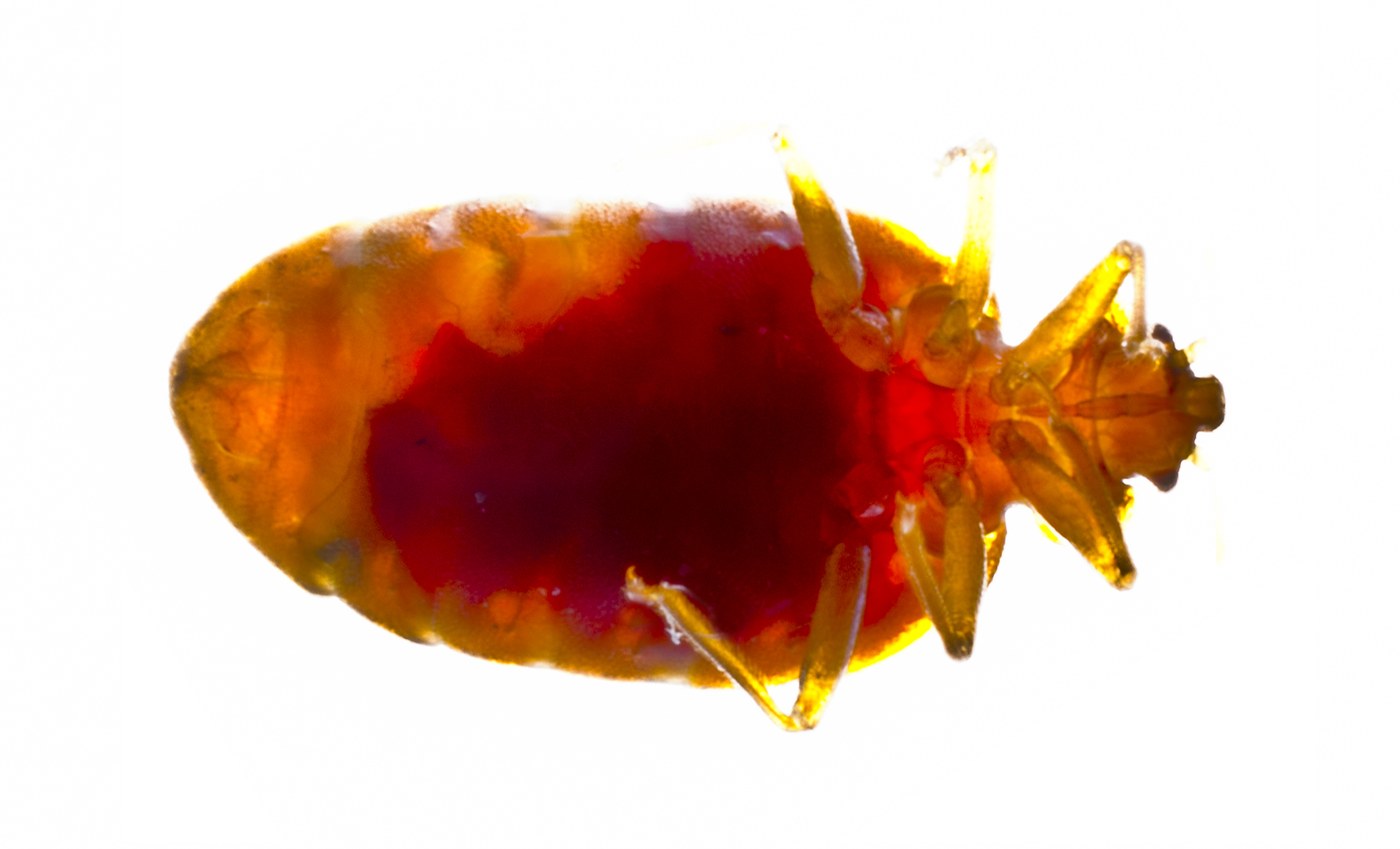
Blood meal, underside view.
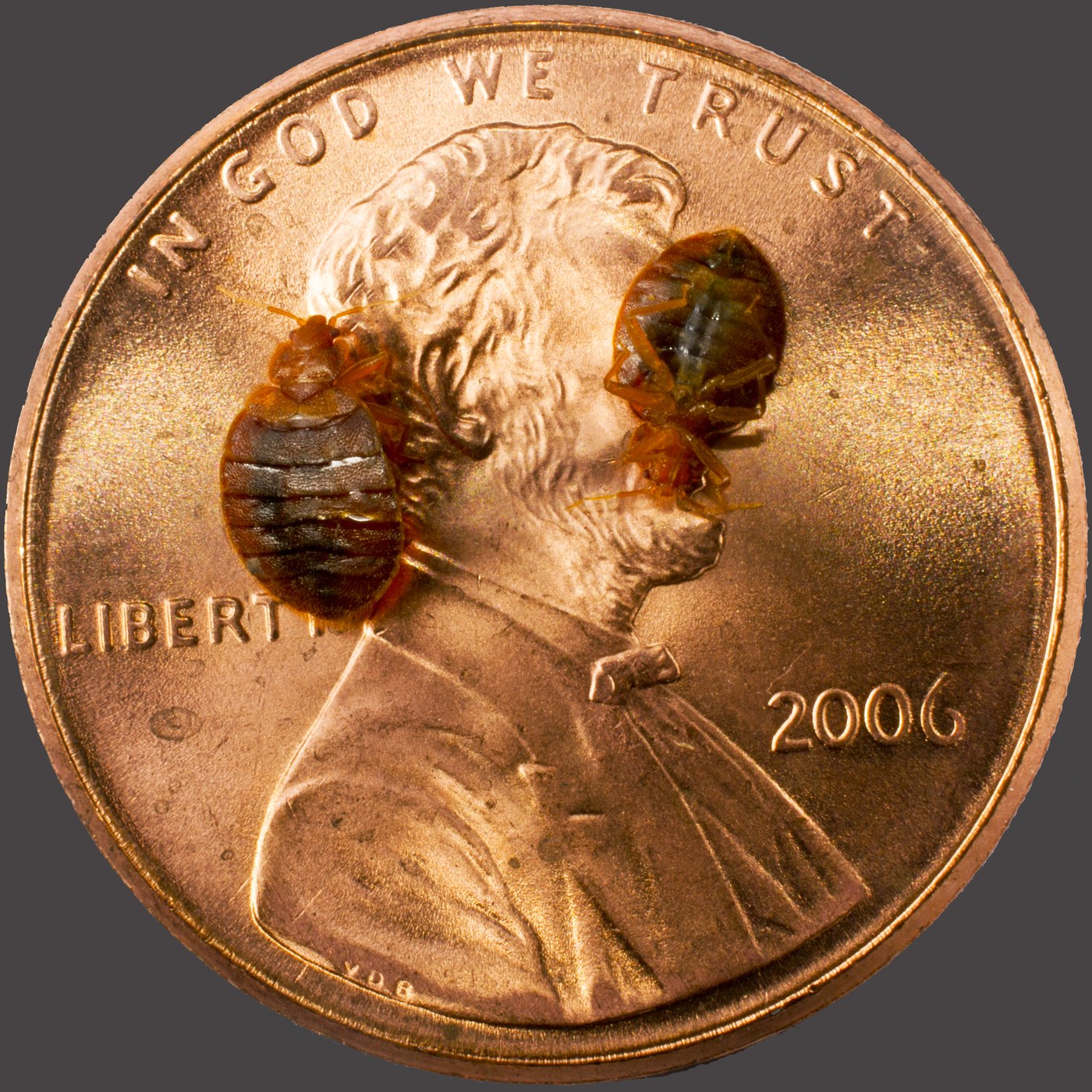
Actual size, shown on a penny.
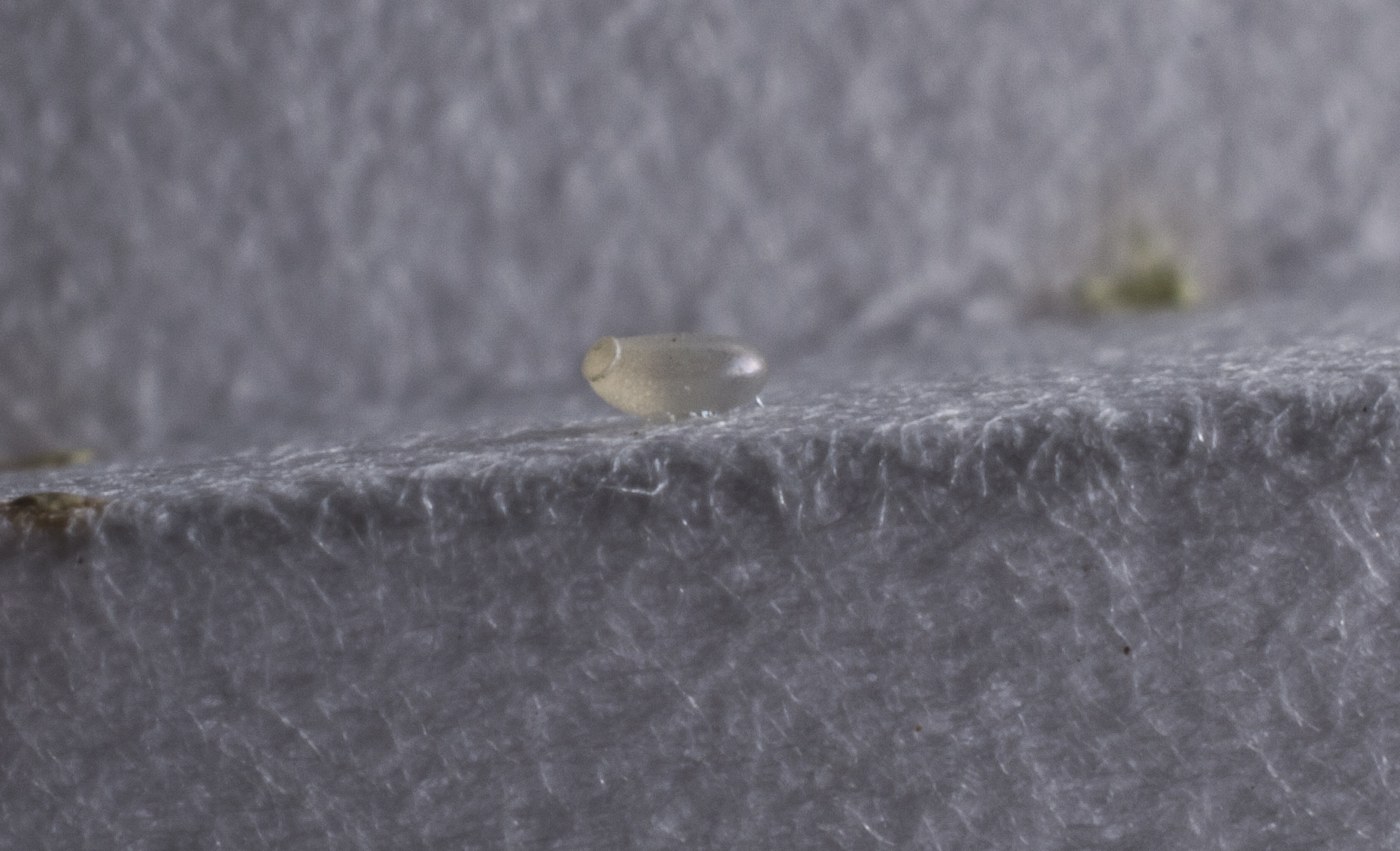
One egg glued to fabric.
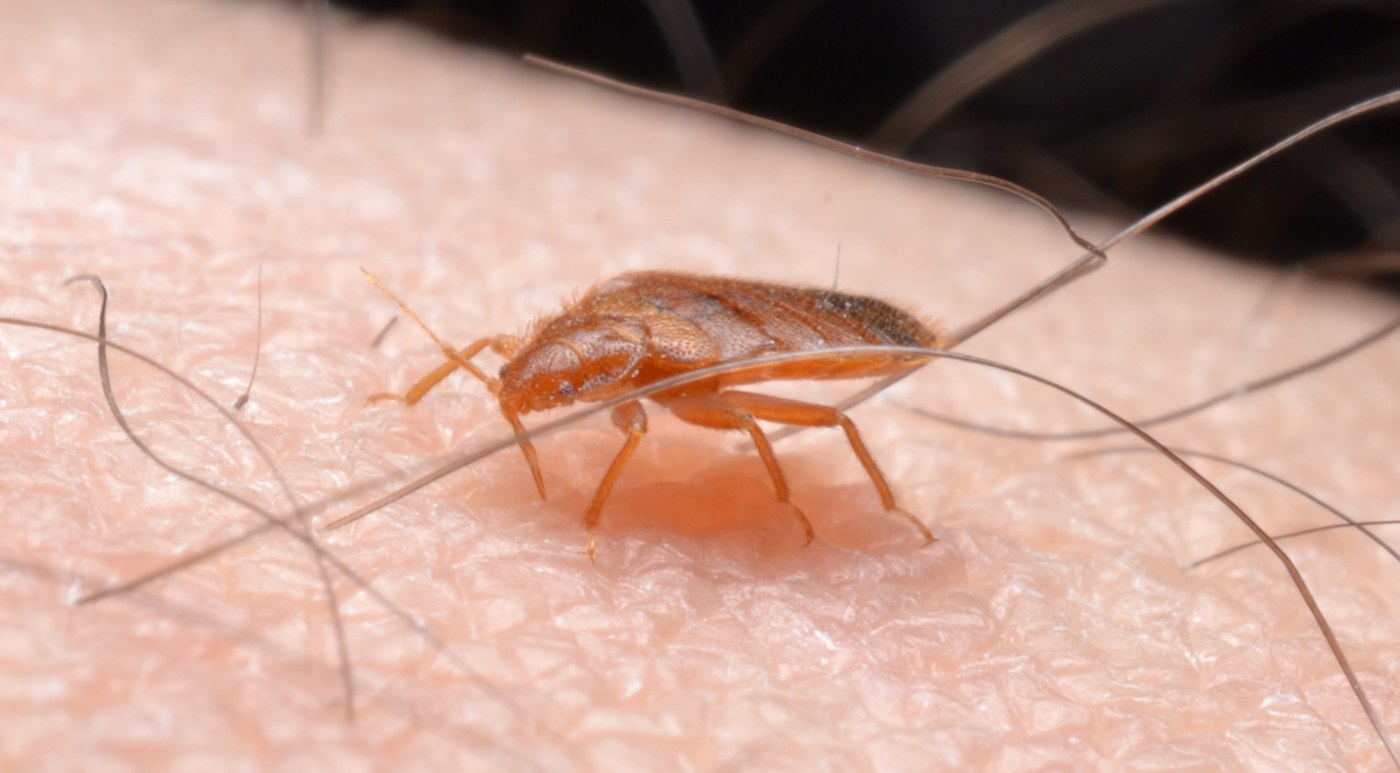
Side profile crossing skin.
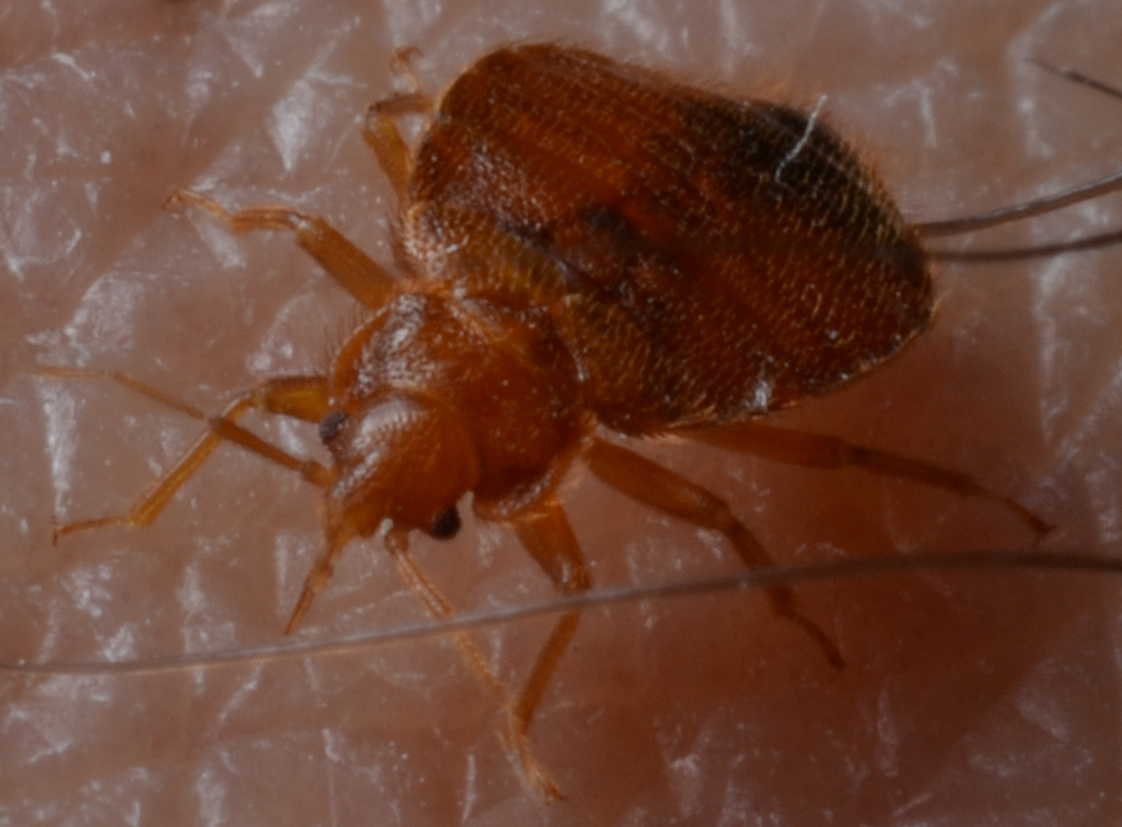
Close-up of body texture.
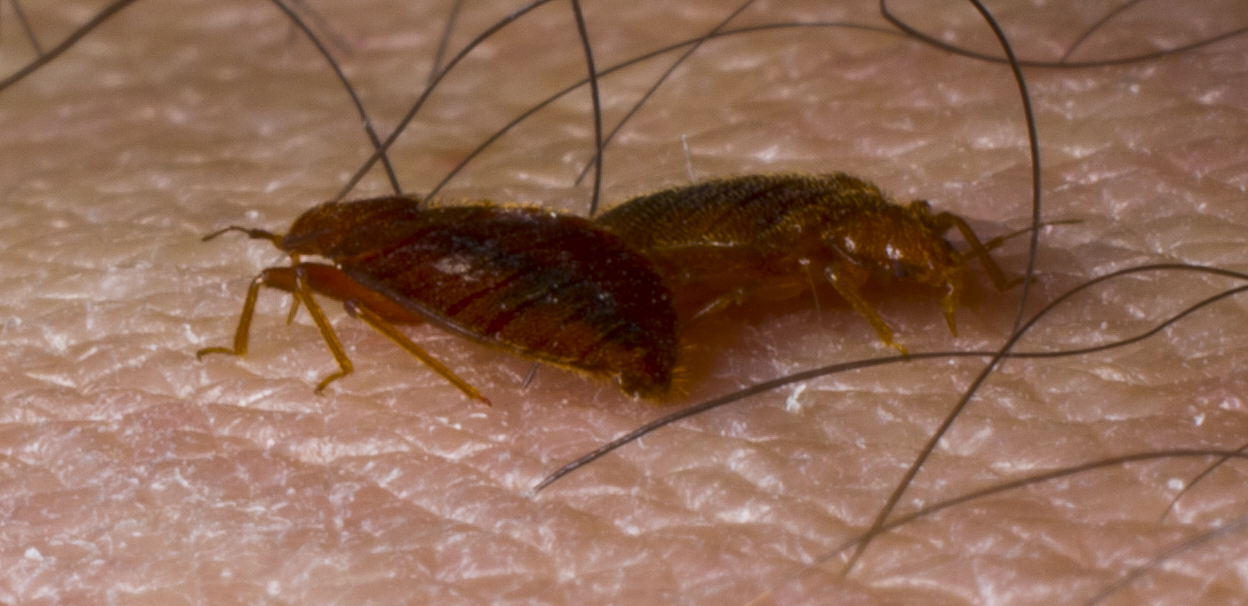
Two adults resting together.
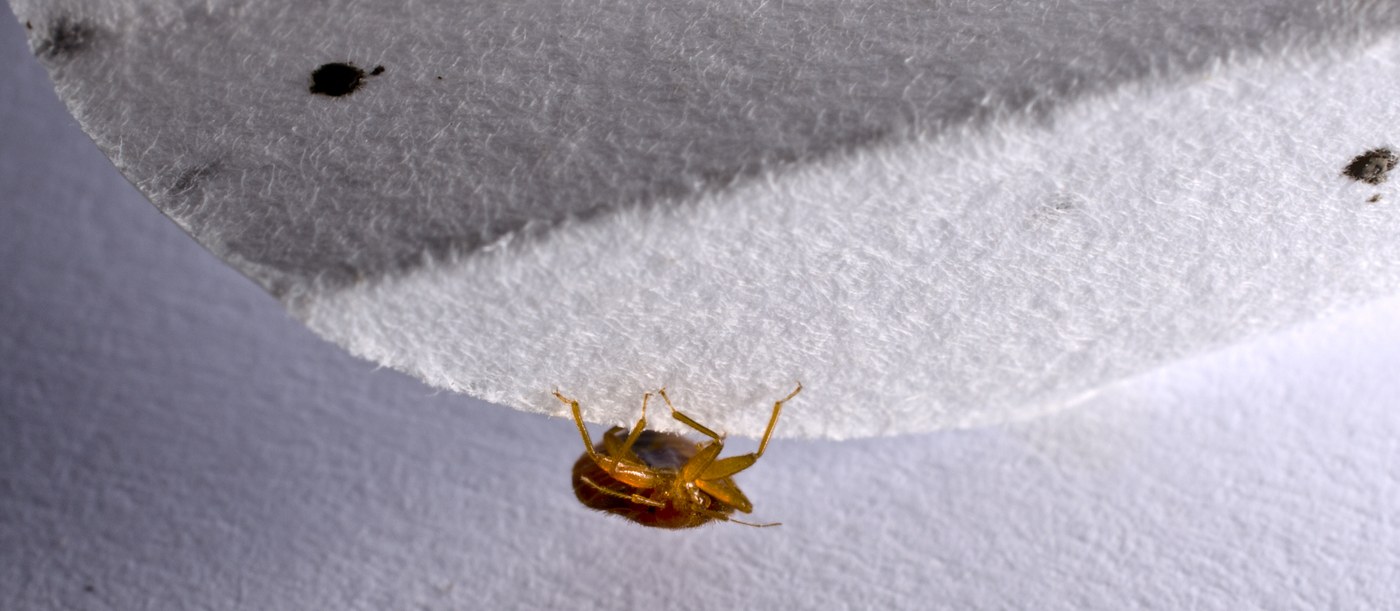
Hiding along a mattress seam.
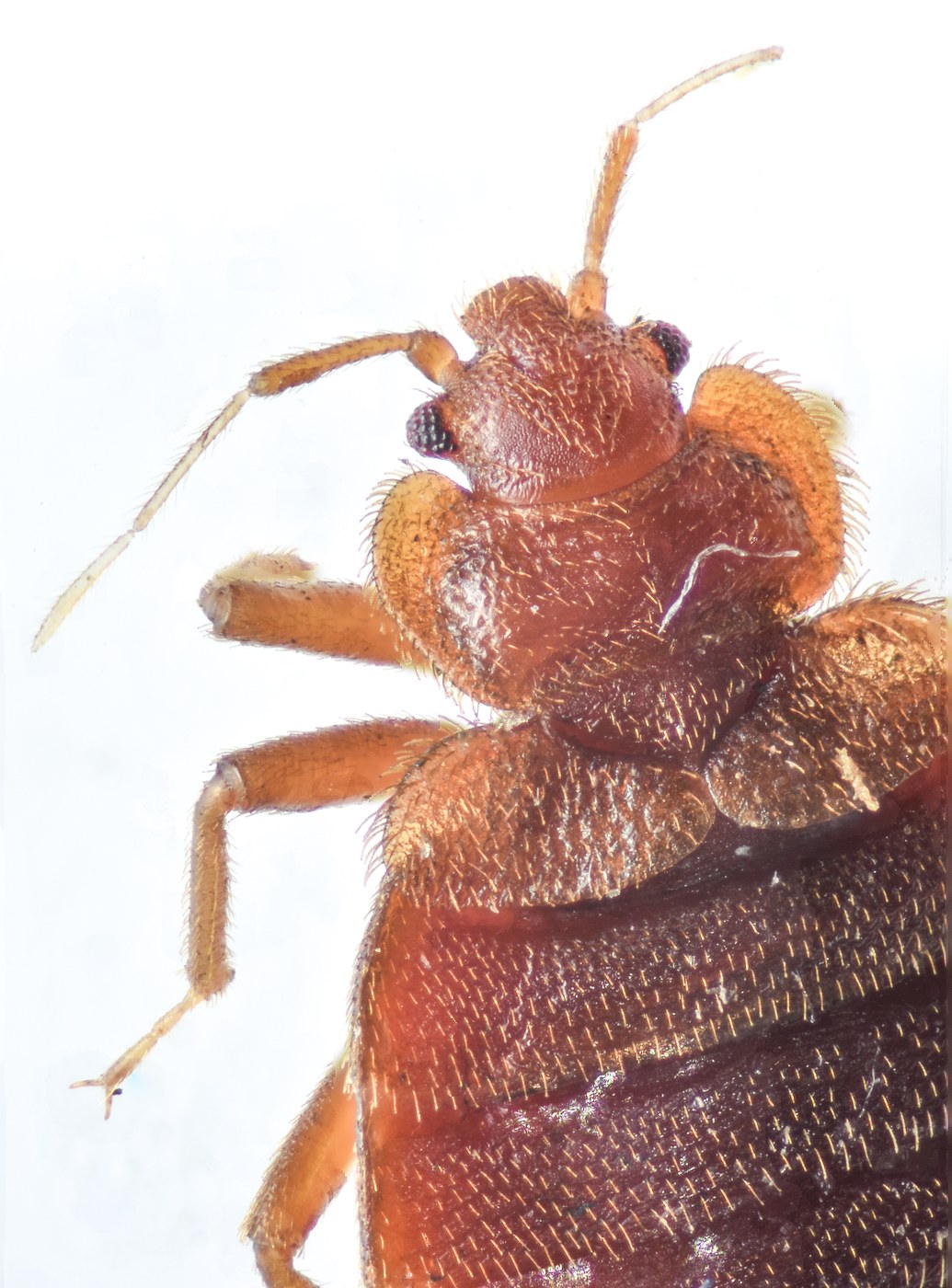
Macro detail of head and eyes.
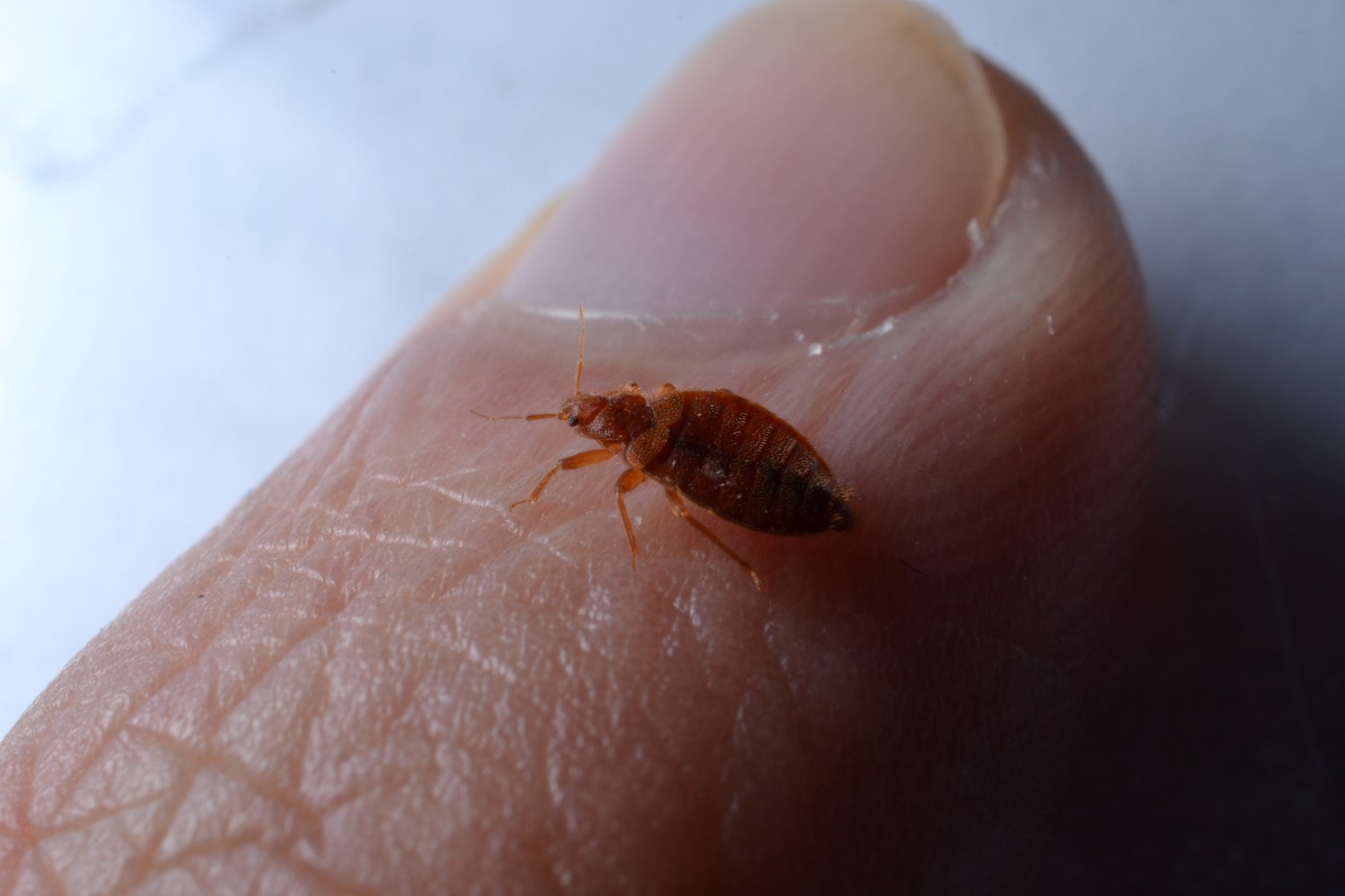
Adult on a fingertip.
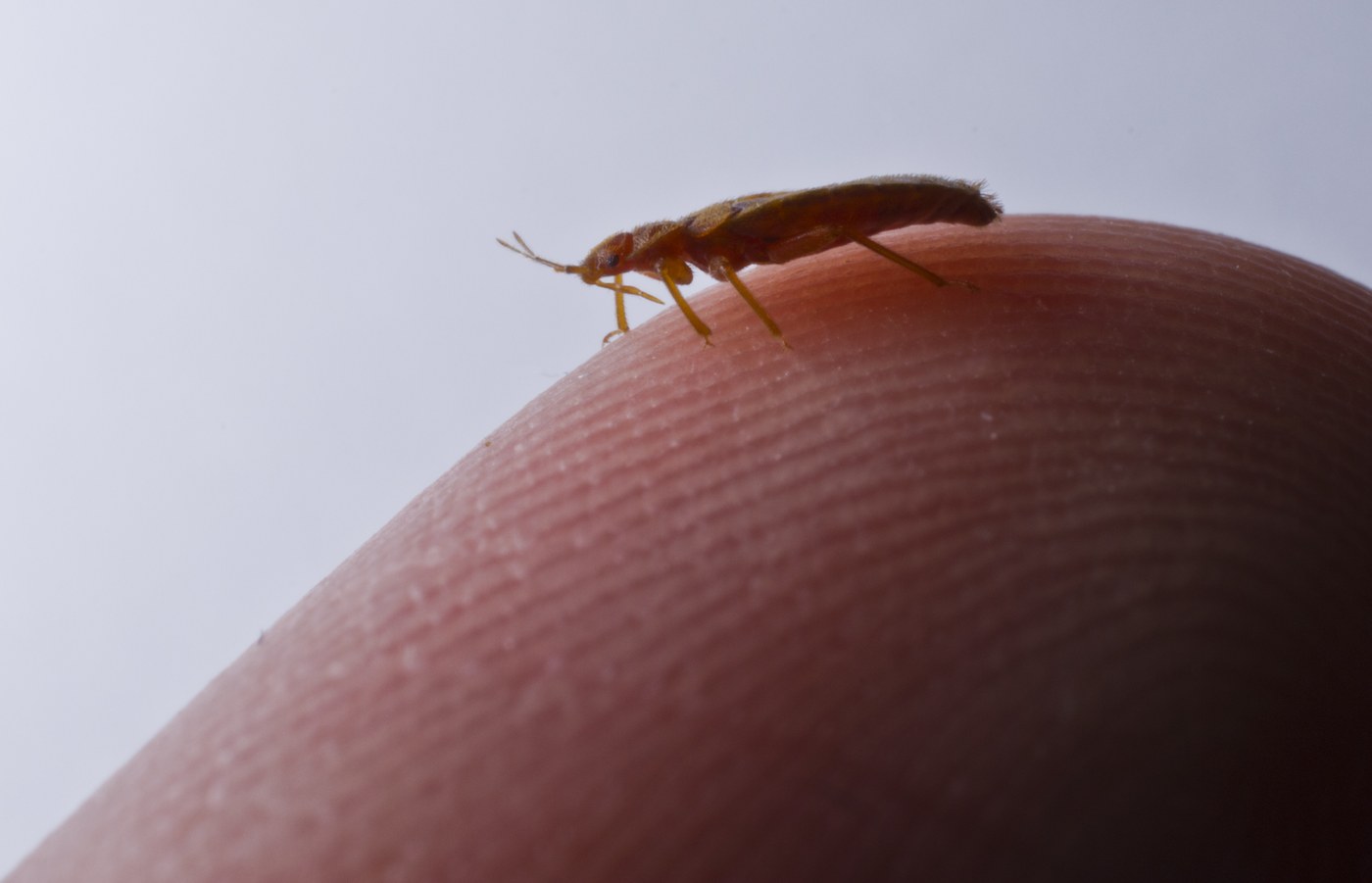
Low-angle view on a finger.
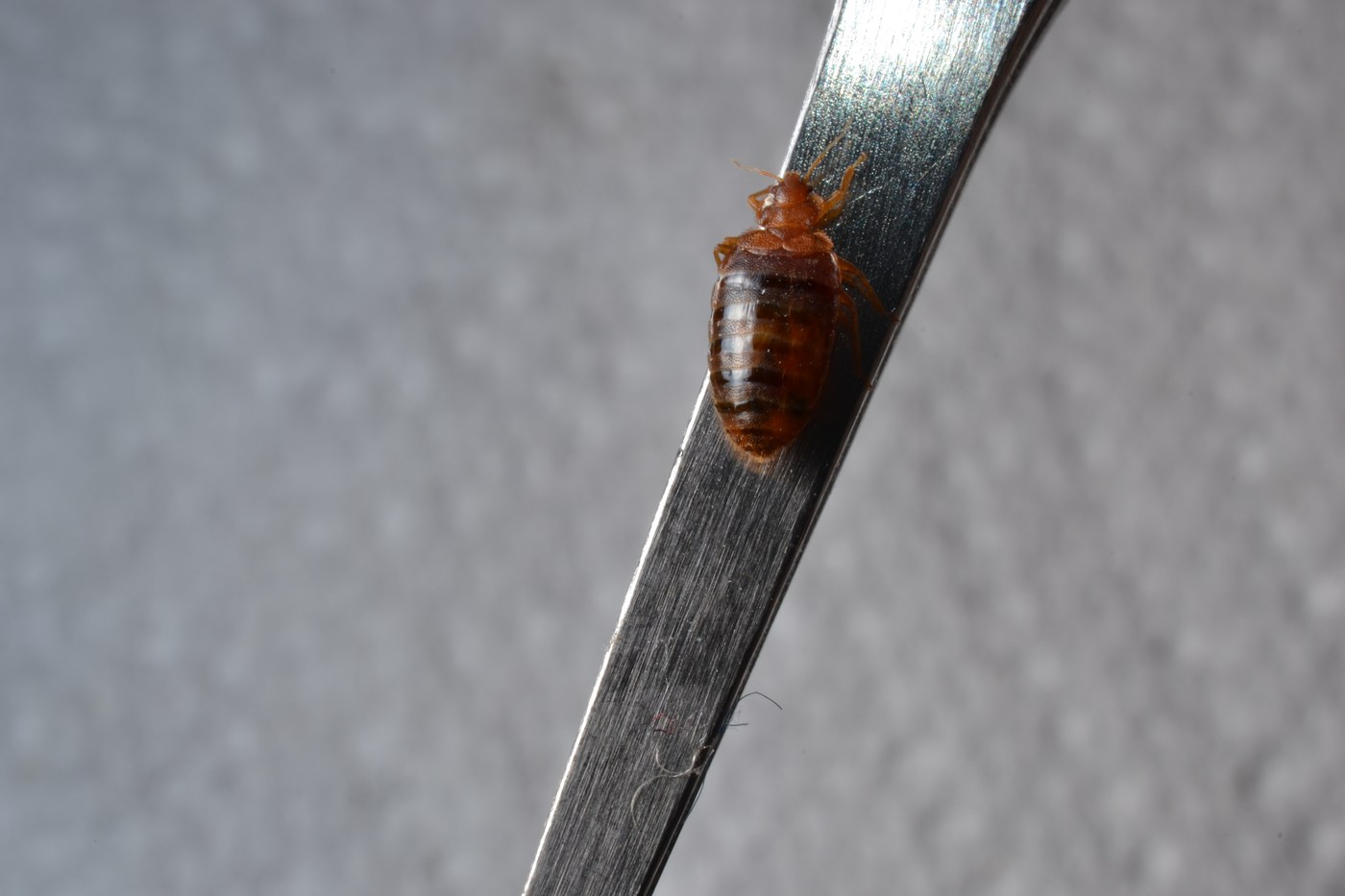
Specimen held on forceps.
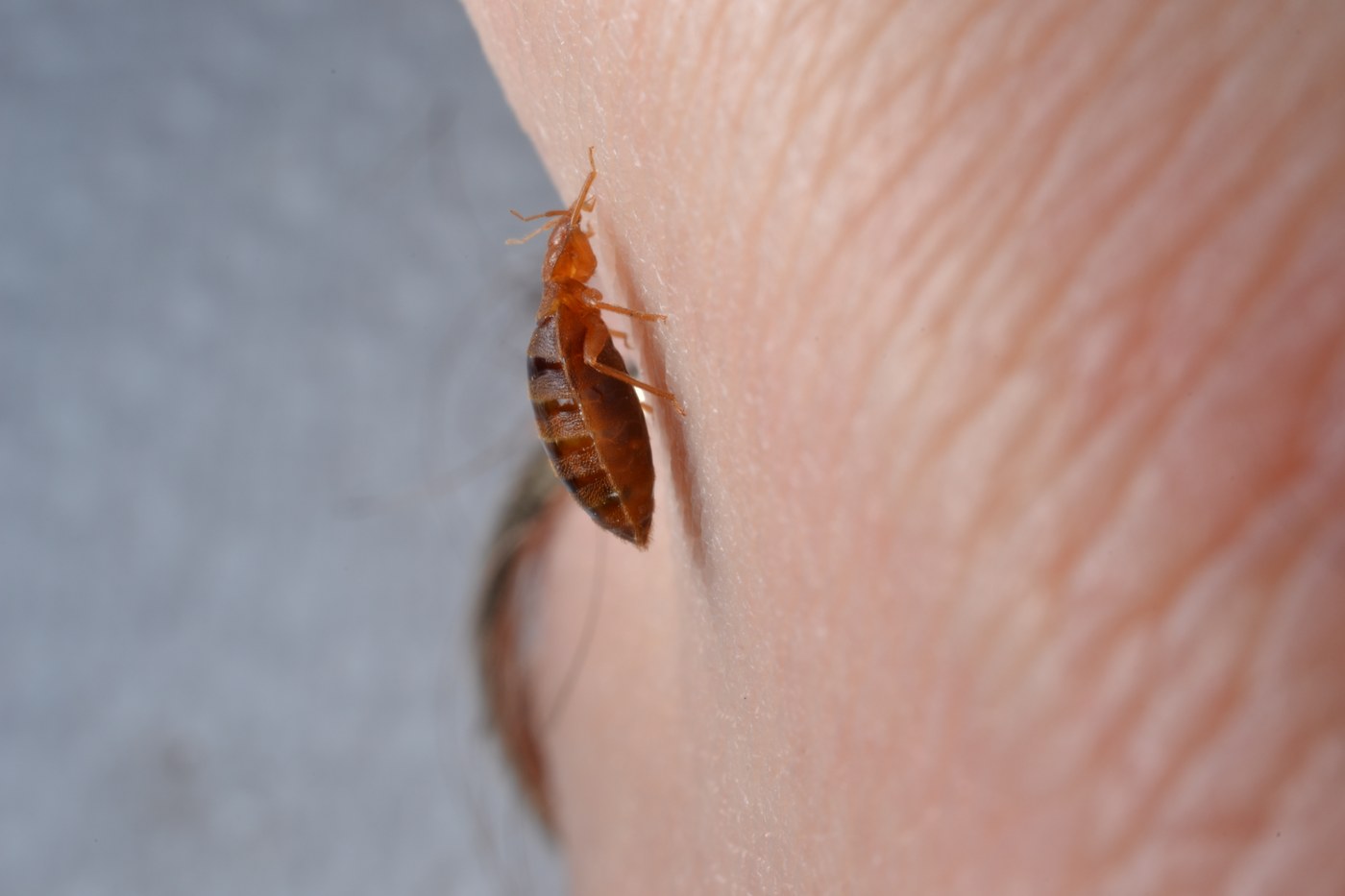
Unfed adult in profile.
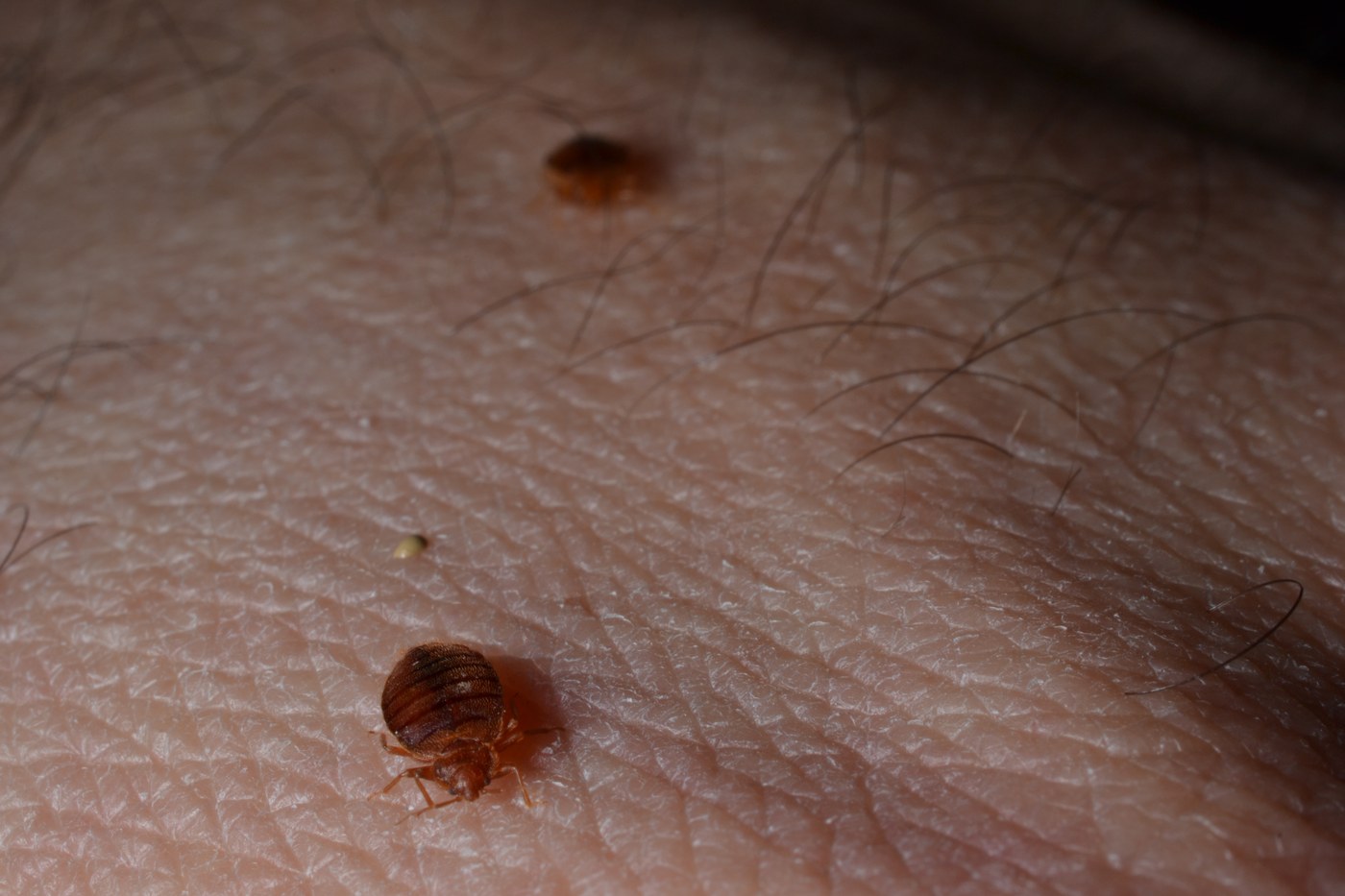
Two fed adults on skin.
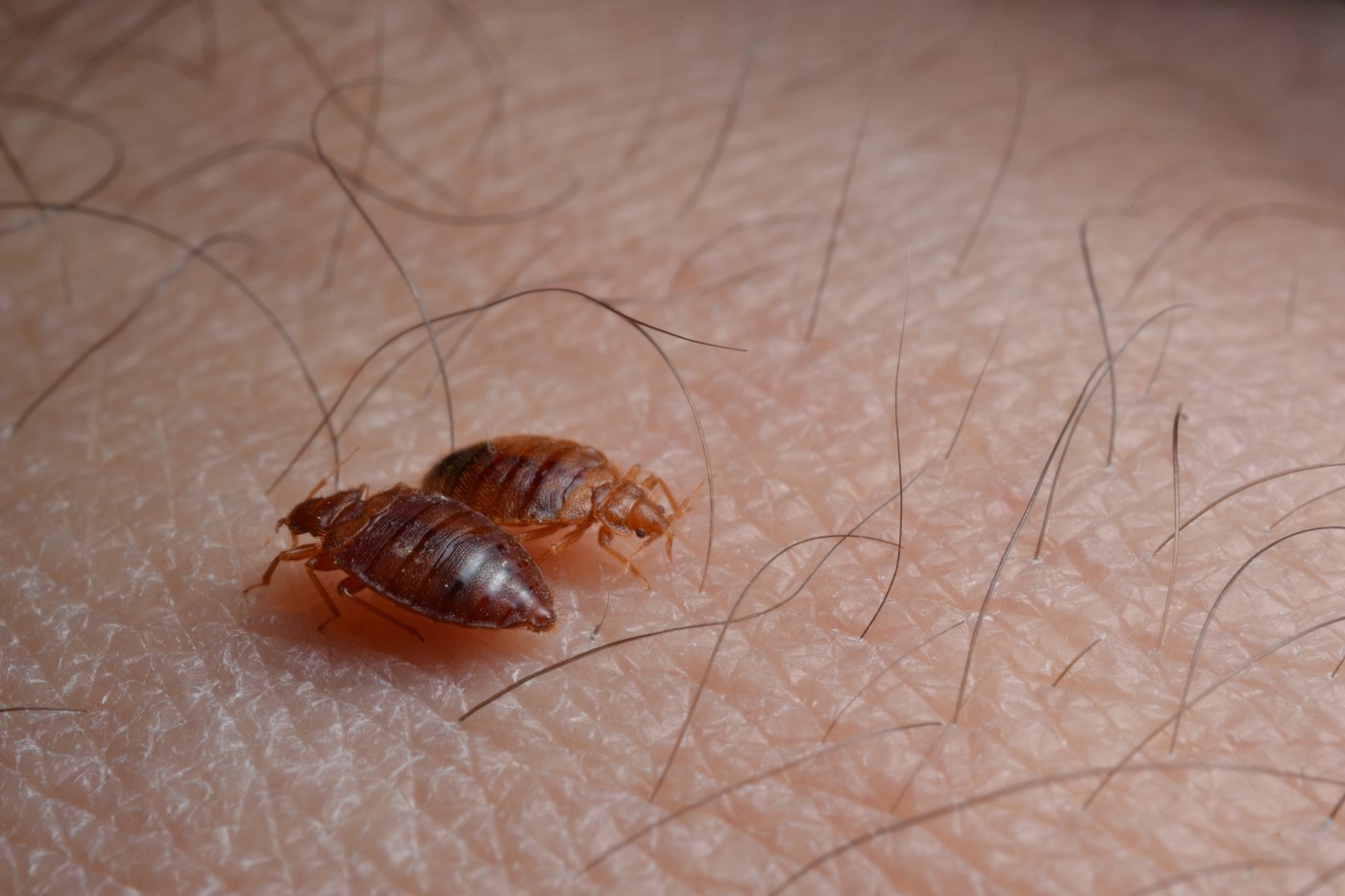
Adults standing close together.
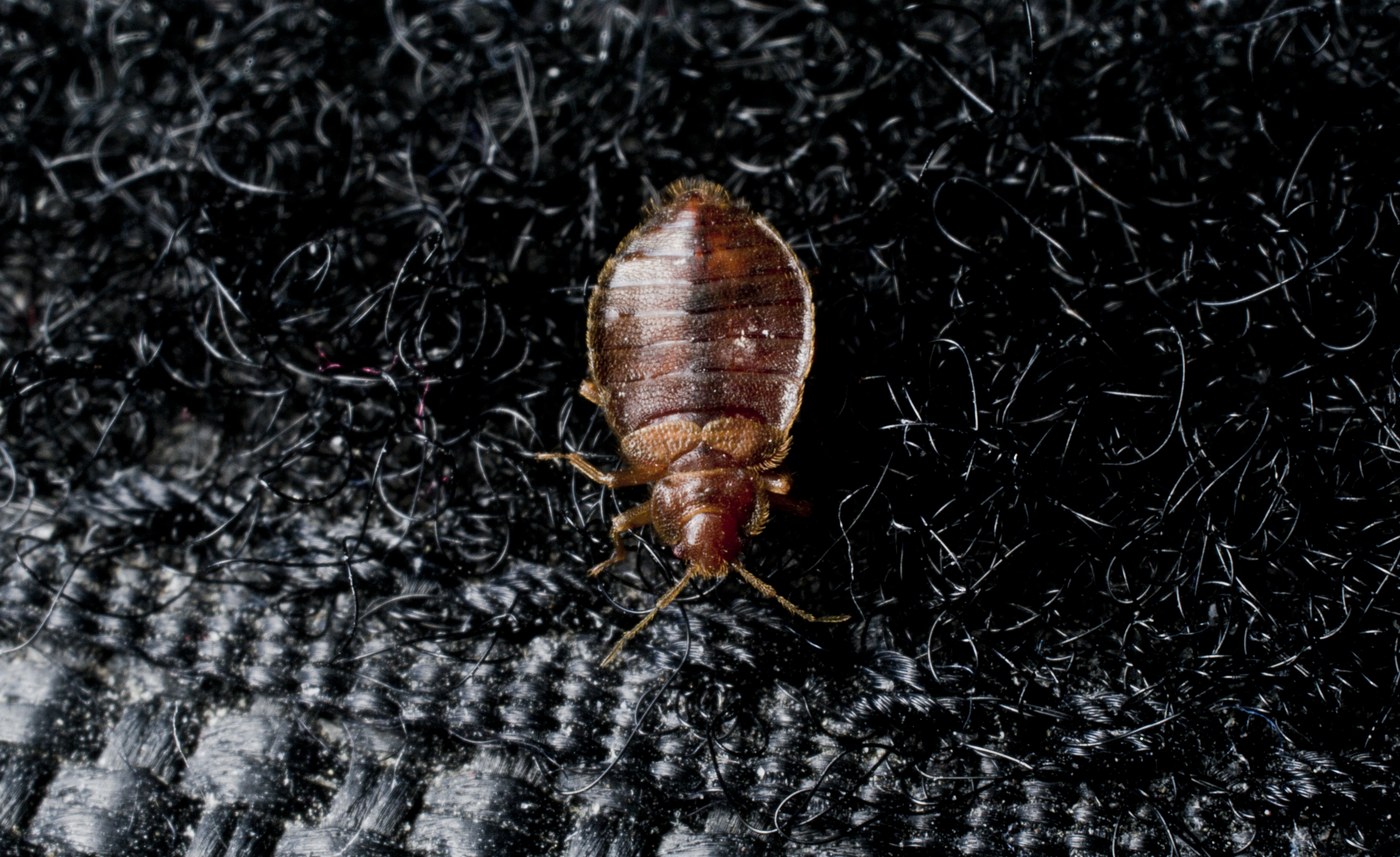
Hitchhiking in luggage fabric.
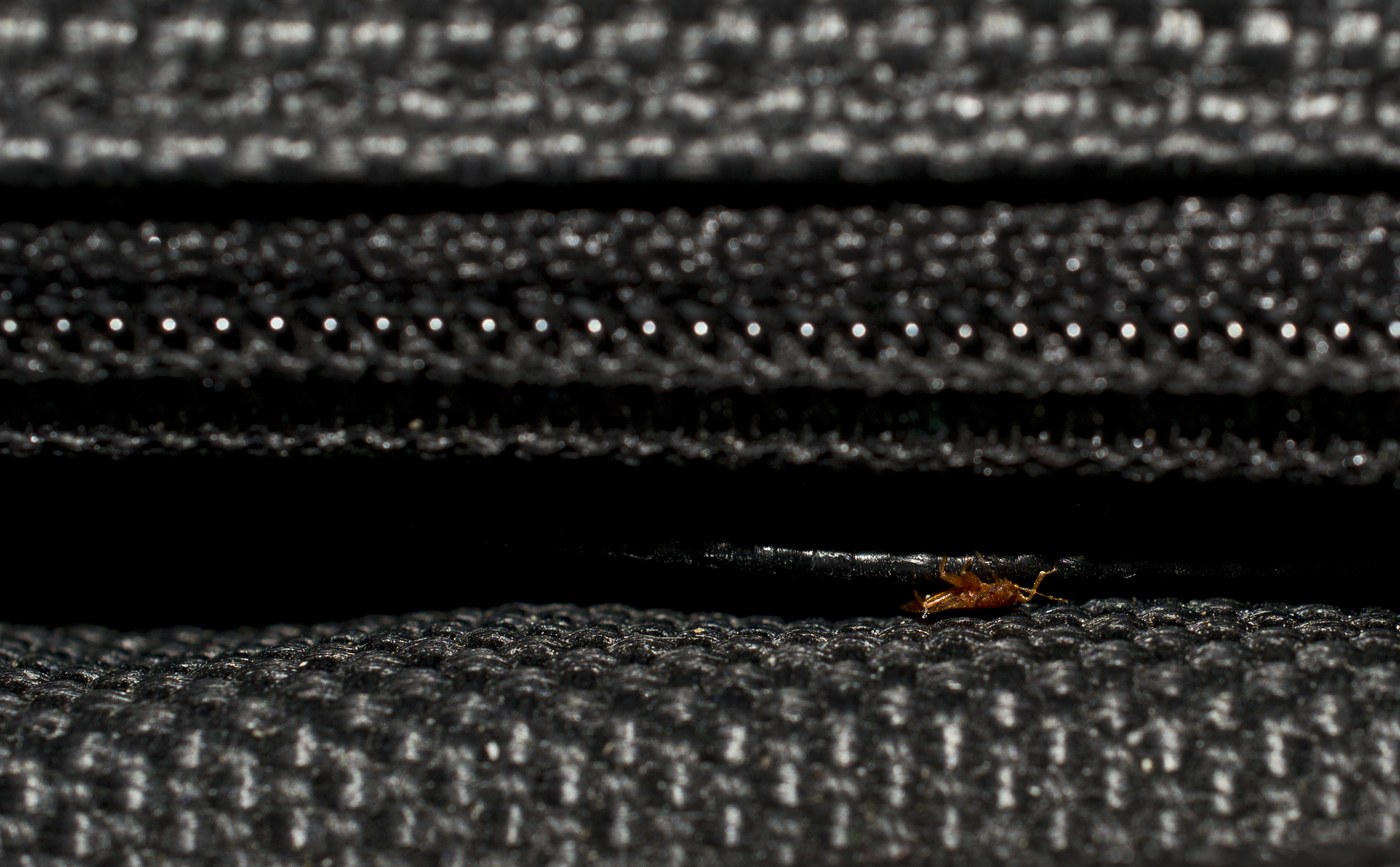
Hiding inside a zipper.
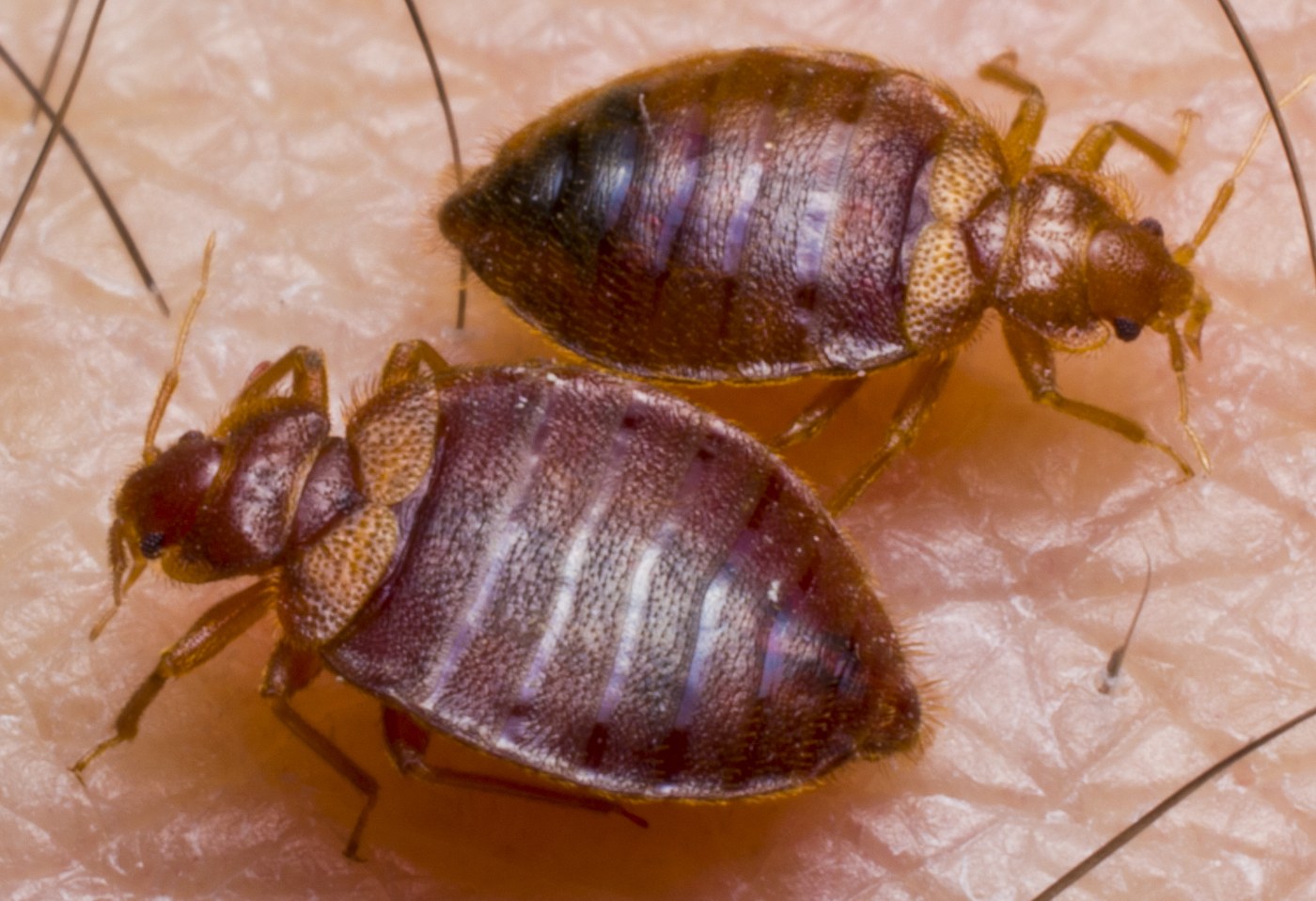
Sharp detail of two adults.
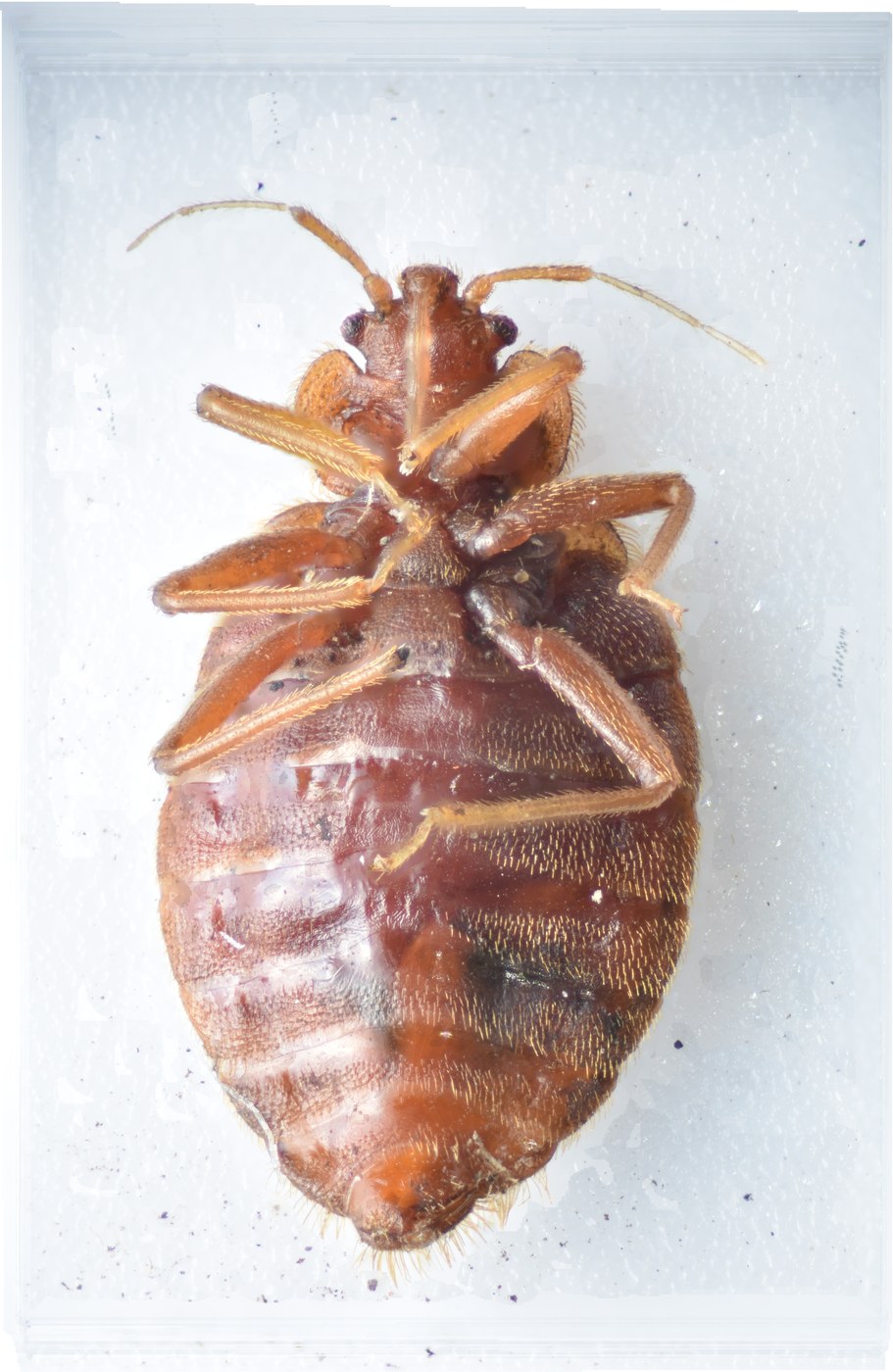
Preserved specimen, studio shot.
Sources
- Bed Bugs, ENTFACT-636 University of Kentucky Department of Entomology
- Pest Notes: Bed Bugs UC Statewide IPM Program, UC ANR Publication 7454
- About Bed Bugs Centers for Disease Control and Prevention
- Should I Use a Fogger to Get Rid of Bed Bugs? U.S. Environmental Protection Agency
- Biology, Habitat, and Management of Bed Bugs Penn State Extension
Image Credits
- Image: NPMA. Used under NPMA member image license.
- UC IPM, credit Dong-Hwan Choe.
- Image: CDC, Public Health Image Library 9819, photograph by Piotr Naskrecki, via Wikimedia Commons. Public domain.
Source.