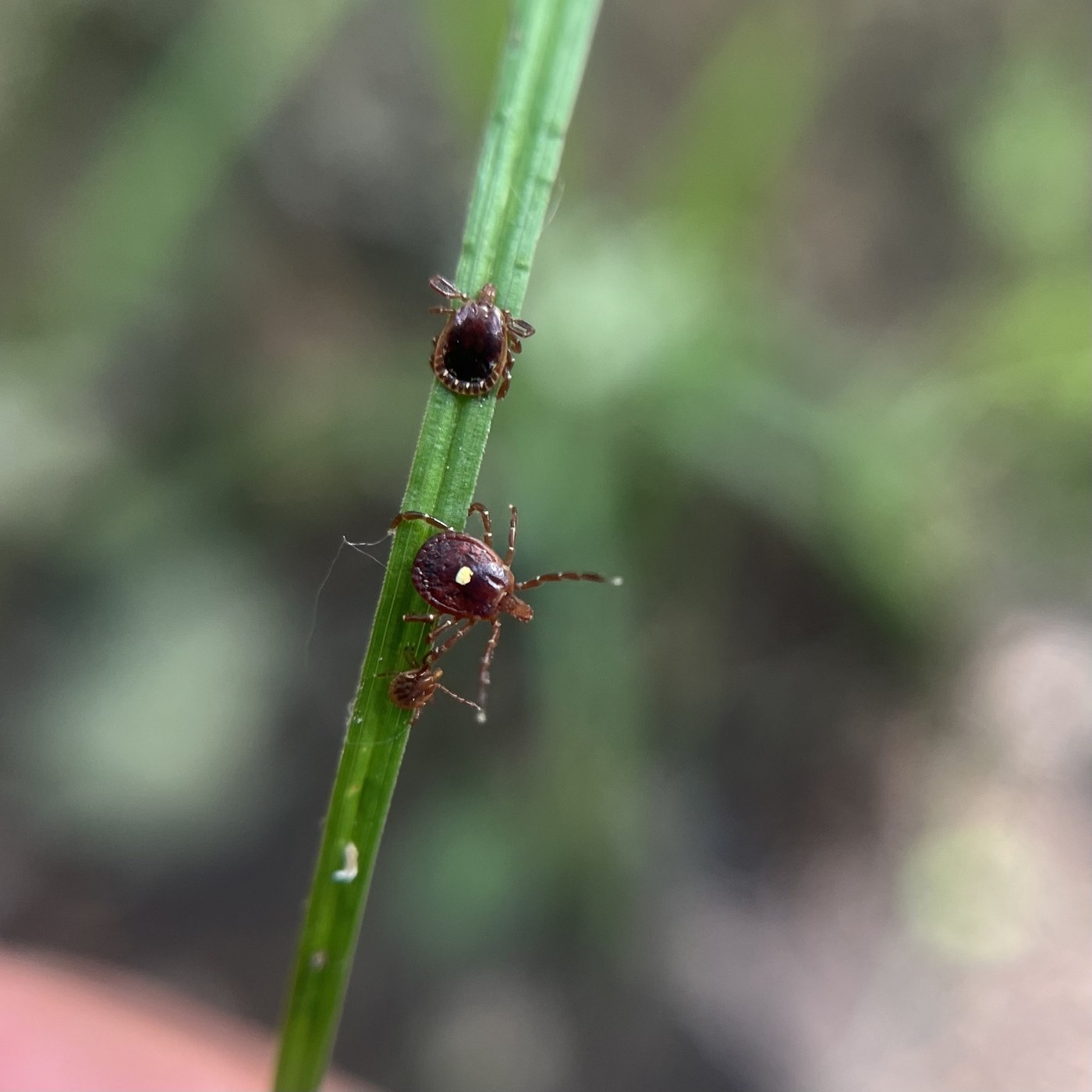
Where They're Found
Seven of the eight U.S. regions, but the species and therefore the disease changes with the map. Lyme disease is concentrated in the Northeast, mid-Atlantic and upper Midwest. The Rocky Mountain wood tick, lone star tick, American dog tick and the newly arrived Asian longhorned tick each have their own range and their own risks.
Seasonal Timeline
It depends on the stage and the region, and the two do not line up. Nymphs peak in mid-summer. Adults are a cold-weather problem across much of the country.
It depends on the stage and the region, and the two do not line up. Nymphs peak in mid-summer. Adults are a cold-weather problem across…
The Pacific Northwest runs the opposite season to the East, because the western blacklegged tick peaks from late autumn into early summer. If you moved across the country, your instincts about when to check are wrong.
This species does not run one calendar. The bar shows the pattern that covers the most regions; the cards above give every region its own window. Read your own row rather than the bar if the two differ.
Life Cycle
Blacklegged ticks follow what entomologists call the 2-3-4 rule: a two-year life cycle, three separate hosts, four life stages. The western blacklegged tick takes about three years. Each mobile stage feeds once, on a different animal, which matters because a tick picks up a pathogen at the larval or nymphal stage and passes it on later. That is exactly why a poppy-seed-sized nymph is the one to worry about.

Larva
Larva. Six legs, not eight. It has to take a blood meal before it can become a nymph, and that first meal is often where it picks up a pathogen.
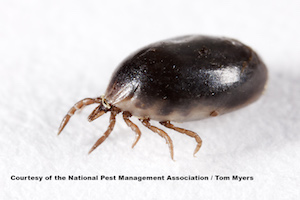
Nymph2
Nymph. Eight legs and about the size of a poppy seed, which is why it gets missed. Nymphs peak in mid-summer and are the stage most likely to pass on a disease.
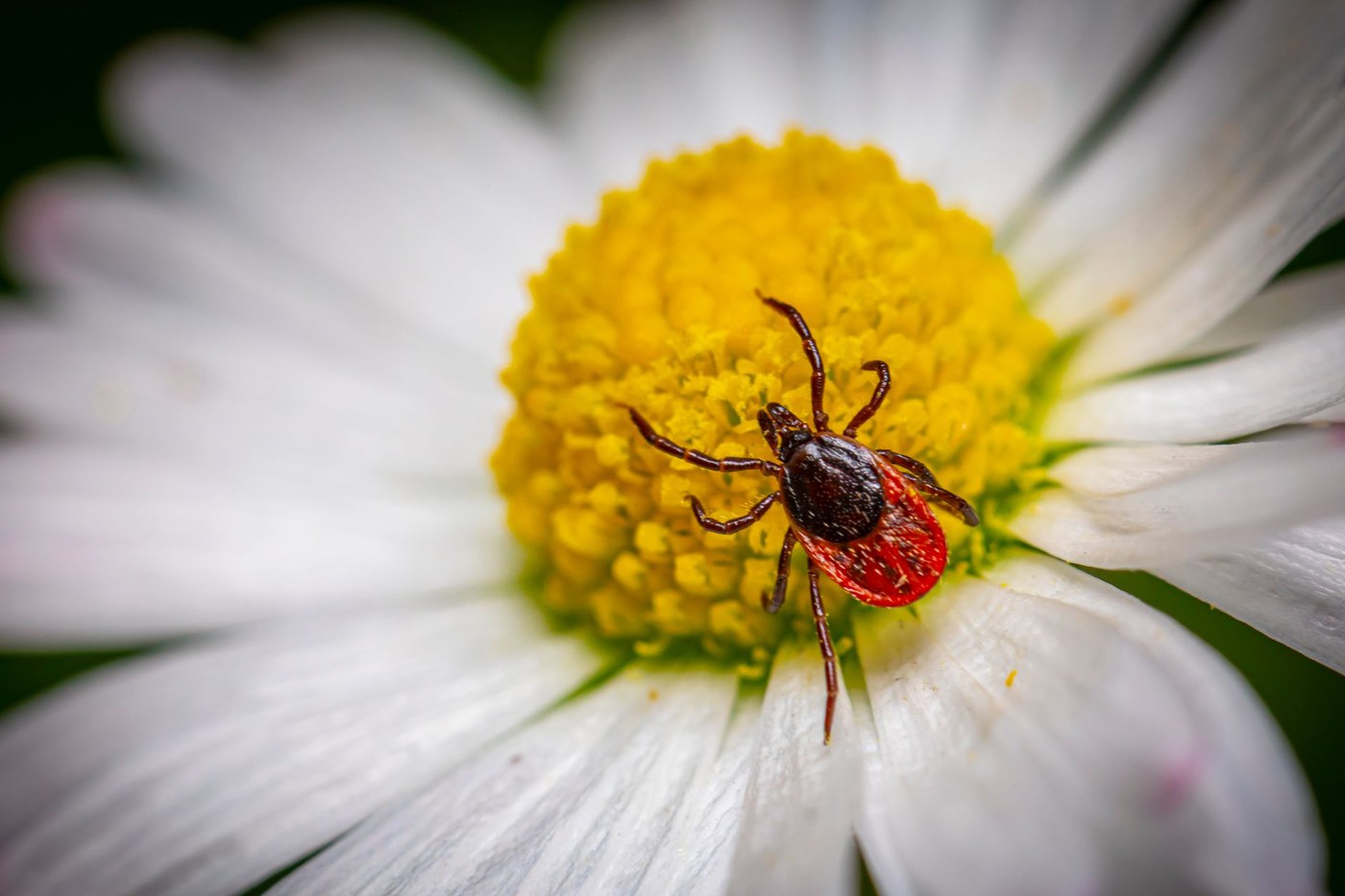
Adult3
Adult. About the size of a sesame seed. In the Northeast these are active from October right through to May.
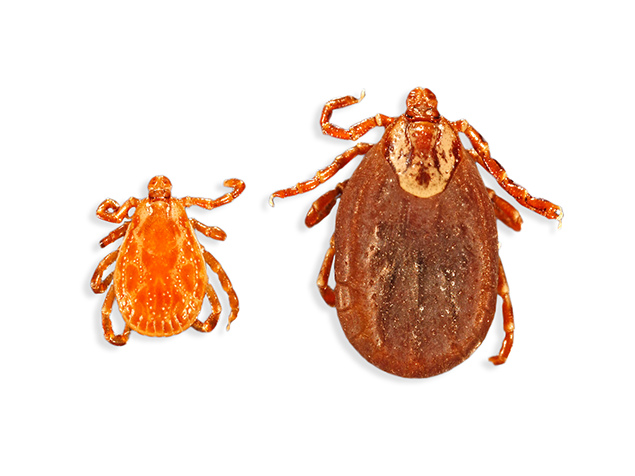
Species2
Not all ticks are deer ticks. The American dog tick, lone star tick, brown dog tick and Rocky Mountain wood tick each carry different diseases in different parts of the country.
<p><strong>Blacklegged ticks follow what entomologists call the 2-3-4 rule:</strong> a two-year life cycle, three separate hosts, four life stages. The western blacklegged tick takes about three years. Each mobile stage feeds once, on a different animal, which matters because a tick picks up a pathogen at the larval or nymphal stage and passes it on later. That is exactly why a poppy-seed-sized nymph is the one to worry about.</p>
Identification
Ticks are arachnids, not insects. Larvae have six legs. Nymphs and adults have eight. If you count six, you are looking at a larva.
Size is the thing worth remembering: a nymph is about the size of a poppy seed, an adult about the size of a sesame seed. That is small enough to be missed on skin entirely, and the nymph is the stage most likely to be carrying something.
They cannot fly and they cannot jump. Ticks do not drop out of trees, whatever you have been told. They climb to the tips of grasses and shrubs and wait, in a posture entomologists call questing, with the front legs held out ready to grab onto whatever brushes past.
They pick their spot deliberately. Ticks identify well-used paths and wait along them. They find you by sensing breath and body odor, body heat, moisture and vibration, and some species can even register a shadow passing.
Signs of Infestation
The sign is the tick itself, so the habit that matters is checking after every outing rather than watching for something around the house. Check under the arms, in and around the ears, inside the belly button, the back of the knees, in and around the hair, between the legs, and around the waist.
Then watch for symptoms for a few weeks. If you develop symptoms within a few weeks of a bite, see a doctor. Fever and chills are the common thread, since every tickborne disease can cause fever. Aches and pains follow, including headache, fatigue and muscle aches, with joint pain in Lyme disease.
Rash is the other signal. Lyme disease, Rocky Mountain spotted fever, ehrlichiosis, tularemia and STARI can all produce distinctive rashes. Lyme's has a name worth knowing, erythema migrans.
One symptom almost nobody knows about. Tick paralysis is caused by a toxin in the saliva of an attached tick. It produces weakness or paralysis that creeps up the body and can look like other neurological conditions. Removing the tick usually resolves it, with movement typically returning within 24 hours.
Alpha-gal syndrome is a different kind of sign. It is a real allergy to red meat and other mammal products that can develop after a tick bite, most often from a lone star tick. In the U.S. it is concentrated in the South, East and Central states, matching lone star tick range. See our Lone Star Tick page for the full picture.
Prevention and When to Call a Pro
Remove a tick correctly. Grasp it as close to the skin as possible with clean fine-tipped tweezers and pull straight up with steady, even pressure. Do not twist. Never use petroleum jelly, heat, or nail polish to try to make it let go, since that can push infected fluid into the skin instead of stopping it. Clean the bite site and your hands afterward with soap and water or rubbing alcohol.
Do it as soon as possible. Do not wait for a doctor's appointment to remove an attached tick. Waiting increases your risk of developing a tickborne disease. Watch for fever or rash over the following weeks and call a doctor if either appears.
Use the right repellent. Look for EPA-registered products containing DEET, picaridin, IR3535, Oil of Lemon Eucalyptus, para-menthane-diol, or 2-undecanone. Apply sunscreen first, repellent second. Skip Oil of Lemon Eucalyptus and para-menthane-diol products on children under three.
Treat clothing and gear. Products with 0.5% permethrin, or clothing that comes pretreated, stay protective through several washes. After coming indoors, ten minutes in a hot dryer kills any ticks riding along. Cold or medium heat will not do it.
Shower and check within two hours of coming inside. A prompt shower is linked to a lower risk of Lyme disease and may help with other tickborne diseases, and it is a natural moment to do a full body check.
Manage the yard, not just the trail. Keep to the center of trails and stay off tall grass and leaf litter when you are outdoors. Around the house, clear leaf litter, cut back brush at the lawn's edge, keep a wood chip or gravel barrier between lawn and woods, and mow regularly.
Adjust the calendar to where you live. In the Northeast, adult deer ticks are questing from October to May. In the Pacific Northwest the western blacklegged tick runs roughly November to June. In California and much of the Southeast the risk is year round. Protecting yourself only in July is protecting yourself for the wrong months.
What a pest professional can and cannot do. A tick bite is a medical matter first: remove it, then watch for symptoms. Treatment around a property targets tick habitat and pressure, particularly the vegetated edges where they wait. It does not replace personal checks, and any company suggesting otherwise is overselling.
Frequently Asked Questions
Do ticks drop out of trees?
No. Ticks cannot fly and cannot jump. They climb to the tips of grasses and shrubs along well-used paths and wait with their front legs out, ready to grab hold of whatever brushes past.
When is tick season?
Not just summer, and that assumption is why people get caught out. Nymphs peak in mid-summer, but adult deer ticks in the Northeast are active October through May, and the western blacklegged tick on the West Coast runs roughly November to June. In California and much of the Southeast, ticks are a year-round risk.
How small is a tick nymph?
About the size of a poppy seed. An adult is about the size of a sesame seed. That size difference is why nymphs get missed, and nymphs are the stage most likely to pass on a disease, because a tick picks up a pathogen at its first or second feed and transmits it at the next one.
How long do ticks live?
Longer than most people expect. A blacklegged tick takes about two years to complete its life cycle and a western blacklegged tick about three, feeding just once at each stage and on a different animal each time.
What should I do after a tick bite?
Remove the tick as soon as possible, then watch for fever, rash or aches over the next few weeks and see a doctor if any appear. Depending on the tick species and how long it was attached, preventive antibiotics may be worth discussing.
Photo Gallery
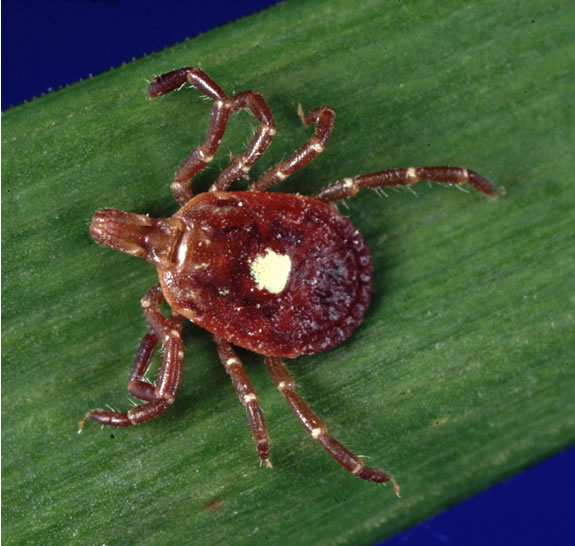
Lone star tick, dorsal view.
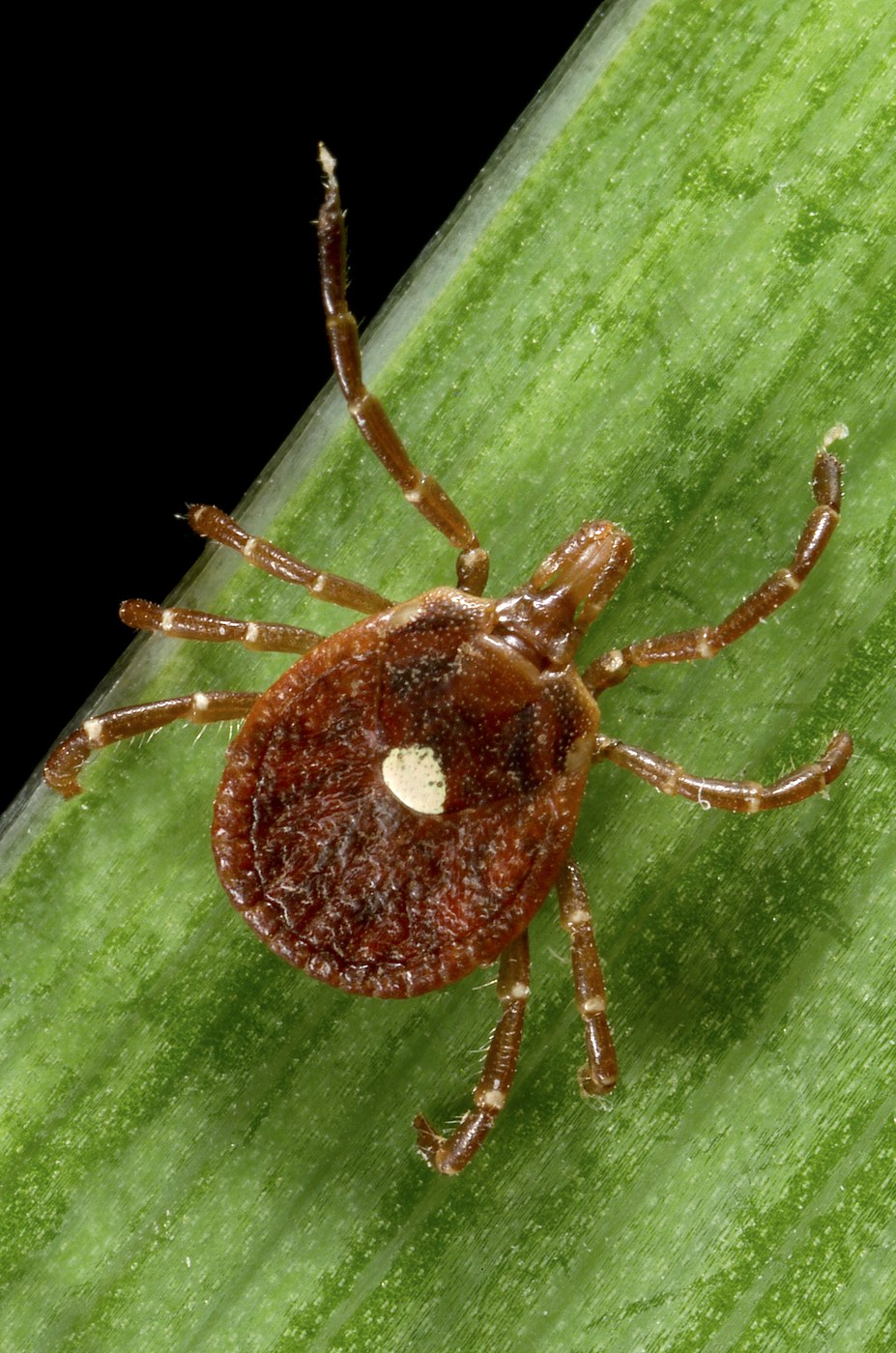
Lone star tick on grass blade.
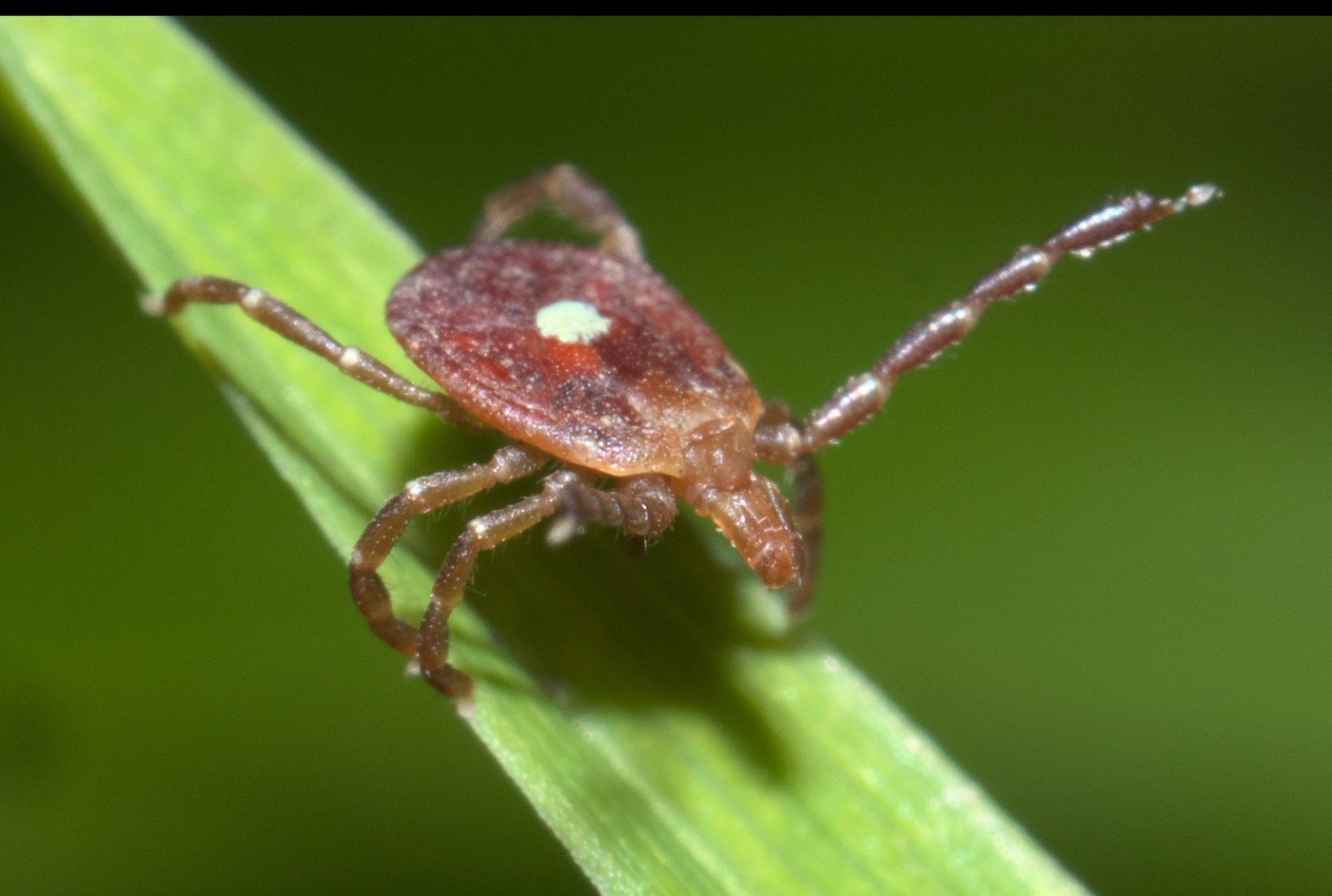
Questing posture on grass.
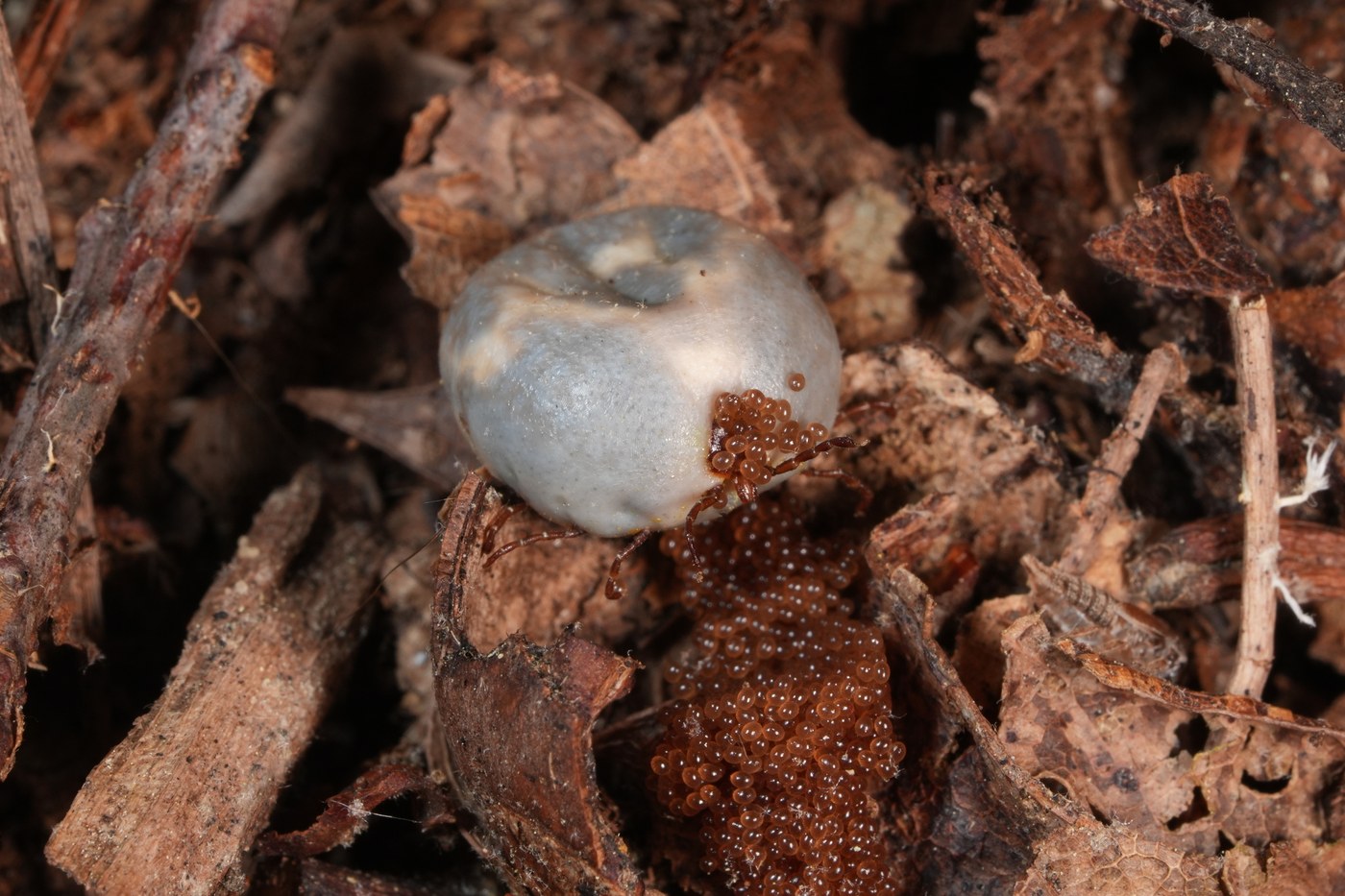
Engorged female laying eggs.
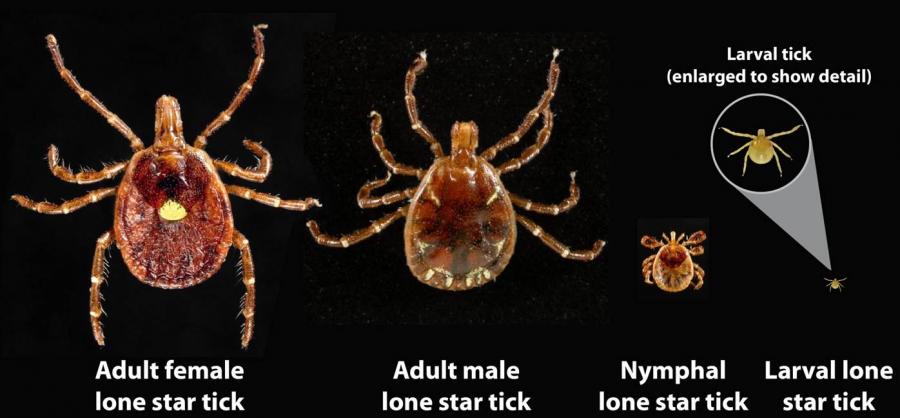
Life stages, adult to larva.
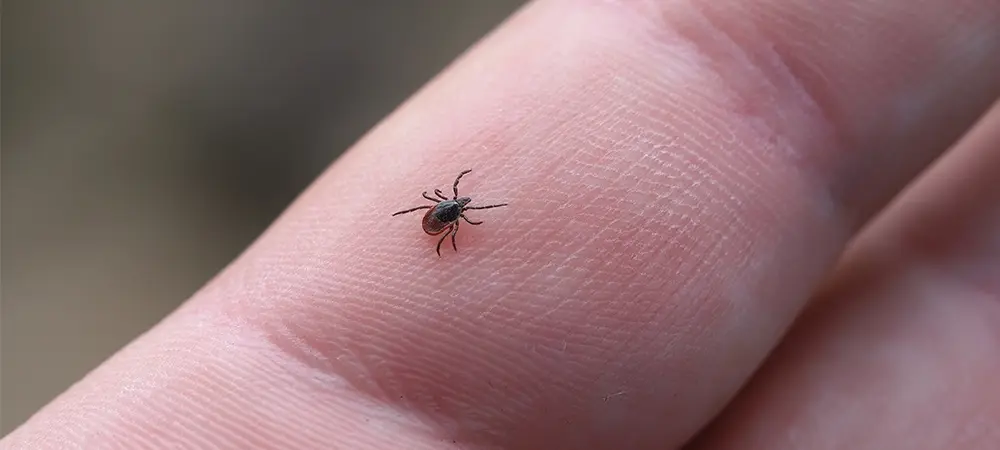
Tick attached to skin.
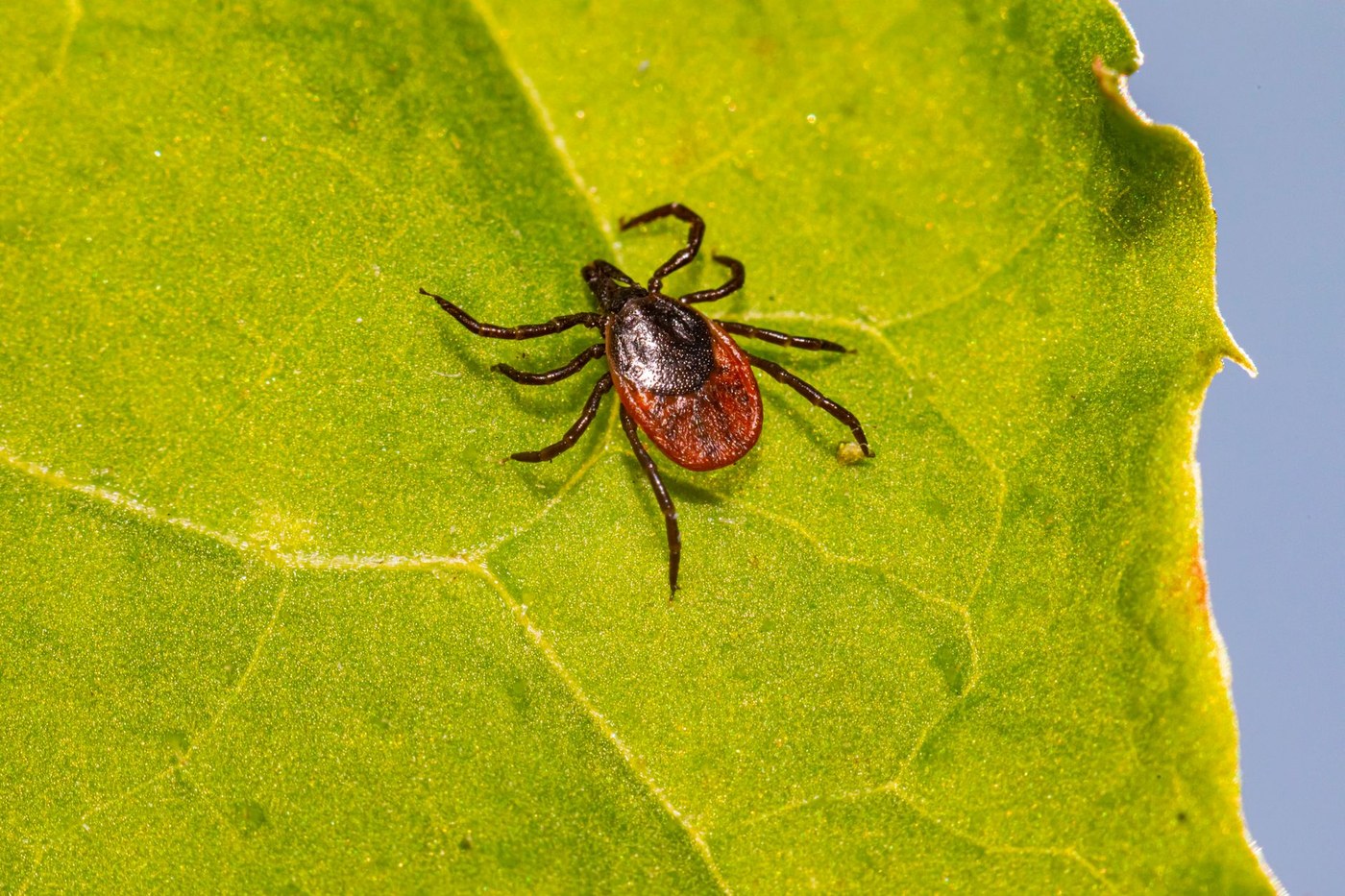
Ticks, adult
Sources
- About Ticks and Tickborne Disease Centers for Disease Control and Prevention
- Tick Lifecycles Centers for Disease Control and Prevention
- About Lyme Disease Centers for Disease Control and Prevention
- Know Your Vector: The Tick's Life Cycle Penn State Extension
- What to Do After a Tick Bite Centers for Disease Control and Prevention
- Preventing Tick Bites Centers for Disease Control and Prevention
- About Alpha-gal Syndrome Centers for Disease Control and Prevention
Image Credits
- Image: Jody via iNaturalist. CC BY 4.0.
License. - Image: NPMA, via PestWorld.
- Image: Erik Karits via Pexels. Pexels License, commercial use permitted.
- Image: CDC, photograph by James Gathany, via Wikimedia Commons. Public domain.
Source. - Image: CDC, photograph by James Gathany, via Wikimedia Commons. Public domain. Resized.
Source. - Image: xpda, via Wikimedia Commons. Licensed CC BY-SA 4.0; this resized copy is offered under the same license.
Source. License. - Image: Gamfeld, via Wikimedia Commons. Dedicated to the public domain under CC0. Resized.
Source. License. - Image: CDC, via Wikimedia Commons. Public domain.
Source. - Image: Enesguney1, via Wikimedia Commons. Licensed CC BY-SA 4.0. Unmodified.
Source. License. - Image: Erik Karits via Pexels. Pexels License, commercial use permitted.
Source. License.