Where They're Found
German cockroaches turn up anywhere in the country, and no climate rules them out, because this species never occurs outdoors anywhere. It thrives only where people are, which means every infestation was carried in, usually on grocery bags, beverage cartons, furniture or belongings.
Seasonal Timeline
Year round. German cockroaches live only indoors at controlled temperature, so there is no dormant season. Complaints peak in summer, but that is a reporting pattern rather than anything the insect is doing.
Year round. German cockroaches live only indoors at controlled temperature, so there is no dormant season. Complaints peak in summer, but…
Apartments and other multi-unit housing run year round in every region, because the insects move between units through shared walls, pipes and wiring rather than responding to the weather.
One limit, stated rather than hidden. No month window is documented for Alaska and Hawaii, so they are not on the bar.
Life Cycle
The arithmetic is why a first sighting is urgent. Up to 40 nymphs per egg case, and a single mated female can produce thousands of new cockroaches in less than a year. Nothing about a German cockroach problem stays small on its own.
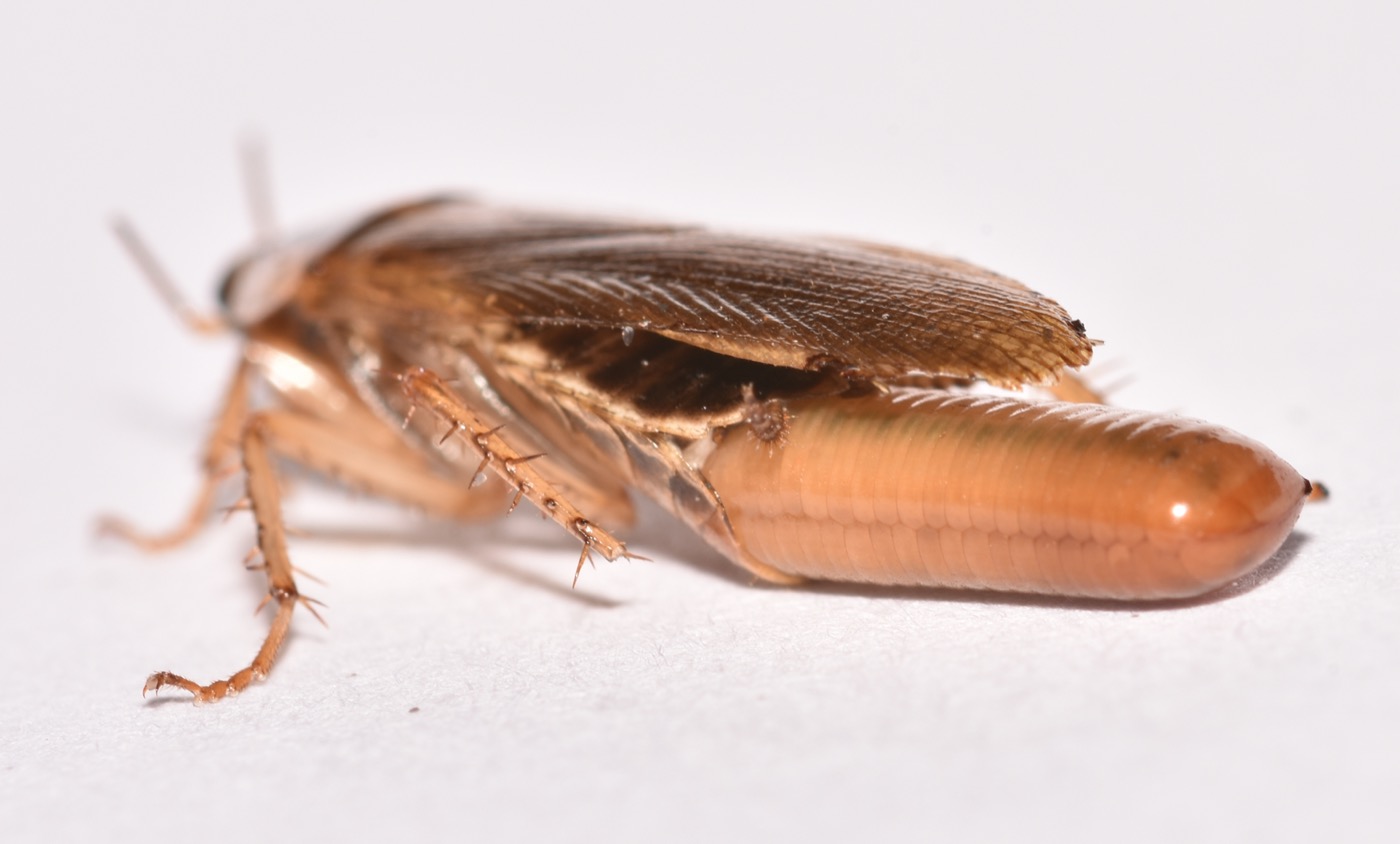
Egg case1
Egg case. Small, brown and bean-shaped. Up to 40 nymphs emerge from one, against 15 to 20 for other cockroach species.
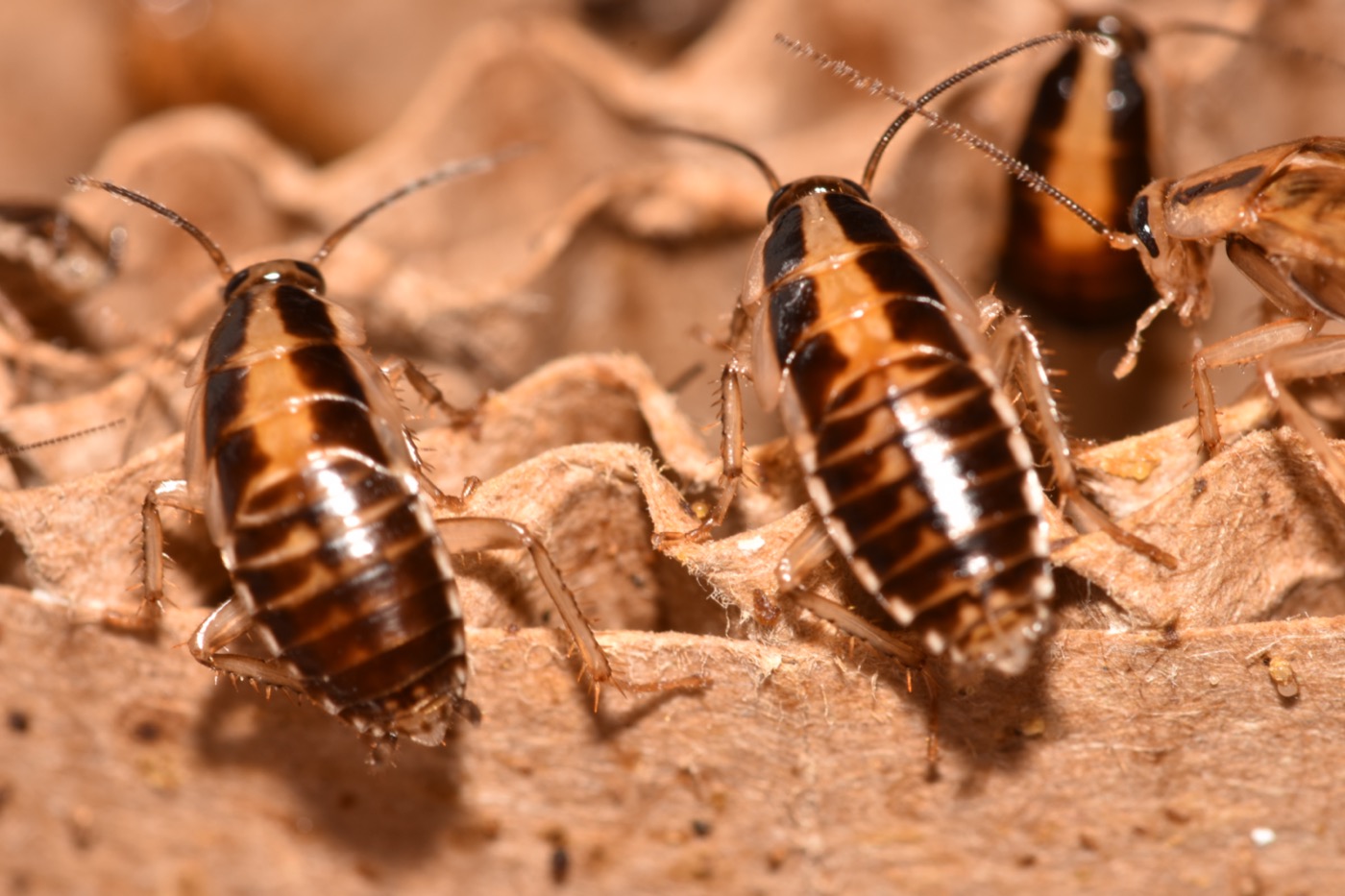
Nymph1
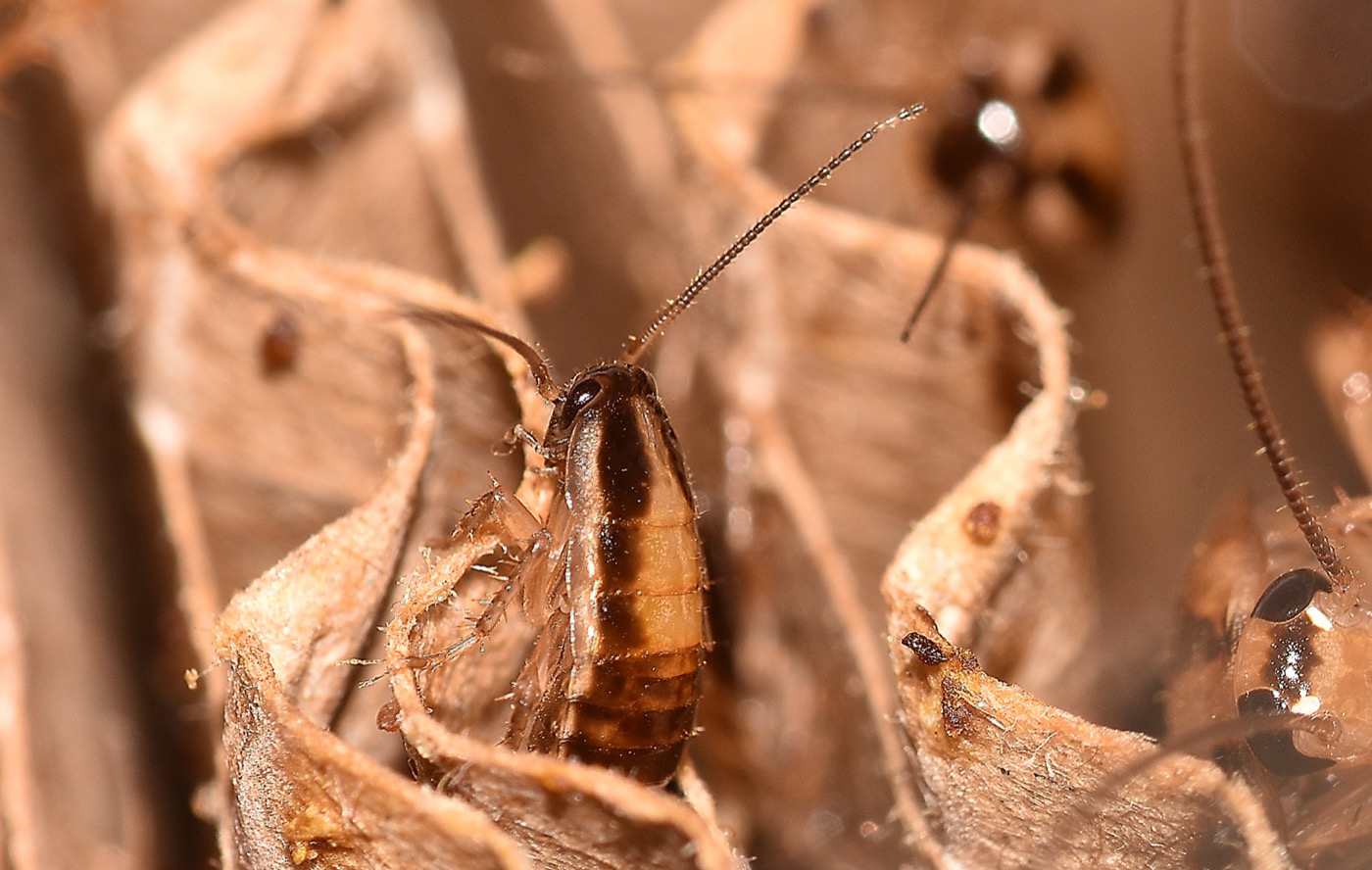
Nymph. Smaller and darker than the adult, wingless, with a tan stripe down the middle of the back. Lives in the same cracks as the adults.
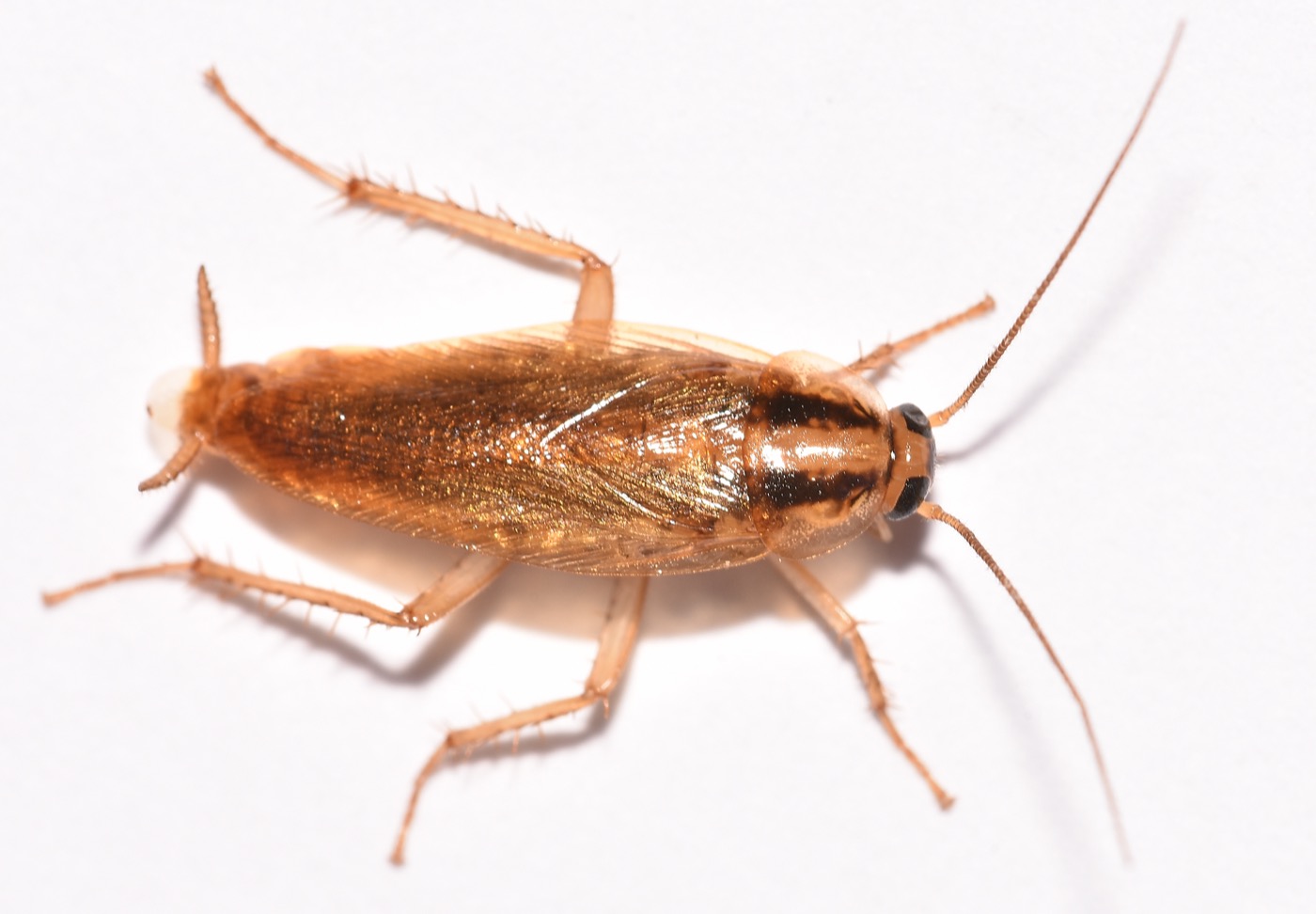
Adult1
Adult. Light brown, about half an inch, with two dark stripes running lengthwise behind the head.
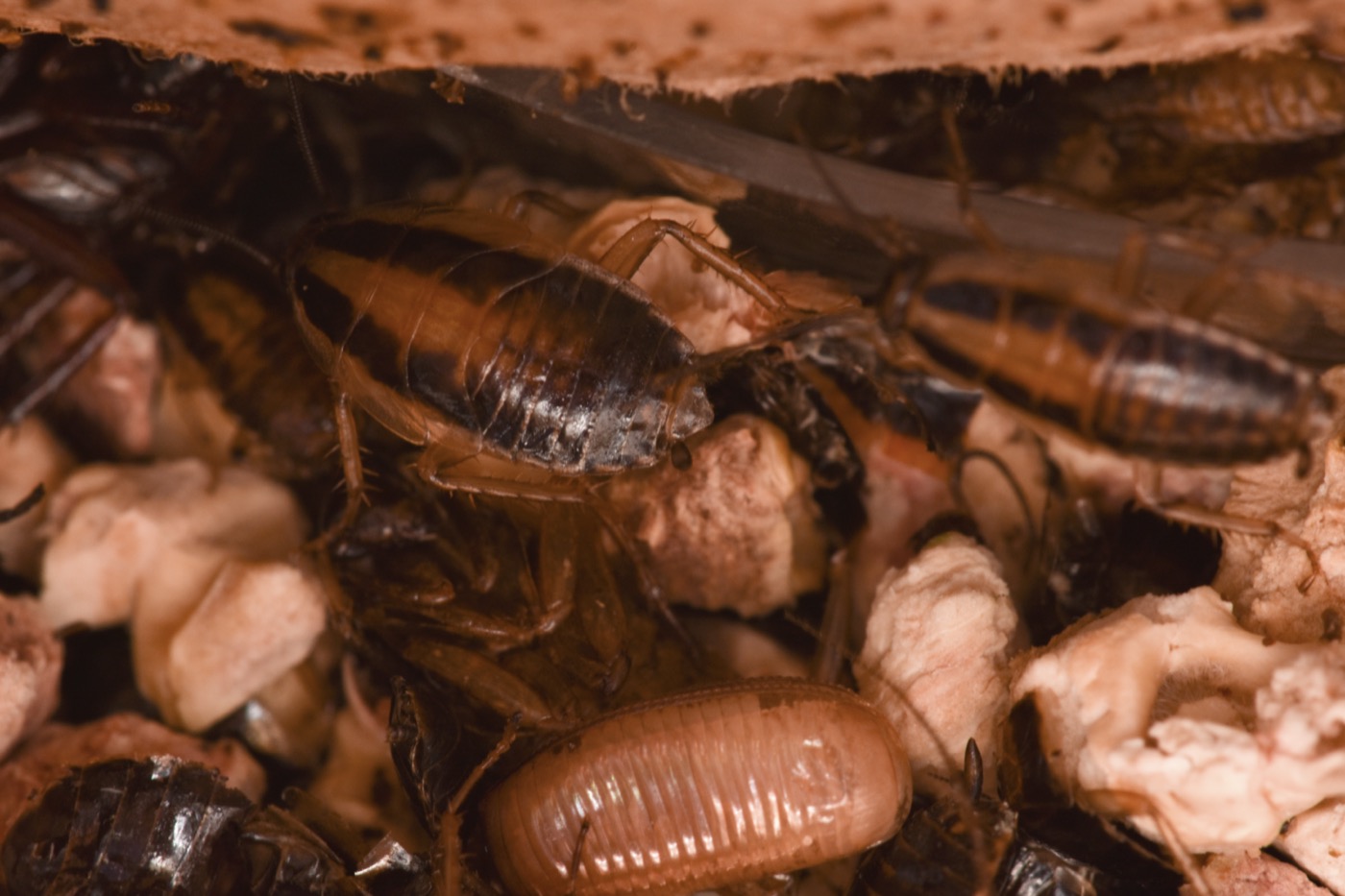
Harborage1
Where they actually are. They do not build nests. They gather in cracks in response to the odor of their own droppings, which is why the spotting marks the spot.
<p><strong>The arithmetic is why a first sighting is urgent.</strong> Up to 40 nymphs per egg case, and a single mated female can produce thousands of new cockroaches in less than a year. Nothing about a German cockroach problem stays small on its own.</p>
Identification
Adults are light brown, about half an inch long, and carry two dark stripes running lengthwise behind the head. You can check that much by eye, but it does not finish the job: the Asian cockroach carries the same stripes at the same size. Behavior separates them. A German cockroach stays indoors and does not fly to lights. Nymphs look the same but smaller, darker, wingless, with a tan stripe down the middle of the back.
The lookalike that changes the treatment is the brownbanded cockroach. Same rough size, but no lengthwise stripes. It has a black bell-shaped mark behind the head and two yellowish bands across the wings. It matters because it hides somewhere completely different: high on walls and ceilings, inside cabinets and closets, behind picture frames, under furniture. Treat it like a German cockroach and you will search under the sink while it lives above your head.
The other three are easier. The American cockroach is much bigger at about an inch and a half, reddish brown, and lives in basements, drains and sewers. The Oriental cockroach is shiny black, about an inch, sluggish, and stays at ground level. Wood cockroaches are brown and about an inch, and give themselves away by flying to lights, which the German cockroach never does. The smokybrown cockroach flies to lights too, so a roach at a porch light is one of those two and not this one.
One fact separates this species from every other roach: it does not occur outdoors. Anywhere. If you have German cockroaches, they were carried in and they are breeding indoors.
Signs of Infestation
Droppings that look like ground pepper. Pepper-like specks mark areas of current or former activity, and because they gather in response to the odor of their own droppings, the spotting marks the harborage.
Do not confuse the spotting with bed bugs. It looks very similar. The tell is location: cockroaches seldom congregate on beds the way bed bugs do. Spotting in a kitchen cabinet corner is roaches, spotting along a mattress seam is not.
An unpleasant odor that comes with established infestations.
Look where it is warm, dark and damp. Under sinks and toilets, behind the refrigerator, dishwasher and stove, near trash containers, inside cabinets and pantries. And check inside clocks, toaster ovens and other heat-producing electronics, which is where an infestation survives a thorough kitchen clean.
In an apartment, your neighbors matter. They travel between units through walls, ceilings, pipes and wires, so treating one unit works against a reservoir it cannot reach.
Prevention and When to Call a Pro
Sanitation genuinely helps with this species, which is not true of every pest. Clean up spills and food waste, do not leave dishes or pet food out overnight, store loose food in tight containers, keep garbage from accumulating, and get rid of stacked paper bags, cartons and newspapers or bag them up.
Seal the routes between rooms and units. Caulk around doors and windows, and seal where pipes and wires pass through walls and floors with caulk, foam or copper mesh. In an apartment this is the single most useful physical step, because it cuts the traffic from next door.
Skip the bug bomb. It makes the problem worse. Total-release foggers push insecticide upward so it settles on floors and countertops, and almost none of it reaches the cracks and voids where roaches actually live. Worse, the ingredients repel, so the roaches scatter deeper into wall voids and become harder to reach. They are also a genuine fire risk: the contents can be flammable near an open flame, and there is a long history of injuries and house fires where a pilot light was left burning.
Do not spray baseboards and countertops either. Roaches spend very little time on open surfaces, and one crossing a treated baseboard will not stay on it long enough to pick up a lethal dose. Effort belongs on the harborage.
Boric acid works, and almost everyone applies it wrong. Roaches pick the dust up while crawling and swallow it while cleaning their legs and antennae, and it stays potent more or less indefinitely as long as it stays dry. But it has to go down as a deposit barely visible to the eye. Cockroaches avoid a heavy layer of powder much as you would avoid walking through a snowdrift, so a thick white line does nothing at all. Never put it on countertops or food surfaces, and never puff it into electronics.
Baits are the best homeowner tool by a distance. Used properly they can match professional results. Placement is everything: flush into corners and edges where roaches travel, and many small pea-sized dabs rather than a few big ones, because roaches do not come to bait from across the room, they find it while foraging. More than a dozen placements can be needed under one kitchen sink. Do not spray cleaner or insecticide near the bait, which puts them off feeding.
When to call, and when not to. Call for any German cockroach in a multi-unit building, or anything that has spread past one room, because neighboring units need inspecting and you cannot arrange that. But it is worth knowing that a homeowner following the steps above can often clear a single-family home themselves. And if you do hire someone, note what the University of Kentucky says: it should not take a full year to eliminate cockroaches if the treatment is done correctly, and once they are gone there is seldom any need to keep reapplying month after month.
Frequently Asked Questions
Do bug bombs kill cockroaches?
No, and they leave you worse off. The insecticide settles on open surfaces instead of penetrating the cracks where roaches live, and because the ingredients repel, the roaches scatter deeper into wall voids. They are also a fire risk. There is a long record of injuries and house fires from foggers set off near a pilot light.
Does having cockroaches mean my house is dirty?
No. Sanitation matters once they are in, but German cockroaches arrive on grocery bags, beverage cartons, furniture and belongings, and in apartments they walk in from next door through the walls. Clean homes get infested regularly.
Can cockroaches cause asthma?
Yes. Allergens from their droppings and shed skins trigger congestion, sneezing, watery eyes and asthma, including severe attacks. NIEHS reports a link between cockroach presence and more severe asthma symptoms, and it is especially common among children living in dense housing.
How do I tell a German cockroach from the others?
Two dark stripes running lengthwise behind the head, on a light brown body about half an inch long. The one that catches people out is the brownbanded cockroach, which has no stripes but two yellowish bands across the wings, and which hides high on walls and ceilings rather than under the sink.
Does boric acid work on cockroaches?
Yes, if you apply it correctly, and most people use far too much. It needs to be a deposit barely visible to the eye. Roaches avoid a heavy layer of powder the way you would avoid a snowdrift, so a thick white line achieves nothing.
Photo Gallery
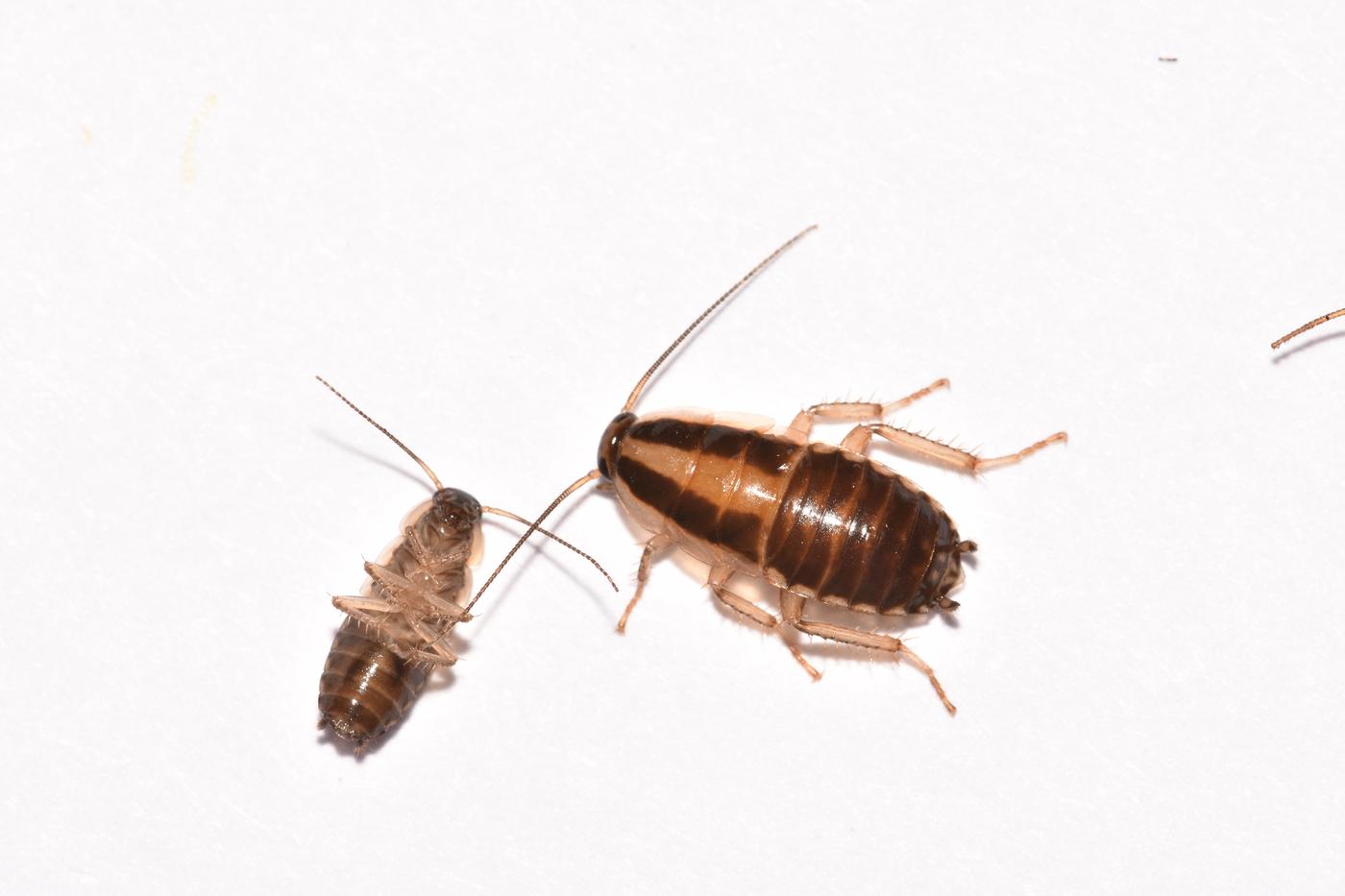
Nymphs at two different sizes.
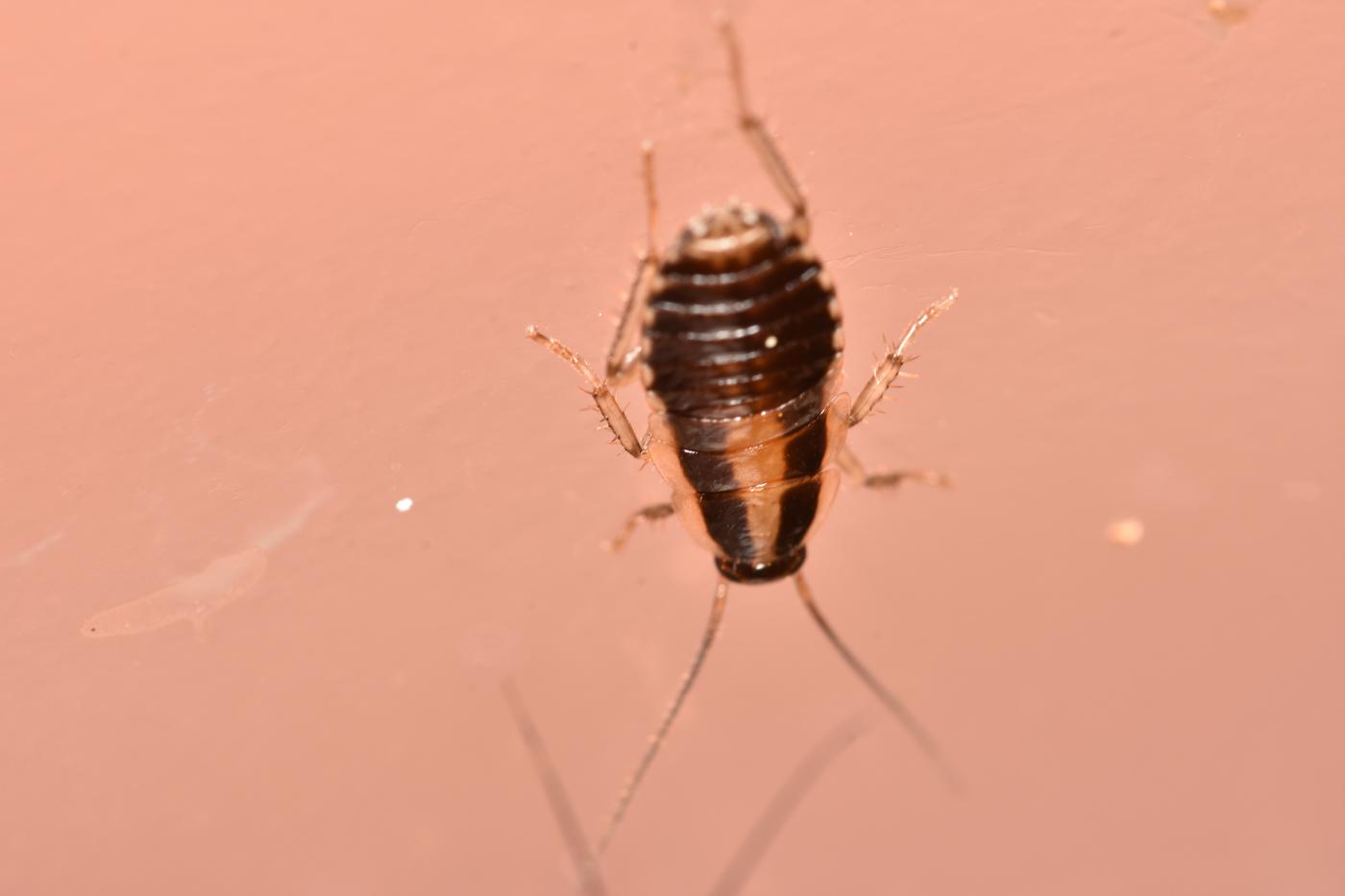
Early-instar nymph, top view.
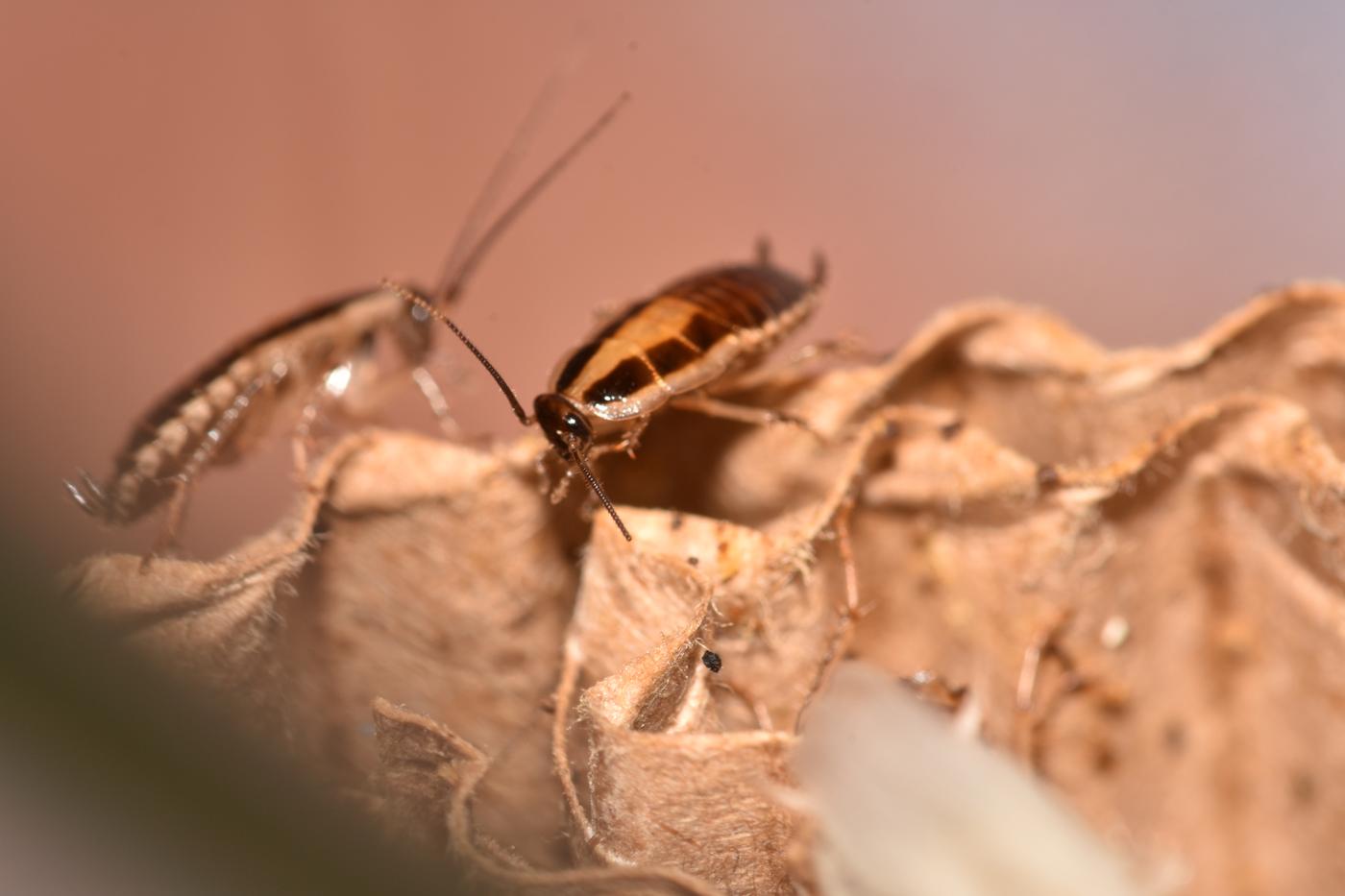
Two nymph instars side by side.
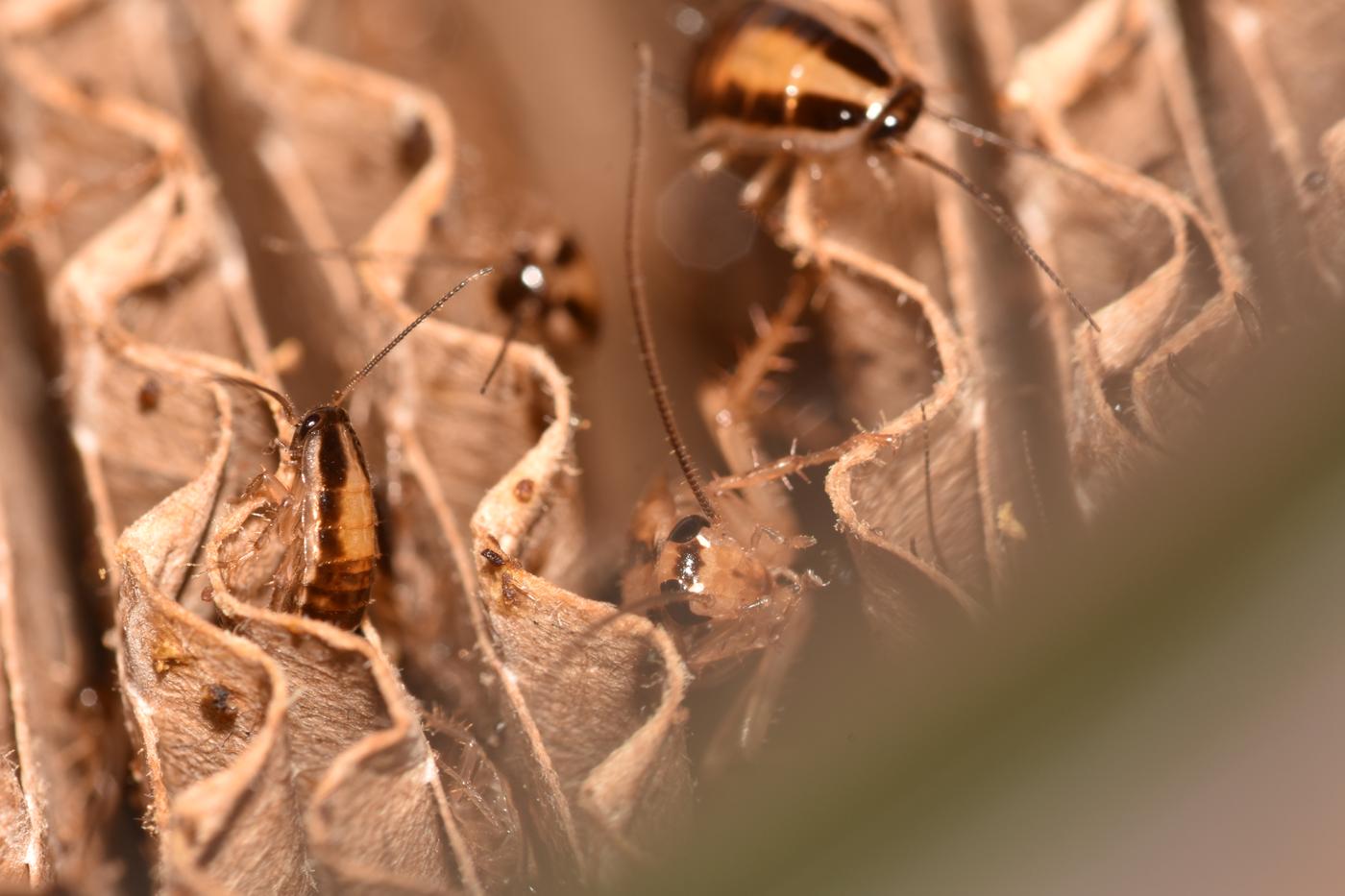
Nymph cluster inside cardboard.
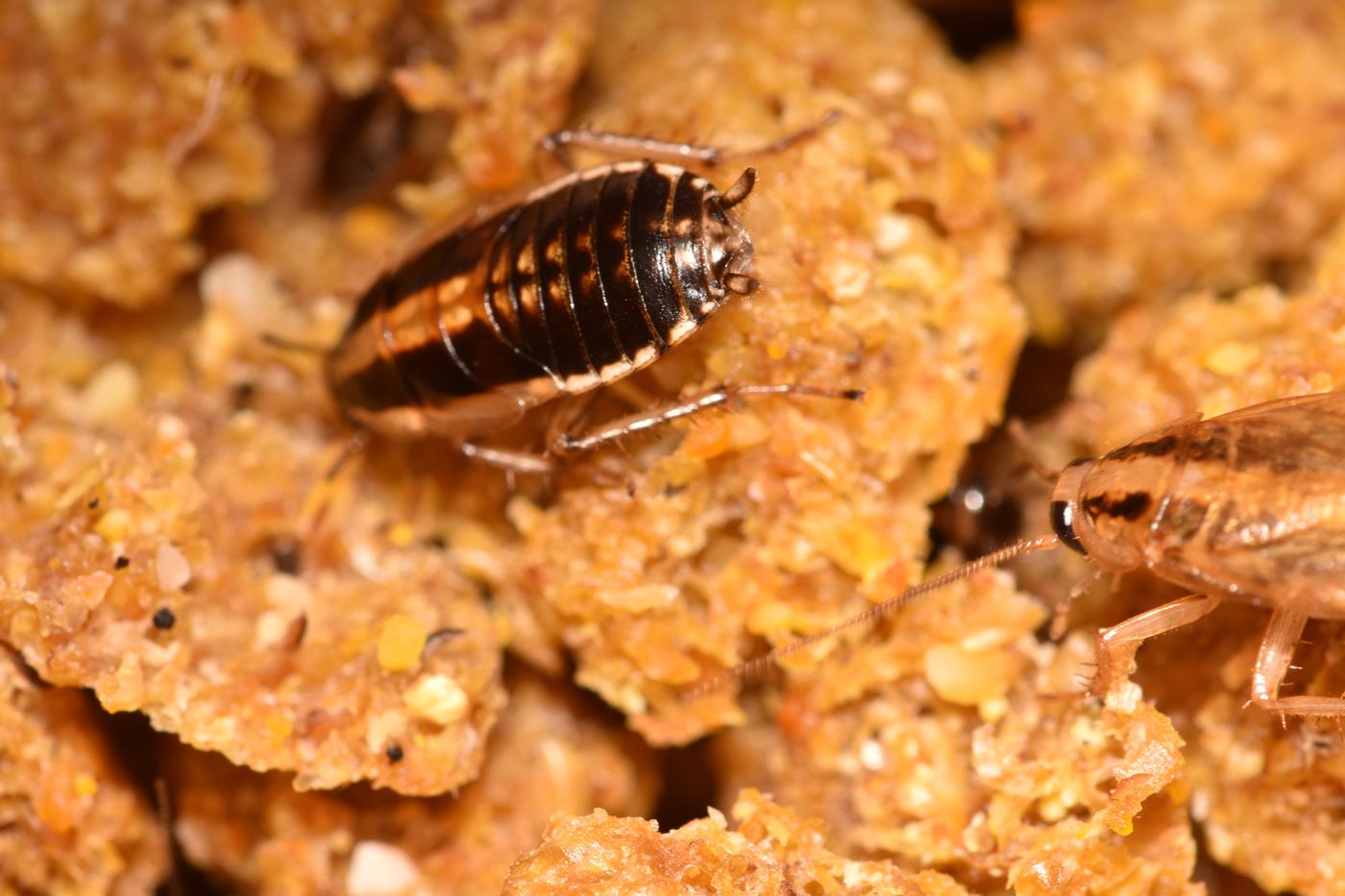
Nymph foraging on pet food.
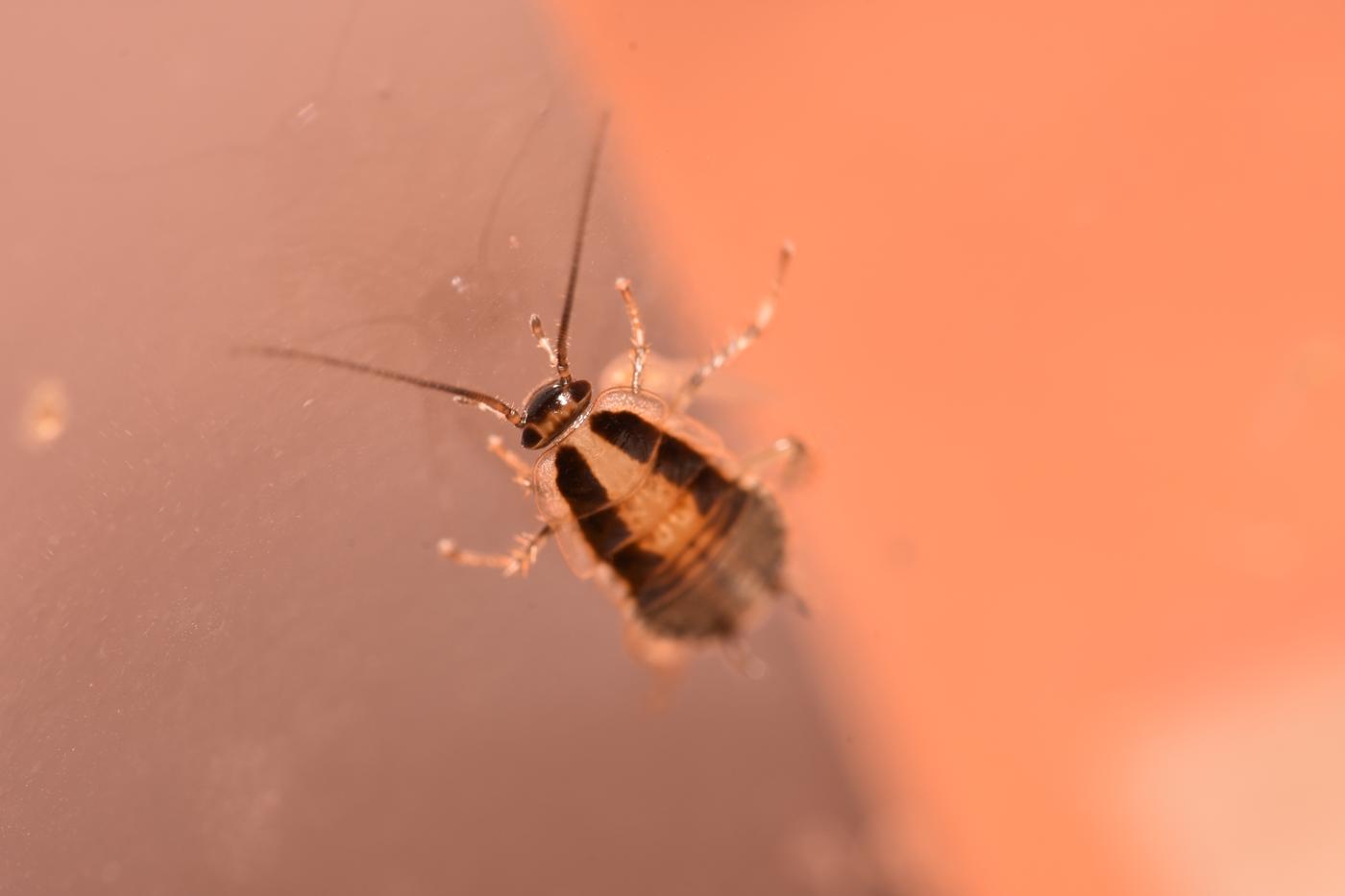
Nymph wedged into a crack.
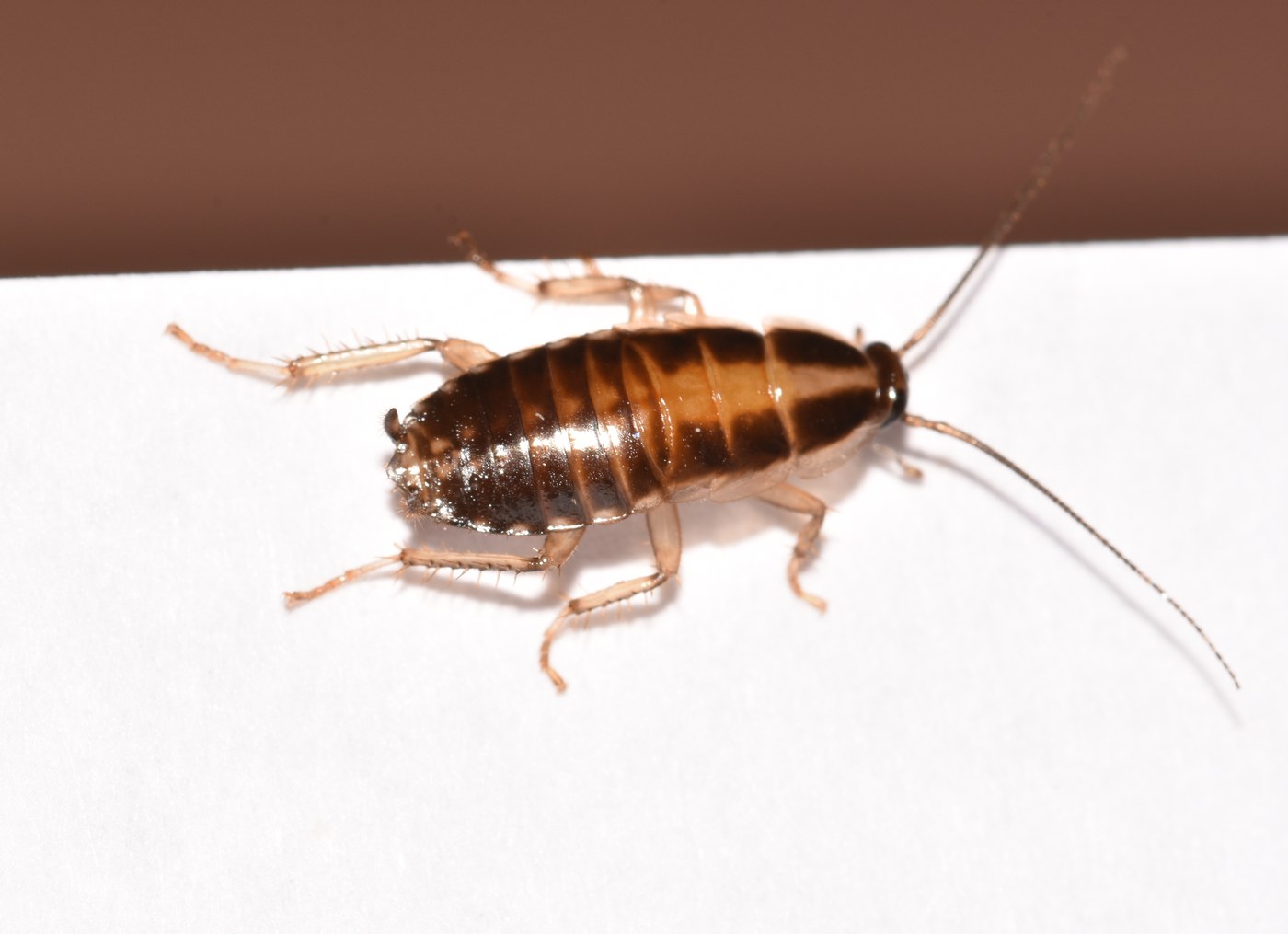
Nymph dorsal stripe detail.
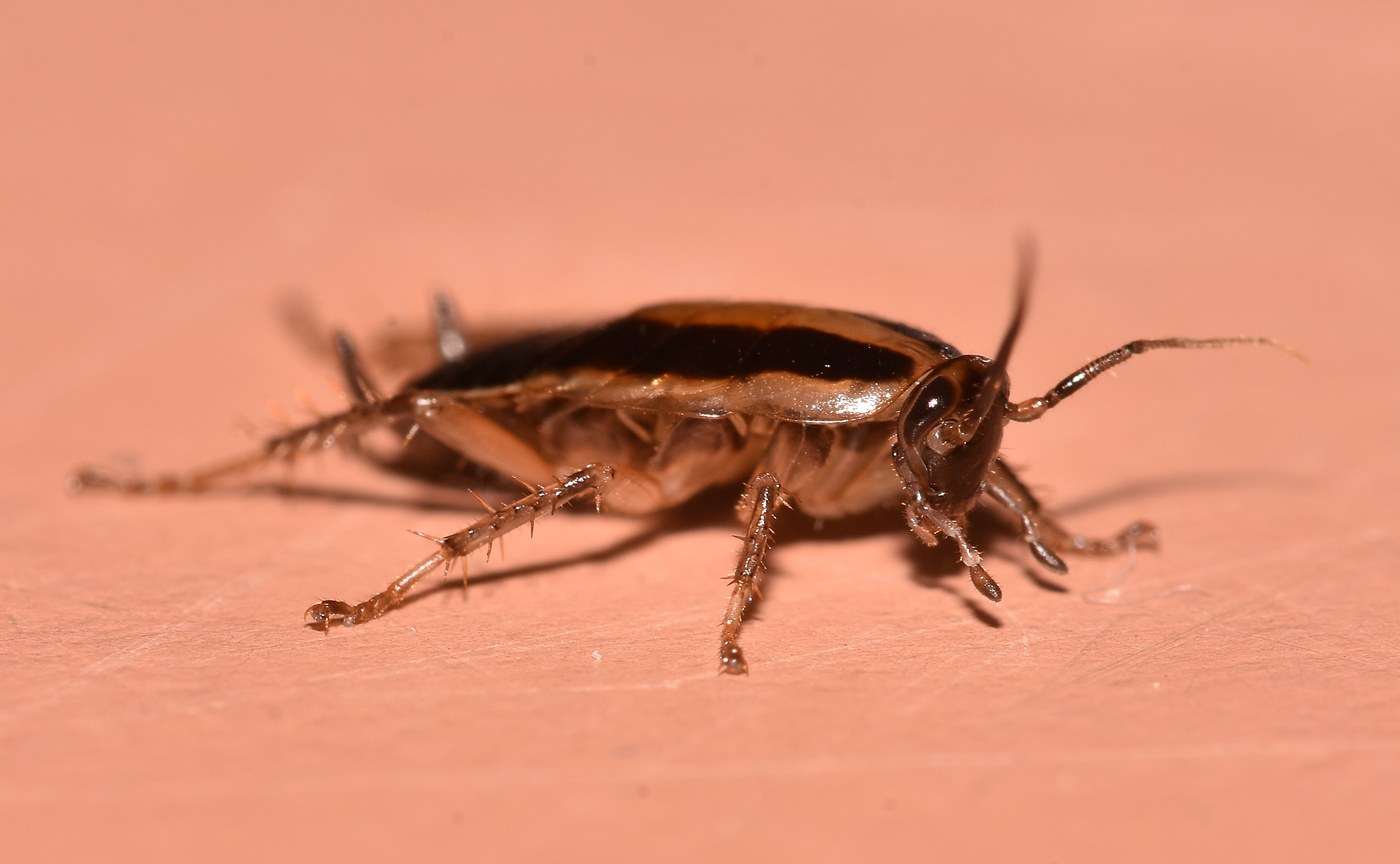
Adult pausing in an alert posture.
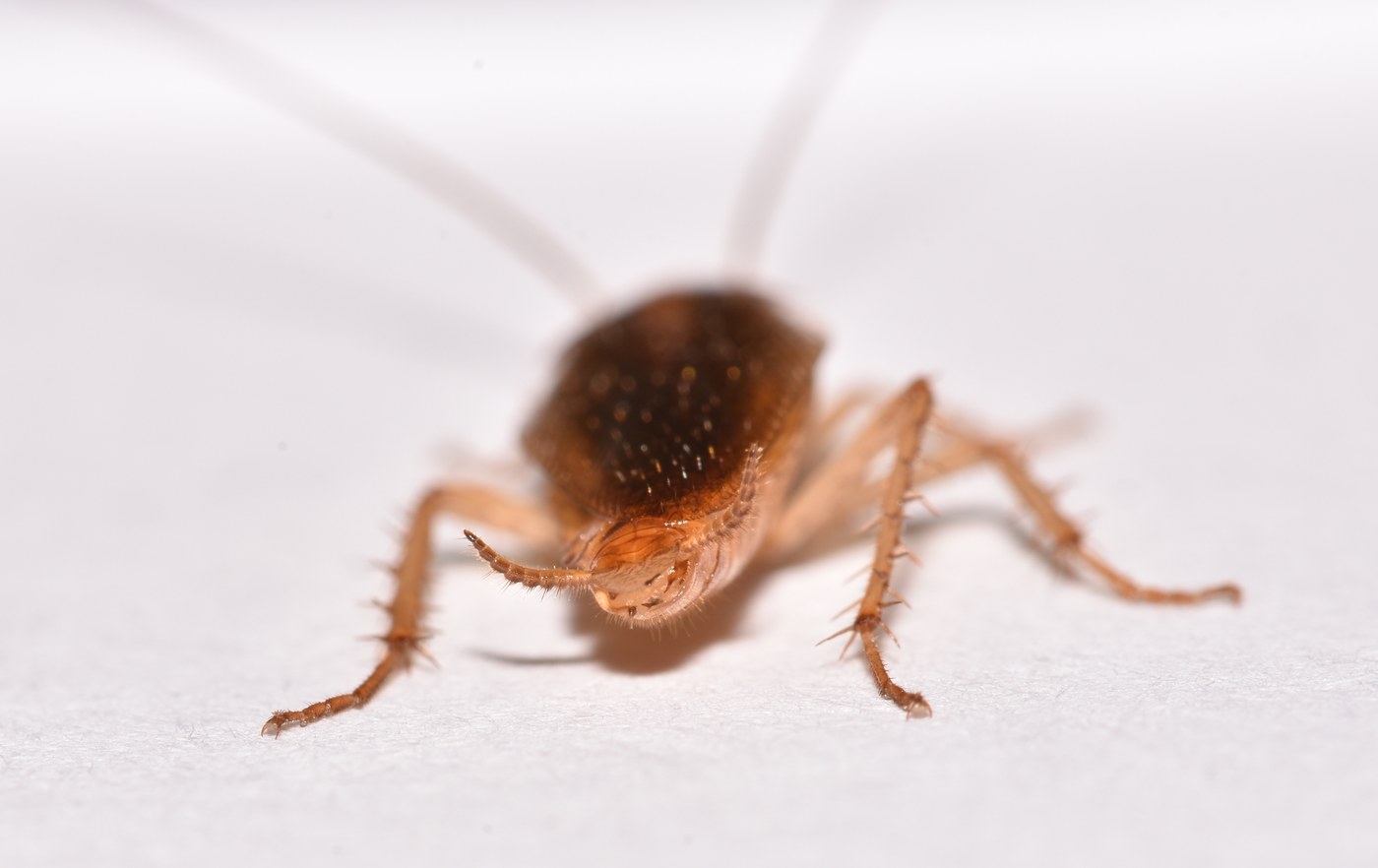
Nymph frontal close-up.
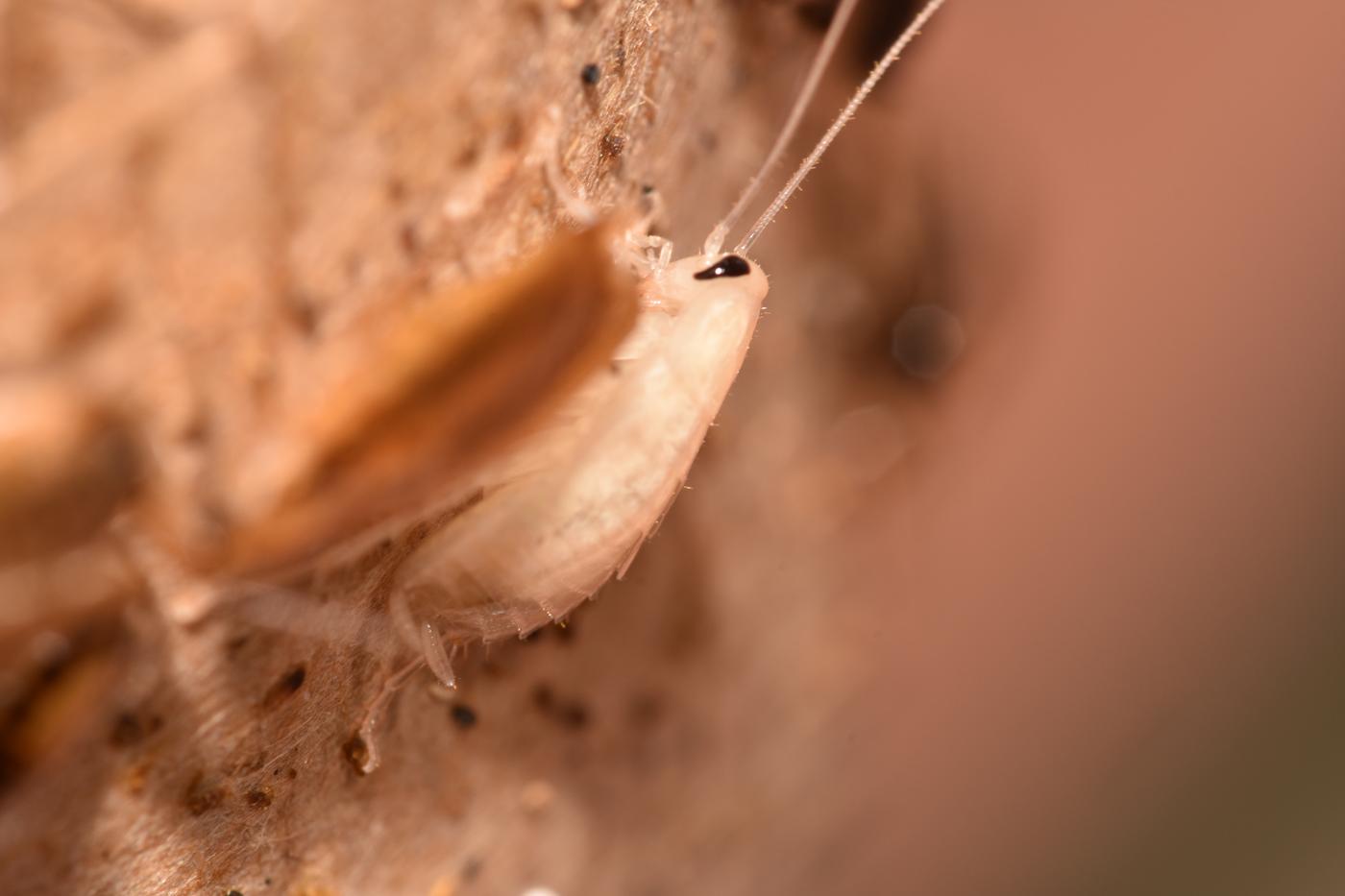
Freshly molted, still pale.
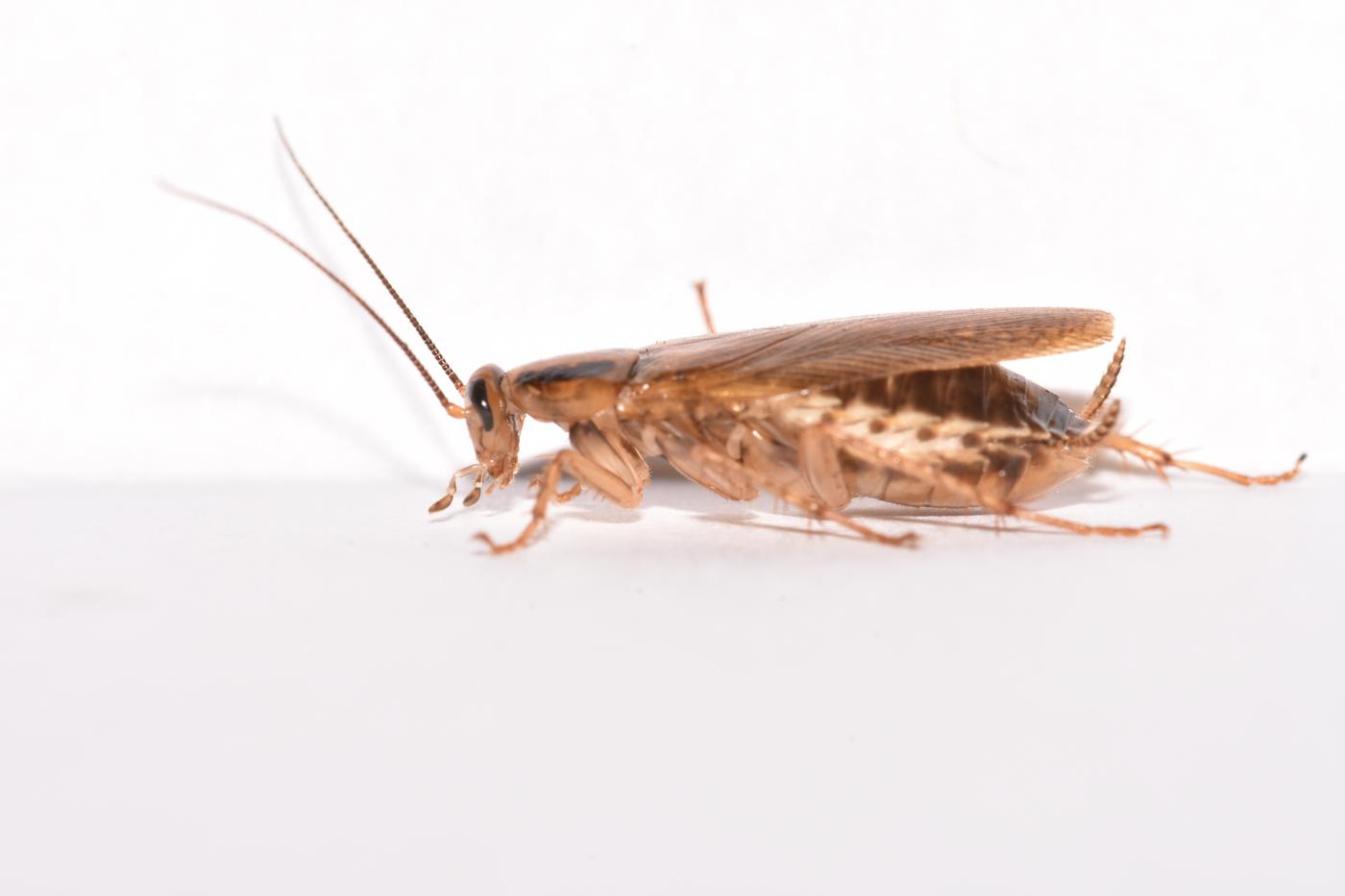
Winged adult in profile.
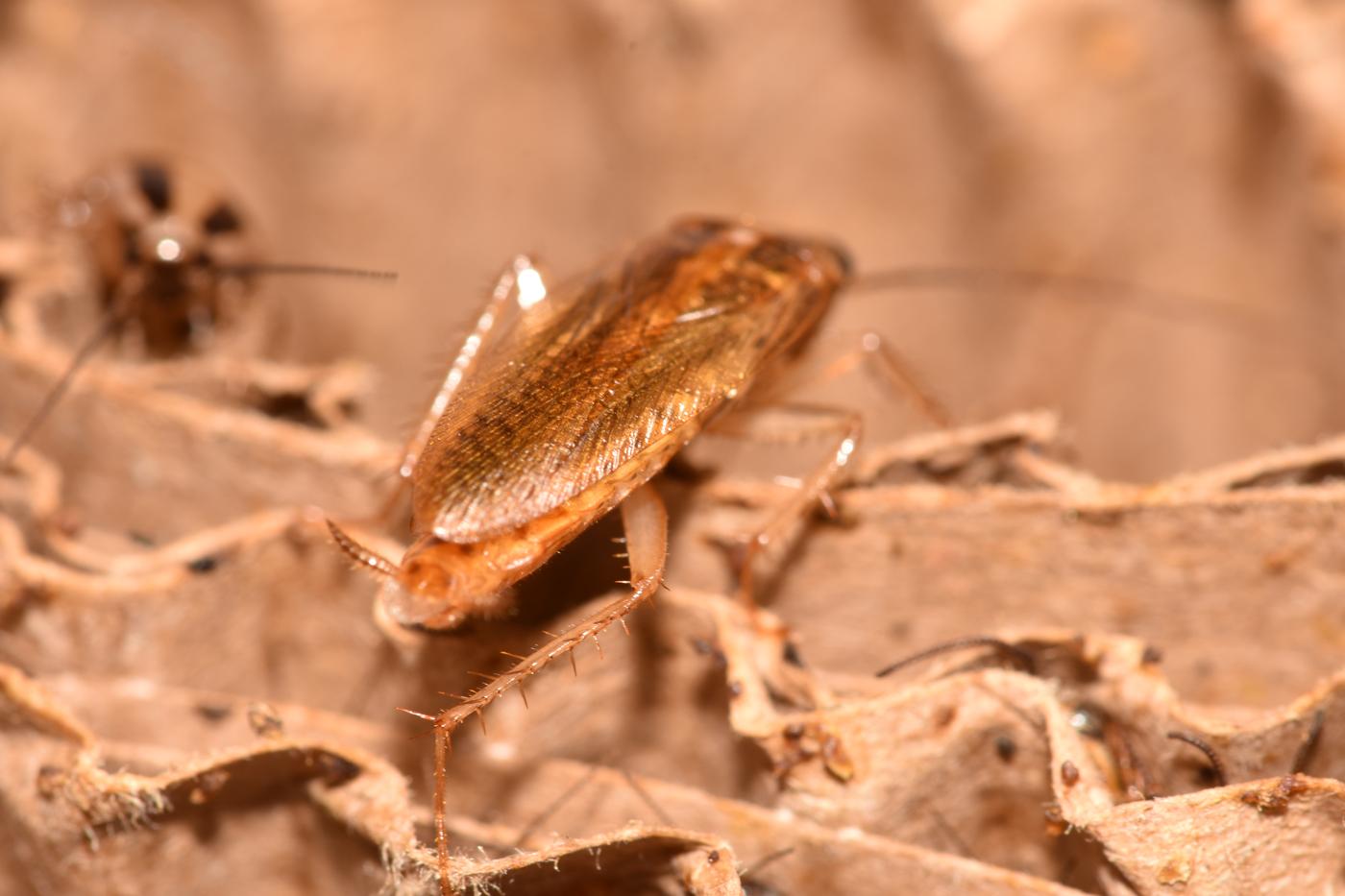
Adult on cardboard harborage.
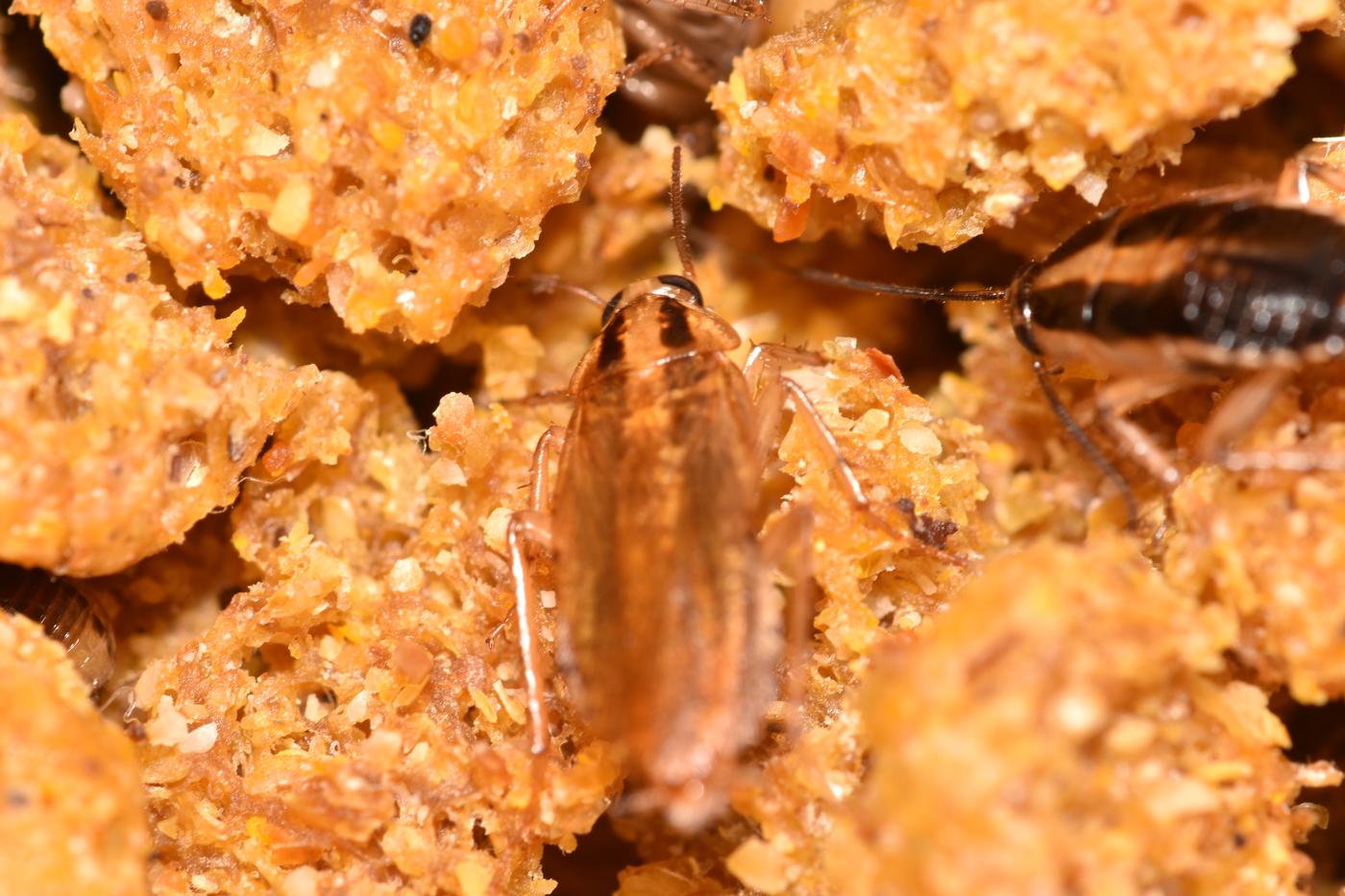
Adult feeding on pet food.
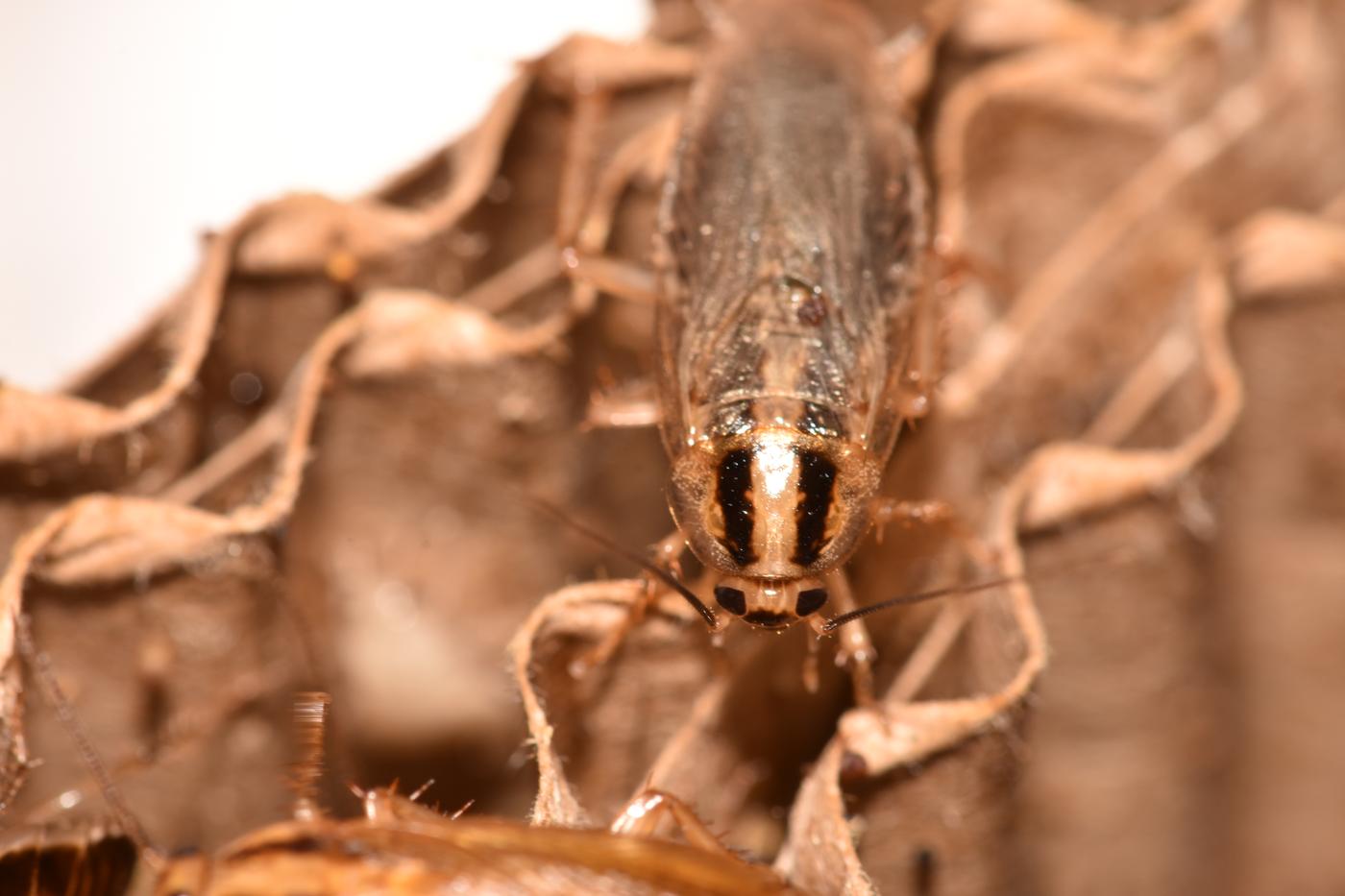
Head-on stripe identification.
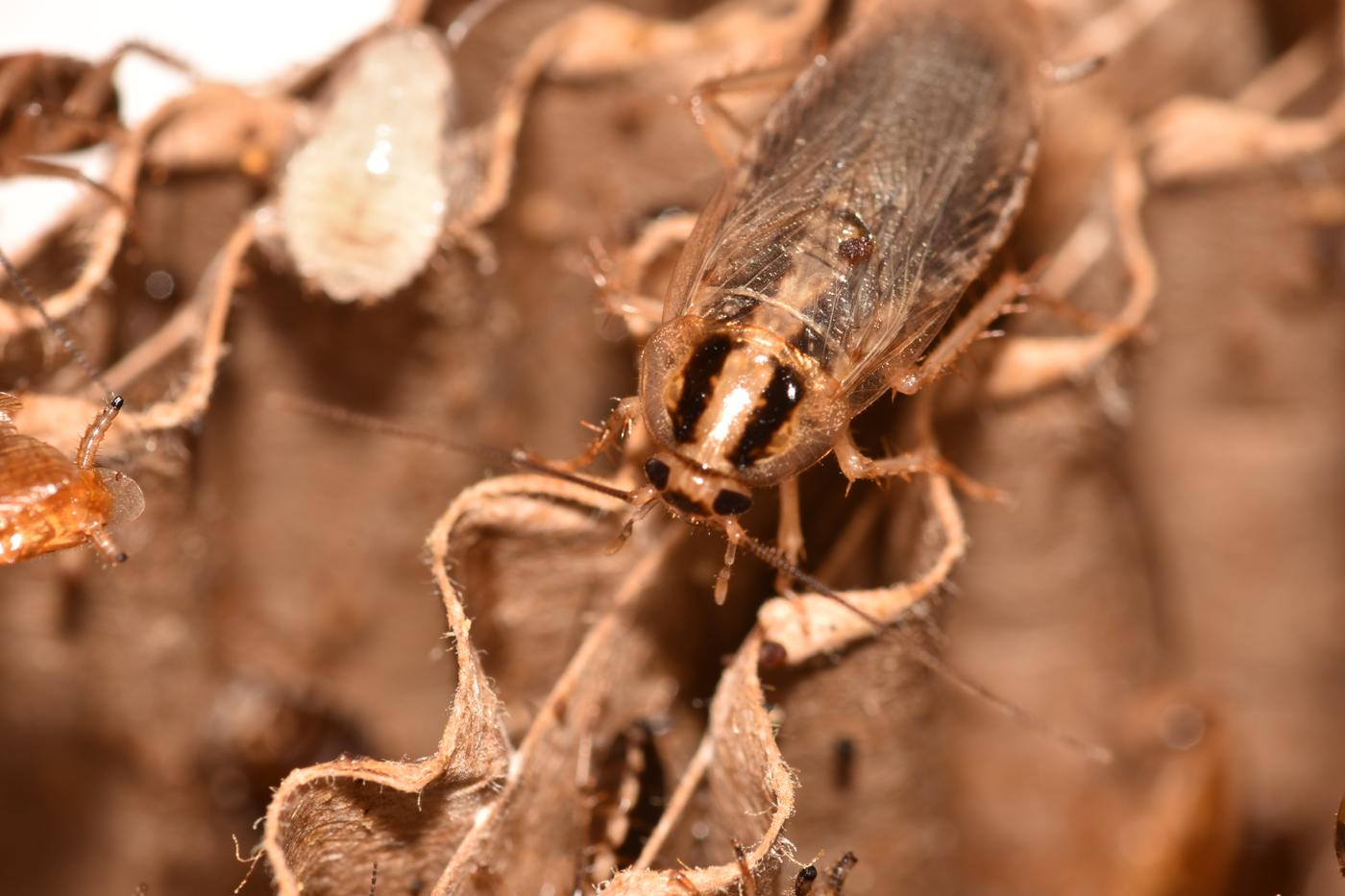
Adult facing forward on cardboard.
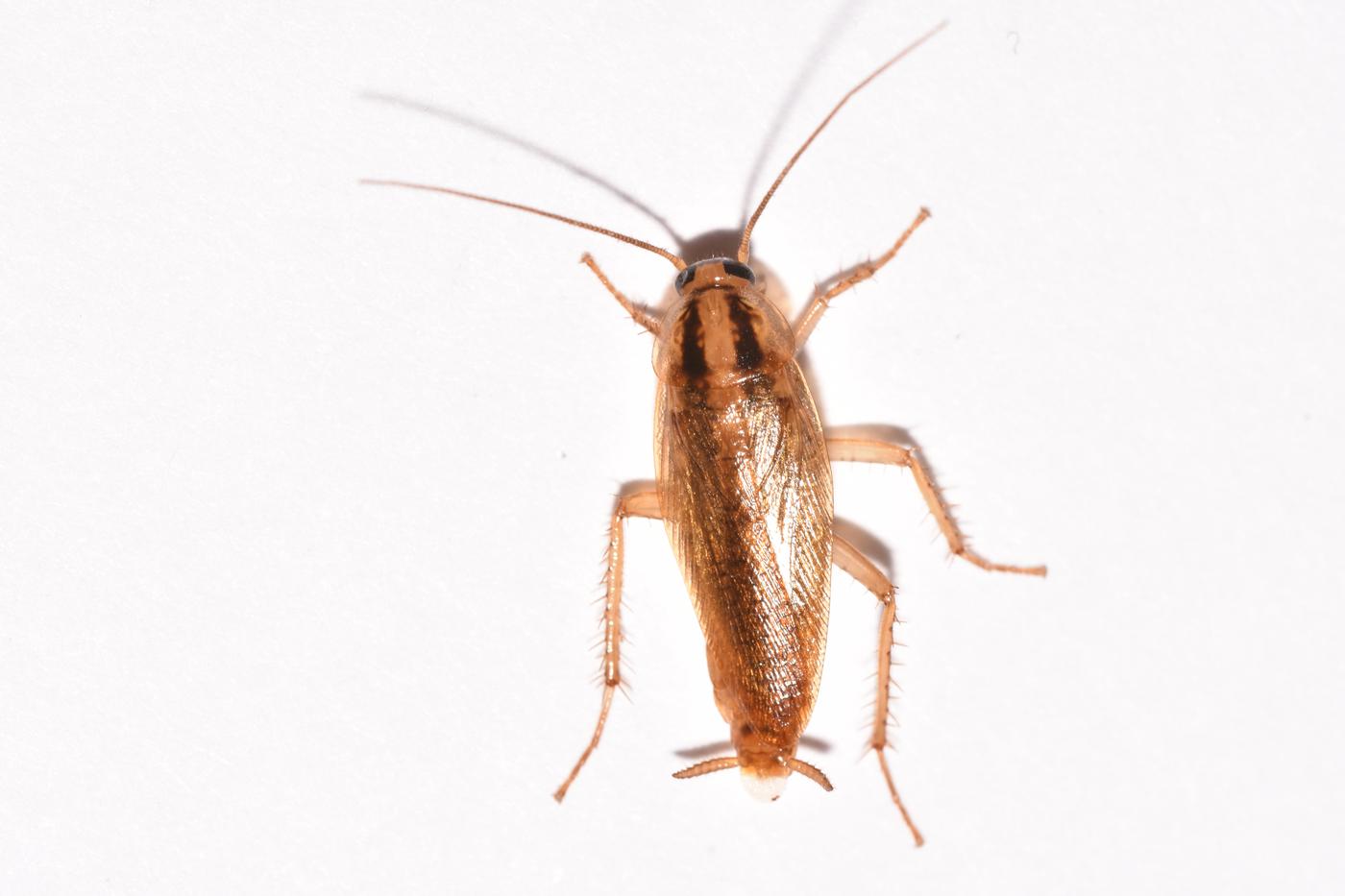
Full dorsal outline on white.
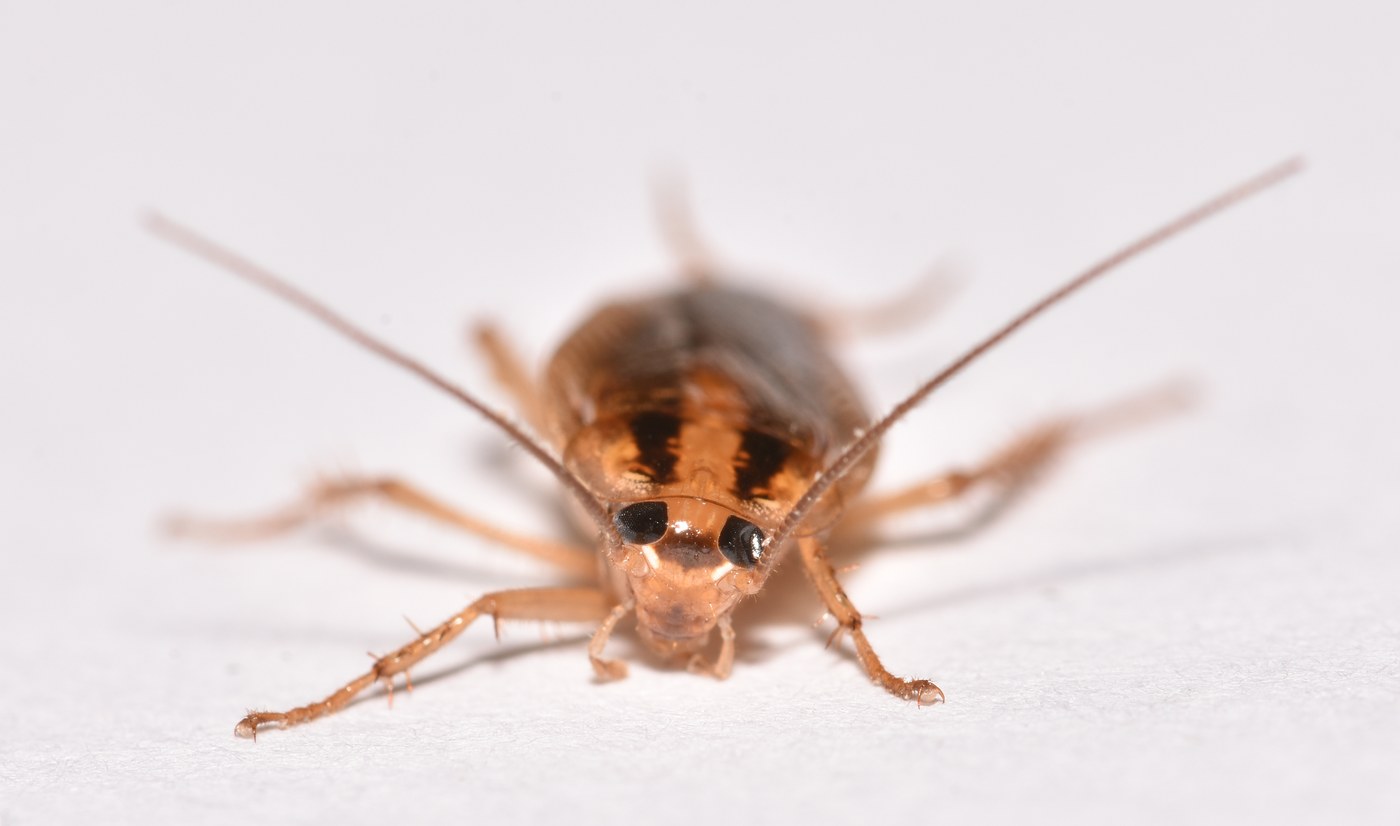
Sharp macro of the pronotum stripes.
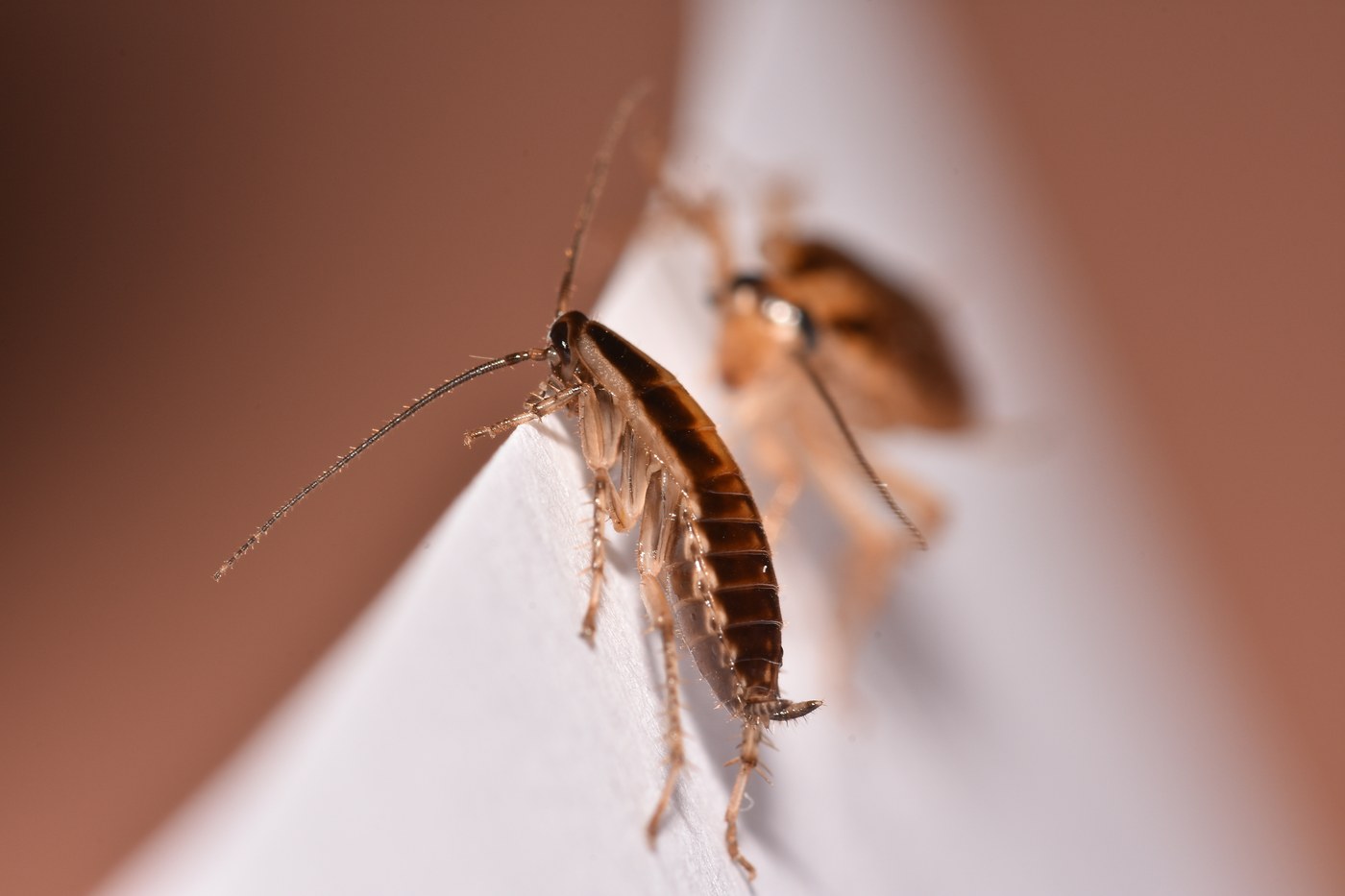
Pair resting on paper's edge.
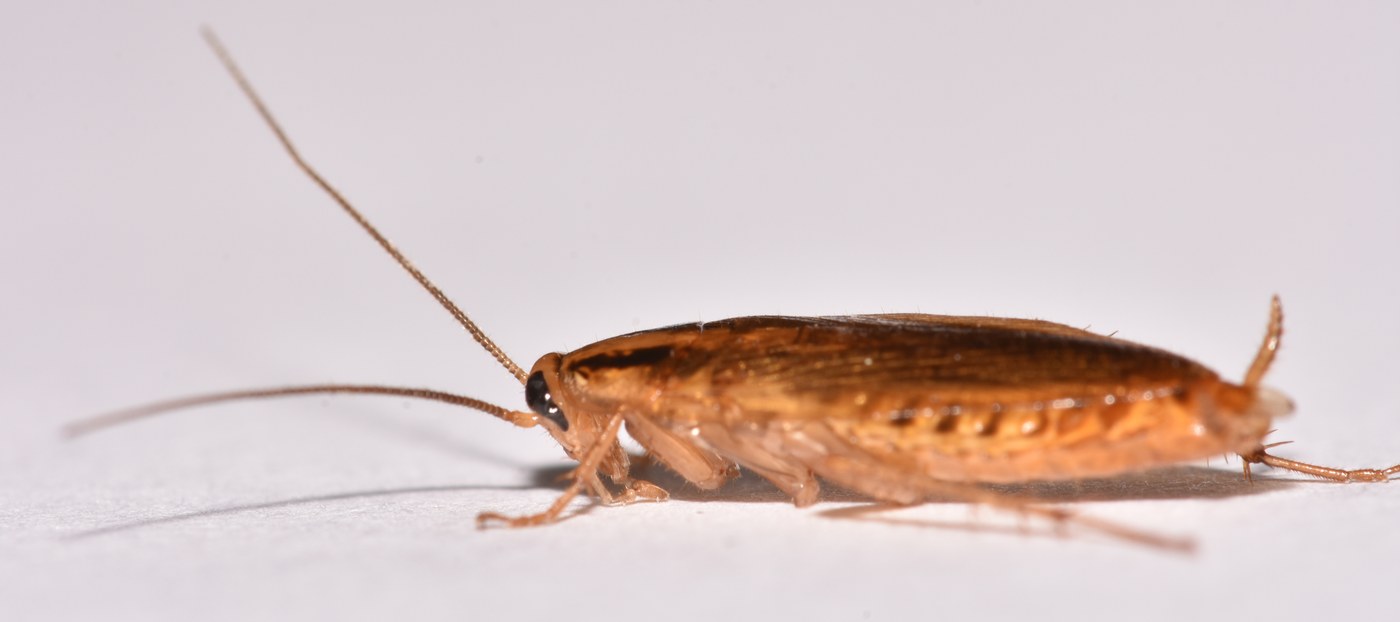
Lateral silhouette on white.
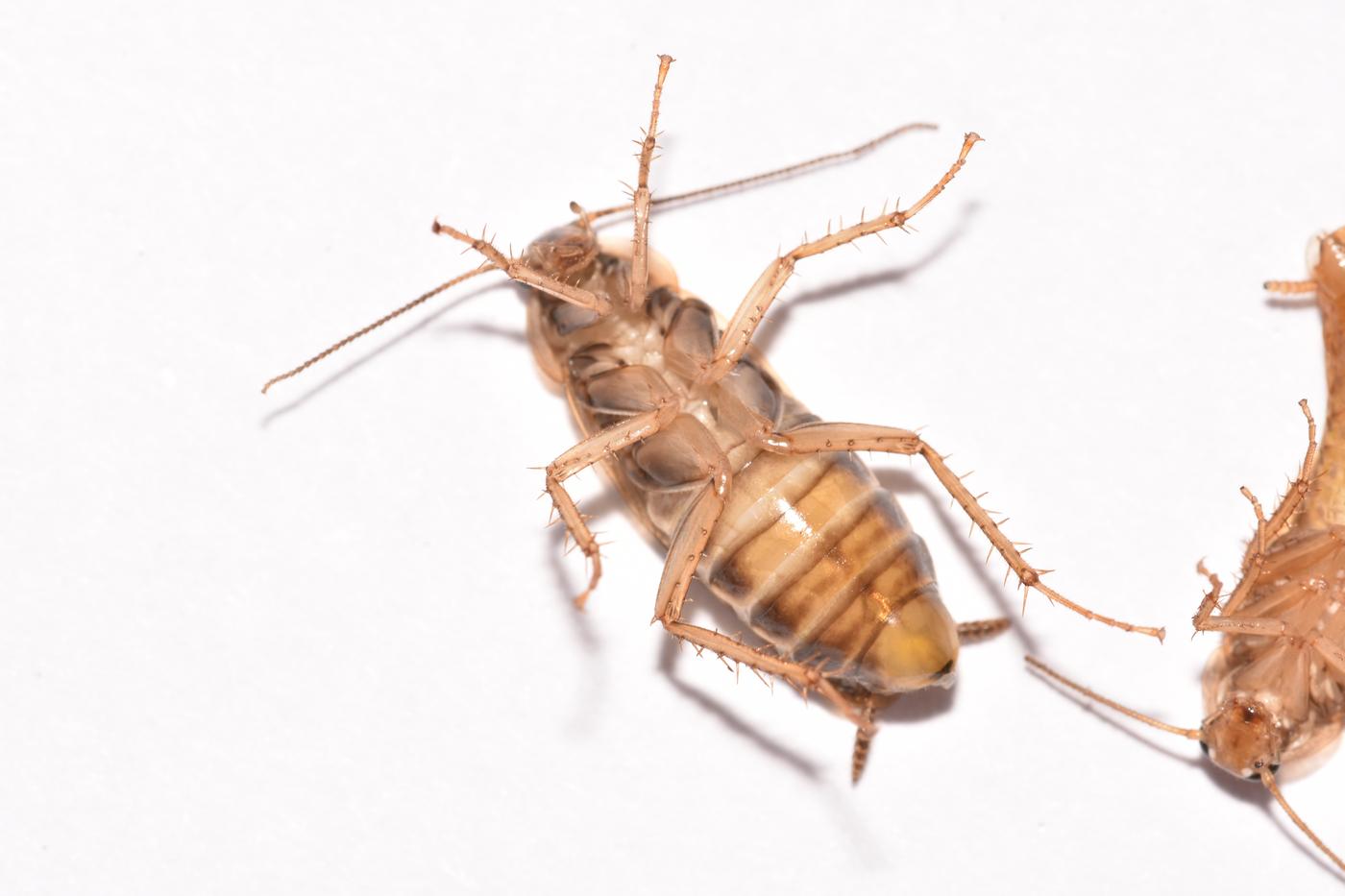
Ventral view, belly exposed.
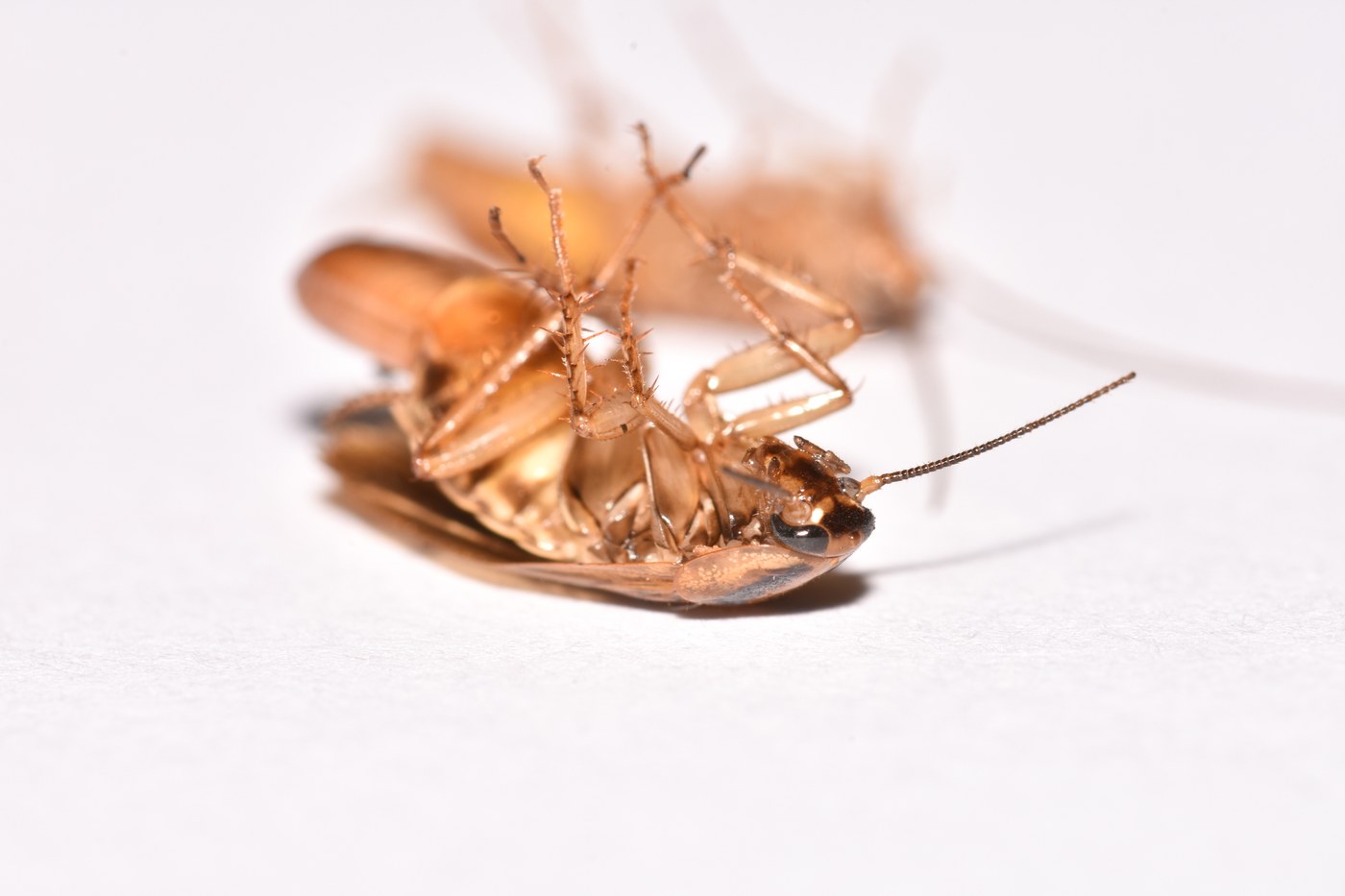
Underside legs and mouthparts.
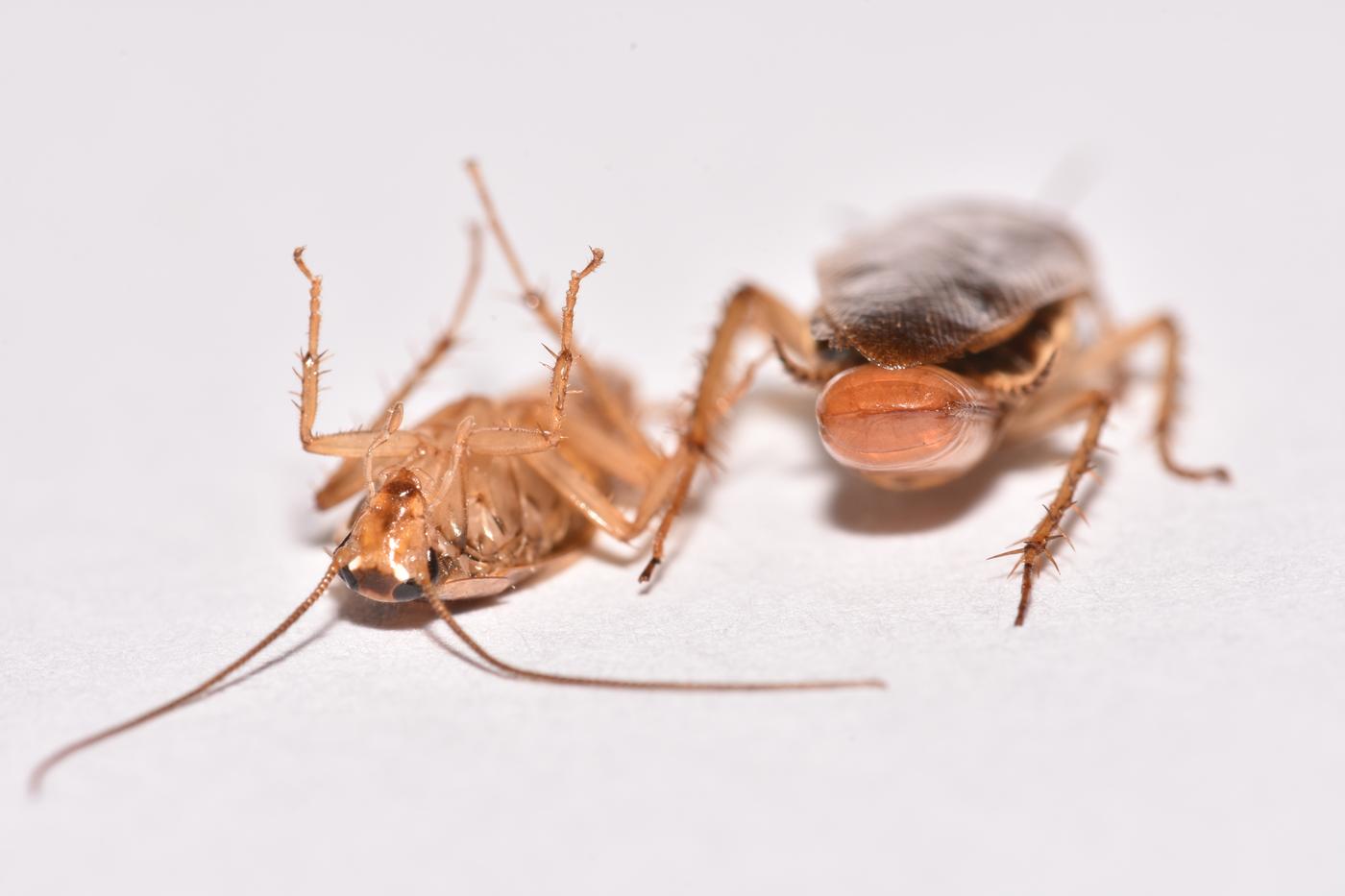
Female carrying an egg case.
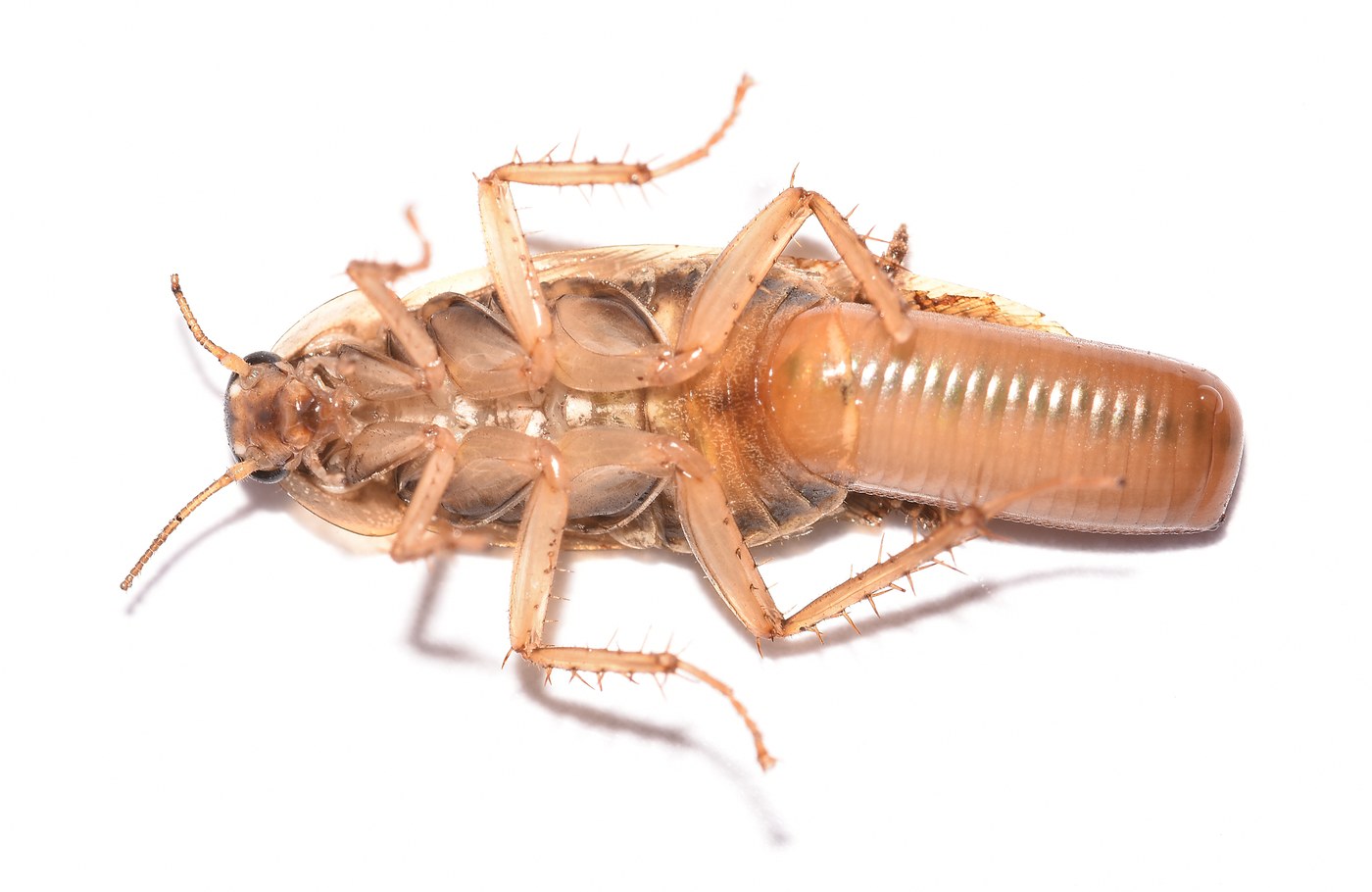
Ootheca attached, ventral view.
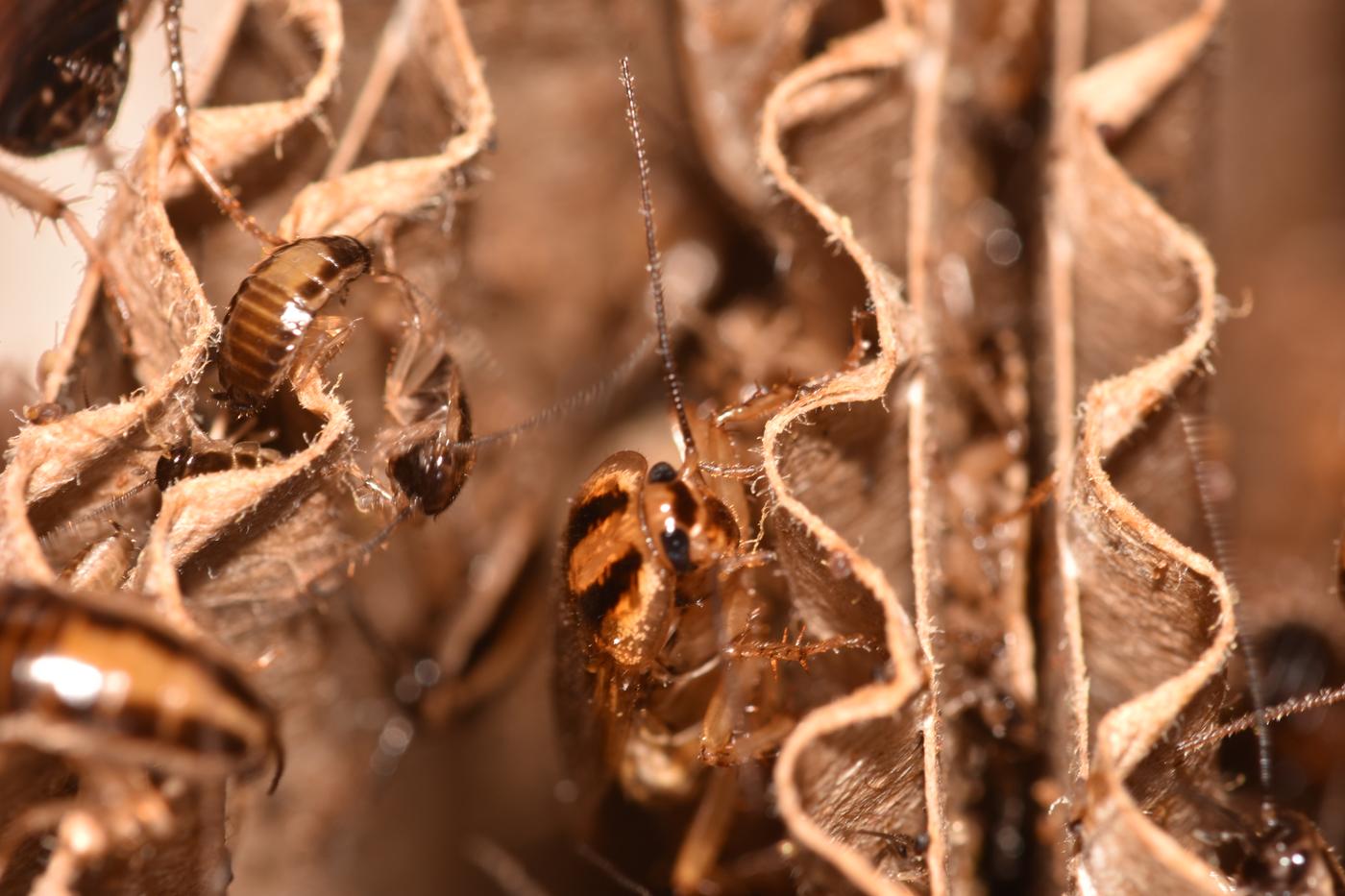
Mixed-age cluster in cardboard.
Sources
- Cockroach Elimination in Homes and Apartments, ENTFACT-614 University of Kentucky Department of Entomology
- Dust Mites and Cockroaches: cockroaches as a source of indoor allergens, the documented link between cockroach presence and more severe asthma symptoms, and the treatment picture of antihistamines, inhaled steroids and immunotherapy National Institute of Environmental Health Sciences
- Cockroaches — Pest Notes, Publication 7467 UC Statewide Integrated Pest Management Program (UC ANR)
- German Cockroach: Biology, Identification, Control NC State Extension, Department of Entomology and Plant Pathology
- Cockroach Allergen Intervention: the finding that exposure to cockroach allergen may be the most important risk factor for asthma in inner-city homes, and that extermination alone reduced allergen levels in infested rental housing National Institute of Environmental Health Sciences
Image Credits
- Image: NPMA. Used under NPMA member image license.