Seasonal Timeline
Turkey vultures are active year round across most of their range, becoming airborne as early as 9 a.m. on sunny days. They nest once a year, typically laying eggs in spring, with young fledging roughly two to three months later.
Turkey vultures are active year round across most of their range, becoming airborne as early as 9 a.m. on sunny days. They nest once a…
This species runs two different calendars. The first is the migratory pattern: spring return and fall staging both produce temporary communal roosts near structures, with a summer lull once the birds disperse to breeding territories. That is the Midwest, the Pacific Northwest, the Southwest and, a month later, the Mountain West.
The Northeast, South Central and Southeast run the opposite shape, a December to February peak built on large winter roosts rather than on migration. California is a third case again, year-round resident in the center and south with turnover only in the north.
Where They're Found
Established across California, the Southwest, Mountain West, Pacific Northwest, Midwest, South Central, Northeast, and Southeast. This is the most widely distributed vulture in the Americas, with a long-established, common breeding presence in all of those regions rather than a marginal or seasonal-only range. Alaska is not among them, but the species is not entirely absent there. Alaska carries a genuine, documented pattern of non-breeding vagrant sightings, spread across the state and reportedly increasing, but no source describes an established breeding population, so Alaska does not count as established range. Hawaii is confirmed absent. No wild vulture of any kind, including this species, is established in Hawaii.
Related Pests
Life Cycle
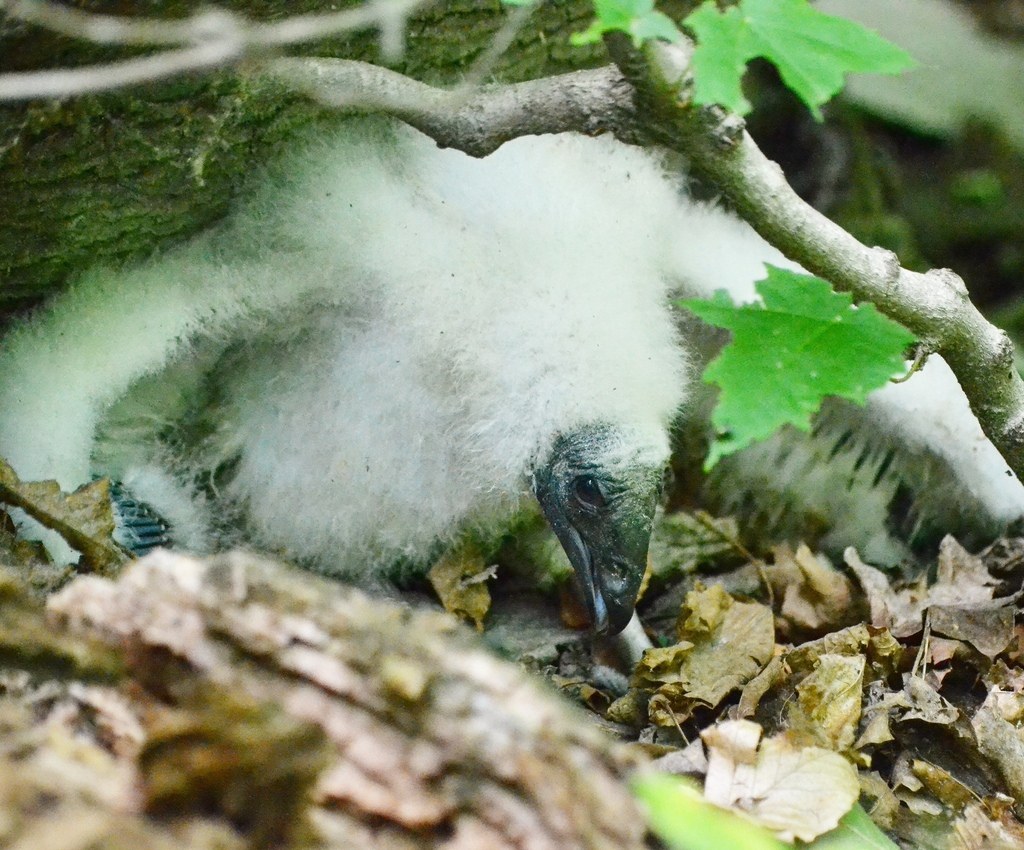
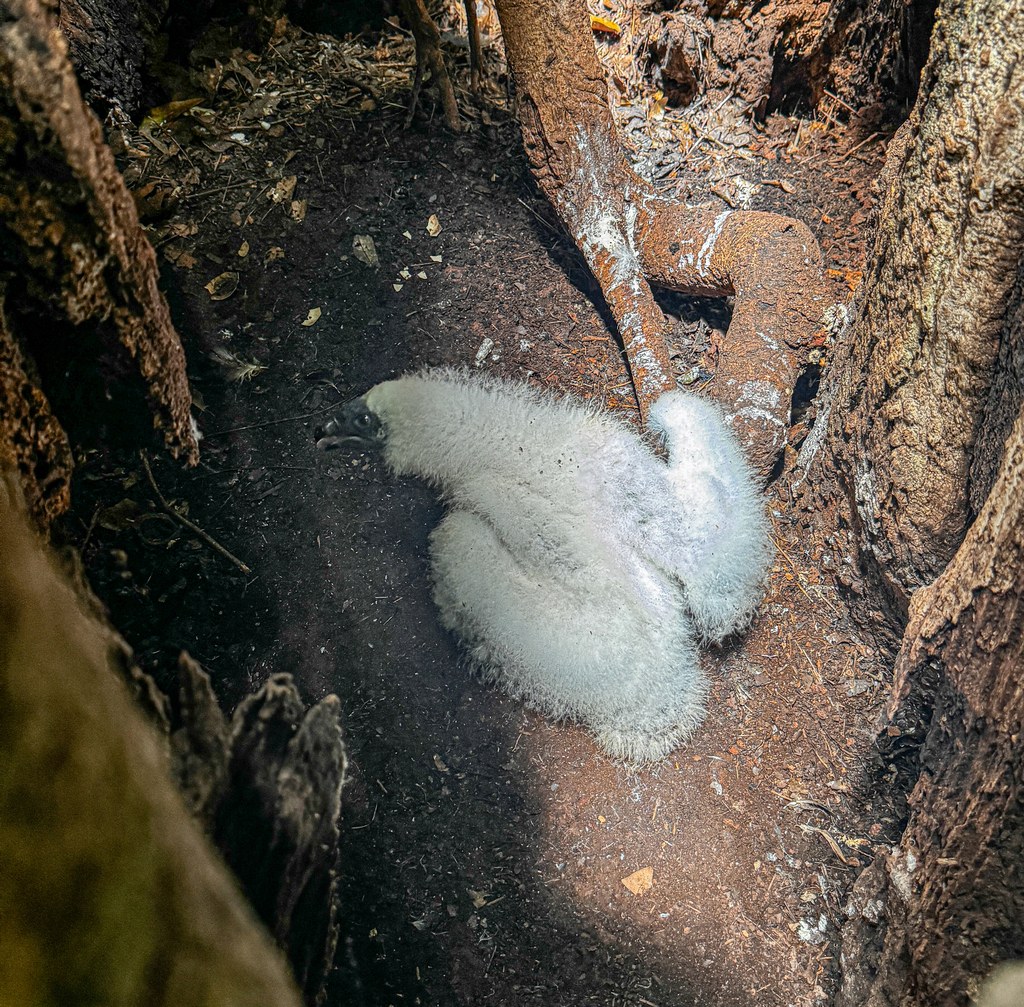
One clutch per year is the norm for this species, and the pace is slow end to end: incubation, nestling, and fledging together span roughly five to six months before a young bird is fully independent.

Egg
Nestling2
Fledgling/Juvenile3
Adult4
Identification
Size and color
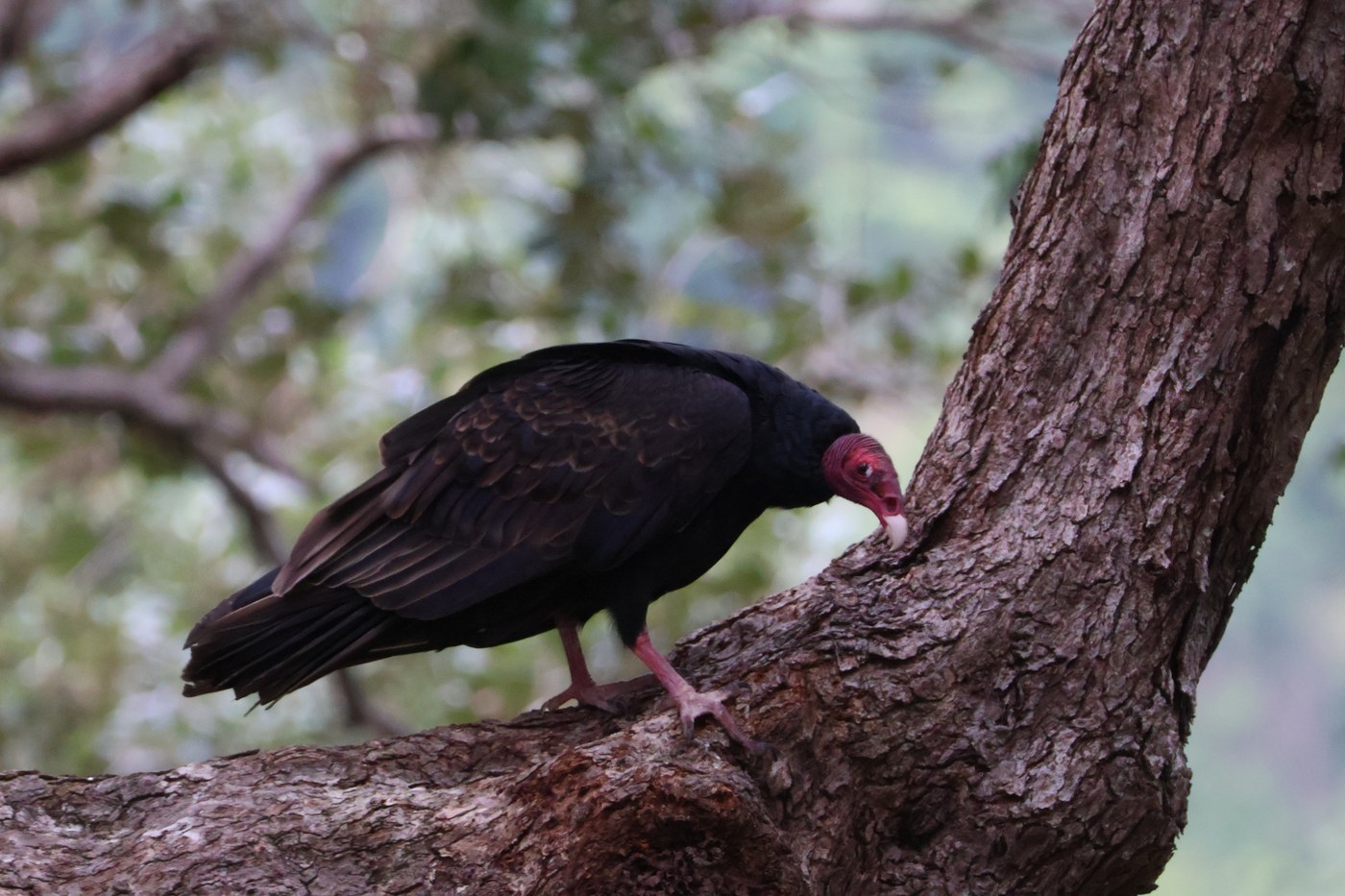
Length 25 to 32 inches, wingspan roughly 5.5 to 6 feet, weight around 4.4 pounds. Appears black from a distance but is dark brown up close, with a featherless red head on adults and a pale, whitish, hooked bill. Legs and feet are pink, often stained white from droppings.
The wing pattern
It is the most reliable field mark. In flight, a turkey vulture shows a strong two-toned underwing: dark wing linings contrast against paler, silvery-gray flight feathers along the entire trailing edge and wingtips. The tail is long, extending past the toes in flight.
Flight style is a second reliable tell
A turkey vulture soars with wings held in a shallow V shape and teeters or rocks side to side, using very few wingbeats. The species has no voice box and is functionally voiceless, limited to hisses and grunts.
Against the Black Vulture
Commonly confused with the Black Vulture (Coragyps atratus). Check the wings first: a turkey vulture's pale, silvery flight feathers run along the entire trailing edge of the underwing, while a black vulture shows silvery-white patches only at the wingtips. An adult turkey vulture's head is bright red where a black vulture's is gray to black at every age, though a juvenile turkey vulture also has a dark, ashy head, so wing pattern is the more reliable check on young birds. A turkey vulture's tail is long and extends past the wingtips; a black vulture's is short and squared.
Signs of Infestation
A communal roost
Large, dark birds with bare heads.
Droppings, pellets, and the smell
White streaking droppings and regurgitated pellets accumulating below a roost, along with a strong, ammonia-like odor at an active site.
Torn caulking and chewed seals
Torn window caulking, roof shingles, vent seals, rubber roof liners, and pool covers near an active roost. Vehicles parked nearby may show scratched paint, removed rubber seals and wiper blades, and punctured vinyl seat covers.
Almost no sound
The species is essentially voiceless. The only sounds documented are hisses and low grunts, typically produced when a bird on the nest is threatened or approached closely.
Prevention and When to Call a Pro
Federal law comes first
This species is federally protected, and that fact governs everything else you might consider doing. Turkey Vulture is listed by name under 50 CFR 10.13 as protected under the Migratory Bird Treaty Act, administered by the U.S. Fish and Wildlife Service. No DIY killing, capture, relocation, or active-nest or egg disturbance is legal at any time without a federal Migratory Bird Depredation Permit. This applies even though the bird is a common, native species and not an endangered one.
Scaring is legal, taking is not
A federal depredation permit is not required to harass or scare the birds away from a roost. Documented, permit-free tools include auditory deterrents such as propane cannons and pyrotechnics, and visual deterrents such as low-powered red lasers.
The effigy, best-documented deterrent
A vulture effigy is the single best-documented, species-specific deterrent. A fabricated effigy, roughly 25 to 26 inches, hung upside down by the legs with wings splayed at a roost site, has been shown in a peer-reviewed field study to disperse roosting turkey vultures. Effigy displays work best placed prominently and used on multiple consecutive evenings, roughly a half hour before to a half hour after sunset, over 7 to 14 days for larger roosts. Birds may return weeks or months later, requiring the harassment to be repeated.
Make the roost less attractive
Removing dead or dying trees favored for roosting, and netting or spiking ledges and flat roofs, are standard property-level steps. None of this takes a bird or disturbs an active nest, so none of it requires a federal permit.
What they actually damage
Protect the specific materials this species is documented to damage: window caulking, roof shingles, vent seals, rubber roof liners, pool covers, vehicle paint, rubber seals and wiper blades, and vinyl seat covers. Cover or store vehicles, boats, and equipment when an active roost is nearby.
An active nest
It gets special handling. Because turkey vultures may reuse the same nest site for a decade or more once established, any active nest with eggs or young discovered in a barn, outbuilding, or structure should not be disturbed. Removing or relocating it requires the same federal permit pathway as taking the bird itself.
Who to Call, and When
An established communal roost causing ongoing fouling or structural or vehicle damage, or any active nest discovered in a structure, should prompt a call to a state wildlife agency or a permitted nuisance wildlife control operator for a non-lethal dispersal or exclusion plan. Never attempt to trap, harm, relocate, or disturb an active nest of this species without a federal Migratory Bird Depredation Permit.
Frequently Asked Questions
Is it illegal to kill, trap, or move a turkey vulture?
Yes, without a federal permit. Turkey Vulture is listed by name under 50 CFR 10.13 as protected under the Migratory Bird Treaty Act, administered by the U.S. Fish and Wildlife Service. Killing, trapping, relocating, or disturbing an active nest without a federal Migratory Bird Depredation Permit is a federal violation. Non-lethal harassment to disperse the birds does not require a permit.
Do turkey vultures attack live animals or pets?
No. State wildlife agencies and university-extension wildlife-damage sources agree that turkey vultures do not kill live animals and almost never attack living prey, which is a documented difference from the black vulture, a related species that is a confirmed predator of newborn livestock.
How do I tell a turkey vulture from a black vulture?
Check the wings first, then the head. A turkey vulture shows pale, silvery flight feathers along the entire trailing edge of the underwing and soars with very few flaps in a shallow V shape, teetering side to side. A black vulture shows silvery-white patches only at the wingtips and flies with a few quick flaps followed by a flat-winged glide. An adult turkey vulture's head is bright red, while a black vulture's is gray to black at every age, though a juvenile turkey vulture also has a dark, ashy head, so wing pattern is the more reliable check on young birds.
Can I remove a turkey vulture nest from my barn or shed?
Not without authorization. Turkey vultures reuse the same nest site for years once established, and disturbing an active nest with eggs or young is illegal under the Migratory Bird Treaty Act without a federal permit. The recommended step is to contact a state wildlife agency or a permitted nuisance wildlife control operator rather than attempt removal.
Why do turkey vultures gather on my roof or in the trees near my house?
They are using the site as a communal roost, a behavior documented in the species whether or not carrion is nearby. Roosts form on poles, dead trees, transmission towers, and building roofs, especially overnight and in cold weather, and can cause real property damage from droppings, regurgitated material, and torn roofing or vehicle materials.
Is a turkey vulture roost a health risk to my family?
The main documented risk is sanitation, not disease transmission from the bird itself: droppings and regurgitated material accumulating at a roost site. In fact, peer-reviewed research on this species' gut microbiome shows its digestive system actively destroys many carrion-borne pathogens, including the bacteria that cause anthrax, botulism, and cholera, rather than spreading them.
Photo Gallery
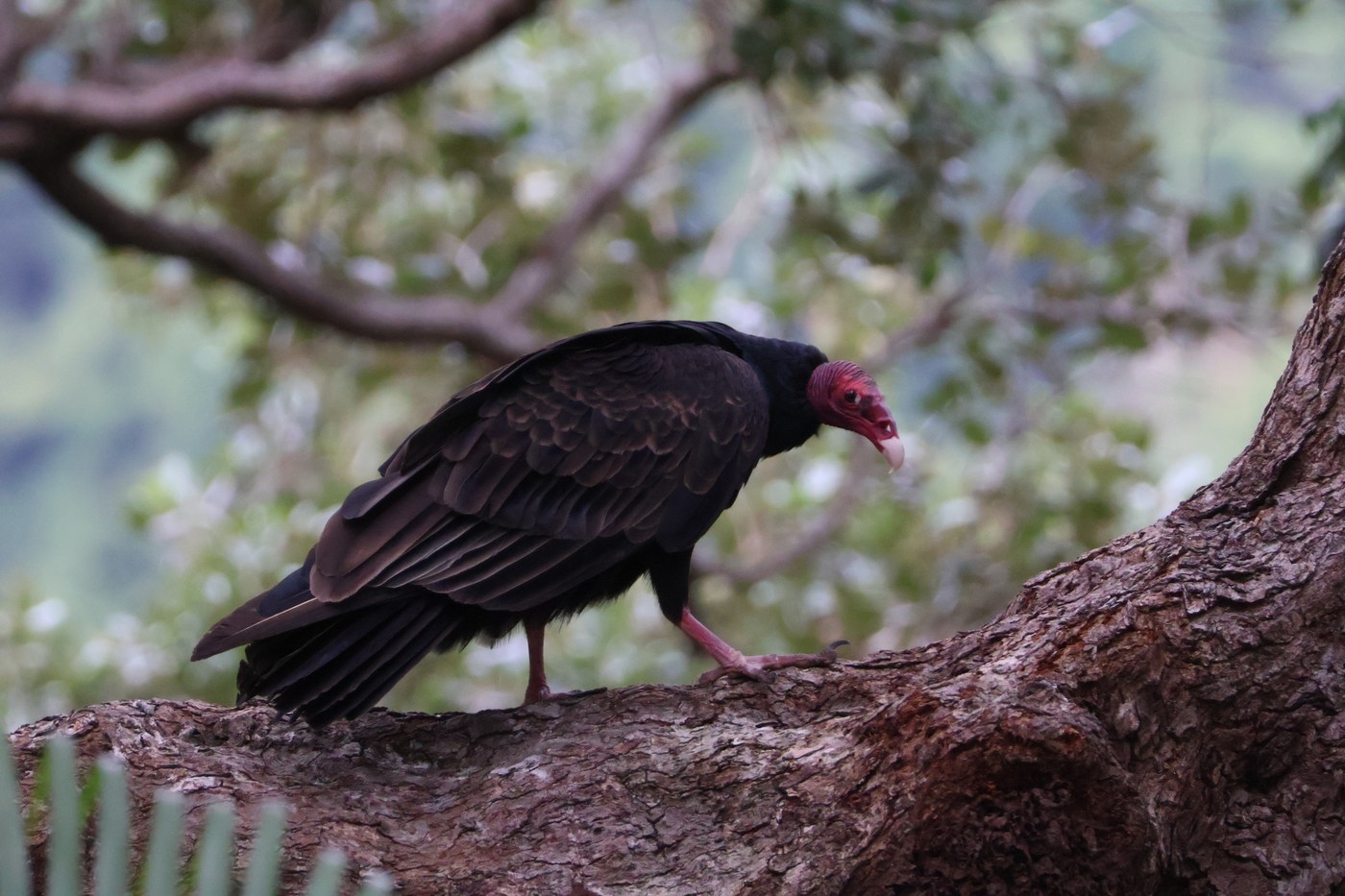
An adult on a horizontal limb, head lowered. The bare red head and the pale hooked bill are the adult markings.
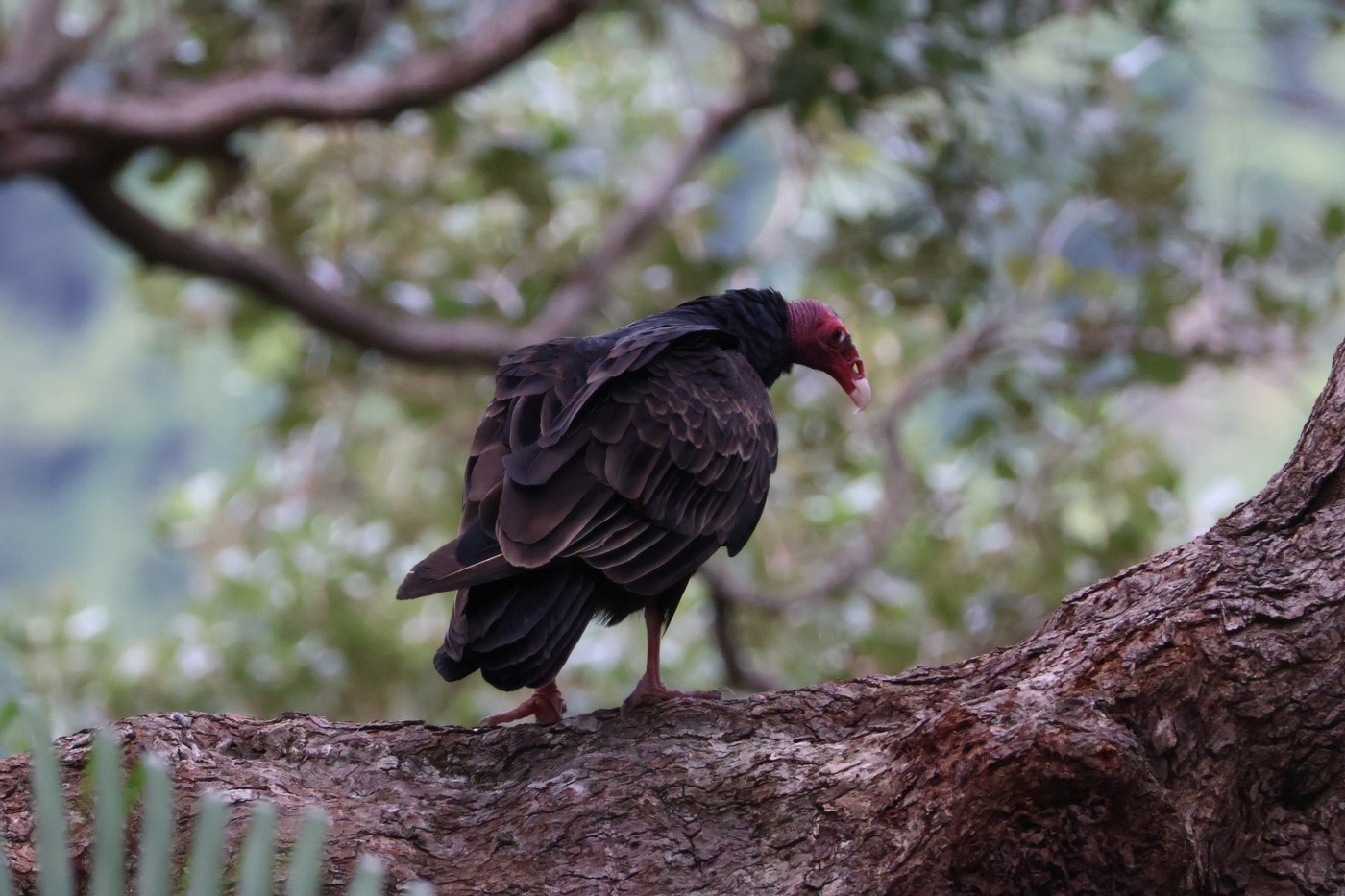
The same bird with its wings folded and its head turned away. Perched birds hold still for long stretches.
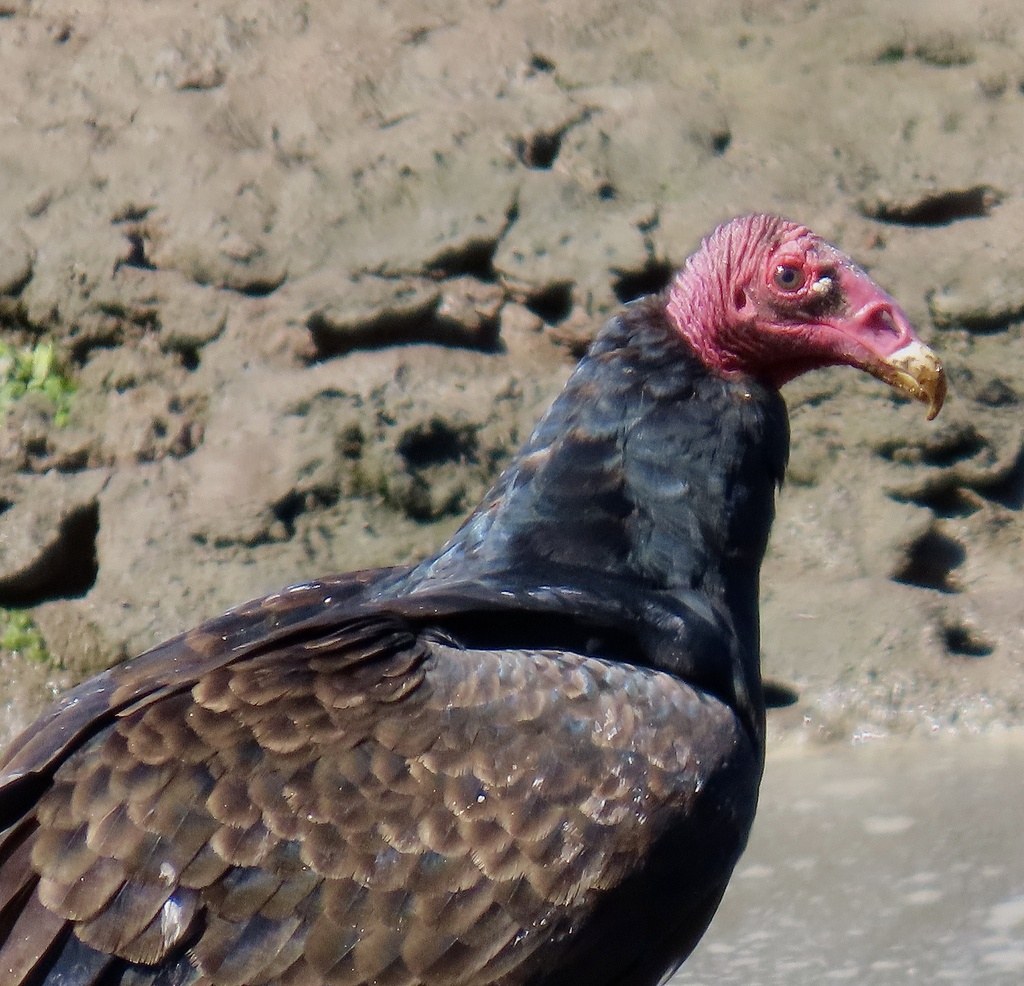
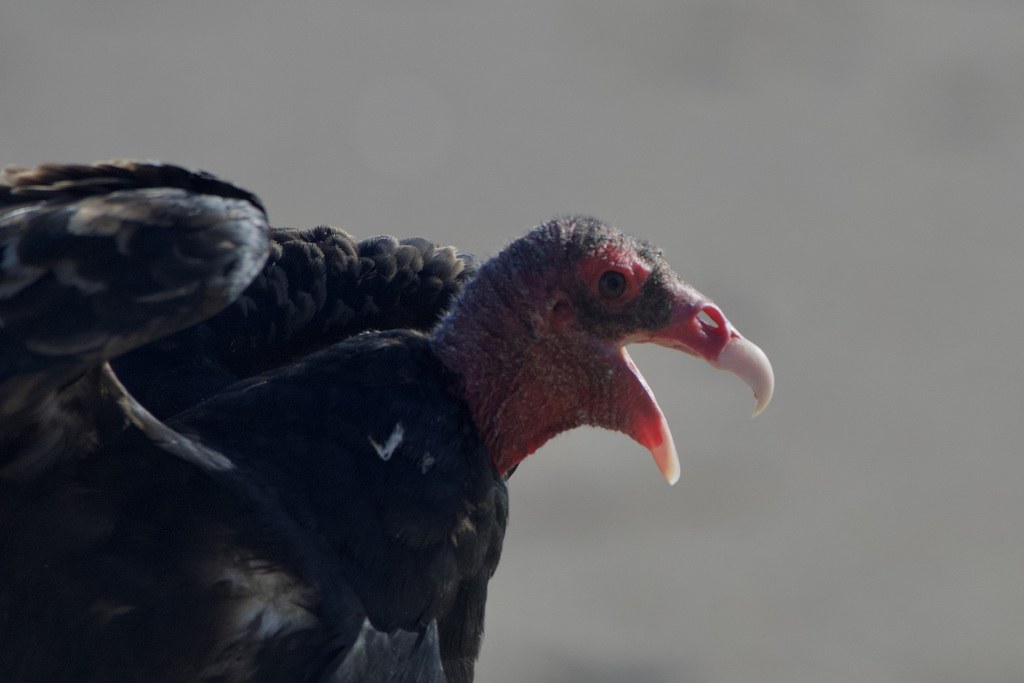
A close view of the bare red head and the pale hooked bill.
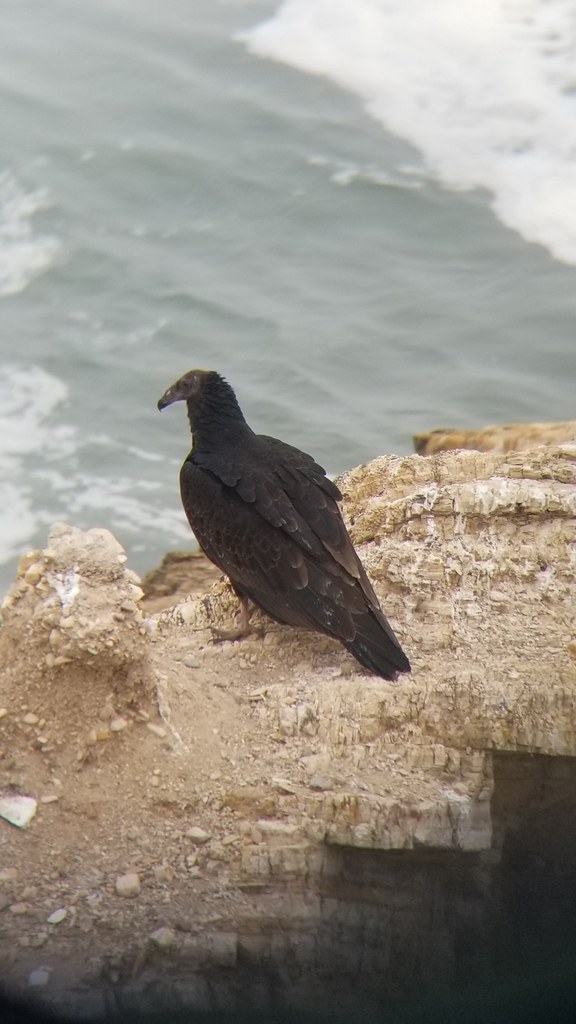
A fledgling on a coastal rock. The head is dark rather than red at this age.
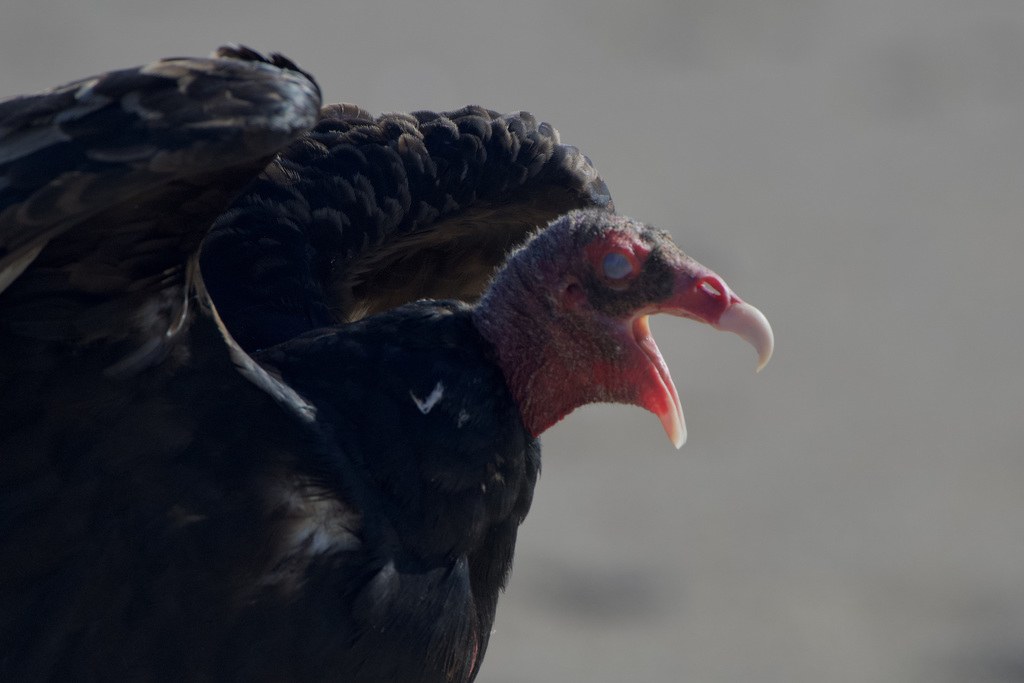
An adult at close range with the bill open, showing the bare red skin of the head and neck.
Sources
- Turkey Vulture Overview and Life History Cornell Lab of Ornithology, All About Birds
- Turkey Vulture Identification Cornell Lab of Ornithology, All About Birds
- Turkey Vulture Field Guide Missouri Department of Conservation
- Turkey Vulture Audubon Field Guide, National Audubon Society
- Vulture Biology Internet Center for Wildlife Damage Management, University of Nebraska-Lincoln
- Operational Activities: Vultures U.S. Department of Agriculture, Animal and Plant Health Inspection Service
- 50 CFR 10.13, List of Birds Protected by the Migratory Bird Treaty Act eCFR
- The microbiome of New World vultures Nature Communications (peer-reviewed, PMID 25423494)
Image Credits
- Image: photographer not named via iNaturalist. CC0 1.0.
- Image: brendanboyd via iNaturalist. CC BY 4.0.
License. - Image: Bill Sheehan via iNaturalist. CC BY-SA 4.0. This resized copy is offered under the same license.
- Image: Isis I. Castro Alberto via GBIF. CC BY 4.0.
- Image: Isis I. Castro Alberto, via iNaturalist. Licensed CC BY 4.0.
Source. License. - Image: Irene, via iNaturalist. Dedicated to the public domain under CC0 1.0.
Source. License. - Image: Nicole via iNaturalist. CC BY 4.0.
Source. License. - Image: Dario Taraborelli, via iNaturalist. Dedicated to the public domain under CC0 1.0.
Source. License.