Seasonal Timeline
Flea pressure tracks humidity more than latitude. Larvae need at least 75 percent relative humidity and 70 to 90 degrees F to develop, which is why Florida and the Gulf South run close to year round while northern activity collapses in winter and rebuilds through summer. Indoors is a separate climate, and fleas can persist all year in a heated house.
Flea pressure tracks humidity more than latitude. Larvae need at least 75 percent relative humidity and 70 to 90 degrees F to develop…
Two extension entomology departments disagree about which stage survives winter. Purdue, writing about Indiana, reports that only adult fleas appear capable of surviving winter and that eggs, larvae and pupae are not known to make it through outdoors. Ohio State, one state over, says most fleas overwinter as larvae or pupae. Neither cites the other, and both are university extension entomology. What they do agree on is the shape of the year: northern flea activity collapses in the cold and rebuilds through summer. The Mountain West is a different case. Outdoor activity there runs May through September, and indoor activity runs year-round in heated pockets of a house. Colorado State University publishes on fleas and counts about 80 species in Colorado, but the same source is candid that the state's dry climate makes fleas rarely problematic, because eggs need more than 50 percent relative humidity to hatch. Colorado infestations usually arrive with a pet that traveled from Texas, California or Florida, then establish in a humid pocket of the house. In Colorado the timing follows the pet, not the calendar.
Where They're Found
Fleas are a documented problem across the Southeast, South Central, Northeast, California and Midwest. The Mountain West belongs on the list too, on Colorado State University's own Colorado publication, with the qualifier above attached. The wider picture is that the cat flea is effectively nationwide wherever there are pets. What varies is pressure, and pressure tracks moisture: larvae need 75 percent relative humidity or better, eggs need more than 50 percent to hatch, and larvae die below 50 percent humidity or above 95 degrees F in the soil. Indoors, the population concentrates wherever the animal sleeps, down at the base of the carpet fibers, under sofa cushions, under beds, along baseboards and carpet edges, and in the pet's bedding. Outdoors it concentrates in moist shaded soil under shrubs, in doghouse and kennel areas, along fences, under decks, against the foundation, in crawl spaces, and even in the thin soil in the joints of a concrete walk. It is not in the sunny lawn. Three separate extension sources say immature fleas do not survive in full sun or in areas of heavy foot traffic, which is why treating the whole yard is wasted money.
Life Cycle
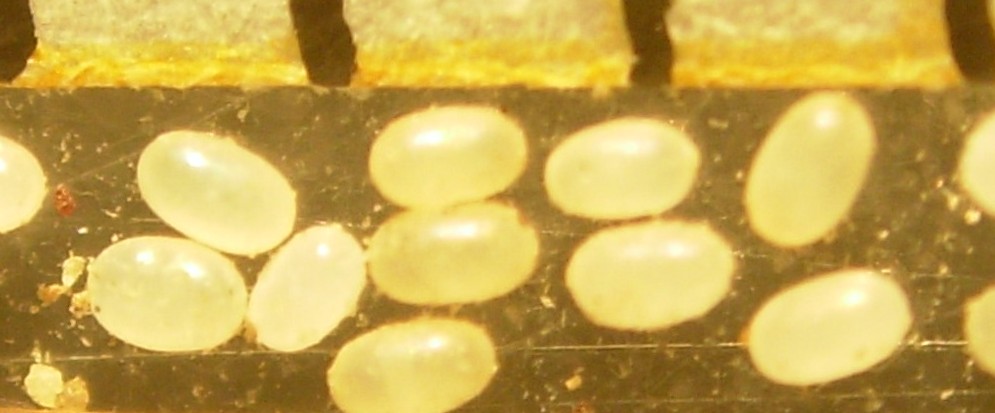
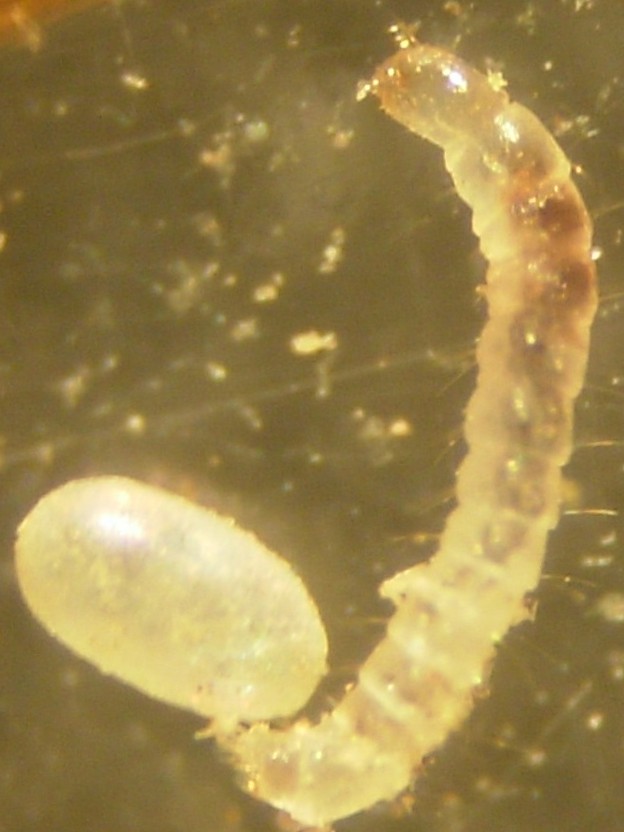
Egg to adult runs about 18 days at the fast end and 21 to 28 days typically, and the sources stretch it out to 30 to 75 days, or as long as two years at the extreme. That two-year figure is the cocoon waiting, not a normal cycle. The cocoon is why infestations rebound, and it is worth understanding the trigger. A fully formed adult sits inside the cocoon and does not come out until something tells it a host is there. The signals are vibration and mechanical pressure, which includes someone walking across the carpet or running a vacuum, a rise in temperature, and exhaled carbon dioxide. Vibration and carbon dioxide each have four or more independent extension and federal sources behind them. Texas A&M says a flea can emerge within seconds of a passing animal. Which produces the effect that catches everybody: come home from two weeks away and the fleas are at the door. Nobody was home, so no vibration, no warmth and no carbon dioxide arrived, and the emergences queued up. Three separate extension sources state this outright. The University of Florida describes people returning to an unoccupied home being attacked by an army of fleas, and Texas A&M describes long-vacant homes and apartments coming alive when new tenants move in. The same mechanism runs a second way, and almost nobody carries it: removing the pet makes the biting worse. The University of Florida reports that flea infestations usually become more evident when pets are removed, because the hungry adults overrun the home and start attacking people instead. Colorado State says the same thing, that attacks on humans are most severe when the infested animal dies or is taken out of the house. Boarding the dog is the first thing most people think of, and it is precisely backwards.
Egg2
Larva3

Pupa
Adult4
Flea Dirt5
Identification
Look at it from the side, not from above
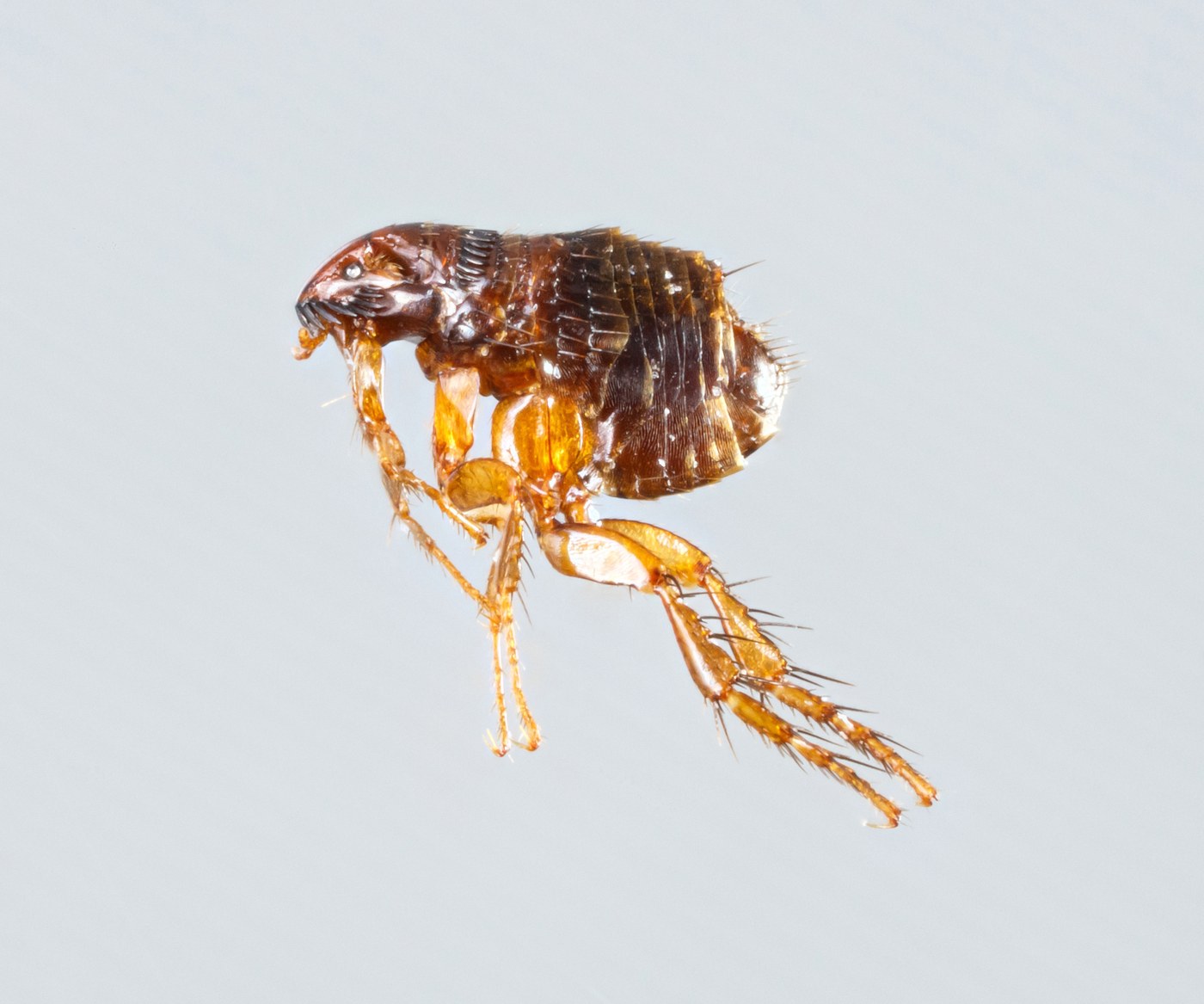
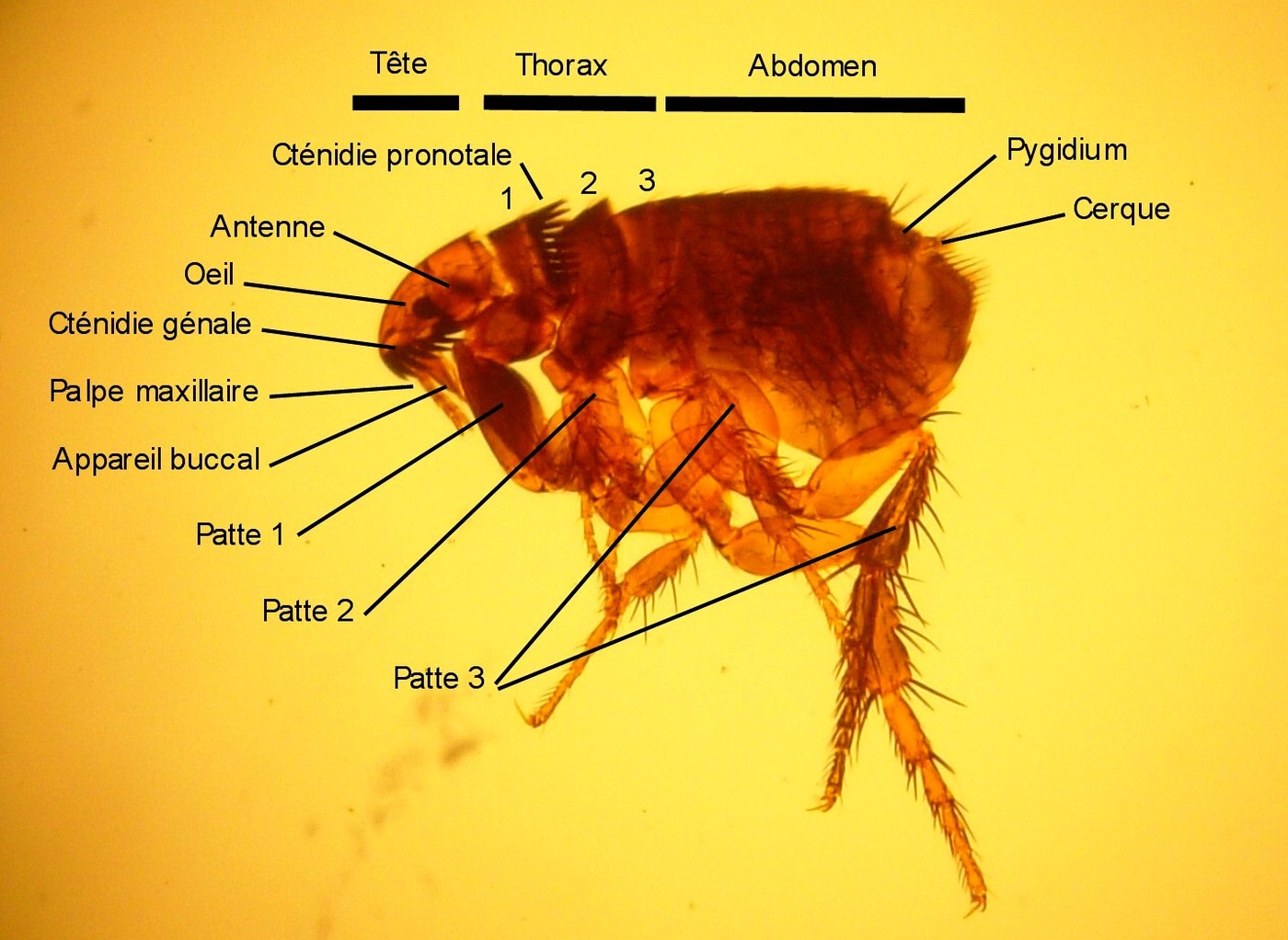
A flea is flattened side to side, so it appears to be walking on edge, and that shape is what lets it move through fur faster than an animal can scratch it out. This is the quickest separation from a bed bug, which is flattened top to bottom and is much larger. Fleas are also wingless, hard and polished, which is why they are so difficult to crush, and covered in backward-pointing bristles that make them hard to pull back out of a coat.
Size and color
Roughly 1/16 to 1/8 inch, reddish brown to nearly black. Sources cluster between about 1 and 3 mm, so a big one is about the size of a sesame seed. The hind legs are obviously enlarged. Under a microscope, the cat flea carries both a pronotal and a genal comb, which is the character a lab uses, but nobody is doing that at home.
How far it jumps
It jumps about six to seven inches straight up and up to about thirteen inches horizontally. Three universities give three different numbers, and Ohio State's split into a vertical and a horizontal figure is what reconciles them. Six to thirteen inches is ankle height, and that is not trivia. It is the reason flea bites land where they land.
The flea on a dog is a cat flea
The flea on a dog in North America is almost always the cat flea. There is a real species called the dog flea, and the two are separated only by a difference visible under high magnification, but the dog flea is a European species and is rare in the United States. The practical answer is geography, not anatomy. If it is on a dog or a cat here, treat it as a cat flea.
"Sand fleas" are just fleas
"Sand fleas" are usually just fleas breeding in the soil. The University of Florida is explicit that the sand flea homeowners describe is nothing more than a common flea breeding outdoors in the dirt. There is also a genuine tropical beach species called the chigoe flea that burrows into feet, which is a completely different animal and not what is in a Georgia backyard. Both uses of the name are real. They are not the same problem.
Springtails and flea beetles
Both get blamed constantly. Both hop, which is enough for most people. Neither is flattened side to side and neither feeds on blood. If you catch one and it is not laterally compressed, it is not a flea.
One that will not move: sticktight
A flea that has attached itself around the ears and eyes and will not move is a sticktight flea. Cat fleas move freely around the animal. Sticktight females fix themselves in place and stay, and they come from ground squirrels and poultry, so they point at a pet that roams rather than at the carpet.
Signs of Infestation
Flea dirt settles it
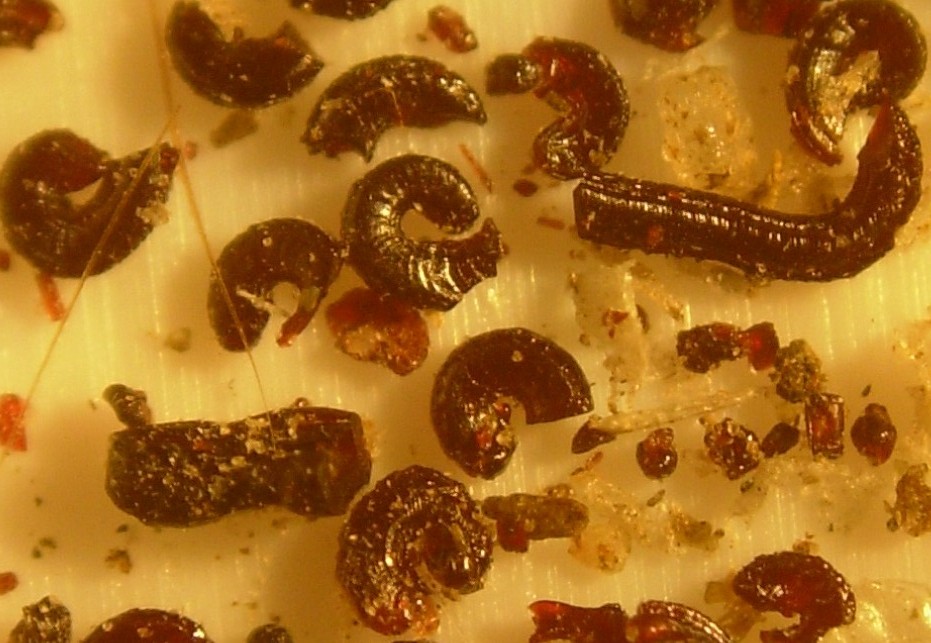
Flea dirt in the coat, and this is the one that settles it. Dark, pepper-like specks in the fur and on bedding. Comb the animal over a white sink or bathtub, wet the specks that fall out, and if they turn the water bright red they are digested blood and you have fleas. That protocol is Ohio State's, and it beats trying to catch an adult. Part the fur where three separate universities agree the fleas concentrate: the shoulder blades and the base of the tail. In heavy infestations you can see them running across the thin-haired part of the belly.
With cats, check the high surfaces
Colorado State and Ohio State independently report the same odd detail, that flea dirt from an infested cat turns up on tabletops, bookcases and the tops of refrigerators. Almost nobody looks there.
Walk the room in white socks, pulled up high
Two universities recommend exactly this. Adults jumping from the carpet show up against the white, and you find out fast which rooms are producing them. It costs nothing.
The animal's behavior
Constant scratching and biting at the legs, belly and back. In heavier infestations the coat becomes soiled and roughened. A pet that has developed an allergy to flea saliva can react badly to one or two bites, and the skin symptoms are often mistaken for mange, so that is a veterinary call rather than a guessing game.
Bites: judge location, not marks
Bites on people: judge the location, not the marks. Flea bites concentrate on the ankles and lower legs, and there is a mechanism behind it rather than a folk rule. The flea emerges from a cocoon in the carpet and jumps onto whatever walks past, and it can only clear six to thirteen inches. Bed bug bites appear on skin that was exposed while you slept, because that insect comes out of the mattress. What you cannot do is tell them apart by how they look. Bites are not a diagnosis for either pest. You confirm fleas by finding flea dirt, and bed bugs by finding the insects, their shed skins or their fecal spotting.
Ignore the three-in-a-row rule
Ignore the "three bites in a row means bed bugs" rule. Purdue states it plainly: multiple bites more or less in a row are characteristic of one flea feeding repeatedly, and are not necessarily a sign of many fleas at all. The breakfast, lunch and dinner line is used all over the internet as a bed bug signature, and a university entomology department says a single flea produces the same pattern.
Rice grains near the bed or rear
Anything like rice grains around the pet's bed or rear. Those are tapeworm segments, and they mean the animal has been swallowing fleas while grooming. They are pumpkin-seed shaped and can move when fresh, then dry down to something that looks like rice. It is a flea finding as much as a worm finding.
Bites but no pet in the house
Purdue's diagnostic is that flea bites on a person mean the home is supporting the development of flea larvae, which is a breeding population indoors rather than a stray insect. With no pet, the host is usually wildlife: raccoons or opossums in the attic or chimney, a skunk or feral cat under the house, or squirrels, rats or bats around the structure.
Prevention and When to Call a Pro
Treat the pet first
A treated pet is the best flea trap in the house. Modern oral and spot-on products changed the math and made the old spray-the-whole-house routine unnecessary in most situations. They kill adult fleas within about 24 hours of the flea boarding the animal, which is fast enough that the flea never lays eggs into the carpet. Keep every animal in the house treated and the population is driven to extinction as the developing fleas emerge, jump on a pet and die. That takes weeks, not days, because the ones already in a cocoon have to come out first.
Ask the vet about resistance
Ask the vet, and ask about resistance. Veterinarians know which products are still performing in your area, and that matters because flea populations develop resistance to insecticides the way bacteria develop resistance to antibiotics. Products that worked five years ago may not now. Field populations resistant to pyrethroids, including permethrin, are documented.
Safety, and it is not negotiable
Safety, and this one is not negotiable. Never put products containing permethrin or amitraz on a cat. Four separate sources, including the CDC, state this independently. Do not use a product labeled for adult dogs on a puppy, kitten or cat unless the label says so. And never treat a pet with the product you used on the carpet or the yard. Those are different formulations for a reason.
Vacuum, and do it properly
It does more here than it does for most pests. Use a beater-bar vacuum, which lifts the carpet nap and lets you reach the base of the fibers where the larvae actually live. Go over the places the pet rests and sleeps first, then room edges, under furniture, under cushions, under beds and throw rugs, along baseboards and carpet edges, around heat registers and in floor cracks. Do it every other day, and keep going for 10 days to two weeks after any treatment.
How much vacuuming removes
How much vacuuming actually removes, reported honestly. On eggs, Texas A&M measured up to 60 percent and Ohio State measured up to 95 percent. Both are university extension, both say "up to," neither cites the other, and the gap between them is 35 points, so treat 60 to 95 percent as the real answer rather than quoting the flattering end. On larvae the sources genuinely disagree: one says vacuuming kills them, another says they grip the carpet fibers and are not removed, Texas A&M puts it at about 30 percent. The part nobody disputes is the best part. Vacuuming triggers the cocoons to open, which drags the one insecticide-proof stage out into the open where anything can reach it. On the bag: three universities say seal it and put it in an outdoor trash container, and one cites recent studies saying that is not necessary. Three to one, so seal it.
Wash and bathe
You are removing the food supply as well as the insects. Launder pet bedding in hot soapy water at least once a week, and wash bedding and throw rugs before any treatment. Bathing the animal removes the dried blood and skin flakes that the larvae eat, which is a longer-lasting effect than killing the adults in the coat. A flea comb helps but has limits: it removes somewhere between 10 and 60 percent of the fleas on the animal. Dip it in soapy water or alcohol as you go. Clean any secondhand carpet or upholstered furniture thoroughly before it comes through the door.
Treat the shade, not the lawn
Outdoors, treat the shade and leave the lawn alone. Immature fleas do not survive in full sun or in areas people walk over constantly, so a well-kept sunny lawn is not where they are. The University of Florida calls spraying the entire yard wasteful and irresponsible, and three other sources agree in substance. Focus on the doghouse and kennel, along fences, under decks, next to the foundation and in crawl spaces. Better still, remove low-hanging vegetation and open those resting areas up to sunlight, which is a fix rather than a treatment. Note that the outdoor and indoor growth regulators are different chemistry: methoprene breaks down in sunlight and cannot be used outdoors, while pyriproxyfen is stable outdoors and hits adults as well as immatures.
Skip the bug bomb
Ohio State states it directly, that total-release aerosols are not recommended because the vapors rarely reach the location of flea larvae or pupae, and University of Kentucky reaches the same verdict independently. The contents go upward and settle on open floors and countertops, so very little gets under a bed, behind furniture or down at the base of the carpet where the eggs, larvae and cocoons actually are. The contents can also be flammable near a pilot light, and there is a long record of house fires from exactly that. There is one narrow exception and it is worth stating rather than flattening. A fogger containing the insect growth regulator methoprene or pyriproxyfen does have some value for fleas, and the reason is the growth regulator in the can, not the fogger as a delivery method. A product you can direct by hand under the bed and behind the furniture reaches the harborage. A fogger does not.
What does not work
It is worth knowing before you spend money. Brewer's yeast, B-complex vitamins and garlic have been tested and do not repel fleas, and four separate universities say so. Ultrasonic devices do nothing, and Ohio State gives the reason: fleas cannot hear ultrasonic sound. Herbal collars are not effective repellents. Pyrethrum-based natural products often fail because many flea populations are resistant to natural pyrethrum as well as the synthetic versions. Fresh cedar chips do contain oils that are toxic to fleas, but the effect lasts a very short time. Pennyroyal oil is worse than useless: its active ingredient is toxic to mammals in a dose-related way and has been associated with lethargy, vomiting, seizures and liver failure. Do not put it on an animal.
Expect fleas after treatment
Do not panic-retreat. Fleas keep emerging for about two weeks after a premises treatment because the spray does not kill pupae, and those are newly emerged adults rather than a failure. The sources disagree on what to do about it. University of Kentucky and UC's IPM program say wait it out and keep vacuuming rather than treating again immediately. Texas A&M schedules a deliberate follow-up at 10 to 14 days for the same reason, that the pupae survived the first pass. Both are reasoning from the same fact. What both agree on is a limit: if adult fleas are still turning up beyond four weeks, the premises or the pets need retreating.
When to Call a Pest Control Professional
Any one of these is enough. There is no pet in the house and there are still fleas, which means an animal is living in the structure. Texas A&M is firm on the order of operations here: the wildlife has to be trapped and removed before a flea treatment will hold, and a homeowner cannot inspect an attic or crawl space for a family of opossums. People are being bitten, which means larvae are developing indoors. The house was vacant or you just moved in and the fleas met you at the door, because there is no pet to treat and the cocoons are already in the carpet. Adults are still appearing more than four weeks after you treated the pet and the premises. Or the pet has flea allergy dermatitis, which is a veterinary call first and a signal to treat the premises at the same time.
What an honest company says
What an honest company will tell you. You may not need one. University of Kentucky's flea publication is written as a do-it-yourself guide, and Texas A&M says plainly that you can eliminate fleas from your home with proper treatment, though it may take time if the infestation is heavy. Colorado State sets the realistic clock at several weeks to several months for full eradication, and nobody should promise you faster. The strongest case for hiring someone comes from Ohio State: where regular preventive treatment has not been followed, it strongly recommends that both a veterinarian and a licensed pest control operator be consulted or hired, because between them they have the experience, training, equipment and effective insecticides. That is a university entomology department naming both professions, and it is the honest version of a recommendation. One more thing worth saying, because some companies imply otherwise: fleas do not damage your house. The cost is the animal's misery, the bites, and how long eradication takes.
Frequently Asked Questions
Why does every website say fleas are 50 percent eggs, 35 percent larvae, 10 percent pupae and 5 percent adults?
Because it got copied. That breakdown does not appear in a single university extension or federal government publication. It appears on encyclopedia entries, veterinary clinic handouts and pet product marketing, and it propagates from there. A number that traces to nothing does not belong in an answer. What is traceable is Colorado State University's statement that only 1 to 5 percent of the flea population is adults on the host, and that one is single-sourced too, which is worth knowing. The claim underneath is solid and multiply sourced: the University of Florida says removing fleas from the animal alone is futile, and the eggs, larvae and cocoons in the house outnumber what is on the pet by a wide margin. The pie chart is the part nobody can back up.
I treated my dog, so why are there still fleas?
Because the dog was never where most of them were. The adults on the animal are a small fraction of the population and the rest is in the carpet, the bedding and under the furniture as eggs, larvae and cocoons. A modern flea medication does win eventually, because every flea that emerges and jumps on a treated pet dies within about 24 hours. But the ones already sealed in a cocoon have to come out first, and that takes weeks. Keep every animal in the house treated, keep vacuuming, and do not judge it at day three.
We came back from vacation and the house was full of fleas. What happened?
The cocoons waited for you. A fully formed adult flea sits inside its cocoon and does not emerge until it detects a host: vibration from someone walking past, a rise in warmth, or exhaled carbon dioxide. With nobody home, none of those signals arrived and the emergences stacked up. Then you opened the door and supplied all three at once. Three separate universities describe this. The University of Florida writes about people returning to an unoccupied home and being attacked by an army of fleas, and Texas A&M describes long-vacant homes coming alive when new tenants move in. At cool temperatures with no host present, adults have been recorded staying in the cocoon up to 12 months.
Should I board the pet until the fleas are gone?
No, and it will make the biting worse. This is the single most counterintuitive thing about fleas. The University of Florida reports that flea infestations usually become more evident when pets are removed, because the hungry adults then overrun the home and start attacking people. Colorado State says the same, that attacks on humans are most severe when the infested animal dies or is removed. A treated pet is the most effective flea trap in the house. Take it away and you have removed the trap and left the fleas.
Do bug bombs work on fleas?
No. Ohio State says total-release aerosols are not recommended for fleas because the vapors rarely reach where the larvae and pupae are, and University of Kentucky reaches the same conclusion independently. The contents release upward and settle on open surfaces, so almost nothing gets under the bed, behind the furniture or down at the base of the carpet fibers where the immature fleas live. They can also be flammable near a pilot light. There is one narrow exception: a fogger that contains the growth regulator methoprene or pyriproxyfen does have some value, and that is because of the growth regulator in it, not the fogger. A product you can aim by hand reaches the places a fogger cannot.
Are these bites fleas or bed bugs?
Not something you can tell from the marks, and anyone who tells you otherwise is guessing. Bites are not a diagnosis for either insect. Location is the real tell, and it is a mechanism rather than a rule of thumb. Flea bites concentrate on the ankles and lower legs because the flea comes up off the floor and can only clear six to thirteen inches. Bed bug bites turn up on skin that was exposed while you were asleep, because that insect comes out of the mattress. Also ignore the three-in-a-row rule that gets used as a bed bug signature. Purdue states that a row of bites is characteristic of one flea feeding repeatedly and does not even mean there are many fleas. You confirm fleas by finding flea dirt, and bed bugs by finding the insects, their shed skins or their dark fecal spotting.
I do not have a pet. Why do I have fleas?
Something else is hosting them. A family of raccoons or opossums in the attic or chimney, a skunk or feral cat living under the house, or squirrels, rats or bats around the structure. Three separate universities name this as the usual answer when there is no pet. Texas A&M is firm about the sequence: the wildlife has to be trapped and removed before a flea treatment will hold, because otherwise the source is still there feeding the next generation. This is the clearest reason to hire someone, since you cannot inspect a crawl space or a chimney for an animal you have never seen.
Can fleas make my family sick?
Realistically the two things that matter are the pet's allergy and the flea tapeworm. Flea allergy dermatitis in dogs and cats can be set off by one or two bites and is the most common real harm, with six universities documenting it. Dog tapeworm passes to a person only if someone swallows an infected flea, which is rare, mostly affects small children, and is usually symptomless. Flea-borne typhus is the one worth knowing about regionally, because the CDC names the cat flea itself as a vector, most US cases are reported from southern California, Hawaii and southern Texas, and reported cases have increased significantly since 2008, which is why the CDC calls it re-emerging in those areas. There is no annual case count to give. The CDC removed flea-borne typhus from the nationally notifiable list in 1987 and no current national figure exists. What the CDC does say: symptoms start 3 to 14 days after exposure, about half of patients get a rash, deaths are rare at under 1 percent of cases, and it resolves with antibiotics. The transmission route is not the bite. Flea feces containing the bacteria gets rubbed into the bite wound when you scratch. And cat scratch disease works through the cat, not through the flea: the flea infects the cat, the flea dirt ends up on the claws, the scratch does the rest. The CDC says direct flea-to-human transmission has been suggested but not proven.
Do fleas carry plague?
Plague is a separate question from typhus and it should not be lumped in with it. Plague is real, it is rural, it is western, and it is rare. The CDC reports an average of seven human plague cases a year in the United States, with a range of 0 to 17, concentrated in northern New Mexico, northern Arizona and southern Colorado, and in California, southern Oregon and far western Nevada. It is a disease of wild rodents and their fleas. The vector the CDC names is the ground squirrel flea, not the flea on somebody's dog. On whether the cat flea itself can carry it, the sources genuinely disagree. Texas A&M says flatly that cat fleas do not carry plague. The University of Florida says cat fleas are capable of transmitting it but that such reports are rare. The CDC does not name the cat flea as a plague vector at all. If you live in one of those rural western counties, plague is a public health matter worth taking seriously and worth raising with your doctor and your state health department. If you live in Atlanta and your dog has fleas, this is not your problem.
Sources
- Fleas, IPM Pests Colorado State University, Department of Agricultural Biology
- Fleas, HYG-2081 Ohio State University Extension, Ohioline
- Cat Flea, Ctenocephalides felis (Bouche), EENY-011 University of Florida IFAS Extension, Featured Creatures
- Managing Fleas, ENTO-PU-046 Texas A&M AgriLife Extension Service
- Fleas, Public Health and Medical Entomology Purdue University Department of Entomology Extension
- About Fleas Centers for Disease Control and Prevention
Image Credits
- Image: Adobe Stock, licensed.
- Image: Auguste Le Roux, via Wikimedia Commons. Licensed CC BY-SA 4.0; this resized copy is offered under the same license.
License. - Image: Auguste Le Roux, via Wikimedia Commons. Public domain.
- Image: Auguste Le Roux, via Wikimedia Commons. Licensed CC BY-SA 3.0; this resized copy is offered under the same license.
License. - Image: Auguste Le Roux, via Wikimedia Commons. Licensed CC BY 3.0.
License.