Where They're Found
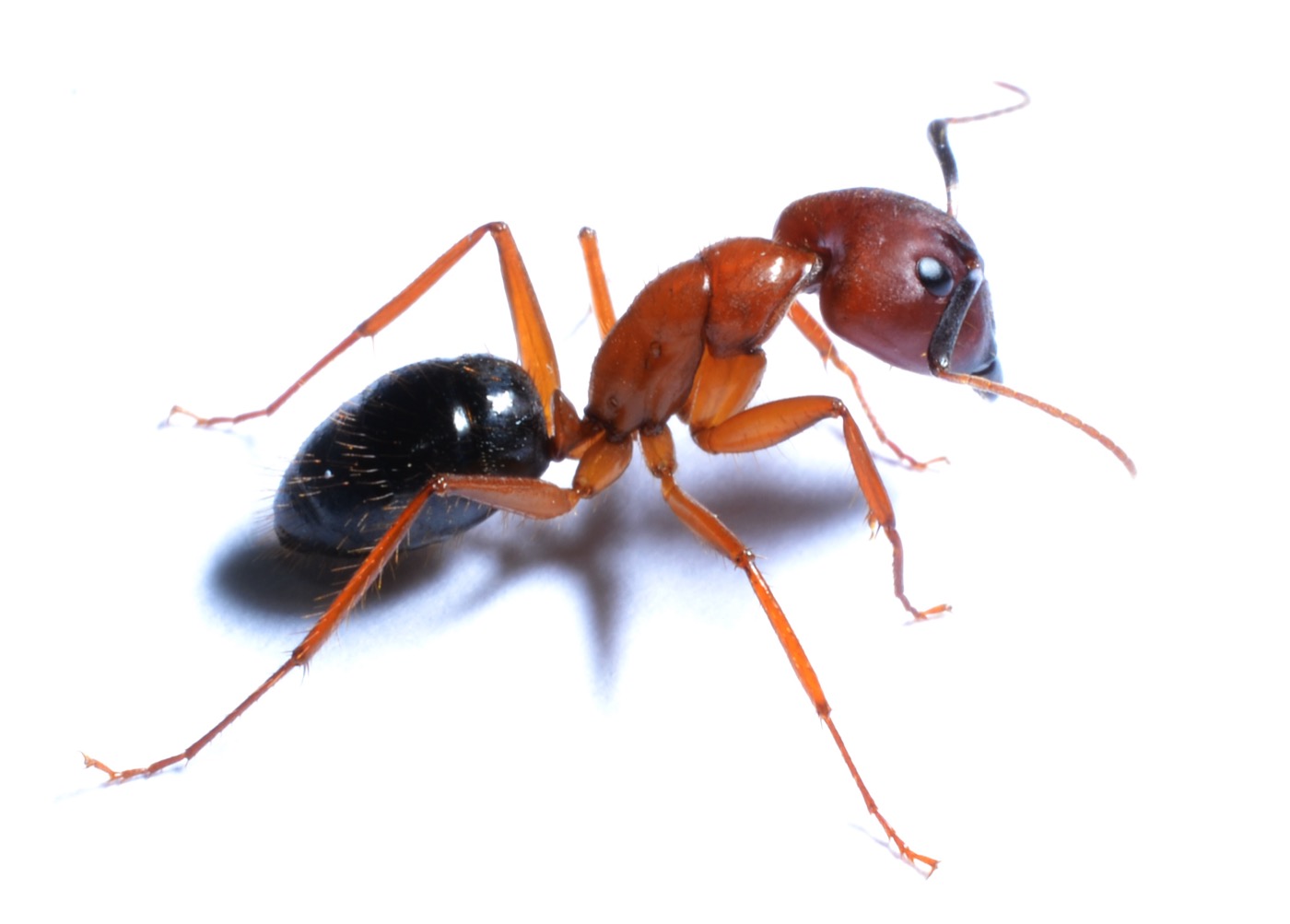
Carpenter ants are established in all eight U.S. regions. Which species you have depends on where you live. The Northeast and Midwest deal with the black carpenter ant, Camponotus pennsylvanicus. In California and the Pacific Northwest the problem species is usually Camponotus modoc, the western black carpenter ant, one of at least ten Camponotus species in that part of the country.
Seasonal Timeline
Spring through late summer, with mating swarms from late May into early June. Winged ants develop in late summer, spend the winter inside the nest, and fly the following spring. Peak months shift by region.
Spring through late summer, with mating swarms from late May into early June. Winged ants develop in late summer, spend the winter inside…
The Southwest runs two peaks, not one. Summer heat suppresses activity from June through August, so the season splits into a spring wave from March to May and a fall wave in September and October. California runs longest, March into October. Check the region cards above for your own months, because the bar shows the two grouped patterns rather than all eight.
This species does not run one calendar. The bar shows the pattern that covers the most regions; the cards above give every region its own window. Read your own row rather than the bar if the two differ.
Life Cycle
The colony timeline matters more than the individual insect. A new colony stays small for its first two or three years, then grows fast. It will not produce a single winged swarmer until it holds roughly 2,000 to 3,000 workers, which takes several years. Once it reaches that point, it turns out 200 to 400 winged ants every year. Swarmers at your windows in spring mean an established colony, not a new one.

Egg and larva
Egg and larva. A founding queen lays a first batch of only 15 to 20, and the larvae are white, legless and C-shaped.
Pupa
Pupa, wrapped in a tan cocoon and tended by workers. Egg to worker takes four to eight weeks.
Adult worker1
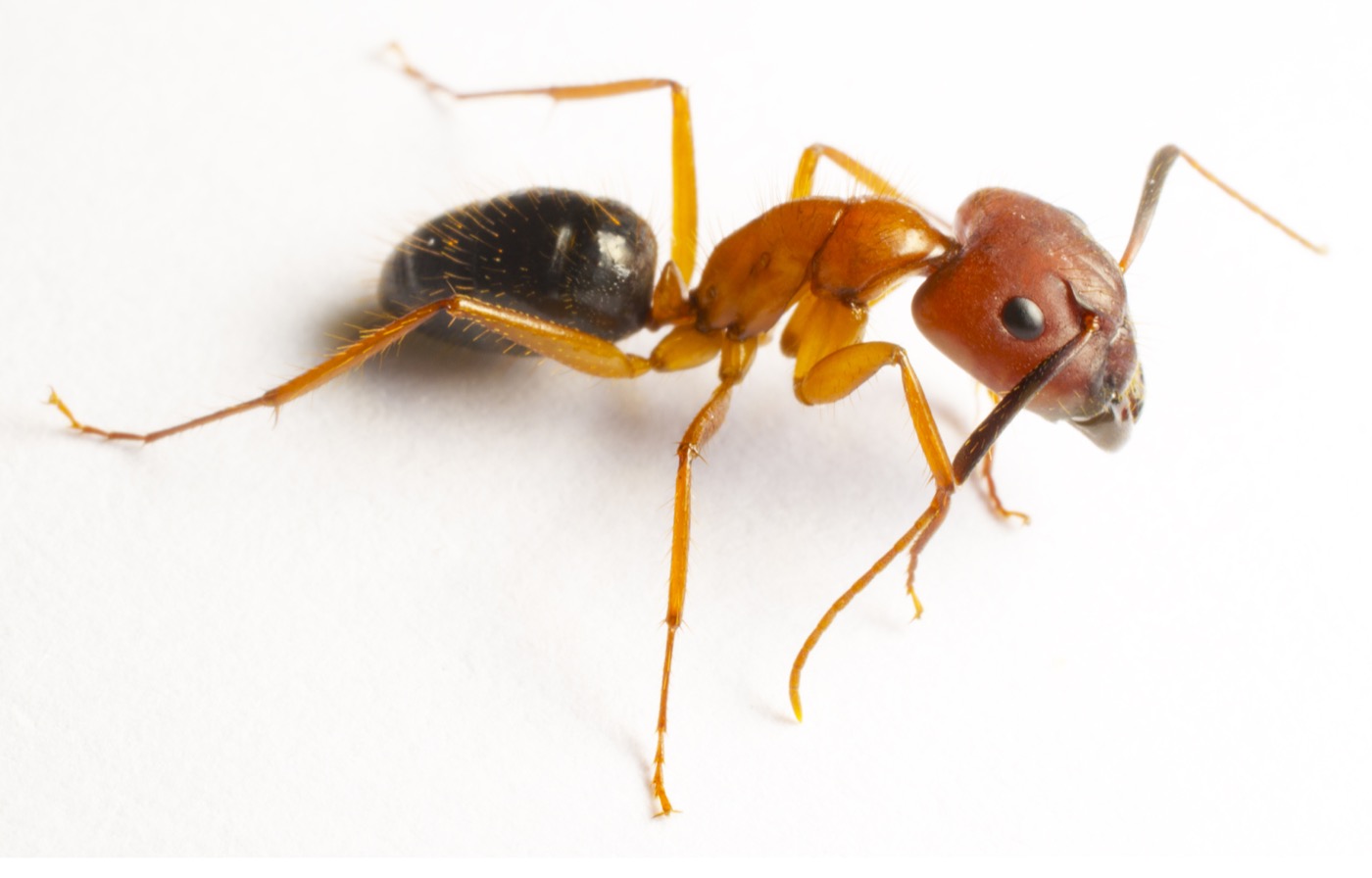
Adult worker. This is the Florida carpenter ant, <em>Camponotus floridanus</em>, the red and black species of the Southeast. The marks that hold across the whole genus are all readable here: one node at the pinched waist, an evenly rounded thorax, and elbowed antennae. Western colonies are <em>Camponotus modoc</em>, matte black with dark red legs.
Castes side by side1
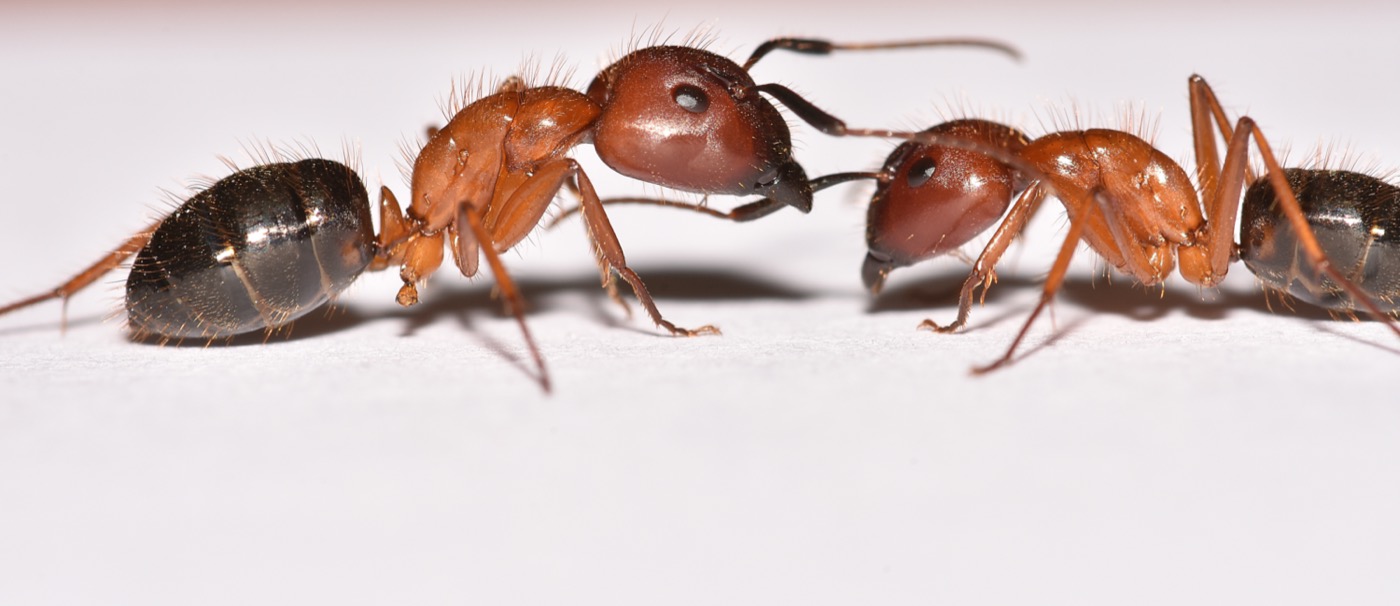
Workers of two sizes, both from one colony. That is why two sizes of large ant in the same kitchen is usually one nest and not two. The winged reproductives, larger again at up to 3/4 inch, are not pictured.
<p>The colony timeline matters more than the individual insect. A new colony stays small for its first two or three years, then grows fast. It will not produce a single winged swarmer until it holds roughly 2,000 to 3,000 workers, which takes several years. Once it reaches that point, it turns out 200 to 400 winged ants every year. Swarmers at your windows in spring mean an established colony, not a new one.</p>
Identification
Big ants, black or red and black, with workers running 1/4 to 5/8 inch depending on the species. Winged reproductives reach 3/4 inch and a queen can hit a full inch. Workers in the same colony come in different sizes, so two sizes of large black ant in one kitchen is usually one nest, not two.
Three features confirm it. There is a single node at the narrow waist, where most look-alike ants have two. The thorax is evenly rounded in profile with no spines or bumps. And there is a circle of hairs at the tip of the abdomen.
The look-alike nobody warns you about is the acrobat ant. It also nests in dead wood, but it is smaller at 1/8 to 3/8 inch and its abdomen is heart-shaped.
Telling them from termites comes down to the swarmers. A carpenter ant has a pinched waist, elbowed antennae, and front wings longer than its hind wings. A termite has a broad waist, straight bead-like antennae, and four wings of roughly equal length. The debris settles it as well: carpenter ant sawdust is fibrous and stringy, while drywood termite pellets are six-sided.
Signs of Infestation
Frass, and its shape. Because they cannot digest wood, everything they excavate gets pushed back out. It lands in cone-shaped piles of coarse, stringy wood fibers mixed with dead insect parts, sifting from cracks in siding, behind moldings, and under porches. Look closely at the pile and you can often find the kick-hole above it, the small opening the ants use to dump it. That hole is how a technician reaches the nest.
Sound. An active colony makes a dry rustling in walls and ceilings, and it gets louder when the colony is disturbed. Tap the wall and put your ear against it. A pro will use a stethoscope, and an inverted drinking glass works surprisingly well.
Smooth galleries. Carpenter ant tunnels look sanded. They follow the wood grain, favor the lighter-colored spring growth rings, and contain no soil and no pellets. Termite galleries are often lined with mud.
Ants indoors in late winter or early spring. This is the sign that tells you the most. An outdoor colony is dormant at that time of year, so ants walking your kitchen in February came from a nest inside a heated part of the building. The one exception is a worker carried in on firewood, which cannot start a nest.
Twenty or more workers seen indoors on a regular basis, or any large group of winged ants at interior windows, points to a nest in the structure. One or two wingless queens does not. Those are newly mated queens that shed their wings outdoors and wandered in looking for a place to start.
Prevention and When to Call a Pro
Carpenter ants follow moisture. They will generally not infest sound wood with a moisture content below 15 percent, which means most prevention is really plumbing and roofing work. Fix leaking gutters, damaged flashing, roof leaks, condensation on pipes, and leaking tubs or appliances. Replace decayed wood and correct whatever rotted it. Ventilate damp attics and crawl spaces, and put a plastic moisture barrier over crawl space soil.
Then close the road in. Workers travel up to 100 yards from the nest, and the parent colony is usually in a tree, stump, or woodpile inside that radius. Trim branches so nothing touches the roof or eaves, prune the branches touching utility lines, pull stumps and waste wood, store firewood off the ground and well away from the house, keep perimeter mulch to two or three inches, break any earth-to-wood contact, and seal where pipes and wires enter.
Call a pro when you cannot find the nest, or when it is inside a wall. Two reasons, and both are structural rather than sales pitch. First, an indoor nest is almost always a satellite of a parent colony outside, and both have to be eliminated or the ants are back in days or weeks. Second, only about 10 percent of a colony is out foraging at any moment, so spraying the ants you can see never reaches the other 90 percent. Reaching the nest usually means drilling into wall voids or framing, which is worth handing to someone who does it for a living.
Worth saying plainly: a single spring swarm or a handful of workers does not always justify a treatment program, and it does not obligate you to an ongoing contract. A colony that has been in a wet sill plate for years is a different conversation, and so is a pending home sale, since carpenter ants count as a wood-destroying organism on an inspection report.
Frequently Asked Questions
Do carpenter ants eat wood?
No, and they physically cannot. They have no way to digest wood cellulose. They chew galleries out of it to nest and push the shavings outside, which is why you find sawdust rather than missing wood.
How serious is the structural risk, really?
It depends on the colony's age, the species, and where you live, and the entomologists do not all agree. Damage builds slowly, usually over years, and a long-established colony in wet framing can genuinely weaken structural wood. Penn State Extension reports that structural damage from nest expansion is rare, and Texas A&M reports that Texas species seldom damage framing lumber at all. A colony that has been working a damp sill plate for six years is a real problem. One swarm in May is not.
Do carpenter ants bite?
They cannot sting, but they can bite hard and spray formic acid into the wound, which burns. They only do it if you disturb the nest or pick one up. They carry no known disease risk.
Why am I seeing them in the middle of winter?
Because outdoor colonies are dormant then. Carpenter ants indoors in late winter or early spring mean a nest inside a heated part of your home, not ants wandering in from the yard.
Can I get rid of carpenter ants myself?
You can try, and the honest answer is that it usually fails for one reason: only about 10 percent of the colony is out foraging at any given time. Killing foragers reduces what you see without touching the nest. If you want to try locating it yourself, watch for workers between sunset and midnight in spring or summer, using a flashlight with red film over the lens, since ants cannot see red light. Bait them with something they will carry home, like tuna packed in water in spring, or honey later in the season.
Photo Gallery
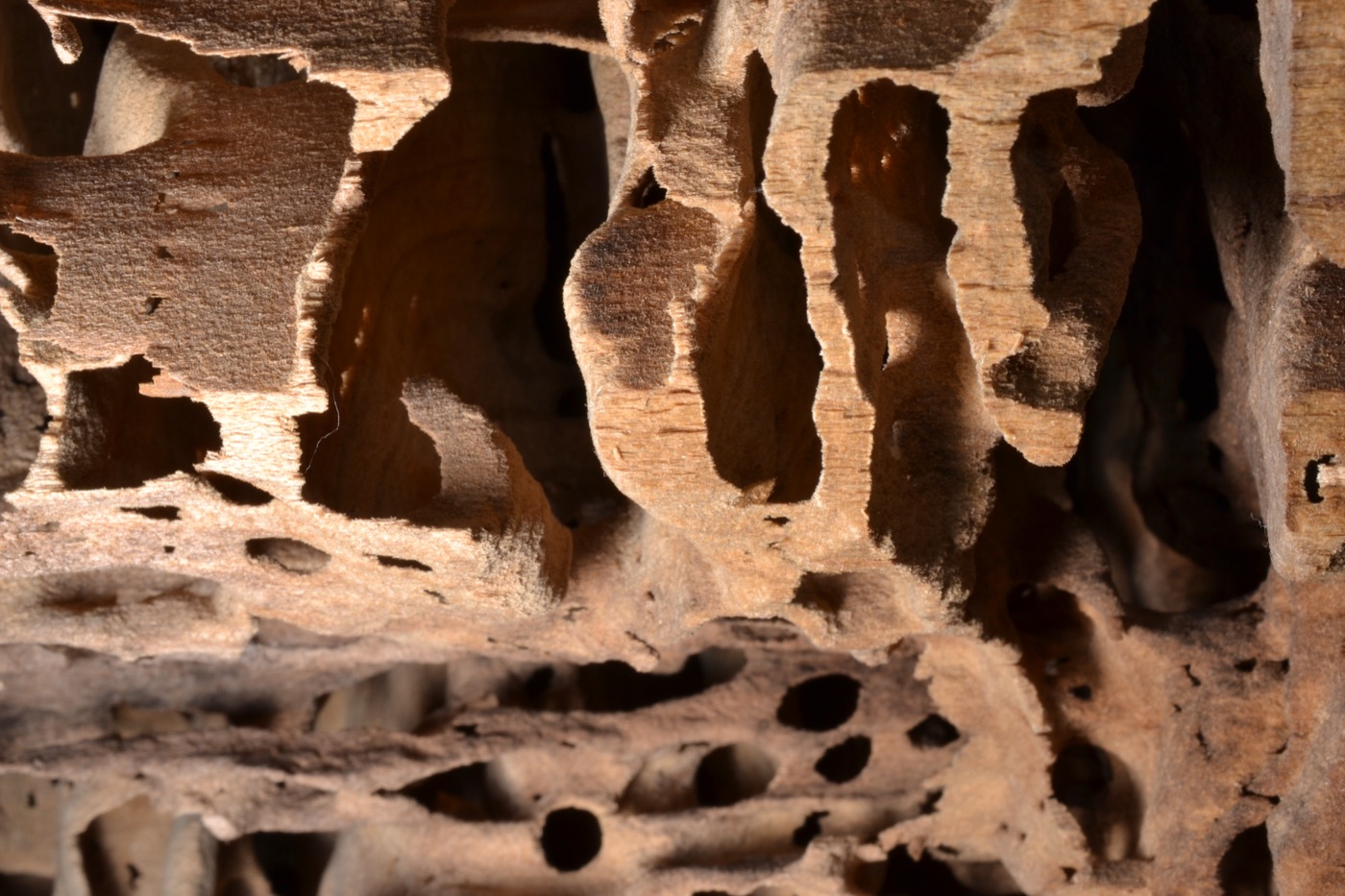
Galleries in structural wood. Carpenter ants sand the walls smooth and clean, which is what separates their damage from a termite gallery packed with mud and soil.
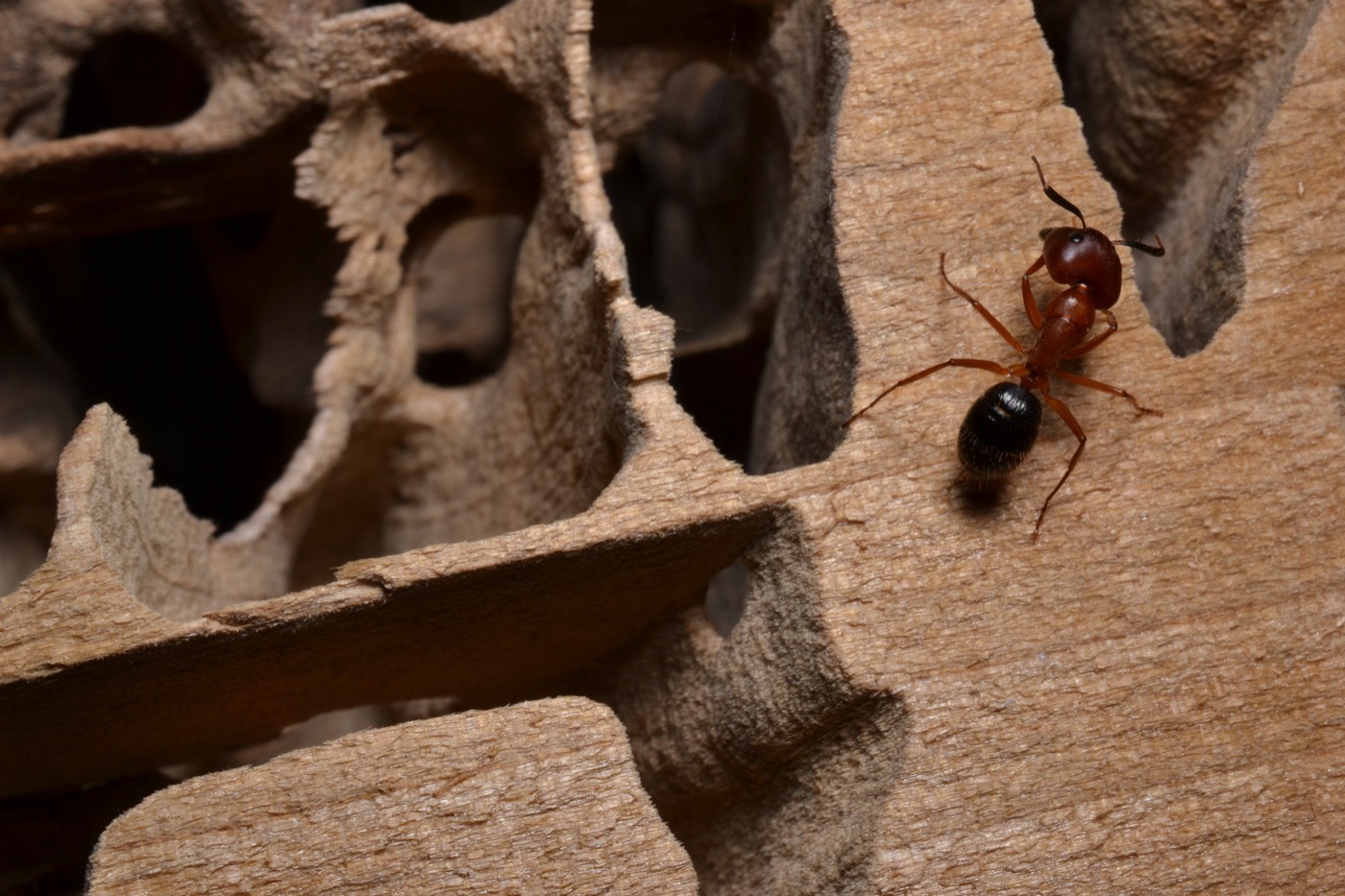
A worker on the face of the wood it nests in, with the galleries open beside it.
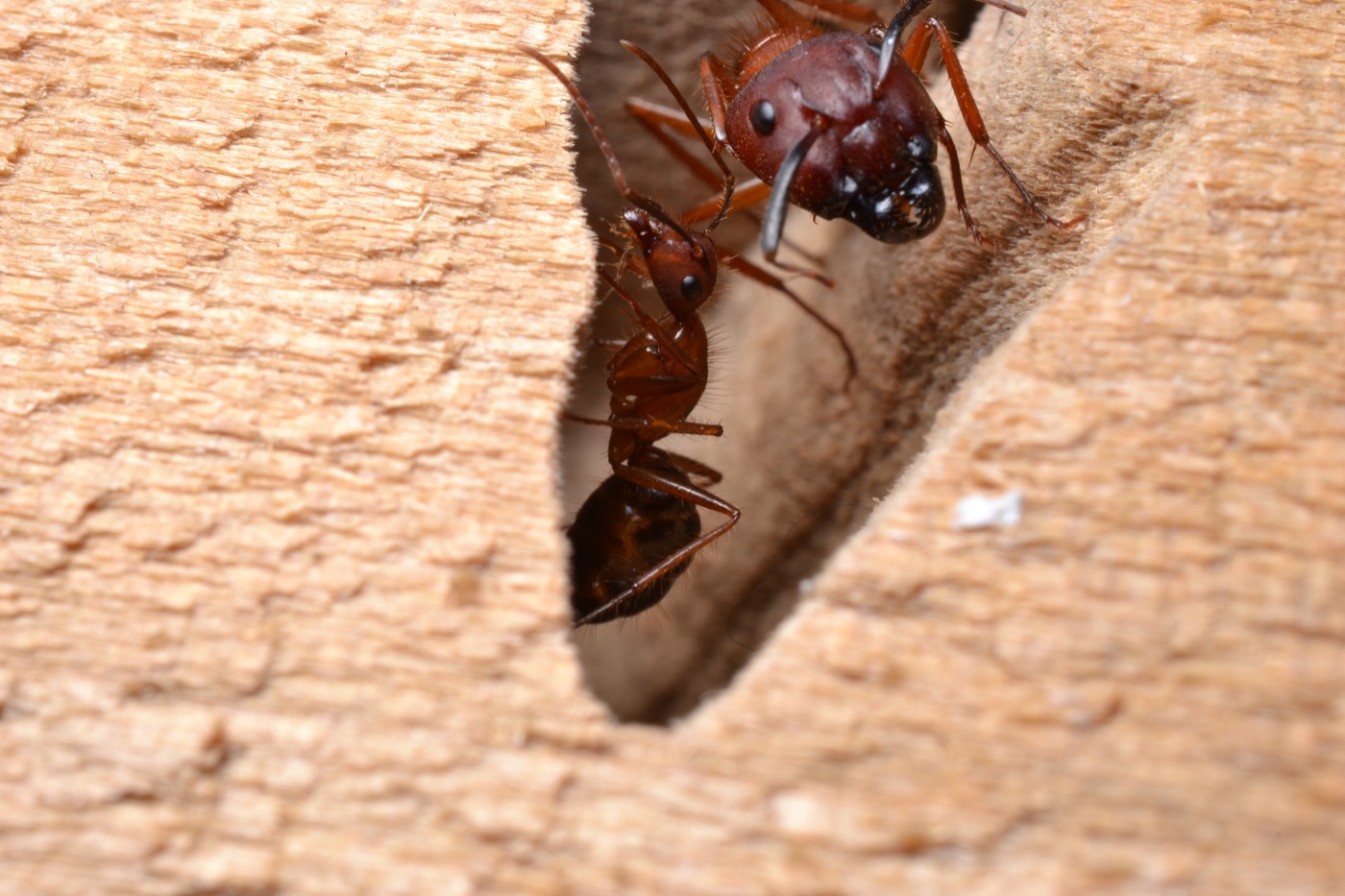
A large worker and a small one at the same gallery opening. Both came out of one nest.
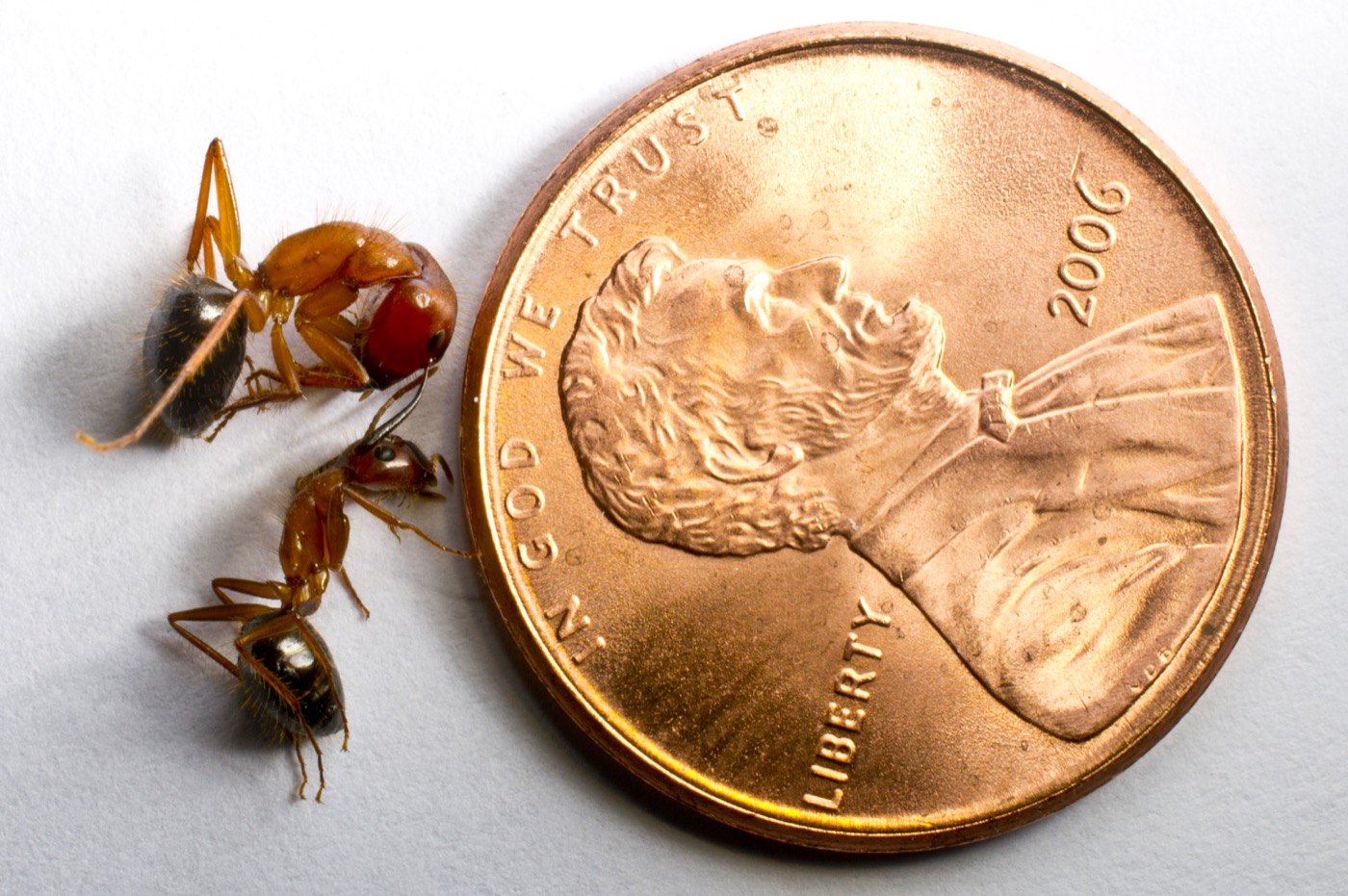
Two workers beside a penny. A quarter to five eighths of an inch is bigger than most people picture when they hear ant.
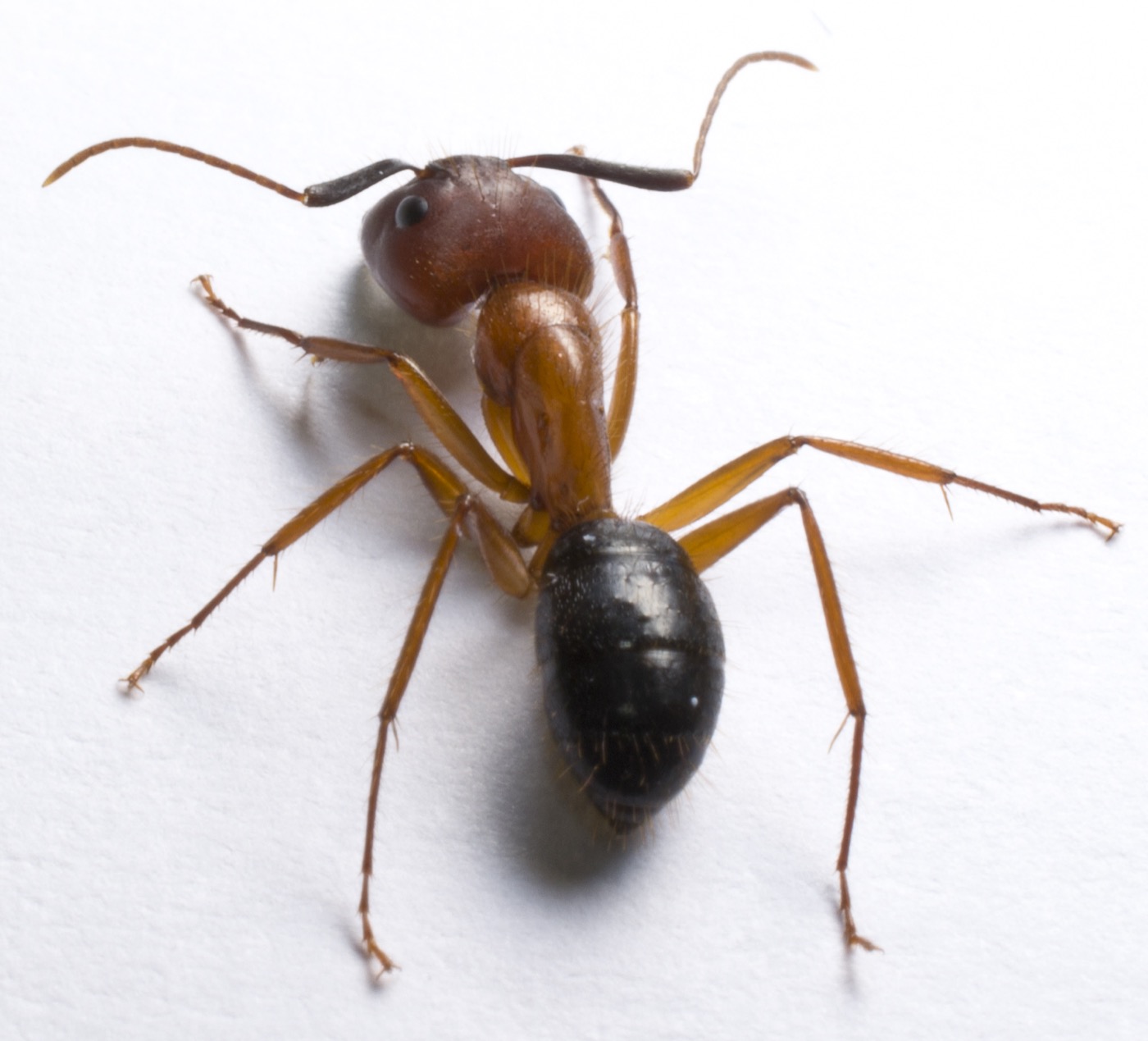
The view a homeowner actually gets, looking down at an ant on a counter. The single waist node and the rounded thorax still read from this angle.
Sources
- Pest Notes: Carpenter Ants, UC ANR Publication 7416 UC Statewide Integrated Pest Management Program (UC ANR)
- Carpenter Ants Penn State Extension, Department of Entomology
- Carpenter Ants, ENTFACT-603 University of Kentucky Department of Entomology
- Carpenter ants University of Minnesota Extension
- Carpenter Ants, Publication E-412 Texas A&M AgriLife Extension Service
- Integrated pest management for ants in schools, PNW 761 Oregon State University Extension Service
Image Credits
- Image: NPMA. Used under NPMA member image license.