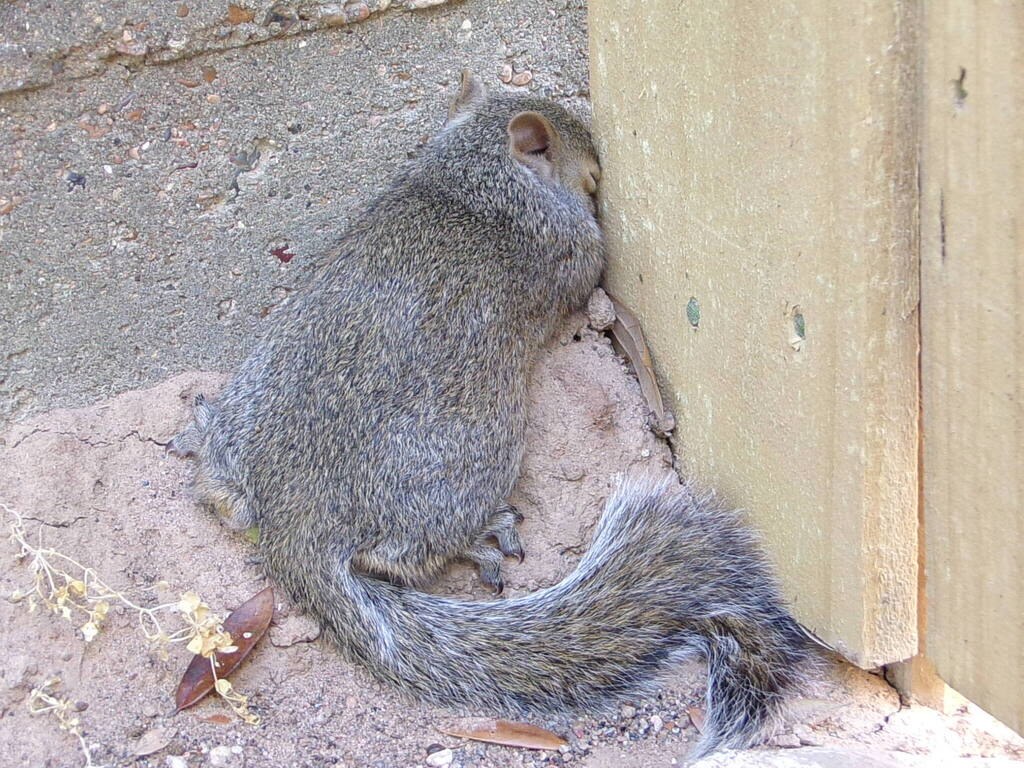
Seasonal Timeline
Squirrel entry into structures peaks in late summer and fall, when a fall litter and cooling temperatures push animals to find a winter den site. A second, smaller push follows in late winter and early spring.
Squirrel entry into structures peaks in late summer and fall, when a fall litter and cooling temperatures push animals to find a winter den…
There is one driver behind every regional peak above, and it is the same one everywhere. Squirrels are cavity dwellers that prefer hollow trees and settle for buildings, and as temperatures drop in late summer and fall they are actively looking for a winter den site at the same time a fall litter is coming up. That is why the noise usually arrives in August, September, or October rather than in the dead of winter. The smaller late-winter and early-spring shoulder tracks the main breeding period, which runs mid-December into early January, with a smaller share of the population breeding again in June.
The South Central region runs about a month earlier on a milder climate, and it is not evenly populated across the map. Activity concentrates in the wooded eastern part of the region, East Texas, Arkansas, and Louisiana, rather than in the drier country to the west. Range nuance is worth one more note for the Midwest and South Central specifically. In the more open, agricultural parts of both regions, fox squirrel is the dominant or co-dominant tree squirrel, so a squirrel in a Midwest or South Central attic is not automatically this species. In the Southeast and Northeast, gray squirrel clearly leads.
The Pacific Northwest is the one region where this species is not native at all. It was introduced there and now dominates urban and suburban tree squirrel populations in the Seattle and Portland areas, having displaced much of the native western gray squirrel from those same urban areas. The seasonal biology is identical to everywhere else. What changes is which squirrel you are actually looking at, and that question is covered in the identification and prevention sections below.
Where They're Found
Eastern gray squirrel's natural range is similar to fox squirrel's but does not extend into many of the western areas fox squirrel reaches. The species has also been introduced in several locations and is often found in urban areas, which is the direct explanation for its Pacific Northwest presence. Gray squirrels turn up in large numbers in cities, especially in and around parks.
In natural habitat, squirrels use hollow trees, human-made squirrel boxes, and leaf nests called dreys, with tree cavities strongly preferred because survival of young is higher in them. Habitat overlap with fox squirrel varies by region. In the Southeast, fox squirrels associate more with mature pine forest while gray squirrels use any habitat with enough mast-producing hardwoods. In the Midwest, fox squirrels lean toward agricultural woodlots while gray squirrels use larger forest blocks.
Around a structure the list is short and consistent across every region: attics, soffits, roof edges, gable vents, and chimneys. Home ranges run anywhere from 1 to 100 acres depending on season and food availability, and when population pressure is high, squirrels may travel 50 miles or more in fall looking for better habitat.
Life Cycle
Up to two litters a year, and that is what sets the control window. Most of the population breeds only once, but a portion breeds again in June, and young may be present February through August as a result. Any exclusion or control work inside that window risks separating young from the adult and leaving them behind in a space no one can reach. That timing sits underneath every recommendation in the prevention section, alongside the separate rule about never sealing an animal inside.

Mating
Nest
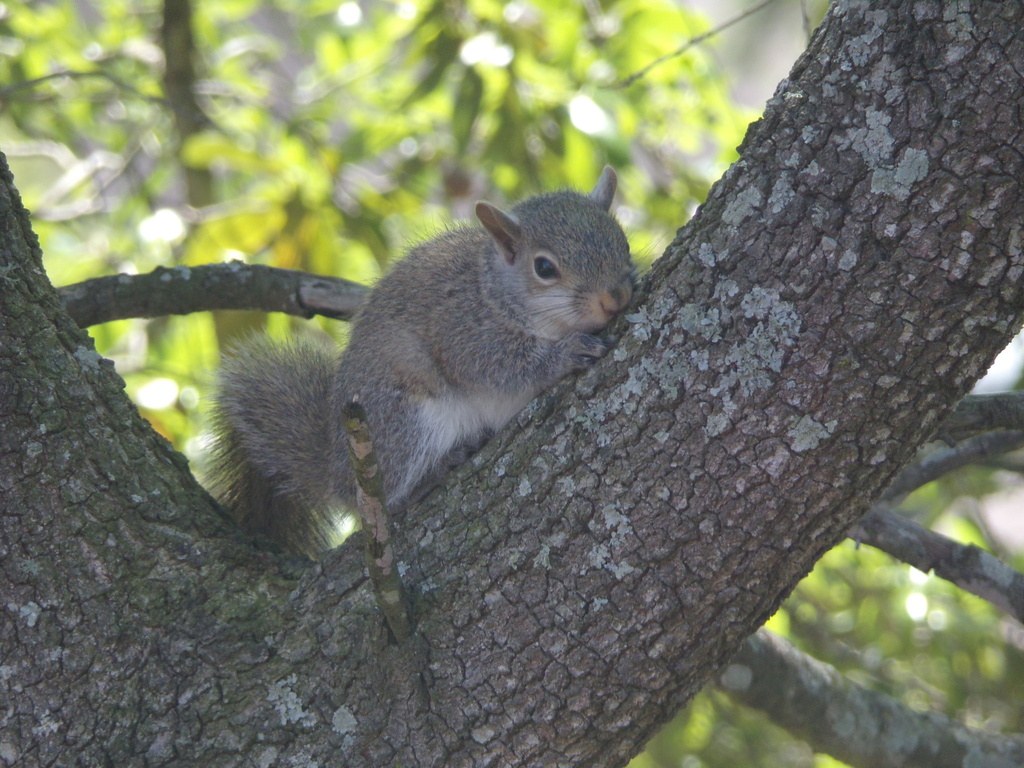
Juvenile2
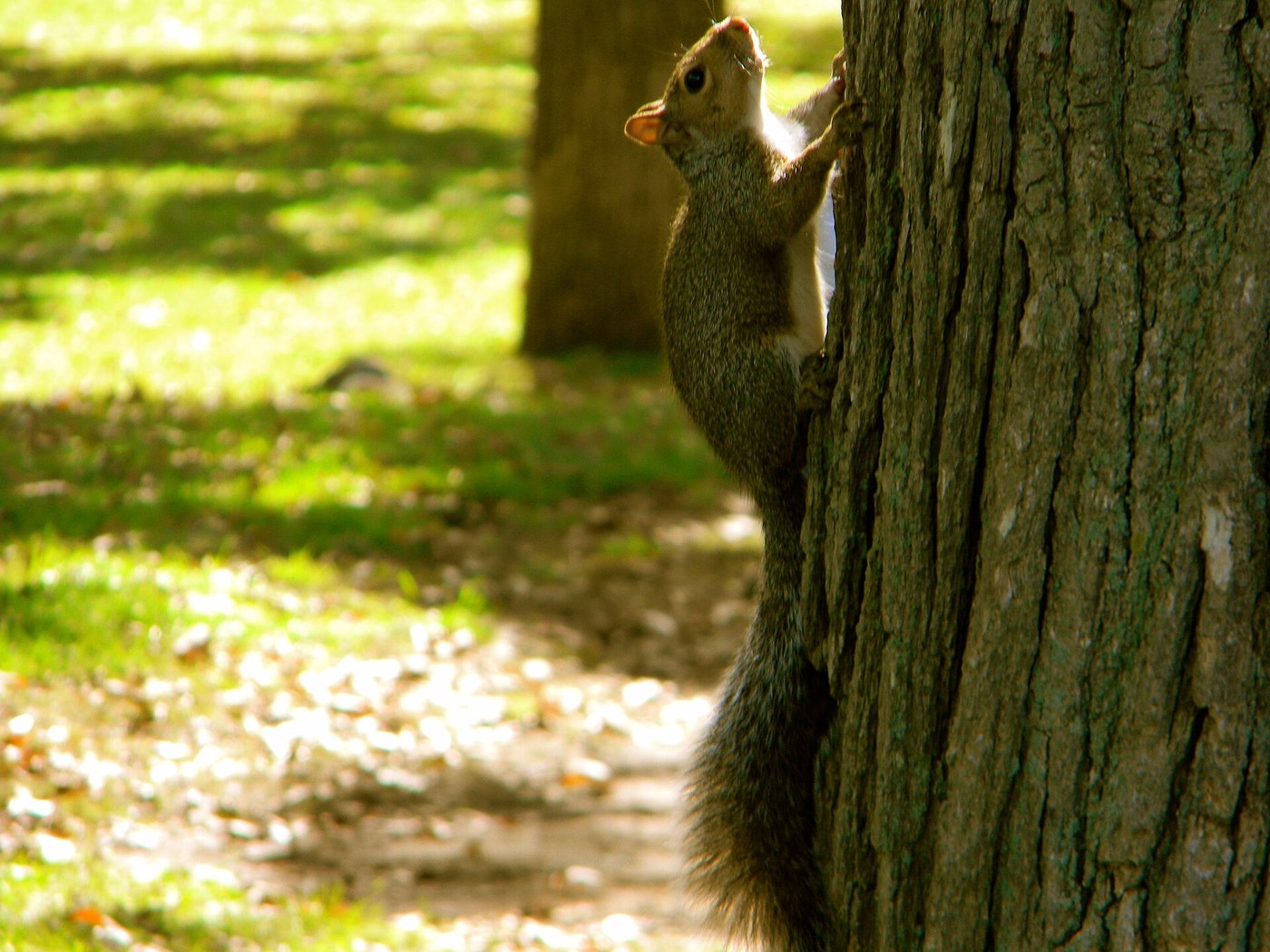
Adult3
Identification
Size and build
16 to 20 inches nose to tail tip, weighing 1 1/4 to 1 3/4 pounds. Overall gray body, bushy tail, no ear tufts. Fox squirrel, the most common look-alike across much of this range, is larger at 18 to 27 inches and 1 3/4 to 2 1/4 pounds.
Color varies more than the name suggests
Typically gray, but some individuals show a distinct reddish cast to the coat, and black individuals are common in the northern parts of the range. Local populations of white gray squirrels occur in western North Carolina, upstate New York, and a few other spots. These are not albino, since white squirrels keep gray coloring on the back of the head, neck, or shoulders.
What it is not
No ear tufts, which rules out tassel-eared squirrel. Not the small-bodied, tufted-ear combination of red squirrel or Douglas pine squirrel. And not a flying squirrel, which is nocturnal, far smaller, and leaves entry holes about the size of a quarter.
Which look-alike depends on where
Which look-alike matters depends on where you are. In the Midwest and South Central regions, fox squirrel is the real one to rule out, and it is the dominant or co-dominant tree squirrel in the more open, agricultural parts of both regions. In the Southeast and Northeast, gray squirrel clearly leads and the question rarely comes up.
In the Northwest, it runs backwards
In the Pacific Northwest the identification question runs the other direction, and it carries legal weight. Washington's state wildlife agency states directly that the native western gray squirrel (Sciurus griseus) is often confused with introduced eastern gray squirrels that are increasingly common in Washington's urban areas. The native species is the protected one. It is larger, with a very long, bushy gray tail carrying white-frosted outer edges, and its body and tail carry no brown at all except an occasional small reddish-brown patch on the back of the ears in winter, visible only on close inspection. Eastern gray squirrel, by contrast, commonly shows a reddish cast or is black. If you are in this region, settle which species you have before you do anything else. The prevention section explains why.
Daytime activity identifies it
Daytime activity is a genuine identifying sign, not just a detail. Squirrels are diurnal. Scratching and running noises during daylight hours point to a squirrel rather than to a rat, a mouse, a bat, or a flying squirrel, all of which are more active at night.
Signs of Infestation
Gnaw holes about the size of a baseball
That size comparison separates fox and gray squirrels from red squirrel, which leaves golf-ball-sized holes, and from flying squirrels, which leave holes about the size of a quarter.
Daytime scratching overhead
Daytime scratching and running noises in an attic, soffit, or wall space. Vocalizations include churrs when the animal is angry, barks as warnings, and squeals in distress or pain. During breeding season, noisy chasing sounds carry through the trees outside.
A leafy nest in a soffit
A nest of leafy debris inside a soffit or attic space. This is the structural version of a leaf nest, and it is usually found near the entry hole rather than deep in the space.
Chewed wiring and transformers
Chewed electrical wiring, and damage to power lines and pole-mounted transformers where squirrels travel wires. This has caused documented power outages. Gnawing left long enough can also weaken rafters.
Yard and tree signs
Chewed bark on ornamental trees and shrubs, small buried or dug-up spots in a lawn from nut caching, and bird house openings that have been chewed wider so a squirrel could reach the nestlings inside.
One sign that belongs to a different species
A large single pile of cached food, for example a heap of pine cones in an attic, is red squirrel work. Gray and fox squirrels are scatter cachers that store individual nuts across many separate spots around their home range, so they do not leave one big pile behind.
Prevention and When to Call a Pro
The fire risk, with real numbers
The fire risk here is documented with real numbers, which is why it comes first. Squirrels chew on electrical lines, and that leads to fires. The cost side has been measured. Squirrels caused 177 power outages in Lincoln, Nebraska in 1980, 24 percent of all outages in the city that year, at an estimated $61,005 in 2010-adjusted costs covering repairs, public relations, and lost revenue. A similar case in Omaha in 1985 produced 332 outages costing at least $94,237 in 2010 prices. After Lincoln installed squirrel guards on its pole-mounted transformers in 1985, its annual squirrel-related costs fell 78 percent, to $10,290. Those are utility figures, not a homeowner's repair bill, but they are the clearest available measure of what squirrel gnawing does to electrical systems. That is the reason chewed wiring in an attic is treated as a fire hazard rather than a nuisance, and the reason exclusion matters more than tolerating the noise.
Never seal an opening too early
Never seal an opening until you are certain every squirrel is out. This is the counterintuitive one. A squirrel sealed inside a structure can cause substantial additional damage chewing its way back out, more than it caused getting in. There is a simple test for whether a suspected opening is still in use: place newspaper in the hole and check it after a day. If it has been pushed through or disturbed, the den is active. If it is undisturbed, the den is likely empty and safe to close. Timing matters on top of that, since young may be present February through August.
Habitat modification comes first
Habitat modification is the practical first step, and it is homeowner-doable. Trim limbs and trees back 6 to 8 feet from the building so squirrels cannot jump to the roof, and include vines such as ivy, which provide the same access a branch does. Modify bird feeders so squirrels cannot forage at the feeder or on the ground beneath it, or give them somewhere else to go, for example an ear of corn wired to a post well away from the house. Metal collars around isolated trees or poles, and aluminum flashing wrapped around trunks, prevent climbing access.
Exclusion is the long-term fix
Exclusion is the correct long-term fix. Close external openings into attics and other parts of the structure, and install a chimney cap. Where squirrels travel a wire toward the structure, lightweight plastic pipe slit and placed over the wire will rotate and tumble a traveling squirrel off. That technique must never be used on or near lines that carry electricity. Only professional electricians or power company employees should handle actual power lines.
One-way doors, with caveats
One-way doors work, with real caveats worth knowing before you buy one. When young are not a concern, a spring-loaded one-way door combined with a large apron, at least a foot square, around the opening reduces the chance the animal simply chews a new hole beside it. Freezing rain can freeze a one-way door shut or open. Some individual animals will fight much harder than others to get back in, so a chew-in is a real possibility to plan for rather than a rare edge case. Gray and fox squirrels are harder to exclude than flying and red squirrels because they have far more jaw strength.
What does not work
No frightening device has been proven effective against squirrels. Strobe lights show some promise and nothing more. Naphthalene can temporarily discourage squirrels from an attic but is not recommended in an occupied building, because it can cause severe distress to people, and any commercial repellent use may itself require pesticide-use certification. No toxicant is registered for tree squirrel control at all.
Trapping and shooting are regulated
The classification is the reason. Fox and gray squirrels are usually classified as game animals, so trapping permits may be required from your state wildlife agency. Check the legal status of squirrels in your specific area before taking any action. Separate from permits, young may be present February through August, so control work inside that window risks leaving young behind.
A squirrel in a chimney
It is its own situation, and it is not a do-it-yourself job. A squirrel trapped in a chimney rarely survives more than 3 days, so the clock is short. Removal there is a special circumstance fraught with risk, and the largest single risk is a bite during handling. Call rather than attempting a chimney rescue.
In the Northwest, confirm species
In the Pacific Northwest, confirm the species before any control action. Washington's Department of Fish and Wildlife states that the native western gray squirrel is a protected species in Washington and cannot be hunted, trapped, or killed. It was added to the state's threatened species list in 1993 and uplisted to state Endangered in 2023 after continued decline, and the agency's own list of conservation threats names possible competition with non-native squirrels, including the eastern gray squirrel, directly. That is Washington's rule specifically, not a claim that every Pacific Northwest state manages the two species the same way, but the practical point holds across the region: trapping or removing a western gray squirrel in the belief that it was the introduced pest species does real harm. Use the size and coloring tells in the identification section, and if there is any doubt, get the species confirmed first.
One reassurance worth stating
Squirrels do not pose a threat to pets. The animals actually at risk are nesting birds, since squirrels will eat eggs and nestlings and will chew a bird house opening wider to reach them.
Who to Call, and When
Call for any squirrel active in a chimney, because removal there carries real physical risk and the animal has a narrow survival window. Call before any trapping, to confirm your state's permit requirements for what is in most states a classified game species. Call in the Pacific Northwest if there is any uncertainty about which squirrel is present, given the protected status of the native look-alike. And call for any active attic or soffit den you are not certain is empty, since sealing it wrong makes the damage worse.
Frequently Asked Questions
Is that scratching in my attic a squirrel or a rat?
Timing is the fastest tell. Squirrels are active during the day, so daytime scratching and running noises point to a squirrel. Rats and mice are more active at night. The entry hole is another clue. Squirrels leave gnaw holes roughly the size of a baseball, larger than the openings rats typically use, and much larger than the quarter-sized holes flying squirrels leave.
Can squirrels actually cause a fire?
Yes, and it is a documented risk rather than a scare tactic. Squirrels chew on electrical wiring, and that gnawing has caused real outages and real costs. Squirrels were behind 177 power outages in Lincoln, Nebraska in 1980, 24 percent of all outages there that year, and 332 outages in Omaha in 1985 costing at least $94,237 in 2010 prices. Gnawing left long enough can also weaken rafters. That is the main reason exclusion matters, not just the noise.
I found an opening a squirrel is using. Should I just seal it up?
Not without checking first. Sealing an active opening before every squirrel is out risks trapping one inside, and a trapped squirrel will cause more damage chewing its way back out than it caused getting in. Put a small amount of newspaper in the opening and check it after a day. If it is undisturbed, the den is likely empty. Keep in mind that young may be present February through August.
Are squirrels dangerous to my pets?
Generally no. Squirrels do not pose a real threat to cats or dogs. The actual risk is to nesting birds. Squirrels will eat bird eggs and nestlings, and they will chew a bird house opening wider to get to them.
I am in the Pacific Northwest and see gray squirrels constantly. Are they protected?
It depends which squirrel you actually have. The common gray squirrel in most Pacific Northwest yards and attics is the introduced eastern gray squirrel, which carries no special protection. The region's native western gray squirrel is a different animal: larger, with a long bushy tail edged in white frosting and no brown anywhere on its body or tail apart from an occasional small patch on the back of the ears in winter. In Washington it is a state Endangered species and cannot legally be hunted, trapped, or killed. If you are not certain which one you have, get it confirmed before doing anything.
Sources
- Tree Squirrels (identification, legal status, physical description, species ranges, voice and sounds) and Tree Squirrel Biology (reproduction, nesting and denning cover, behavior, habitat, food habits) Internet Center for Wildlife Damage Management (University of Nebraska-Lincoln / USDA APHIS Wildlife Services)
- Tree Squirrel Damage Prevention and Control Methods, and the companion Tree Squirrel Damage Identification page Internet Center for Wildlife Damage Management (University of Nebraska-Lincoln / USDA APHIS Wildlife Services)
- Western gray squirrel (Sciurus griseus) species profile: description, range, regulations, and conservation threats Washington Department of Fish and Wildlife
- Control of Tree Squirrel Damage (NebGuide G1924) University of Nebraska-Lincoln Extension
- Eastern Gray Squirrel NC State Extension