Seasonal Timeline
Outdoor activity and mating run roughly April through October across all three regions, with most confirmed bites occurring April through September. Because the species tolerates both unheated basements in winter and hot attics in summer, indoor sightings can continue outside that window even while outdoor activity and bite risk drop off.
Outdoor activity and mating run roughly April through October across all three regions, with most confirmed bites occurring April through…
An off month outdoors is not an off month indoors. The Apr-Oct window describes when this spider is active outside and when most confirmed bites happen. Indoors, a recluse can survive comfortably in a cold, unheated basement all winter or a hot, undisturbed attic all summer, and adults have been documented to go 6 to 12 months without feeding. Treat the seasonal window as a guide to outdoor and bite risk, not as proof a structure is clear in December.
Where They're Found
The established range runs from roughly Ohio south to Georgia and west to Nebraska and Texas, which covers the Midwest, South Central and Southeast. That range restriction is part of identifying one: UC IPM documents that the brown recluse has no established population in California, with fewer than 20 verified specimens ever collected there despite decades of searching, and that recluse-bite diagnoses in California, Oregon, Washington and Colorado vastly outnumber any verified spider specimens from those states. If you are outside the Midwest, South Central or Southeast and think you are looking at a brown recluse, the odds favor a look-alike.
Related Pests
Life Cycle
There is no true metamorphosis here. A spiderling looks like a miniature adult from the moment it hatches and simply molts its way up in size over roughly a year and 5 to 8 molts. No university or federal source states an egg-stage duration, the length of individual instars, or a generations-per-year figure for this spider. What is documented, and what matters practically, is that adults can survive 6 to 12 months without feeding, which lets a population persist quietly in an attic, wall void or storage area for a long time before it is noticed.

Egg
Spiderling / Juvenile
Adult1
Identification
Count the eyes
A brown recluse has six eyes arranged in three separated pairs (dyads) in a semicircle on the front of the cephalothorax. Nearly every other spider, including the harmless species most often mistaken for a recluse, has eight eyes in two rows of four. Rick Vetter of UC Riverside, the field's leading researcher on this species, states plainly that checking the eye pattern is the best way to eliminate almost all suspect non-recluse spiders. This matters more than any color or marking, and it is why a caught specimen on a sticky trap can be checked under a hand lens rather than identified from across the room.
Read the eyes with the whole body
The eye count works with the rest of the body. UC IPM treats five features together as required for a confident field identification: six eyes in dyads, a uniformly colored abdomen with fine hairs and no stripes, no spines on the legs, uniformly colored legs, and a body no longer than 3/8 inch. Color runs light beige to dark brown, often golden brown, with no bands or mottling anywhere on the body.
Trust the violin least
The violin marking is the identifier to trust the least, not the most. The dorsal violin or fiddleback marking is widely used in general pest-control content, but both UC IPM and University of Kentucky Extension flag it as unreliable. It varies in intensity, can be faint to nonexistent even on genuine recluses, and is easily imagined by non-experts on harmless spiders that do not actually have it. Build an identification around the eyes, not the violin shape.
Ruling out each look-alike
The spiders people confuse it with, and how each one is ruled out. Cellar spiders and funnel weavers (including hobo spiders) have eight eyes in two rows of four and often show multiple pigment colors on the abdomen where a recluse is uniform. Spitting spiders share the unusual six-eye layout but lack a violin marking and have distinctly multicolored, mottled legs and abdomen. Orb weavers build visible, conspicuous outdoor webs and have spines on their legs, while a recluse builds only a small, hidden, irregular retreat web and has no leg spines. Huntsman spiders show multiple colors on their legs or abdomen where a recluse is uniform.
Range is part of identification
The established range covers the Midwest, South Central and Southeast, roughly Ohio south to Georgia and west to Nebraska and Texas. There is no established population in California, and UC IPM's own specimen-verification work found zero confirmed Loxosceles among spiders submitted by people diagnosed with recluse bites in California, Oregon, Washington and Colorado over a 41-month period. A spider found outside the Midwest, South Central or Southeast is very unlikely to actually be a brown recluse.
Signs of Infestation
Shed skins
Moltings with a distinctive outstretched-leg appearance, found in the same dark, undisturbed spots the spider hides in during the day.
Irregular, messy retreat webs
Non-sticky and irregular rather than a recognizable trap pattern, usually low to the ground or tucked into corners and wall-floor junctures. A recluse's web functions as a hiding spot and detection line, not a prey-capture net, so it looks nothing like an orb weaver's web.
Egg sacs
Off-white, silken, about 1/3 inch across, often wrapped in irregular webbing.
Occasional daytime sightings
This spider is nocturnal, so a daytime sighting usually signals disturbance, overcrowding, or hunger rather than normal behavior.
Captures on flat sticky traps
Glue boards with no raised edges, placed along baseboards, both detect activity and provide a specimen that can be checked for the six-eye pattern rather than identified by eye from a distance.
Prevention and When to Call a Pro
Clear harborage at the foundation
Clear outdoor harborage against the foundation. Remove woodpiles, leaf litter, loose bark, boxes, tires and other debris stacked against the house. These are the exact microhabitats the species prefers outdoors, including under rocks, logs and woodpiles and in barns, sheds and behind shutters.
Seal small entry points
Gaps under doors, vents, utility penetrations and areas beneath siding are all sized for a spider this small to exploit.
Move beds away from the walls
Move beds away from walls and remove bed skirts and under-bed storage. This is a specific, documented recluse-bite prevention step rather than generic advice, since low, undisturbed, floor-adjacent spaces are exactly what a recluse that has gotten indoors seeks out.
Store clothing off the floor
Store shoes, clothing and boxes off the floor in sealed plastic containers rather than cardboard, and shake out shoes and clothing before wearing them. Recluses commonly hide inside stored items, and this single habit removes a large share of indoor bite risk.
Flat sticky traps for monitoring
Use flat glue or sticky traps with no raised edges along baseboards and in corners, especially behind furniture and clutter. This serves as ongoing monitoring, not just a one-time check, and lets a caught specimen be confirmed by its eye pattern rather than guessed at.
A suspected bite goes to a doctor
Any suspected bite that develops into a spreading, ulcerating or non-healing lesion should go to a physician first, not a pest control company. Given how often recluse bites are misdiagnosed, a homeowner outside the Midwest, South Central or Southeast should specifically ask whether MRSA or another cause has been ruled out before accepting a recluse-bite diagnosis.
When to Call a Pest Control Professional
Call a pest control professional for multiple confirmed sightings, molted skins or egg sacs found through sticky-trap monitoring, especially inside wall voids, attics or basements. That pattern indicates an established indoor population rather than a single wandering individual. Chemical treatment against this species is difficult, and for a single occasional specimen, mechanical removal (traps, vacuuming) is often just as effective as spraying.
Frequently Asked Questions
How can you tell a brown recluse spider from other spiders?
Count the eyes. A brown recluse has six eyes arranged in three separated pairs, while almost every other spider, including the harmless species most often mistaken for it, has eight. The violin-shaped marking commonly used for identification is unreliable: it varies in intensity and can be faint or absent even on a genuine recluse, so it should never be the deciding feature.
Is every necrotic-looking spider bite actually a brown recluse bite?
No, and this is one of the most over-diagnosed conditions in American medicine. Rick Vetter's own specimen-verification research found that across a 41-month collection period, none of the spiders submitted by people diagnosed with a recluse bite in California, Oregon, Washington or Colorado, all states with no established recluse population, were actually Loxosceles. UC IPM separately states that roughly 60 percent of recluse-bite diagnoses nationally came from areas with no known recluse population. A necrotic-looking skin lesion has other, more common causes, including bacterial infections such as MRSA, and a physician should evaluate it rather than assuming a spider is responsible, especially outside this spider's established range.
What states have brown recluse spiders?
The established range runs roughly from Ohio south to Georgia and west to Nebraska and Texas, covering the Midwest, South Central and Southeast regions. There is no verified established population in states like California, Oregon, Washington or Colorado, despite diagnoses of recluse bites being reported frequently in those states.
How long does it take a brown recluse bite to heal?
A recluse bite is typically painless at first, with redness, swelling and tenderness sometimes not appearing until 3 to 8 hours later. Most bites remain localized and heal within about 3 weeks without medical intervention. In an estimated 10 percent or fewer of cases, the bite progresses to a necrotic lesion that can take months to heal and leave a scar. Rare systemic reactions are more common in children, older adults and people who are immunocompromised, and any bite that worsens or spreads should be seen by a physician.
Where do brown recluse spiders hide inside a house?
In dark, undisturbed voids: wall voids, above suspended ceilings, inside ductwork, behind baseboards, inside closets, cardboard boxes, and stored clothing and shoes, plus unheated basements and hot attics that most other pests avoid. Because they are nocturnal hunters, they retreat to spots like these during the day and are rarely seen out in the open unless disturbed.
Photo Gallery
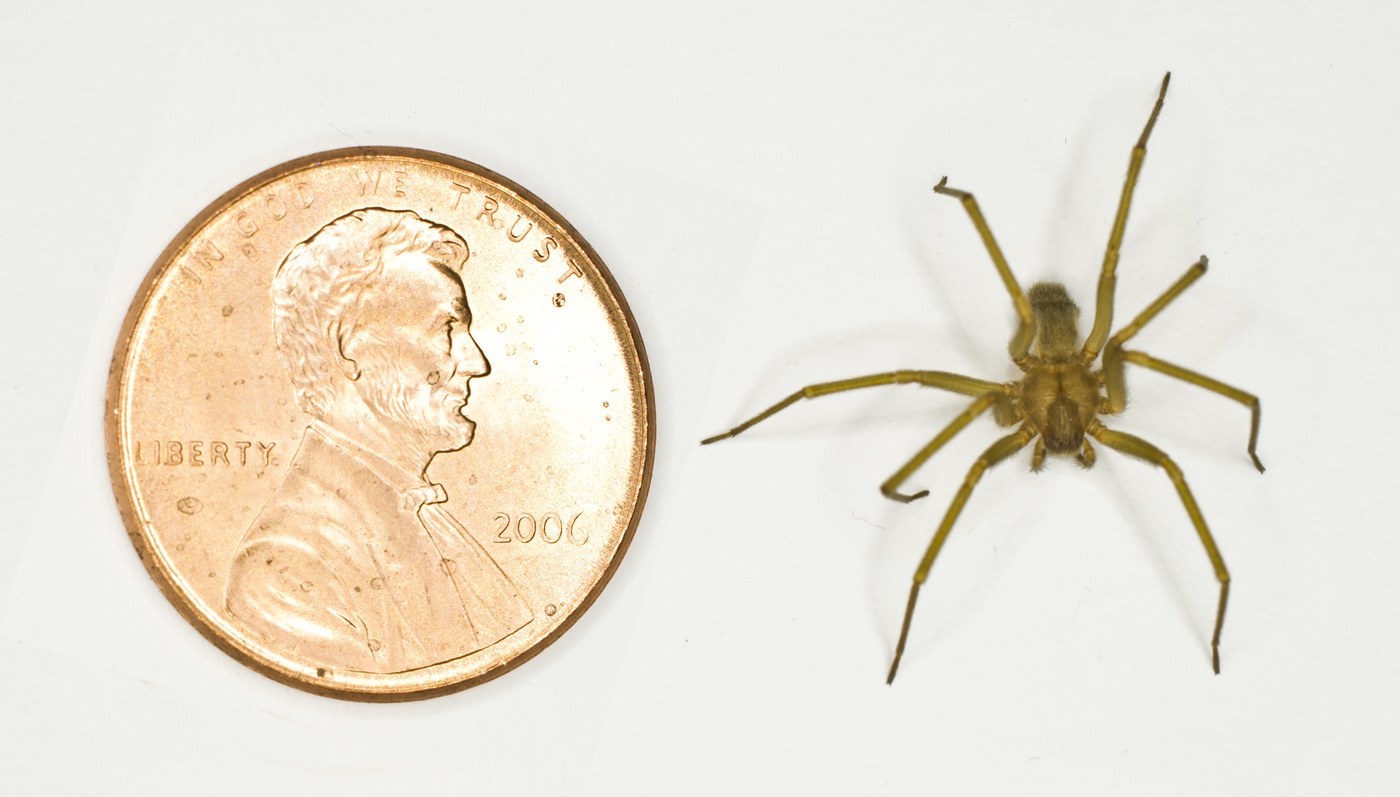
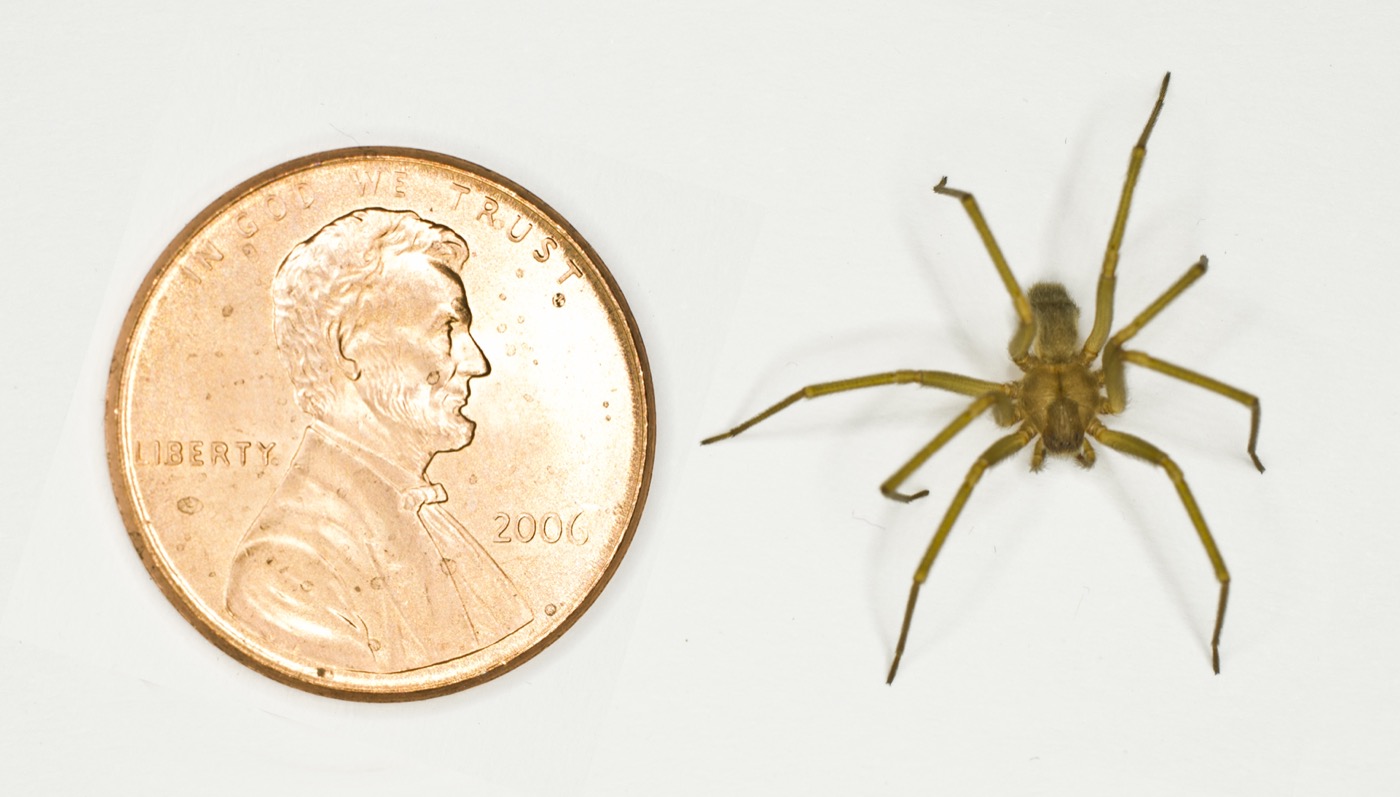
Adult beside a penny for scale.
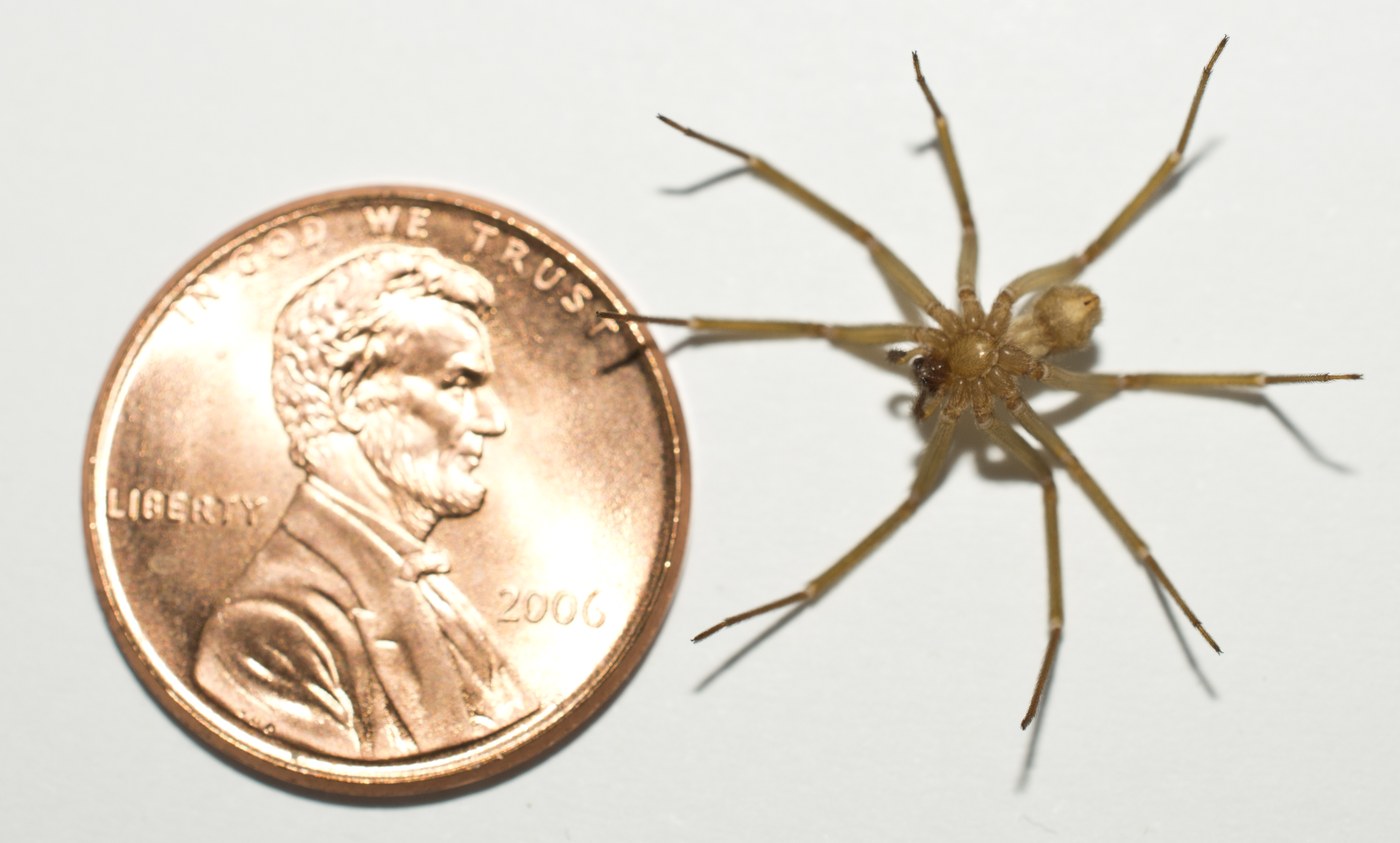
Ventral view beside a penny.
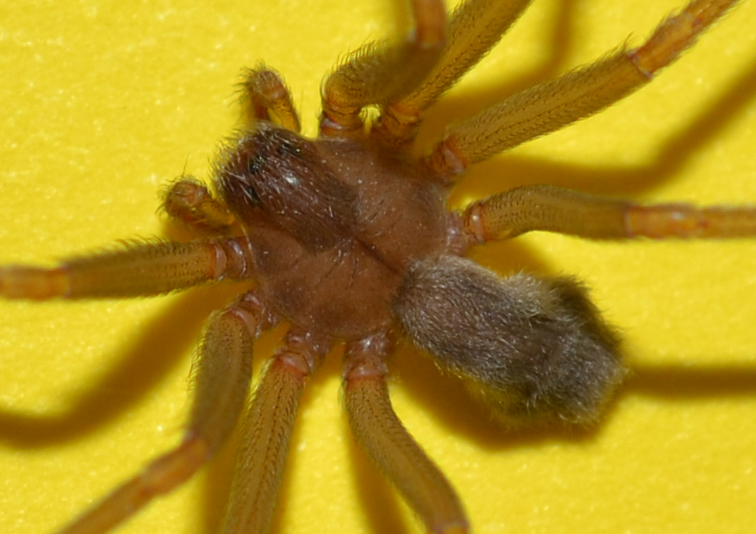
Violin marking close-up.
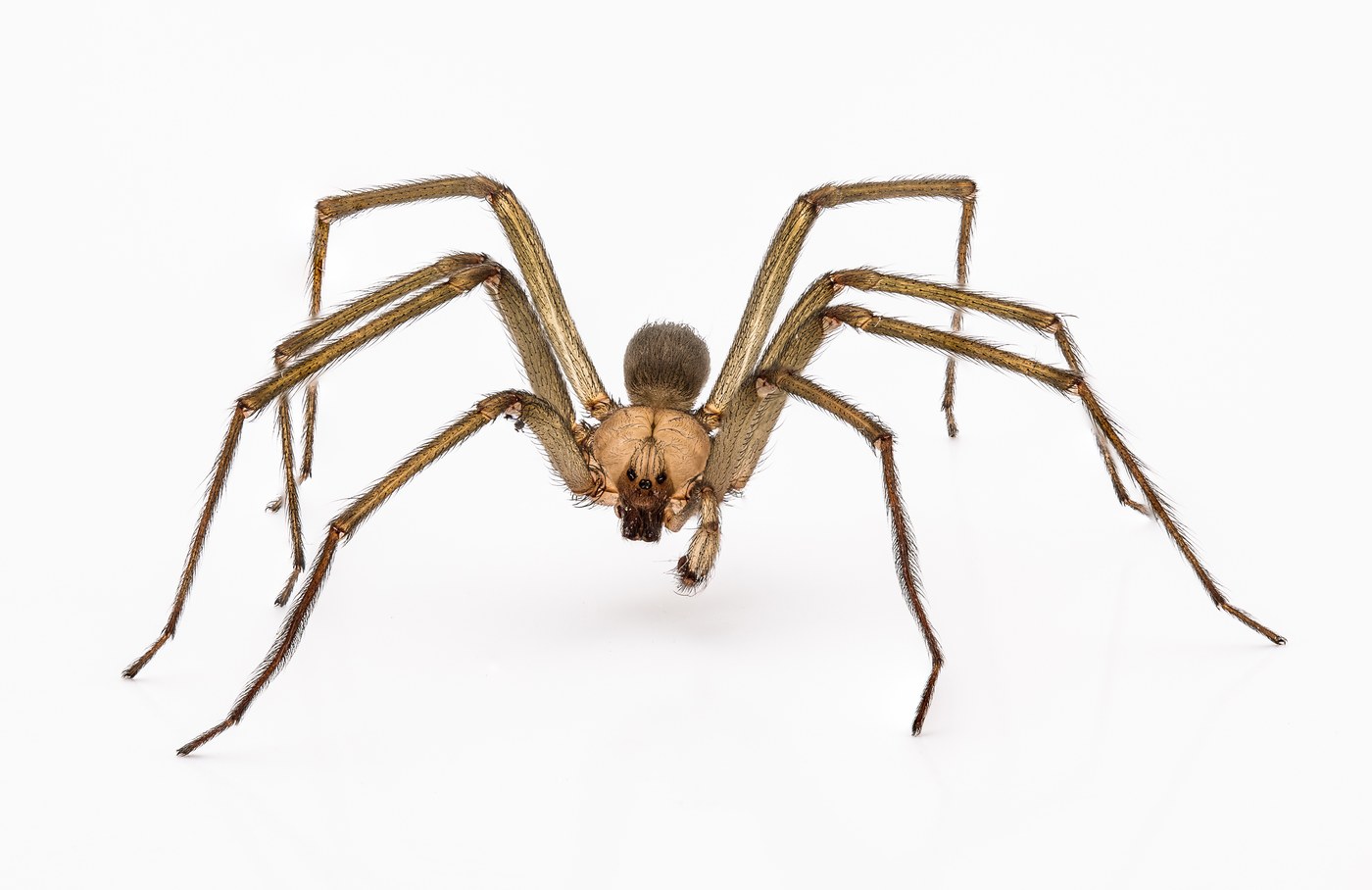
Adult, head-on, legs spread.
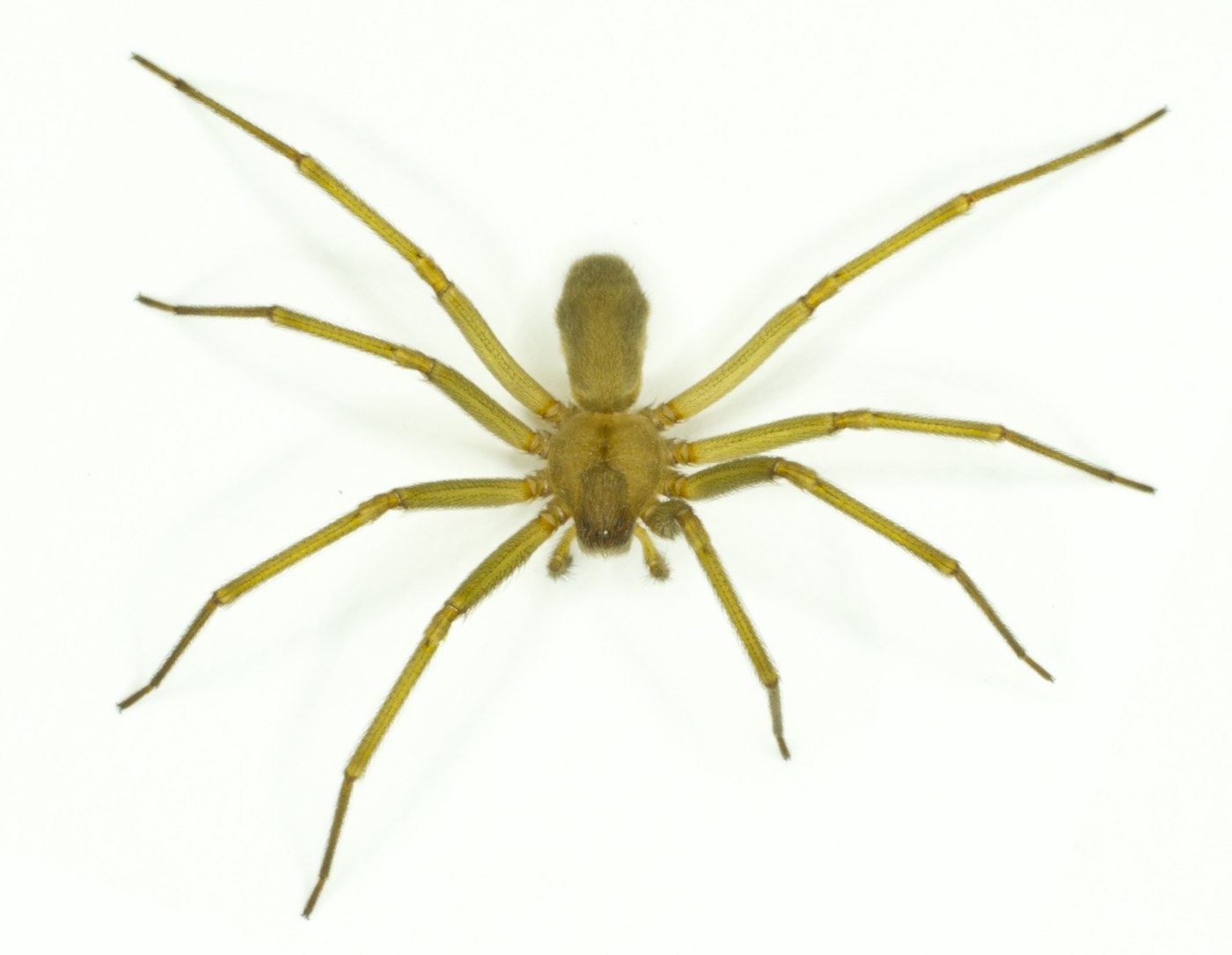
Adult, dorsal view.
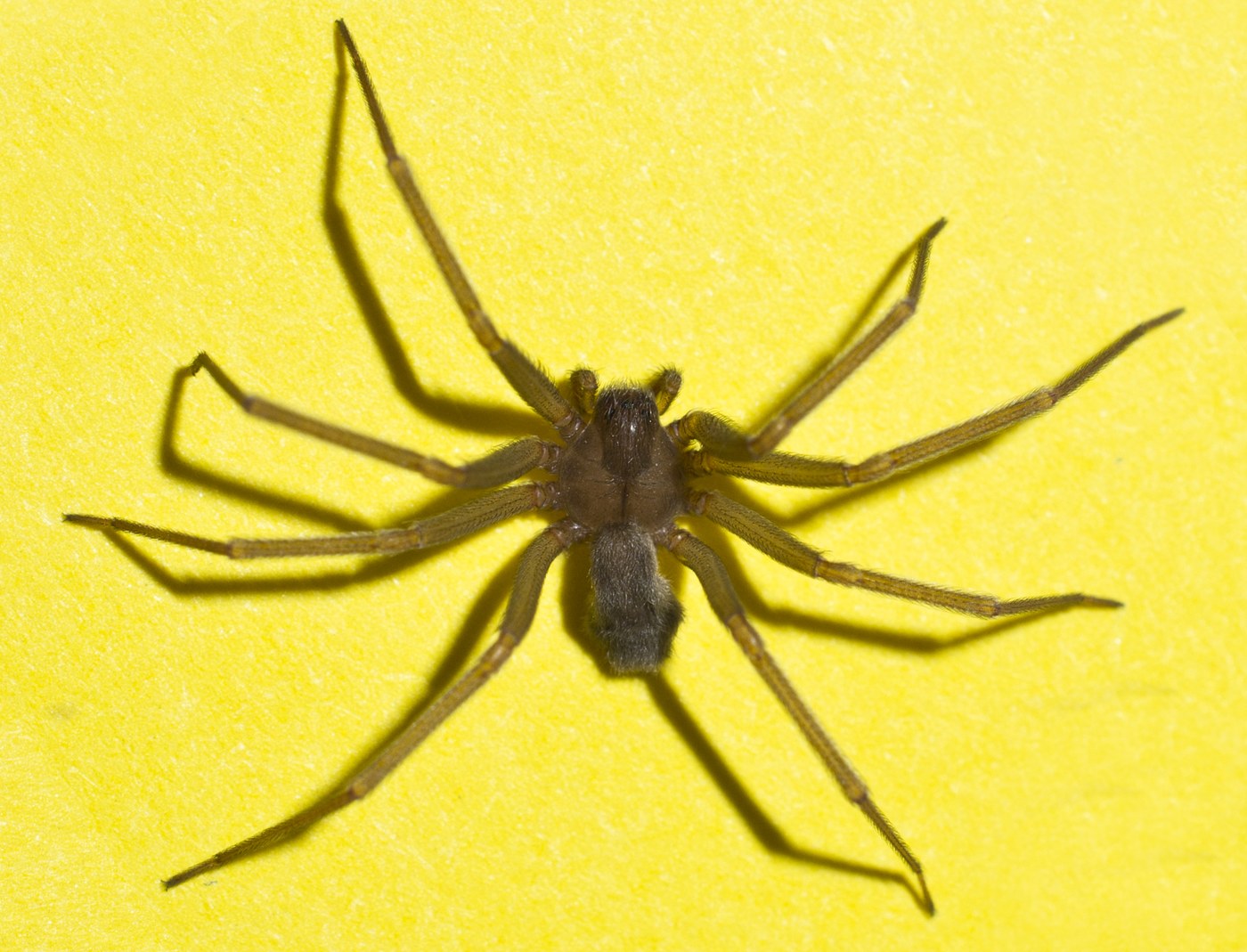
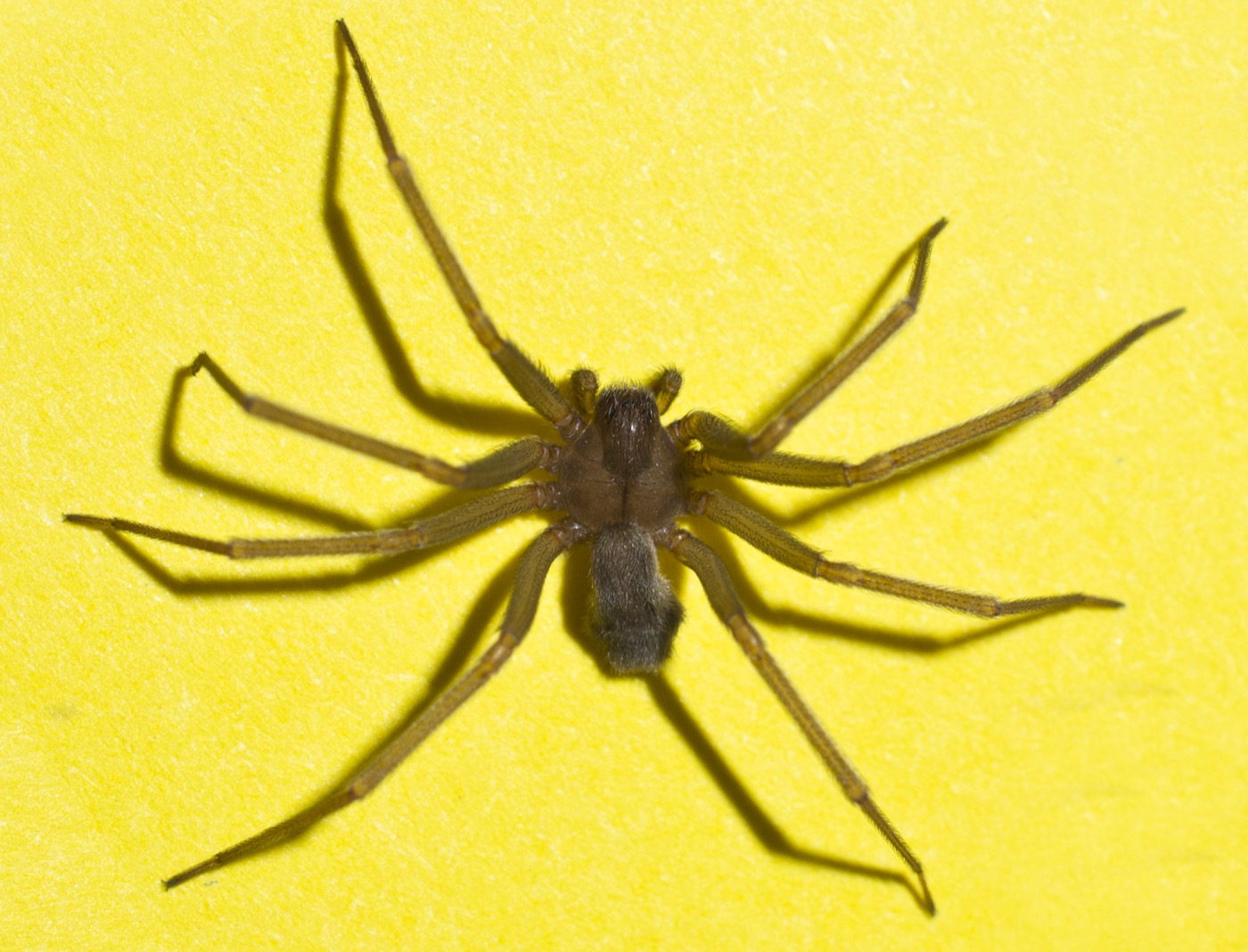
Adult, dorsal, on yellow background.
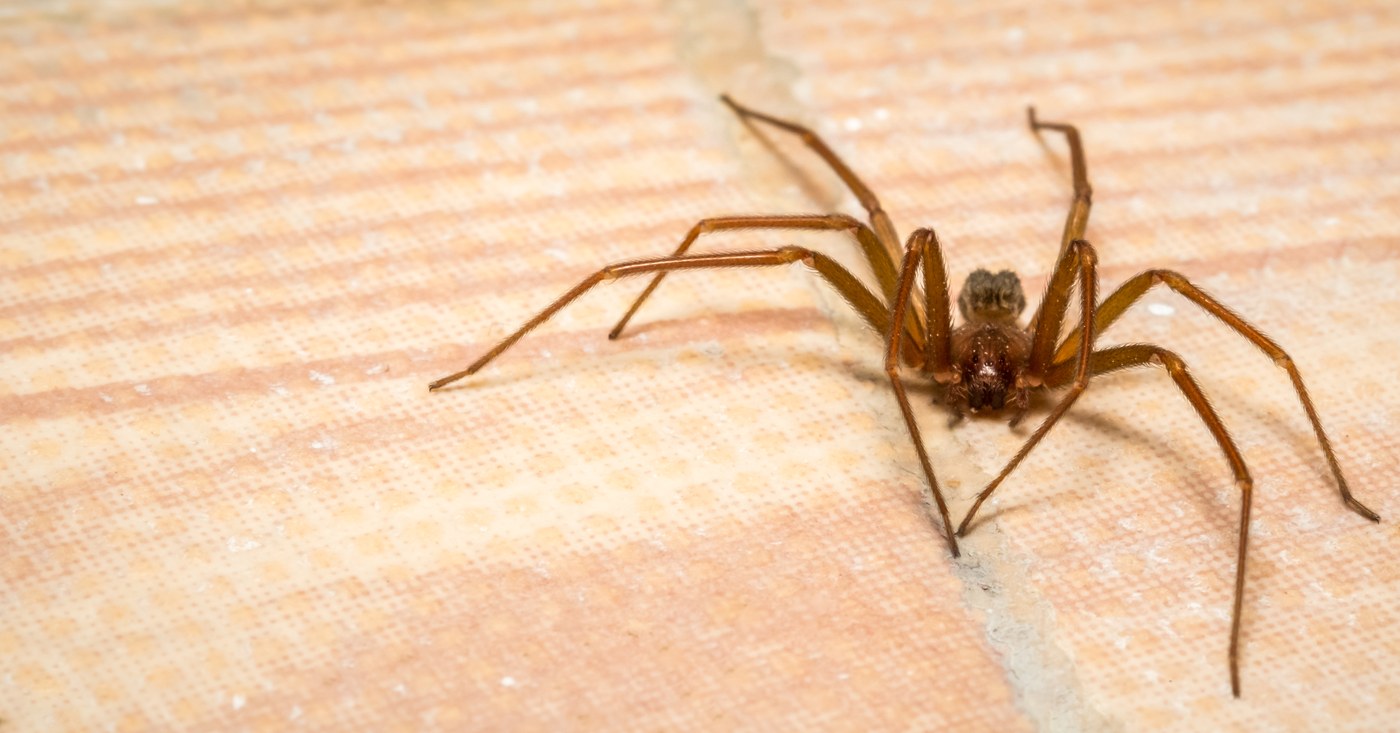
Adult on indoor fabric.
Sources
- Brown Recluse and Other Recluse Spiders, Pest Notes Publication 7468 UC Statewide Integrated Pest Management Program, UC Riverside (R.S. Vetter)
- Brown Recluse Spider, ENTFACT-631 University of Kentucky Cooperative Extension Service
- Recluse Spider, Field Guide to Common Texas Insects Texas A&M AgriLife Extension Service
- How to Identify and Misidentify a Brown Recluse Spider UC Riverside Spider Research (Vetter lab)
- Bites of Brown Recluse Spiders and Suspected Necrotic Arachnidism, New England Journal of Medicine Swanson, D.L., Vetter, R.S., 2005
- NOT RECLUSE, A Mnemonic Device to Avoid False Diagnoses of Brown Recluse Spider Bites, JAMA Dermatology Forrester, J.A. et al.
Image Credits
- Image: NPMA. Used under NPMA member image license.
- Image: Adobe Stock, licensed.