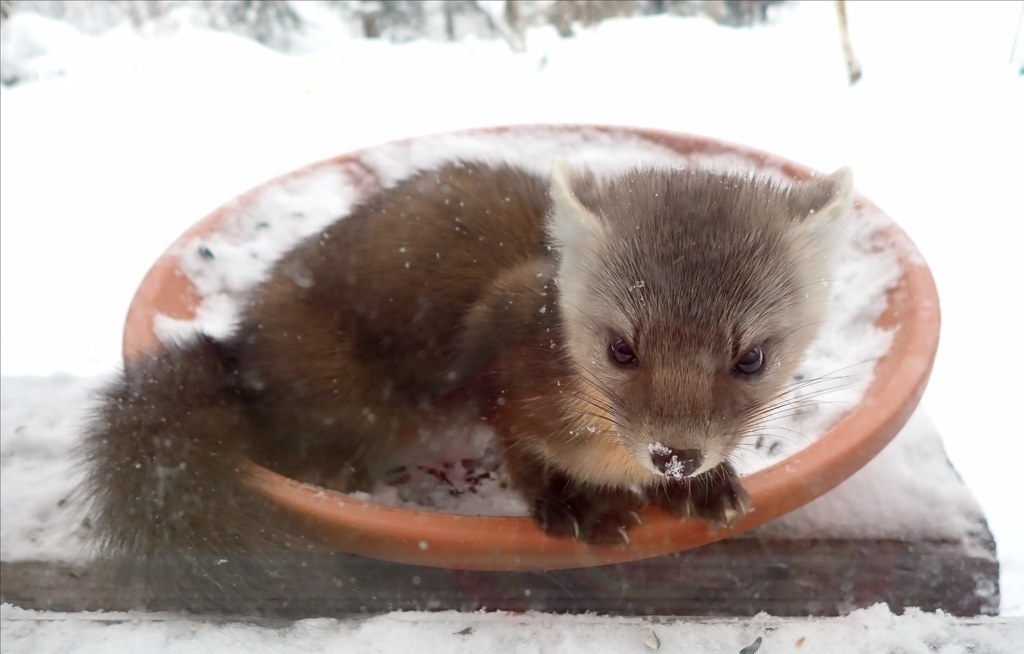
Where They're Found
The American marten (Martes americana) occupies mature and old-growth coniferous and mixed forest across the northern tier of the country. Its core range is mainland Alaska, where it is present across most forested regions of the state from Southeast Alaska to the northern and western limits where trees give out. Beyond Alaska, established populations occur in the Great Lakes states (the Upper Peninsula of Michigan, Wisconsin, and Minnesota, following historical extirpation and 20th-century reintroduction), the Northeast (Maine, New Hampshire, New York, and a recovering population in Vermont), and the northern Rocky Mountains (Montana and northern Idaho).
A genetic split identified in research published from 2012 onward divides what used to be treated as one continent-wide species into two: this true American marten, and the closely related Pacific marten (Martes caurina), which occupies the Pacific Northwest, California, the Southwest, and the southern and central Rockies. A 2020 genetic study traced the species boundary through the northern Rocky Mountains to the Clark Fork Valley on the Idaho-Montana border. A marten seen in Washington, Oregon, California, or New Mexico is very likely this related but separate Pacific marten, not the true American marten.
There is no established population of either marten species in Hawaii.
Seasonal Timeline
Mating runs July through August, followed by a long delayed-implantation period before kits are born April through May. Activity is year-round, with denning conflicts in rural structures most plausible in spring when a female is seeking a den site for that year's litter.
Mating runs July through August, followed by a long delayed-implantation period before kits are born April through May. Activity is…
Because of delayed implantation, the roughly year-long gap between mating and birth is mostly a dormant period for the embryo, not active pregnancy. Only about the final month before birth involves active fetal development.
One limit, stated rather than hidden. No month window is documented for Midwest, Mountain West and Northeast, so they are not on the bar.
Life Cycle
Delayed implantation explains an odd-looking gap. Mating happens in July or August, but the fertilized egg does not implant and begin active development for about 6 months. Total time from mating to birth runs close to a year, even though only the final month or so involves active fetal growth. The pregnancy itself is not unusually long.

Kit
Kit. Litters average 3 young, born April to May after a roughly 6-month delayed-implantation period. Kits weigh about 1 ounce at birth, blind and helpless in a tree cavity, hollow log, or squirrel midden. Eyes open at 5 to 6 weeks.
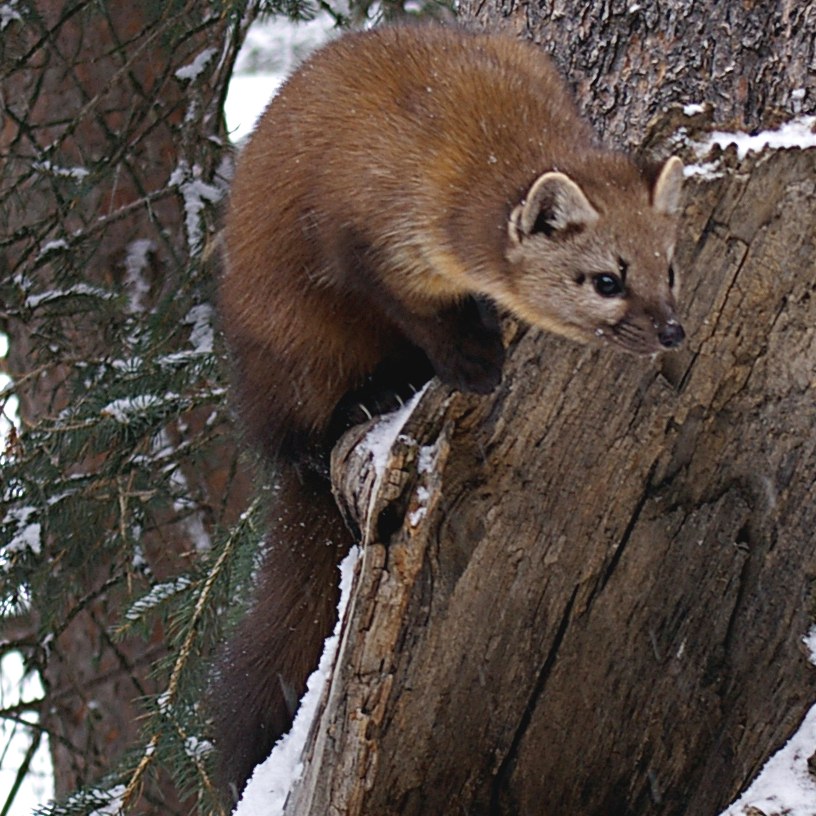
Juvenile2
Juvenile. Reaches independence from the mother by late summer of its birth year. Sexual maturity typically follows around age 2, though some females breed as early as 15 months.
Adult
Adult. Body length 19 to 25 inches excluding the tail, weight up to about 4 pounds, males considerably larger than females. Solitary and territorial, with a home range from about 1 to 15 square miles depending on food availability. Can live over 11 years in optimal conditions, typically 4 to 6 years in Alaska.
Signs of Activity
Not the animal itself, the signs. A tree cavity, hollow log, or squirrel midden used as a den, tracks in snow, and, rarely, an enlarged gap at a rural cabin's roofline or outbuilding siding where a marten has forced entry to use the space as a substitute den.
<p><strong>Delayed implantation explains an odd-looking gap.</strong> Mating happens in July or August, but the fertilized egg does not implant and begin active development for about 6 months. Total time from mating to birth runs close to a year, even though only the final month or so involves active fetal growth. The pregnancy itself is not unusually long.</p>
Identification
Body length 19 to 25 inches (48 to 65 cm), not counting the tail, which adds roughly another third to total length. Weight reaches up to about 4 pounds, with a typical range closer to 1.1 to 3.1 pounds and males running considerably larger than females.
The throat and chest bib is the clearest field mark. A distinct buff, pale orange, or cream patch across the throat and upper chest contrasts sharply with the body color, which itself ranges from pale yellowish-brown through brown to near black.
Erect, rounded ears; sharp, non-retractable claws built for climbing; large, well-furred paws that work like natural snowshoes in deep snow; a long, bushy tail.
Not the same animal as a fisher. Fishers are considerably larger (up to about 47 inches nose to tail versus a marten's roughly 25-inch body alone), darker overall, and lack the marten's contrasting pale throat bib. Size and that bib are the two fastest tells between the two.
Not the same animal as a mink. Mink are semi-aquatic, tied to streams, ponds, and coastal margins, while martens are upland forest animals. Mink also run smaller, with a thinner tail and partially webbed toes for swimming that the marten lacks entirely.
At a distance, a marten can be mistaken for a weasel, but weasels are much smaller-bodied with a thin, sparsely-furred tail rather than the marten's full, bushy one.
A taxonomic detail worth knowing before assuming range: what used to be treated as one wide-ranging species has been split by recent genetics into this true American marten (Martes americana) and the closely related Pacific marten (Martes caurina). The two look essentially identical in the field; the difference is which side of a specific line through the Northern Rockies you're standing on, not anything visible on the animal itself.
Signs of Infestation
A tree cavity, hollow log, or squirrel midden in active use as a den. These are the natural equivalent of what a marten looks for, whether in true wilderness or at a forest edge.
Tracks in snow. Large, well-furred paws leave a distinct print, and the trail pattern differs from the larger fisher's.
Sightings near dawn or dusk. Martens are primarily nocturnal and crepuscular, with activity levels that shift seasonally rather than following one fixed pattern.
Rarely, an enlarged gap at a rural cabin roofline, log-cabin chinking, or outbuilding siding. A marten using a structure as a substitute den is an uncommon but real conflict pattern, distinct from the food-driven entry pattern seen in rodents or raccoons.
Vocalizations near a den with kits present. Huffs, chuckles, and short calls are part of normal marten communication, most likely to be noticed close to an active den.
Prevention and When to Call a Pro
Marten legal status varies by state, and this is the starting point. Some Northeastern and Great Lakes states manage marten as a regulated furbearer with a defined trapping season where the population is secure, while Vermont currently lists marten as a fully protected endangered species as part of an ongoing recovery effort. Rules genuinely differ and change, so check current regulations with your state wildlife agency before attempting to trap, relocate, or exclude a marten, and treat a licensed nuisance wildlife control operator as the safer default over a DIY trap purchase.
Confirm it isn't a mother with kits before doing anything. Litters are born April to May and kits aren't independently mobile until late summer. Excluding an active den during that window risks trapping or orphaning young inside a structure. A licensed wildlife control professional can confirm occupancy status before any work begins.
Seal likely entry points only after confirming the animal is out, not during active denning. Treat gaps at rooflines, soffits, vents, and log-structure chinking the way you would for any similarly-sized climbing mammal: identify the actual entry point in use, confirm the den is empty, then permanently seal with durable material such as metal flashing or hardware cloth rather than a temporary patch.
Remove easy substitute-denning opportunities close to structures. Since the documented conflict pattern is substitute denning rather than food-seeking, clearing brush piles, woodpiles, and loose siding directly against a rural cabin or outbuilding reduces the odds a marten treats it as equivalent to a natural tree cavity.
Secure poultry or small livestock housing on forest-edge rural properties. Standard predator-proof coop construction, solid and well-maintained walls and doors with no gap wider than about 1.5 to 2 inches and secured latches closed at night, addresses a marten the same way it addresses raccoons and weasels. This is a reasonable precaution rather than a response to a well-documented risk: American marten predation on backyard poultry is not well documented in U.S. sources the way it is for the related European pine marten, a different species with its own extensively published coop-proofing guidance overseas.
Do not attempt to handle, trap, or relocate a marten yourself. Beyond the legal question above, martens are agile climbers with sharp claws and are not reliably deterred by human presence at close range. Once a structure conflict is confirmed, this is a call-a-professional situation, not a DIY trapping project.
When to call a professional: a marten has taken up residence in a cabin, barn, or outbuilding and shows no sign of leaving once the current denning season ends; there's any suspicion of a mother with kits present; you're unsure of your state's current trapping or take rules for marten; or poultry and small-livestock losses recur on a forest-edge property and a marten is specifically suspected, since confirming which animal is actually involved matters before any action is taken.
Frequently Asked Questions
Is an American marten the same animal as a pine marten?
Informally yes, "pine marten" is a common nickname for it in parts of the US, but that name also belongs to a separate European species, which can cause confusion when reading overseas sources about marten conflicts.
What's the difference between a marten and a fisher?
Mainly size and color. Fishers are considerably larger (up to about 47 inches nose to tail) and darker, and they lack the marten's pale throat bib, one of the clearest field marks between the two.
Are American martens dangerous to pets or people?
No meaningful direct risk is documented. They are not classified among the primary rabies reservoir species in US surveillance data, and there's no documented pattern of aggression toward people.
Can I trap a marten that's denning in my barn?
It depends entirely on your state. Marten regulatory status ranges from a managed furbearer with an open trapping season to full state endangered-species protection, so check with your state wildlife agency or a licensed nuisance wildlife control operator before doing anything yourself.
Where in the US are American martens actually found?
Mainland Alaska, the Great Lakes states, the Northeast, and the northern Rocky Mountains (Montana and northern Idaho). Marten sightings elsewhere in the West are very likely the closely related Pacific marten, a separate species with a different range.
Photo Gallery
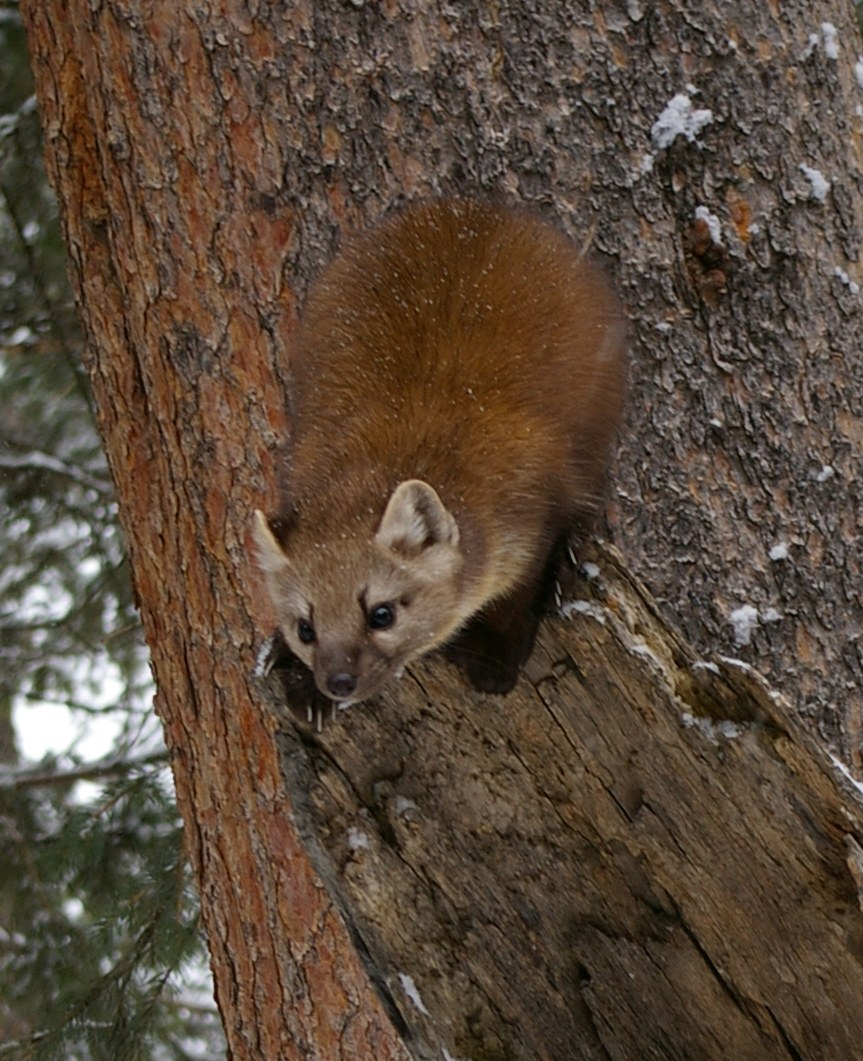
American Marten, juvenile
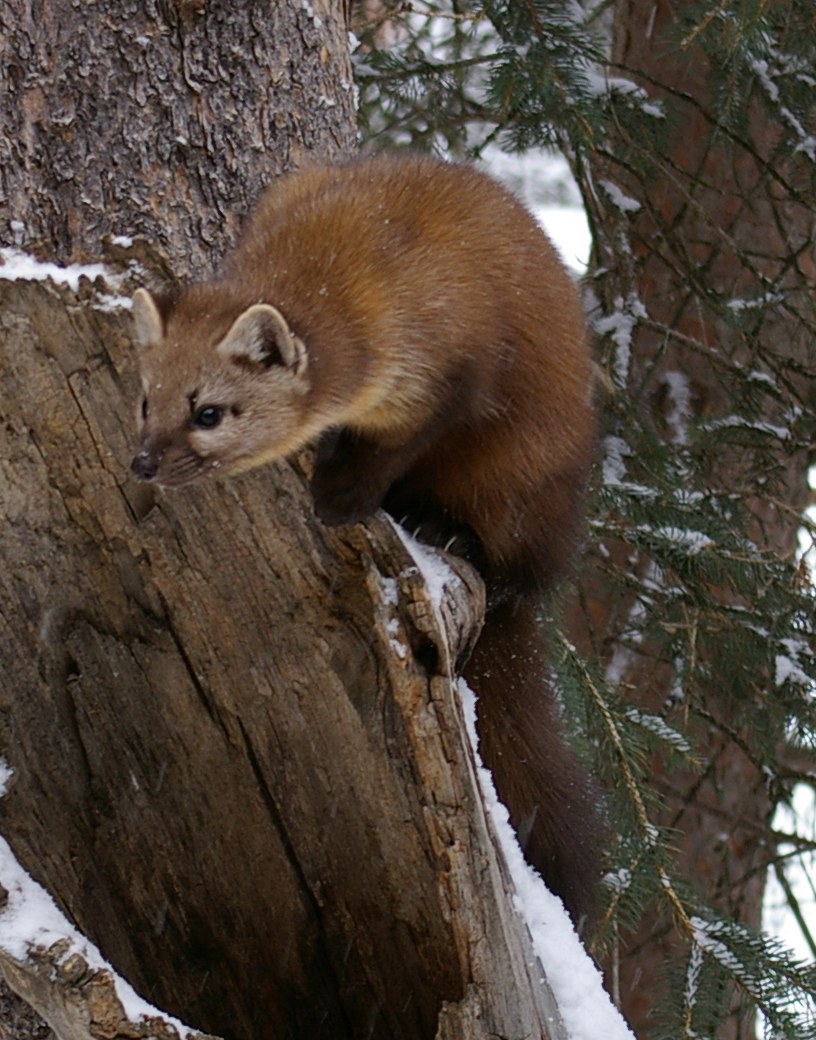
American Marten, juvenile
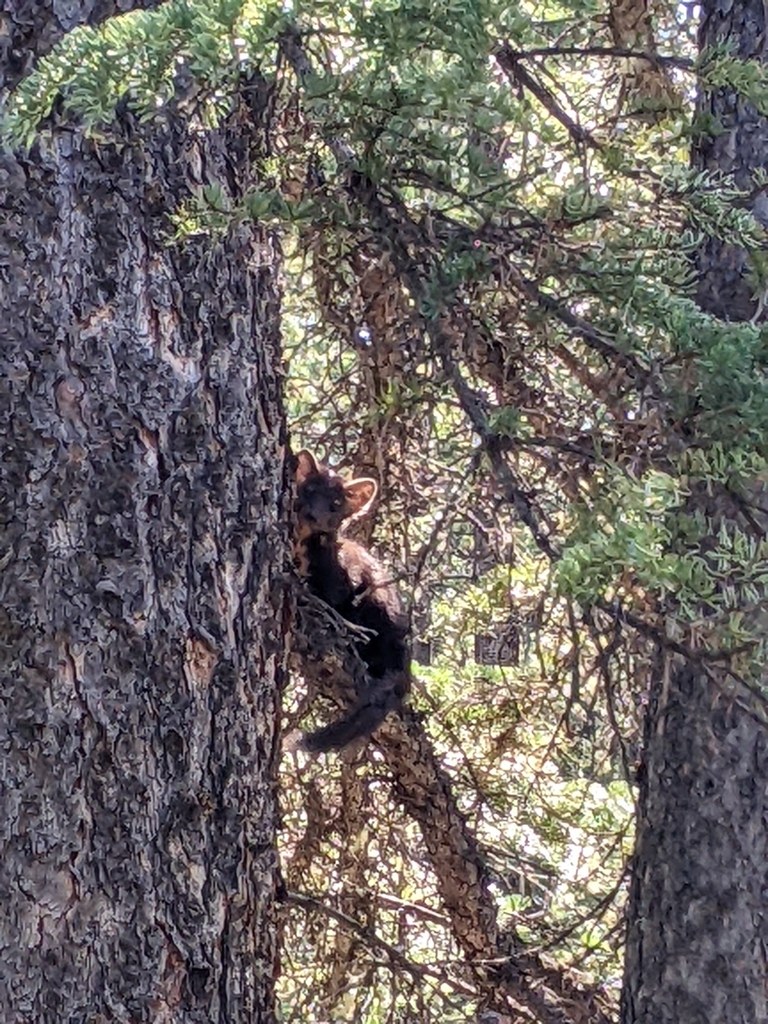
American Marten, juvenile
Sources
- American Marten Species Profile Alaska Department of Fish and Game
- American Marten U.S. National Park Service
- American Marten Vermont Fish & Wildlife Department
- Martes americana, M. caurina, American marten, Pacific marten (Fire Effects Information System) USDA Forest Service, Rocky Mountain Research Station
- Species Status Assessment for the Coastal Marten (Martes caurina), Version 2.2 U.S. Fish and Wildlife Service
- Carnivore Contact: A Species Fracture Zone Delineated Amongst Genetically Structured North American Marten Populations Frontiers in Genetics
- Characteristics of American marten den sites in Wyoming USDA Forest Service, Rocky Mountain Research Station / Journal of Wildlife Management
- The Elusive Pacific Marten in New Mexico New Mexico Department of Game and Fish
- Rabies in the United States: Protecting Public Health Centers for Disease Control and Prevention
- Vital Signs: Trends in Human Rabies Deaths and Exposures, United States, 1938-2018 Centers for Disease Control and Prevention (MMWR)
Image Credits
- Image: photographer not named via iNaturalist. CC0 1.0.
License. - Image: Cephas, via Wikimedia Commons. Licensed CC BY-SA 4.0; this resized copy is offered under the same license.
License. - Image: Tim Gage from Vancouver, Canada, via Wikimedia Commons. Licensed CC BY-SA 2.0; this resized copy is offered under the same license.
Source. License. - Image: Tim Gage from Vancouver, Canada, via Wikimedia Commons. Licensed CC BY-SA 2.0; this resized copy is offered under the same license.
Source. License. - Image: Don Cretin via iNaturalist. CC BY 4.0.
Source. License.